Washington Papers Editors - Böcker
Visar alla böcker från författaren Washington Papers Editors. Handla med fri frakt och snabb leverans.
8 produkter
8 produkter
1 256 kr
Skickas inom 7-10 vardagar
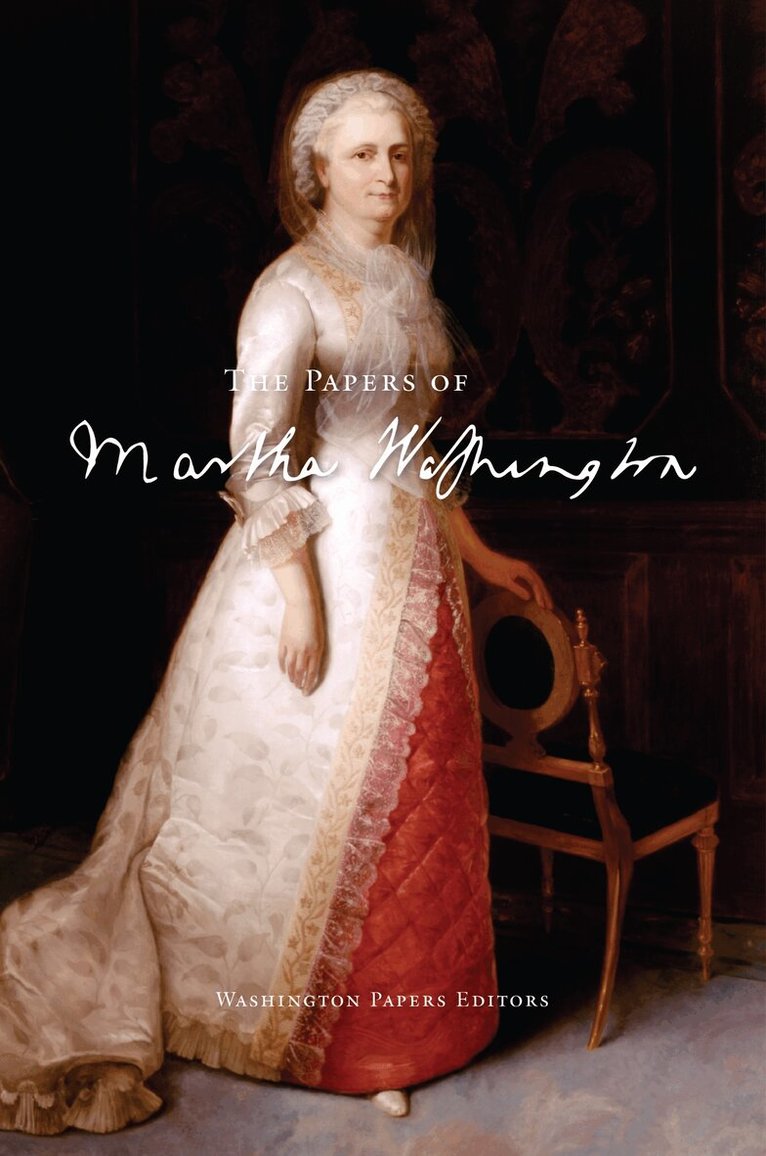
The Papers of Martha Washington is the first scholarly edition of Martha Washington’s correspondence, spanning her entire life, from her youth as a wealthy but largely unknown Virginia plantation mistress through her ascent to becoming an American icon.Her family letters make up most of the volume, bringing to light Martha Washington’s personality in her own words. As she rose to fame, she began to correspond with such significant figures in American history as Mercy Otis Warren, Abigail Adams, Elizabeth Willing Powel, and the Marquis de Lafayette. Her correspondence paints a picture of social life during the Revolutionary War and the early republic. The dozens of people who sent condolence letters after her husband’s death are a who’s who of key Federalist figures at the turn of the nineteenth century.For periods from which few materials survive, the editors have selected financial papers and third-party documents that bridge the gaps in the correspondence. Although Martha burned all but four of the letters between her and George Washington, the remaining documents tell a fascinating story about the early United States from a unique female perspective. This volume offers readers a more three-dimensional, accurate portrait of Martha Washington and enhances our understanding of women’s contributions to early American history.Aside from correspondence, the Papers of Martha Washington also includes directories of key people and places, timelines, maps, editorial essays, a calendar of financial documents, and appendices documenting everything from the inventory of the contents of Mount Vernon to the division of dower slaves, serving as an invaluable historical tool and a readable introduction to the life of America’s first First Lady.
1 256 kr
Skickas inom 7-10 vardagar
In March 1781, General Washington anticipated a campaign to drive the British from New York City, but difficulties mandating enlistments and outfitting recruits forestalled this opportunity. Meanwhile, a storm damaged British ships and provided an opening for the French to sail from Newport to the Chesapeake Bay to help trap British forces commanded by Brig. Gen. Benedict Arnold in Virginia. To Washington's disappointment, however, the British fleet recovered in time to fight the French at the Battle of Cape Henry, prompting Captain Destouches to withdraw and leaving the British to control the bay. Undeterred, Washington encouraged major generals Nathanael Greene and Baron von Steuben in the southern states, where Continental forces bloodied the British at the Battle of Guilford Courthouse. His mounting personal frustrations regarding Mount Vernon and his mother's efforts to secure financial relief from the Virginia legislature were lightened by Martha Washington's presence at the winter encampment.
1 256 kr
Skickas inom 7-10 vardagar
In May 1781, talks with Lieutenant General Rochambeau enlivened Gen. George Washington’s spirits with prospects of active operations against the British forces holding New York City. Having convinced the French that New York City should be their objective unless developments were to shift the emphasis southward, Washington resumed appeals for recruits and supplies as American troops camped along the lower Hudson River awaited the arrival of Rochambeau’s expeditionary force from Rhode Island. Puzzling news came from Major General Lafayette in Virginia, however, where the British under Lt. Gen. Charles Cornwallis had withdrawn toward the coast after having driven far into the northwestern uplands. What they did not know was that captured mail had alerted British Gen. Henry Clinton to allied intentions, and Cornwallis was taking a position to reinforce the British forces in New York City. Washington attempted a coordinated attack on British fortifications guarding northern Manhattan as French troops joined his army, and though the maneuver fizzled, it allowed a junction of the armies closer to New York City than originally planned. Politics in Virginia and domestic concerns back home also demanded Washington’s attention during this time, as Martha Washington fell ill and returned home to Mount Vernon.
1 256 kr
Skickas inom 7-10 vardagar
The junction on 6 July of Lieutenant General Rochambeau and his French army with Continental troops outside New York City brightened Gen. George Washington’s spirits. He finally could commence operations against the British stronghold. The promise of a powerful French naval squadron under Lieutenant General de Grasse arriving off the American coast increased Washington’s optimism and drove him to renew demands on state officials to supply Continental army recruits, militia, and provisions. Failure to comply embarrassed Washington and required awkward explanations to the French allies.Developments in the southern states offered other opportunities. Major General Lafayette, who commanded in Virginia, shadowed the withdrawal of Lt. Gen. Charles Cornwallis and his British army toward the Chesapeake Bay and deployed his troops to contain the enemy once they took post at Yorktown. Learning that de Grasse would sail to the Chesapeake Bay abruptly changed Washington’s thinking. Rather than besiege New York City, he would seize the initiative and move the bulk of his force to Virginia. The allies could shift attention to Charleston if the British escaped Yorktown, but the likelihood was a concentration at the latter location.The entire French army and part of the Continental army began their march south on 19 August. Already working with astounding energy and stamina, Washington displayed extraordinary physical and intellectual capacity over the next weeks. A feint toward Staten Island, N.Y., baffled Gen. Henry Clinton and kept the British from launching a disruptive flank attack. The logistical complexities of the allied movement can be seen on the map that accompanies the “Narrative Chronology” following Washington’s letter to Rochambeau on 17 August.Washington began the campaign by speaking confidently of how Providence’s “common blessing” would lead to an allied victory. Holding strategic and tactical advantages, he could glimpse the ultimate success of the revolutionary cause.
1 256 kr
Skickas inom 7-10 vardagar
The British surrender at Yorktown on 19 Oct. was a glorious moment for the allied forces under the command of Gen. George Washington and French lieutenant generals Rochambeau and de Grasse. Yet anxieties accompanied each stage of the allied operations, and subordinates noticed Washington's distress. Following a failure of a British relief force to arrive from New York, Lt. Gen. Charles Cornwallis finally requested surrender negotiations, and a testy exchange with Washington preceded the discussions that resulted in articles of capitulation. The end of the siege of Yorktown accelerated efforts to gather enslaved laborers who had fled to the British and return them to their owners. Disease had killed many already. Harshly treated, the survivors did not feel the joy that swept across the United States as news of the British surrender spread. For Washington, the joy of victory soon was tempered when his stepson, John Parke Custis, died from fever on 5 November. Comforting Martha Washington at Mount Vernon delayed his leaving for Philadelphia to consult with Congress, where more needed to be done to achieve independence and secure the revolutionary cause.
1 256 kr
Skickas inom 7-10 vardagar
Celebrations of victory over the British quickly yielded to business as Gen. George Washington traveled to Philadelphia and became immersed in painstaking policy discussions with members of Congress and the heads of the new executive structure of the central government. Washington saw signs of public lethargy grounded in a belief that the victory at Yorktown had ended the conflict. He urged preparations for continued aggressive operations, as Virginia leaders seethed with anger upon being pushed for additional recruits, money, and other resources. In their view, they had already given enough during the Yorktown campaign. With a relatively quiet military situation in both the northern and southern departments, as well as overseas, Washington found time for correspondence regarding land interests and ongoing issues at Mount Vernon, including the recovery of another planter’s enslaved laborers believed to have escaped on departing French ships. He hoped that the war would end soon, but he acted on the premise that much hard work and sacrifice remained for the United States to win its independence. He stood ready to lead all who would follow in the struggle for the final success of the revolutionary cause.
1 383 kr
Skickas inom 11-20 vardagar
Gen. George Washington anticipated his return to the army as spring approached in 1782. He had been in Philadelphia since the fall to exchange thoughts with government officials about financial, military, and diplomatic policies. Arriving at his headquarters in Newburgh, N.Y., on 31 March, Washington soon learned that the laboriously negotiated provision contracts to supply the officers and troops had caused dissatisfaction. Combined with a continued lack of pay, the complaints threatened already fragile morale. Washington ordered investigations that demonstrated concern for his troops. A lack of money and recruits likewise troubled Washington. He feared that the army would not be prepared to take the field. The outlook appeared equally bleak in the southern department, where Maj. Gen. Nathanael Greene's army also experienced poor morale, inadequate equipment, and frustration over the slow arrival of reinforcements. A complete change in the British ministry and a new parliamentary policy to end offensive operations against the Continental forces complicated planning. Unlike many, Washington hesitated to believe that peace was at hand, and he urged John Hanson, president of Congress, on 10 May 'that instead of relaxing we ought to improve the present Moment.' A failed prisoner-exchange negotiation diverted Washington's attention from his usual tasks, as did an extended ordeal that centered on British captain Charles Asgill and the military and moral implications of retaliation to avenge or check atrocities. He also quashed a suggestion that he declare himself king because of congressional ineffectiveness, noting in his reply to Col. Lewis Nicola that 'no occurrence in the course of the War, has given me more painful sensations' than to read such a notion from one of his officers. Despite his leadership responsibilities, Washington showed love for his family through engagement with the John Parke Custis estate settlement and efforts to launch the legal education of his nephew Bushrod Washington. Such actions manifested Washington's optimism that there would be a future after the war that fulfilled the promise of the revolutionary cause.
1 291 kr
Kommande
As spring waned in 1782, Gen. George Washington wondered how seriously the British wished to pursue peace negotiations. Despite a recent letter from British general Guy Carleton that announced a cessation of offensive operations, hostilities persisted along the New York frontier as well as in Georgia, South Carolina, and the Ohio country. A newspaper report about an address in Parliament that likened potential US independence to Irish independence convinced Washington that British declarations lacked sincerity.Insufficient funds hindered every step to achieve military readiness. Animosities arose between provision contractors and army officers, a lack of pay sparked a spirit of mutiny throughout the Continental army, and Washington constantly confronted logistical or administrative complications.Washington worked assiduously to sustain cordial relations with the French. He encouraged elaborate army celebrations to mark the birth of the French dauphin and conferred with Lieutenant General Rochambeau in Philadelphia, where they decided to have the French army that had wintered in Virginia march to join the Continental troops stationed along the Hudson River. After the concentration, they would target the British garrison in New York City.A tour through northern New York supplied Washington with evidence of his public renown as he received formal expressions of praise from appreciative admirers. In his replies, Washington urged continued exertions to achieve true independence for the United States and the promise of the revolutionary cause.