Wayne A. Beach - Böcker
Visar alla böcker från författaren Wayne A. Beach. Handla med fri frakt och snabb leverans.
6 produkter
6 produkter
2 151 kr
Skickas inom 10-15 vardagar
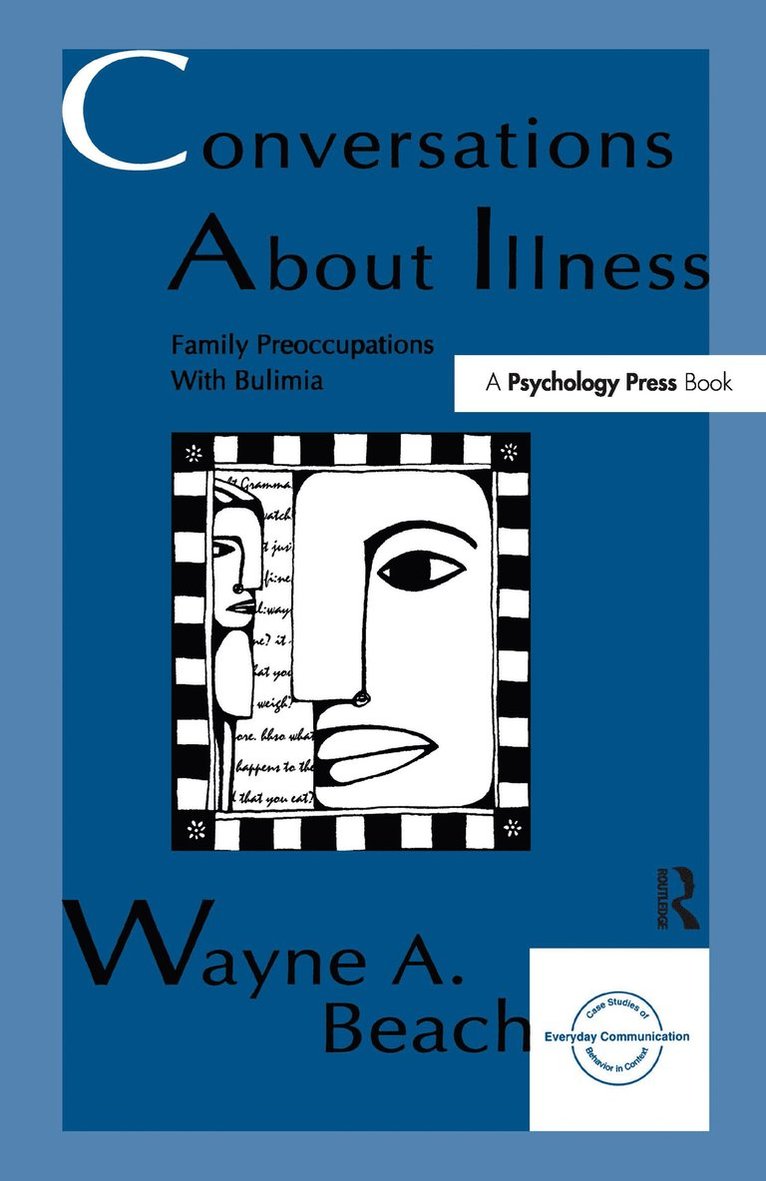
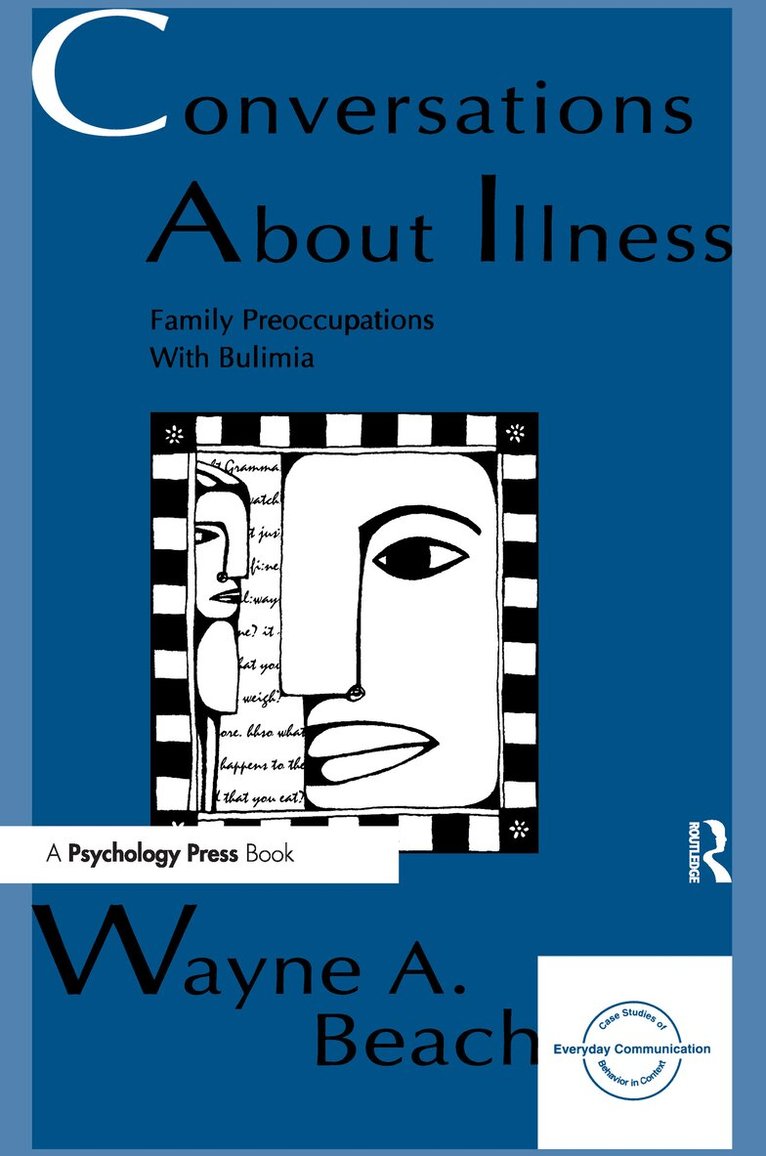
The grandmother granddaughter conversation examined in this book makes explicit what the detailed study of interaction reveals about two social problems--"bulimia" and "grandparent caregiving." For the first time, systematic attention is given to interactional activities through which family members display ordinary yet contradictory concerns about health and illness:* a grandmother's (who is also a registered nurse) attempts to initiate, confront, and remedy her granddaughter's lack of responsibility in admitting bulimic "problems" and committing to professional medical assistance;* a granddaughter's methods for avoiding ownership of the alleged bulimic problems by discounting the legitimacy of her grandmother's expressed concerns.Through analysis of a single audio-recorded and transcribed conversation, Wayne Beach reveals the altogether pervasive and often troubled talk surrounding family medical predicaments. From a careful review of extant theories that seek to explain eating disorders and grandparent caregiving, it becomes clear that an overreliance on self-report data has promoted underspecified understandings of "social contexts" -- conceptualizations void of real time practices and interactional consequences mirroring how families manage their daily affairs and understandings regarding health and illness. In contrast, this volume draws attention to family members' embodied interactional activities. Here it is seen, for example, how methods for expressing concern and caring by individuals may nevertheless eventuate in interactional troubles and problems between family members. The analysis reveals that, while displays of basic concerns for others' health and well being are routine occurrences between family members in home environments -- and of course, across friendship and various support networks -- even the delicate and well-intended management of such occasions guarantees neither agreement on the nature of the alleged "problems" nor, consequently, a commitment to seek professional help as a means of remedying a medical condition. In such cases, the very existence of an illness is itself a matter of some contention to be interactionally worked out. And it is perhaps both predictable and symptomatic that those explicitly denying (or as with the granddaughter, indirectly failing to admit) that problematic health behaviors exist, also somehow let it be made known that far too much attention is being given to possibilities and consequences of illness in the first instance.Implications of this investigation extend well beyond "bulimia" and "grandparent caregiving" to a vast array of casual and institutional involvements between family members, friends, and bureaucratic representatives such as those involved in long-term caregiving, dealing with cancer and Alzheimer's disease, or conducting psychiatric interviews and HIV/AIDS counseling sessions. Findings regarding the interactionally organized nature of talk about bulimia, as well as the problematic nature of caregiving, will be of value to researchers focusing on language and social interaction, health practitioners, and families alike.This volume includes the full transcript of the conversation in the case study. A copy of the audio-recording is available for classroom adoption and/or personal purchase by contacting: Wayne A. Beach, School of Communication, San Diego State University, San Diego, CA 92182-4516.
580 kr
Skickas inom 10-15 vardagar
The grandmother granddaughter conversation examined in this book makes explicit what the detailed study of interaction reveals about two social problems--"bulimia" and "grandparent caregiving." For the first time, systematic attention is given to interactional activities through which family members display ordinary yet contradictory concerns about health and illness:* a grandmother's (who is also a registered nurse) attempts to initiate, confront, and remedy her granddaughter's lack of responsibility in admitting bulimic "problems" and committing to professional medical assistance;* a granddaughter's methods for avoiding ownership of the alleged bulimic problems by discounting the legitimacy of her grandmother's expressed concerns.Through analysis of a single audio-recorded and transcribed conversation, Wayne Beach reveals the altogether pervasive and often troubled talk surrounding family medical predicaments. From a careful review of extant theories that seek to explain eating disorders and grandparent caregiving, it becomes clear that an overreliance on self-report data has promoted underspecified understandings of "social contexts" -- conceptualizations void of real time practices and interactional consequences mirroring how families manage their daily affairs and understandings regarding health and illness. In contrast, this volume draws attention to family members' embodied interactional activities. Here it is seen, for example, how methods for expressing concern and caring by individuals may nevertheless eventuate in interactional troubles and problems between family members. The analysis reveals that, while displays of basic concerns for others' health and well being are routine occurrences between family members in home environments -- and of course, across friendship and various support networks -- even the delicate and well-intended management of such occasions guarantees neither agreement on the nature of the alleged "problems" nor, consequently, a commitment to seek professional help as a means of remedying a medical condition. In such cases, the very existence of an illness is itself a matter of some contention to be interactionally worked out. And it is perhaps both predictable and symptomatic that those explicitly denying (or as with the granddaughter, indirectly failing to admit) that problematic health behaviors exist, also somehow let it be made known that far too much attention is being given to possibilities and consequences of illness in the first instance.Implications of this investigation extend well beyond "bulimia" and "grandparent caregiving" to a vast array of casual and institutional involvements between family members, friends, and bureaucratic representatives such as those involved in long-term caregiving, dealing with cancer and Alzheimer's disease, or conducting psychiatric interviews and HIV/AIDS counseling sessions. Findings regarding the interactionally organized nature of talk about bulimia, as well as the problematic nature of caregiving, will be of value to researchers focusing on language and social interaction, health practitioners, and families alike.This volume includes the full transcript of the conversation in the case study. A copy of the audio-recording is available for classroom adoption and/or personal purchase by contacting: Wayne A. Beach, School of Communication, San Diego State University, San Diego, CA 92182-4516.
Natural History of Family Cancer
Interactional Resources for Managing Illness
Inbunden, Engelska, 2009
996 kr
Skickas inom 10-15 vardagar
Family members and cancer patients routinely talk about and through cancer on the telephone. Yet little is known about the social organization of these conversations and how cancer diagnosis, treatment, and prognosis impact everyday living. The culmination of a decade of research, this volume offers close examination of the first natural history of one family's 13 month journey through a wife/mother/sister's terminal cancer. From diagnosis through death of a loved one, analysis of these 61 family phone recordings (and transcriptions) offers primal insights about the fundamental importance of communication. Family members continually rely on one another when navigating through complex social, emotional, technical, and biomedical concerns associated with cancer: Updating and assessing emerging news, being stoic, claiming and defending knowledge, reporting and responding to ongoing troubles, making airline reservations, adjusting to stable yet ambiguous health circumstances, displaying frustration, commiserating, maintaining a 'state of readiness', evaluating doctors and medical care, telling and retelling stories, being humorous and playful, and constructing hope as an alternative to despair. These interactions reveal no small measures of personal challenges, emotional turmoil, humorous exchanges, endearing actions, and resolute efforts to remain hopeful in the progressive face of bad cancer news. Moments such as these are extraordinary and mundane, foreign yet strikingly familiar to all who have encountered them when matters of illness, disease, life, and death move to the forefront and require our attention. Readers will not only gain enhanced understandings of ordinary human interactions, but a deep appreciation for managing the trials, tribulations, hopes and triumphs of cancer - and all human illness journeys shaped by communication in everyday life.
433 kr
Skickas inom 10-15 vardagar
Family members and cancer patients routinely talk about and through cancer on the telephone. Yet little is known about the social organization of these conversations and how cancer diagnosis, treatment, and prognosis impact everyday living. The culmination of a decade of research, this volume offers close examination of the first natural history of one family's 13 month journey through a wife/mother/sister's terminal cancer. From diagnosis through death of a loved one, analysis of these 61 family phone recordings (and transcriptions) offers primal insights about the fundamental importance of communication. Family members continually rely on one another when navigating through complex social, emotional, technical, and biomedical concerns associated with cancer: Updating and assessing emerging news, being stoic, claiming and defending knowledge, reporting and responding to ongoing troubles, making airline reservations, adjusting to stable yet ambiguous health circumstances, displaying frustration, commiserating, maintaining a 'state of readiness', evaluating doctors and medical care, telling and retelling stories, being humorous and playful, and constructing hope as an alternative to despair. These interactions reveal no small measures of personal challenges, emotional turmoil, humorous exchanges, endearing actions, and resolute efforts to remain hopeful in the progressive face of bad cancer news. Moments such as these are extraordinary and mundane, foreign yet strikingly familiar to all who have encountered them when matters of illness, disease, life, and death move to the forefront and require our attention. Readers will not only gain enhanced understandings of ordinary human interactions, but a deep appreciation for managing the trials, tribulations, hopes and triumphs of cancer - and all human illness journeys shaped by communication in everyday life.
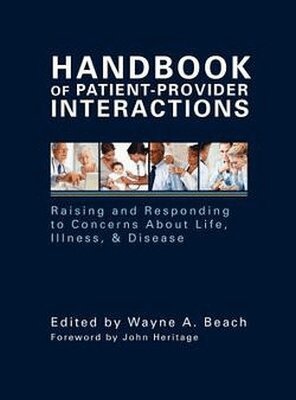
Handbook of Patient-Provider Interaction
Raising and Responding to Concerns About Life, Illness and Disease
Inbunden, Engelska, 2012
2 100 kr
Skickas inom 10-15 vardagar
This Handbook chronicles fifty years of efforts by clinicians, medical scientists, and social science researchers to closely examine communication during medical interviews. Fifty-two chapters have been integrated to provide readers with a diverse sampling of significant contributions during this extended period. The book is a rich tapestry of fundamental questions, innovative methodological approaches, well-reasoned arguments, insightful findings, and grounded suggestions for improving communication during medical interviews. It includes investigations designed to explicate and resolve communication dilemmas, envision therapeutic possibilities, and create hopeful yet realistic futures for patient-provided collaborations and partnerships.
Handbook of Patient-Provider Interactions
Raising and Responding to Concerns About Life, Illness, & Disease
Häftad, Engelska, 2012
818 kr
Skickas inom 10-15 vardagar
This Handbook chronicles fifty years of efforts by clinicians, medical scientists, and social science researchers to closely examine communication during medical interviews. Fifty-two chapters have been integrated to provide readers with a diverse sampling of significant contributions during this extended period. The book is a rich tapestry of fundamental questions, innovative methodological approaches, well-reasoned arguments, insightful findings, and grounded suggestions for improving communication during medical interviews. It includes investigations designed to explicate and resolve communication dilemmas, envision therapeutic possibilities, and create hopeful yet realistic futures for patient-provided collaborations and partnerships.