Wayne Dowler – författare
Visar alla böcker från författaren Wayne Dowler. Handla med fri frakt och snabb leverans.
10 produkter
Classroom and Empire
The Politics of Schooling Russia''s Eastern Nationalities, 1860-1917
Av Wayne Dowler
E-bok, 2000
1072 kr
Lägg i varukorg
Classroom and Empire tells the story of the politics of alphabets, languages, and schooling in the eastern empire of Russia from 1860 to 1917. Wayne Dowler presents an intriguing cast of characters, including Nikolai Il''minskii, whose method of schooling non-Russian children lay at the heart of …
Russia in 1913
Av Wayne Dowler
Inbunden, 2010
2,0 utav 5 stjärnor. Totalt antal röster: (1)
473 kr
Lägg i varukorg
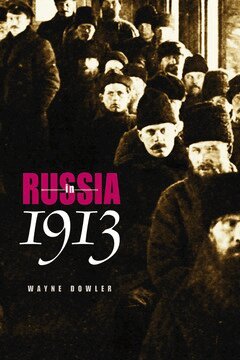
A pivotal year in the history of the Russian Empire, 1913 marks the tercentennial celebration of the Romanov Dynasty, the infamous anti-Semitic Beilis Trial, Russia's first celebration of International Women's Day, the ministerial boycott of the Duma, and the amnestying of numerous prisoners and …
Russia in 1913
Av Wayne Dowler
Häftad, 2012
254 kr
Lägg i varukorg
A pivotal year in the history of the Russian Empire, 1913 marks the tercentennial celebration of the Romanov Dynasty, the infamous anti-Semitic Beilis Trial, Russia's first celebration of International Women's Day, the ministerial boycott of the Duma, and the amnestying of numerous prisoners and …
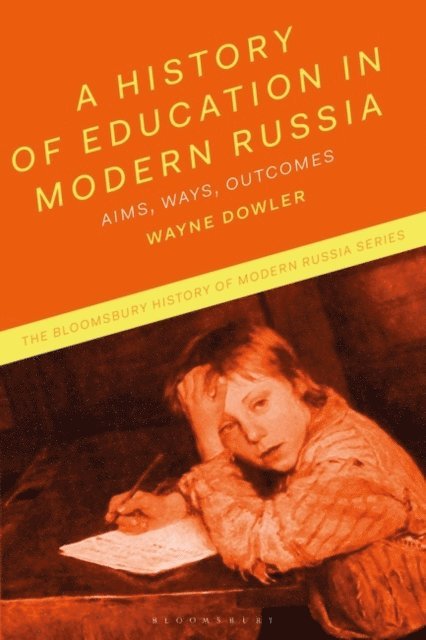
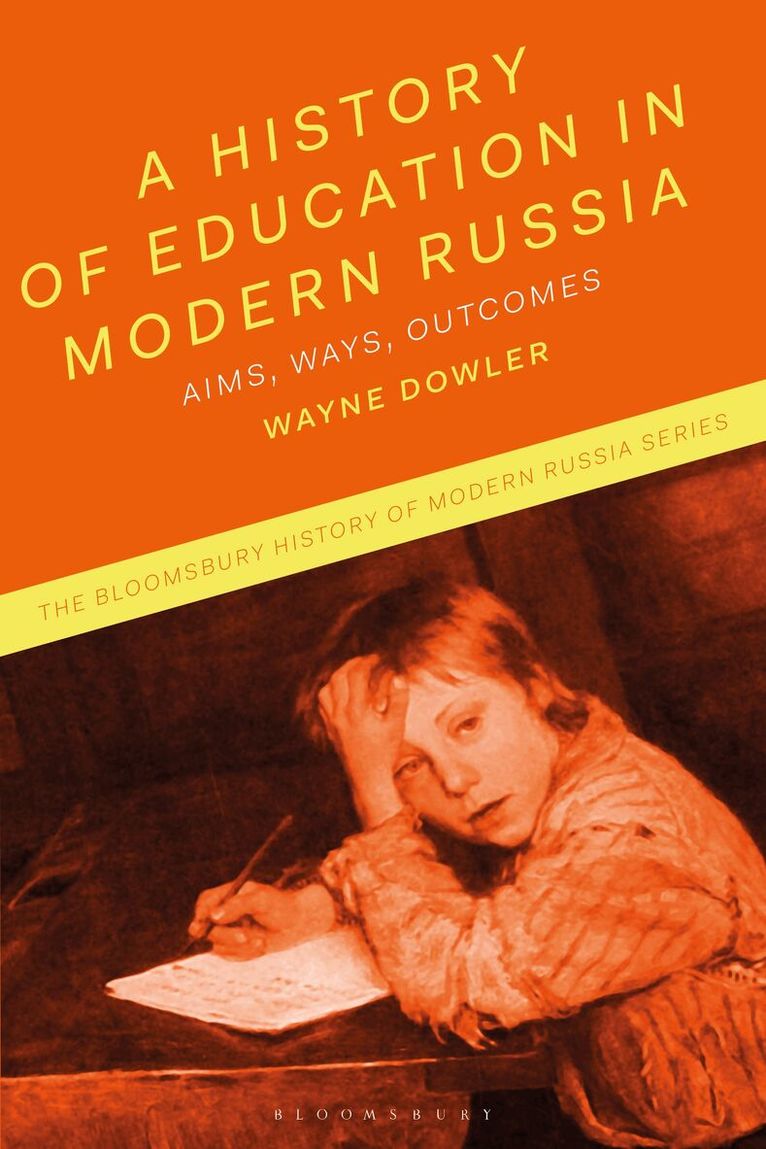
History of Education in Modern Russia
Aims, Ways, Outcomes
Av Wayne Dowler, Ian D. Thatcher m. fl.
Inbunden, 2021
1462 kr
Lägg i varukorg
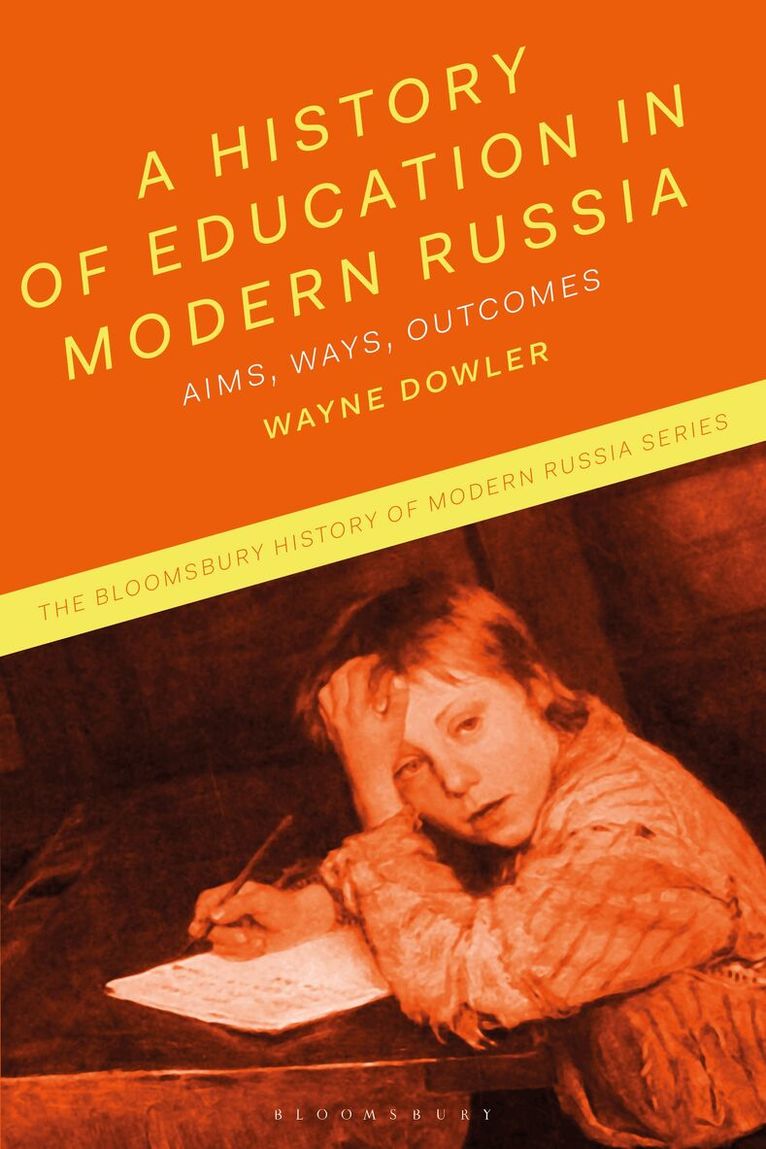
A History of Education in Modern Russia is the first book to trace the significance of education in Russia from Peter the Great’s reign all the way through to Vladimir Putin and the present day.Individual chapters open with an overview of the political, social, diplomatic and cultural environment …
History of Education in Modern Russia
Aims, Ways, Outcomes
Av Wayne Dowler
E-bok, 2021
482 kr
Lägg i varukorg
A History of Education in Modern Russia is the first book to trace the significance of education in Russia from Peter the Great''s reign all the way through to Vladimir Putin and the present day. Individual chapters open with an overview of the political, social, diplomatic and cultural environment …
History of Education in Modern Russia
Aims, Ways, Outcomes
Av Wayne Dowler
E-bok, 2021
466 kr
Lägg i varukorg
A History of Education in Modern Russia is the first book to trace the significance of education in Russia from Peter the Great''s reign all the way through to Vladimir Putin and the present day. Individual chapters open with an overview of the political, social, diplomatic and cultural environment …
History of Education in Modern Russia
Aims, Ways, Outcomes
Av Wayne Dowler, Michael S. Melancon
Häftad, 2023
444 kr
Lägg i varukorg
A History of Education in Modern Russia is the first book to trace the significance of education in Russia from Peter the Great’s reign all the way through to Vladimir Putin and the present day.Individual chapters open with an overview of the political, social, diplomatic and cultural environment …
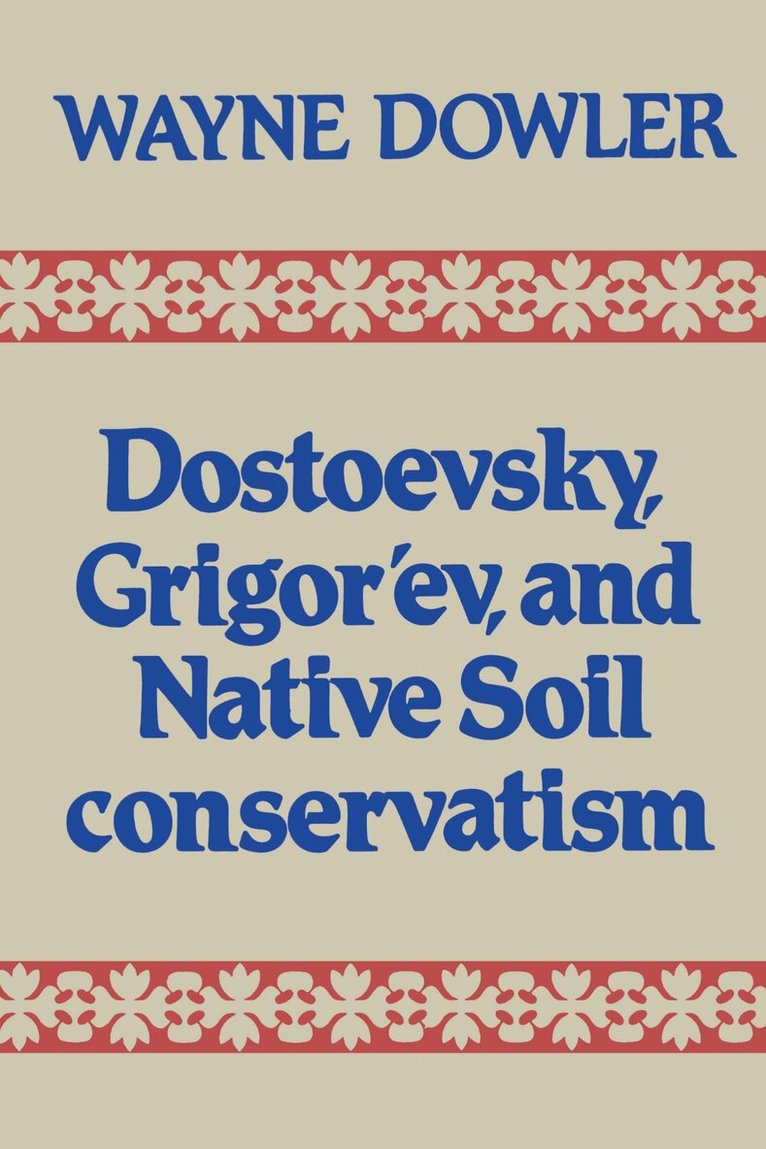
Dostoevsky, Grigor'ev, and Native Soil Conservatism
Av Wayne Dowler
Häftad, 1982
369 kr
Lägg i varukorg
Native soil was a mid-nineteenth-century Russian reaction against materialism and positivism. It emphasized the need for people to live their lives and develop themselves naturally, so that class difference might be reconciled, the achievements of the West fused with the communalism and Christian …
Dostoevsky, Grigor'ev, and Native Soil Conservatism
Av Wayne Dowler
E-bok, 1982
460 kr
Lägg i varukorg
Native soil was a mid-nineteenth-century Russian reaction against materialism and positivism. It emphasized the need for people to live their lives and develop themselves naturally, so that class difference might be reconciled, the achievements of the West fused with the communalism and Christian …
Dostoevsky, Grigor'ev, and Native Soil Conservatism
Av Wayne Dowler
E-bok, 1982
408 kr
Lägg i varukorg
Native soil was a mid-nineteenth-century Russian reaction against materialism and positivism. It emphasized the need for people to live their lives and develop themselves naturally, so that class difference might be reconciled, the achievements of the West fused with the communalism and Christian …