Wayne S. Vucinich – Författare
Visar alla böcker från författaren Wayne S. Vucinich. Handla med fri frakt och snabb leverans.
5 produkter
5 produkter
835 kr
Skickas inom 3-6 vardagar
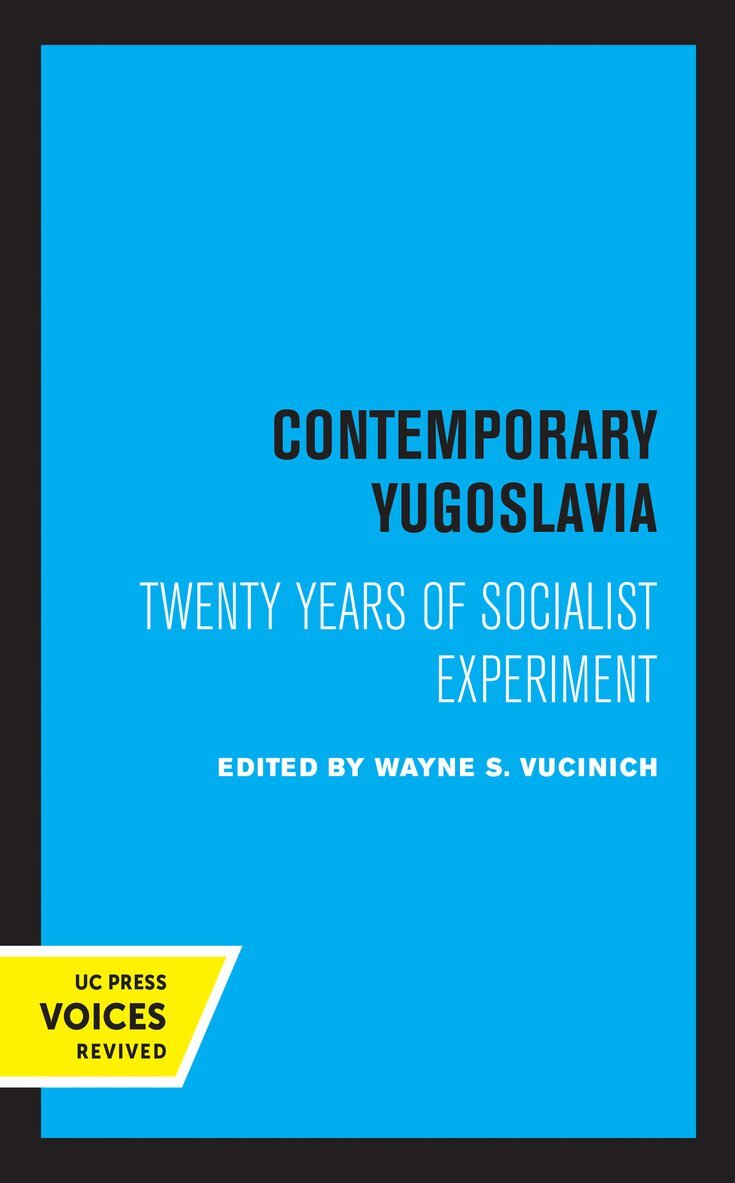
Contemporary Yugoslavia: Twenty Years of Socialist Experiment offers a comprehensive analysis of Yugoslavia's political, economic, and social evolution since World War II. This volume, based on papers presented at a 1965 Stanford University conference, explores pivotal issues such as Yugoslavia's postwar reconstruction, its departure from Stalinist orthodoxy, and the adoption of "national communism." Featuring contributions from leading scholars, the book examines topics like Tito's leadership, the transformation of Yugoslav-Marxist thought, economic decentralization, and the complex nationality problem. The authors highlight Yugoslavia's unique trajectory, blending socialism with capitalistic reforms, and its impact on both domestic stability and international relations.This insightful collection underscores the profound effects of wartime disruptions and Communist policies on Yugoslav society, from social modernization to enduring ethnic tensions. Essays delve into the struggle for national unity amid centrifugal forces, the role of strategic leadership, and the challenges of sustaining liberalization and democratization. For scholars and readers interested in Cold War history, socialist systems, or the Balkan region, this book provides a nuanced understanding of Yugoslavia's revolutionary path and its broader implications for global politics and social change.This title is part of UC Press's Voices Revived program, which commemorates University of California Press’s mission to seek out and cultivate the brightest minds and give them voice, reach, and impact. Drawing on a backlist dating to 1893, Voices Revived makes high-quality, peer-reviewed scholarship accessible once again using print-on-demand technology. This title was originally published in 1969.
1 513 kr
Skickas inom 3-6 vardagar
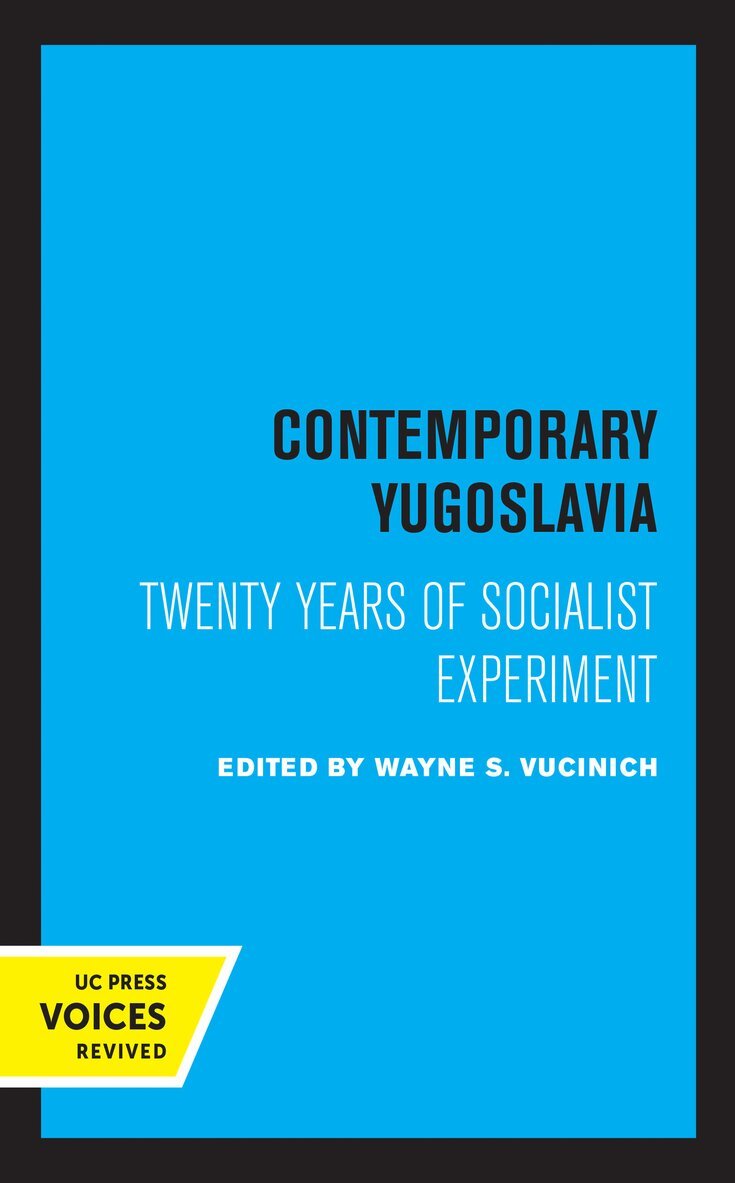
Contemporary Yugoslavia: Twenty Years of Socialist Experiment offers a comprehensive analysis of Yugoslavia's political, economic, and social evolution since World War II. This volume, based on papers presented at a 1965 Stanford University conference, explores pivotal issues such as Yugoslavia's postwar reconstruction, its departure from Stalinist orthodoxy, and the adoption of "national communism." Featuring contributions from leading scholars, the book examines topics like Tito's leadership, the transformation of Yugoslav-Marxist thought, economic decentralization, and the complex nationality problem. The authors highlight Yugoslavia's unique trajectory, blending socialism with capitalistic reforms, and its impact on both domestic stability and international relations.This insightful collection underscores the profound effects of wartime disruptions and Communist policies on Yugoslav society, from social modernization to enduring ethnic tensions. Essays delve into the struggle for national unity amid centrifugal forces, the role of strategic leadership, and the challenges of sustaining liberalization and democratization. For scholars and readers interested in Cold War history, socialist systems, or the Balkan region, this book provides a nuanced understanding of Yugoslavia's revolutionary path and its broader implications for global politics and social change.This title is part of UC Press's Voices Revived program, which commemorates University of California Press’s mission to seek out and cultivate the brightest minds and give them voice, reach, and impact. Drawing on a backlist dating to 1893, Voices Revived makes high-quality, peer-reviewed scholarship accessible once again using print-on-demand technology. This title was originally published in 1969.
699 kr
Skickas inom 7-10 vardagar
The essays in this 1982 volume result from a conference held at Stanford University in 1978, assembled to assess the overall character and significance of the prerevolutionary Russian experiment with the principle and practice of local self-government, the zemstvo, over half of its existence, 1864-1918. The unifying theme of the collection is the rejection of the liberal myth of the zemstvo as an instrument of social integration. The chapters focus on the substantive elements of conflict and tension that existed within the zemstvos, especially between the institutions' two principal groups: the landed gentry, who dominated the zemstvo, and the peasants, who constituted the majority of the population and were intended to the beneficiaries of most of the economic and cultural programs, yet had little part in their formation. Based on the contributors' extensive knowledge of their respective subjects, many of them provide information from previously unpublished materials in Soviet and American archives.
524 kr
Tillfälligt slut
338 kr
Skickas inom 10-15 vardagar
A Stanford University Press classic.