Wenda R. Trevathan - Böcker
Visar alla böcker från författaren Wenda R. Trevathan. Handla med fri frakt och snabb leverans.
5 produkter
5 produkter
1 182 kr
Skickas inom 5-8 vardagar
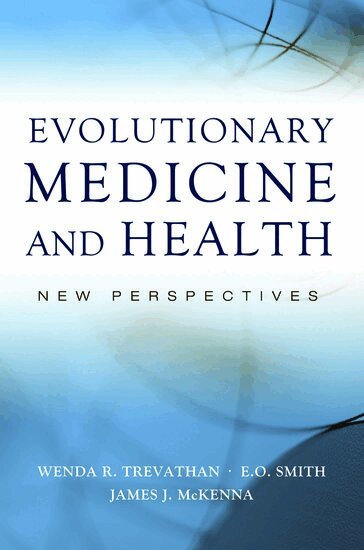
Building on the success of their groundbreaking anthology Evolutionary Medicine (OUP, 1999), Wenda R. Trevathan, E. O. Smith, and James J. McKenna provide an up-to-date and thought-provoking introduction to the field with this new collection of essays. Ideal for courses in evolutionary medicine, medical anthropology, and the evolution of human disease, Evolutionary Medicine and Health: New Perspectives presents twenty-three original articles that examine how human evolution relates to a broad range of contemporary health problems including infectious, chronic, nutritional, and mental diseases and disorders. Topics covered include disease susceptibility in cultural context, substance abuse and addiction, sleep disorders, preeclampsia, altitude-related hypoxia, the biological context of menstruation, and the role of stress in modern life. An international team of preeminent scholars in biological anthropology, medicine, biology, psychology, and geography contributed the selections. Together they represent a uniquely integrative and multidisciplinary approach that takes into account the dialogue between biology and culture as it relates to understanding, treating, and preventing disease. A common theme throughout is the description of cases in which biological human development conflicts with culturally based individual behaviors that determine health outcomes. Detailed, evidence-based arguments make the case that all aspects of the human condition covered in the volume have an evolutionary basis, while theoretical discussions using other empirical evidence critique the gaps that still remain in evolutionary approaches to health.Evolutionary Medicine and Health: New Perspectives features an introductory overview that covers the field's diverse array of topics, questions, lines of evidence, and perspectives. In addition, the editors provide introductions to each essay and an extensive bibliography that represents a state-of-the-art survey of the literature. A companionwebsite at www.oup.com/us/evolmed offers a full bibliography and links to source articles, reports, and databases. Written in an engaging style that is accessible to students, professionals, and general readers, this book offers a unique look at how an evolutionary perspective has become increasingly relevant to the health field and medical practice.
2 296 kr
Skickas inom 3-6 vardagar
Building on the success of their groundbreaking anthology Evolutionary Medicine (OUP, 1999), Wenda R. Trevathan, E. O. Smith, and James J. McKenna provide an up-to-date and thought-provoking introduction to the field with this new collection of essays. Ideal for courses in evolutionary medicine, medical anthropology, and the evolution of human disease, Evolutionary Medicine and Health: New Perspectives presents twenty-three original articles that examine how human evolution relates to a broad range of contemporary health problems including infectious, chronic, nutritional, and mental diseases and disorders. Topics covered include disease susceptibility in cultural context, substance abuse and addiction, sleep disorders, preeclampsia, altitude-related hypoxia, the biological context of menstruation, and the role of stress in modern life. An international team of preeminent scholars in biological anthropology, medicine, biology, psychology, and geography contributed the selections.Together they represent a uniquely integrative and multidisciplinary approach that takes into account the dialogue between biology and culture as it relates to understanding, treating, and preventing disease. A common theme throughout is the description of cases in which biological human development conflicts with culturally based individual behaviors that determine health outcomes. Detailed, evidence-based arguments make the case that all aspects of the human condition covered in the volume have an evolutionary basis, while theoretical discussions using other empirical evidence critique the gaps that still remain in evolutionary approaches to health. Evolutionary Medicine and Health: New Perspectives features an introductory overview that covers the field's diverse array of topics, questions, lines of evidence, and perspectives. In addition, the editors provide introductions to each essay and an extensive bibliography that represents a state-of-the-art survey of the literature. A companion website at www.oup.com/us/evolmed offers a full bibliography and links to source articles, reports, and databases.Written in an engaging style that is accessible to students, professionals, and general readers, this book offers a unique look at how an evolutionary perspective has become increasingly relevant to the health field and medical practice.
2 162 kr
Skickas inom 10-15 vardagar
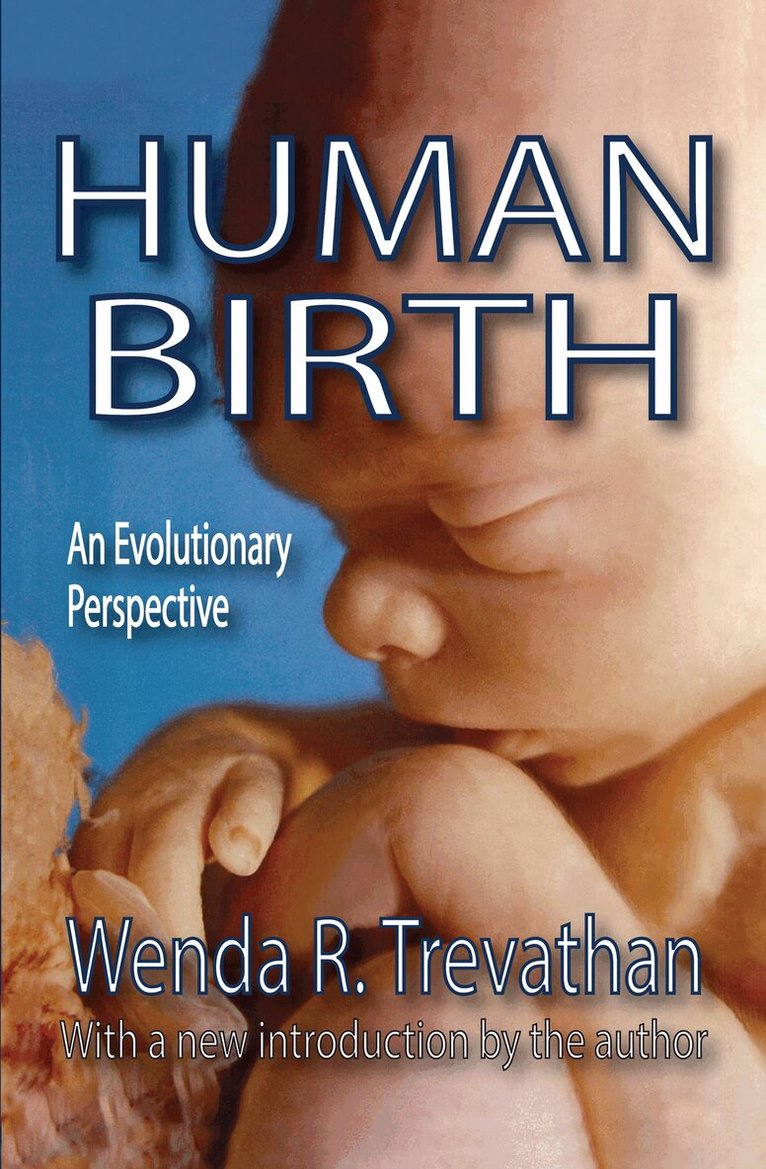
The story of human evolution has been told hundreds of times, each time with a focus that seems most informative of the teller. No matter how it is told the primary characters are rarely mothers and infants. Darwin argued survival, but today we know that reproduction is what evolution is all about. Centering on this, Trevathan focuses on birth, which gives the study of human evolution a crucial new dimension.Unique among mammals, humans are bipedal. The evolution of bipedalism required fundamental changes in the pelvis and resulted in a narrow birth canal. Humans are also large-brained animals, which means that birth is much more challenging for our species than for most other animals. The result of this mismatch of large head and narrow pelvis is that women are highly dependent on assistance at birth and their babies are born in an unusually undeveloped state when the brain is still small. Human Birth discusses how the birth process has evolved and ways in which human birth differs from birth in all other mammals.Human Birth is also concerned with mother-infant interaction immediately after birth. While working as a midwife trainee, Trevathan carefully documented the births of more than one hundred women and recorded maternal and infant behaviors during the first hour after birth. She suggests ways in which the interactions served not only to enhance mother-infant bonding, but also to ensure survival in the evolutionary past. With clarity and compelling logic Trevathan argues that modern birth practices often fail to meet evolved needs of women and infants and suggests changes that could lead to better birth experiences. This paperback edition includes a new introduction by the author.
412 kr
Skickas inom 7-10 vardagar
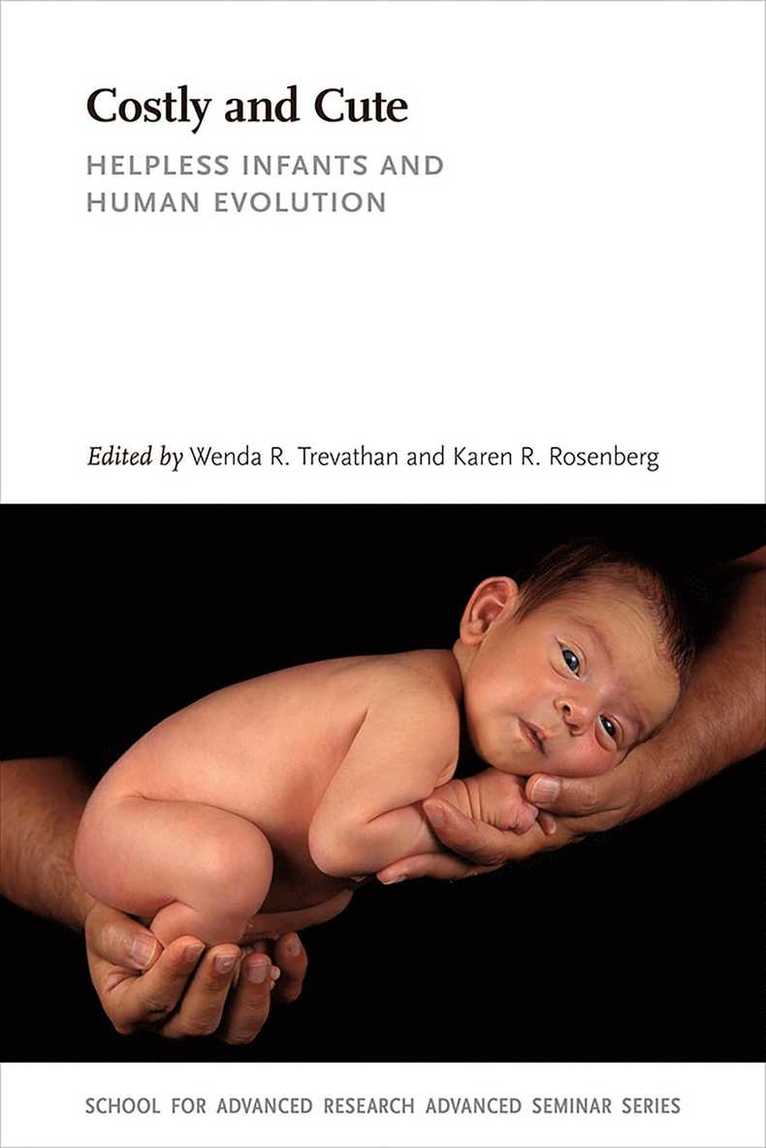
Scholars have long argued that the developmental state of the human infant at birth is unique. This volume expands that argument, pointing out that many distinctively human characteristics can be traced to the fact that we give birth to infants who are highly dependent on others and who learn how to be human while their brains are experiencing growth unlike that seen in other primates. The contributors to this volume propose that the ""helpless infant"" has played a role in human evolution equal in importance to those of ""man the hunter"" and ""woman the gatherer."" The authors take a broad look at how human infants are similar to and different from the infants of other species, at how our babies have constrained our evolution over the past six million years, and at how they continue to shape the ways we live today.
668 kr
Skickas inom 10-15 vardagar
The story of human evolution has been told hundreds of times, each time with a focus that seems most informative of the teller. No matter how it is told the primary characters are rarely mothers and infants. Darwin argued survival, but today we know that reproduction is what evolution is all about. Centering on this, Trevathan focuses on birth, which gives the study of human evolution a crucial new dimension.Unique among mammals, humans are bipedal. The evolution of bipedalism required fundamental changes in the pelvis and resulted in a narrow birth canal. Humans are also large-brained animals, which means that birth is much more challenging for our species than for most other animals. The result of this mismatch of large head and narrow pelvis is that women are highly dependent on assistance at birth and their babies are born in an unusually undeveloped state when the brain is still small. Human Birth discusses how the birth process has evolved and ways in which human birth differs from birth in all other mammals.Human Birth is also concerned with mother-infant interaction immediately after birth. While working as a midwife trainee, Trevathan carefully documented the births of more than one hundred women and recorded maternal and infant behaviors during the first hour after birth. She suggests ways in which the interactions served not only to enhance mother-infant bonding, but also to ensure survival in the evolutionary past. With clarity and compelling logic Trevathan argues that modern birth practices often fail to meet evolved needs of women and infants and suggests changes that could lead to better birth experiences. This paperback edition includes a new introduction by the author.