Wendy Custable – författare
434 kr
Läs direkt efter köp
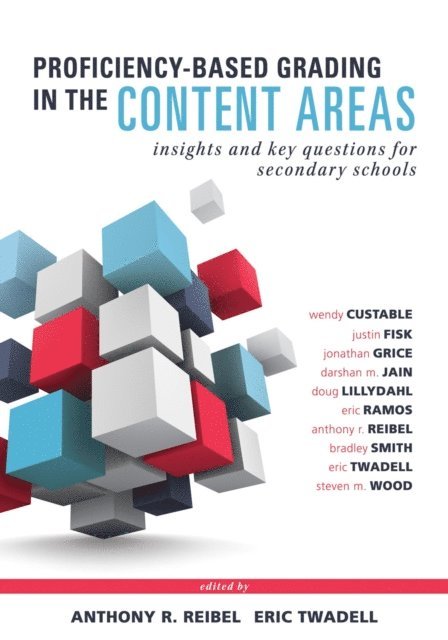
No matter the content area, evidence-based grading puts student growth at the heart of the classroom. Designed for teachers and administrators of grades 6-12, Proficiency-Based Grading in the Content Areas details a five-step approach for implementing evidence-based grading and maintaining its effectiveness over time. This book equips any educator -- from technical to fine arts -- with the tools and support to make this important shift.
Use proficiency-based grading (also known as evidence-based grading) to drive student success:
Become familiar with the basic concepts and essential decisions of evidence-based grading that apply to all content areas.Learn the five phases of implementing proficiency-based grading -- (1) preparation, (2) incubation, (3) insight, (4) evaluation, and (5) elaboration.Explore the steps, paradigm shifts, and pedagogy necessary to implement proficiency-based grading in a particular content area.Study individual-level and institutional-level grading decisions and how they differ from each other.Understand how proficiency-based grading differs from content area to content area and the unique benefits it offers to each.Contents:IntroductionChapter 1: Implementing Proficiency-Based Grading With Core Belief FidelityChapter 2: Implementing Evidence-Based Reporting in Career and Technical EducationChapter 3: Implementing Evidence-Based Grading in English Language ArtsChapter 4: Implementing Evidence-Based Grading in Fine ArtsChapter 5: Implementing Evidence-Based Grading in MathematicsChapter 6: Implementing Evidence-Based Grading in Physical Education and HealthChapter 7: Implementing Evidence-Based Grading in SciencesChapter 8: Implementing Evidence-Based Grading in Social SciencesChapter 9: Implementing Evidence-Based Grading in World LanguagesEpilogue: Creating Self-Reliant LearnersReferences and ResourcesIndex
400 kr
Läs direkt efter köp
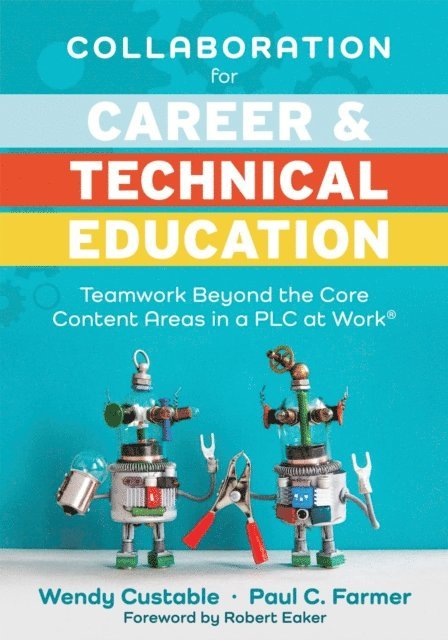
All teachers--including career and technical education (CTE) teachers--play a vital role in building a thriving PLC. In this practical resource, the authors explicitly outline how to improve teaching and learning by integrating PLC best practices into CTE programs. Teams of CTE educators will learn how to clarify their purpose, discover their common denominators, and incorporate powerful collaborative processes into their daily work.
Use this resource to learn the vital strategies necessary for building and improving teams:
Become familiar with the common issues that prevent CTE educators from engaging in the collaborative PLC process.Learn why and how the PLC process benefits both CTE educators and students.Learn how CTE educators can create collaborative programs that are tailored toward CTE fields of study.Receive professional guidance and concrete, achievable teaching strategies for creating an effective PLC process.Access a checklist of crucial action steps for career tech teams at the end of each chapter.Contents:IntroductionChapter 1: Establishing a Collaborative CultureChapter 2: Forming Collaborative TeamsChapter 3: Setting Up the Logistics of TeamworkChapter 4: Identifying Essential Learnings and Developing CTE CurriculumChapter 5: Designing Instruction and AssessmentsChapter 6: Reflecting on DataChapter 7: Responding to Student LearningEpilogue: Turning Parking Spaces Into Rest SpacesAppendix A: Glossary of TermsAppendix B: Reproducibles