Wendy N. Whitman Cobb - Böcker
Visar alla böcker från författaren Wendy N. Whitman Cobb. Handla med fri frakt och snabb leverans.
10 produkter
10 produkter
2 103 kr
Skickas inom 10-15 vardagar
This book explores the privatization of space and its global impact on the future of commerce, peace and conflict. As space becomes more congested, contested, and competitive in the government and the private arenas, the talk around space research moves past NASA’s monopoly on academic and cultural imaginations to discuss how Elon Musk’s SpaceX and Jeff Bezos’ Blue Origin is making space "cool" again.This volume addresses the new rhetoric of space race and weaponization, with a focus on how the costs of potential conflict in space would discourage open conflict and enable global cooperation. It highlights the increasing dependence of the global economy on space research, its democratization, plunging costs of access, and growing economic potential of space-based assets.Thoughtful, nuanced, well-documented, this book is a must read for scholars and researchers of science and technology studies, space studies, political studies, sociology, environmental studies, and political economy. It will also be of much interest to policymakers, bureaucrats, think tanks, as well as the interested general reader looking for fresh perspectives on the future of space.
575 kr
Skickas inom 10-15 vardagar
This book explores the privatization of space and its global impact on the future of commerce, peace and conflict. As space becomes more congested, contested, and competitive in the government and the private arenas, the talk around space research moves past NASA’s monopoly on academic and cultural imaginations to discuss how Elon Musk’s SpaceX and Jeff Bezos’ Blue Origin is making space "cool" again.This volume addresses the new rhetoric of space race and weaponization, with a focus on how the costs of potential conflict in space would discourage open conflict and enable global cooperation. It highlights the increasing dependence of the global economy on space research, its democratization, plunging costs of access, and growing economic potential of space-based assets.Thoughtful, nuanced, well-documented, this book is a must read for scholars and researchers of science and technology studies, space studies, political studies, sociology, environmental studies, and political economy. It will also be of much interest to policymakers, bureaucrats, think tanks, as well as the interested general reader looking for fresh perspectives on the future of space.
1 526 kr
Skickas inom 5-8 vardagar
Political Science Today by Wendy Whitman Cobb gives students a holistic view of political science by dedicating one chapter to each area of study within the discipline. The Second Edition uses a field-based approach that allows students to sample what the major has to offer and come away with a basic understanding of how politics—any kind of politics—affects their everyday lives. The book also provides students with an overview of the skills and possibilities they'll encounter as majors, including developing critical thinking skills, conducting and consuming research, and understanding the unique career opportunities after graduation. The book's table of contents begins with foundational tools like theories and research methods, then builds up to subfield chapters on Comparative Politics, International Relations, American Government, Political Economy, and Public Policy and Administration.
552 kr
Skickas inom 10-15 vardagar
Unbroken Government demonstrates how institutional and electoral characteristics present since the writing of the Constitution influence policy development. Utilizing policy areas as diverse as human spaceflight, clean air, homeland security, and foreign policy, this work shows how these patterns manifest themselves in the policymaking process.
552 kr
Skickas inom 10-15 vardagar
Unbroken Government demonstrates how institutional and electoral characteristics present since the writing of the Constitution influence policy development. Utilizing policy areas as diverse as human spaceflight, clean air, homeland security, and foreign policy, this work shows how these patterns manifest themselves in the policymaking process.
675 kr
Skickas inom 10-15 vardagar
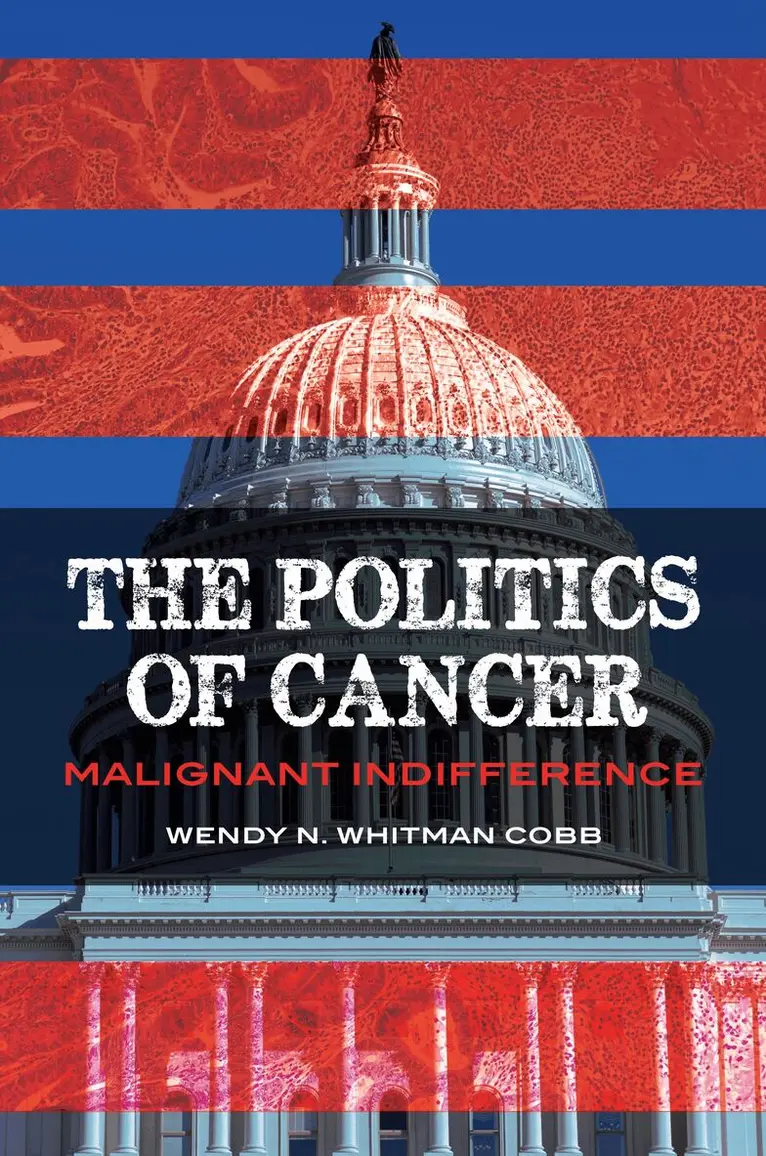
This book examines the politics of cancer, explains how our government is intrinsically tied to cancer research efforts, and documents how major political actors make cancer policy and are influenced in their decision making by political, social, scientific, and economic variables.Is whether we contract cancer—and whether we survive the disease, if we get it—largely just a result of good versus bad luck, or are these outcomes regarding cancer tied to the policies and actions of our federal government? Cancer-treating drug development and approval is overseen by the U.S. Food and Drug Administration, billions of dollars of federal money are devoted towards cancer research, and exposure of citizens to potentially cancer-causing environments or chemicals is regulated by the Environmental Protection Agency. Additionally, all of these factors can be affected by the political motivations of our most powerful politicians.The Politics of Cancer: Malignant Indifference analyzes the policy environment of cancer in America: the actors, the political institutions, the money, and the disease itself, identifying how haphazard U.S. government policy toward cancer research has been and how the president, Congress, government bureaucracies, and even the cancer industry have failed to meet timelines and make the expected discoveries. Whitman Cobb examines funding for the National Cancer Institute and the roles of the executive, Congress, policy entrepreneurs, and the bureaucracy as well as that of the state of cancer science. She argues that despite the so-called "war on cancer," no strategic, comprehensive government policy has been imposed—leading to an indecisive cancer policy that has significantly impeded cancer research.Written from a political science perspective, the book offers insight into the realities of science policy and the ways in which the federal government is both the source of funding for much of cancer research and often deficient in setting comprehensive and consistent anti-cancer policy. Readers will come to understand how Congress, the president, the bureaucracy, and the cancer industry all share responsibility for the current state of cancer policy confusion and consider whether pharmaceutical companies, for-profit cancer treatment hospitals, and interest groups like the American Cancer Society have a personal incentive to keep the fight alive.
1 762 kr
Skickas inom 3-6 vardagar
646 kr
Skickas inom 10-15 vardagar
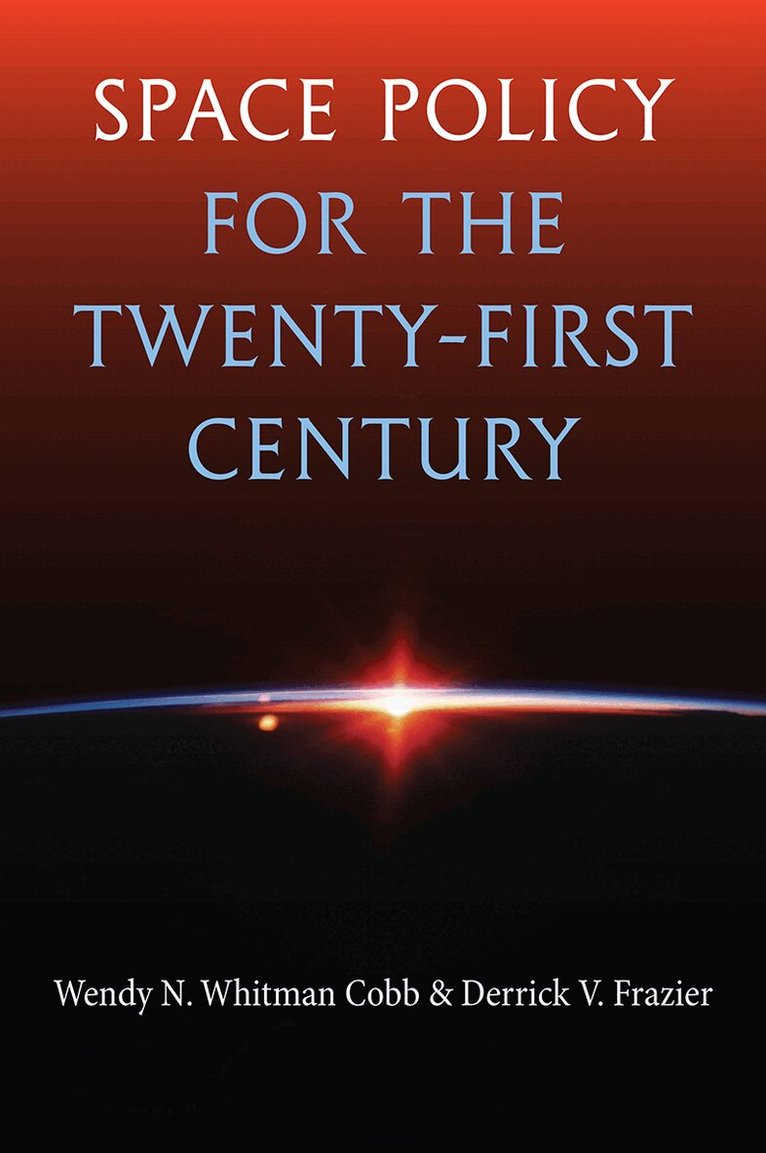
A foundational, accessible overview of space policy in the United StatesThis book provides readers with the first comprehensive overview of major space policies in the United States and a framework through which to analyze them. It examines all facets of space policy—civilian, military, and commercial—and presents this material accessibly for use at multiple levels, from undergraduate courses to government practitioners making and implementing policy.The first section offers a history of space exploration, focusing on the US within a global context. The second section looks at the actors and institutions involved in setting space policy in a government based on the separation of powers, including the president, Congress, NASA, and the Department of Defense. The book concludes with chapters on the different sectors of space policy as well as questions this field will face in the future. As policymakers and business leaders become increasingly aware of the everyday systems that depend on space technologies, such as communications, mapping, and weather monitoring, and as space becomes a more visible arena for commercial competition, potential humanitarian gain, and military threats, Space Policy for the Twenty-First Century helps students and professionals navigate the complexity of space as a policy area.
1 130 kr
Kommande
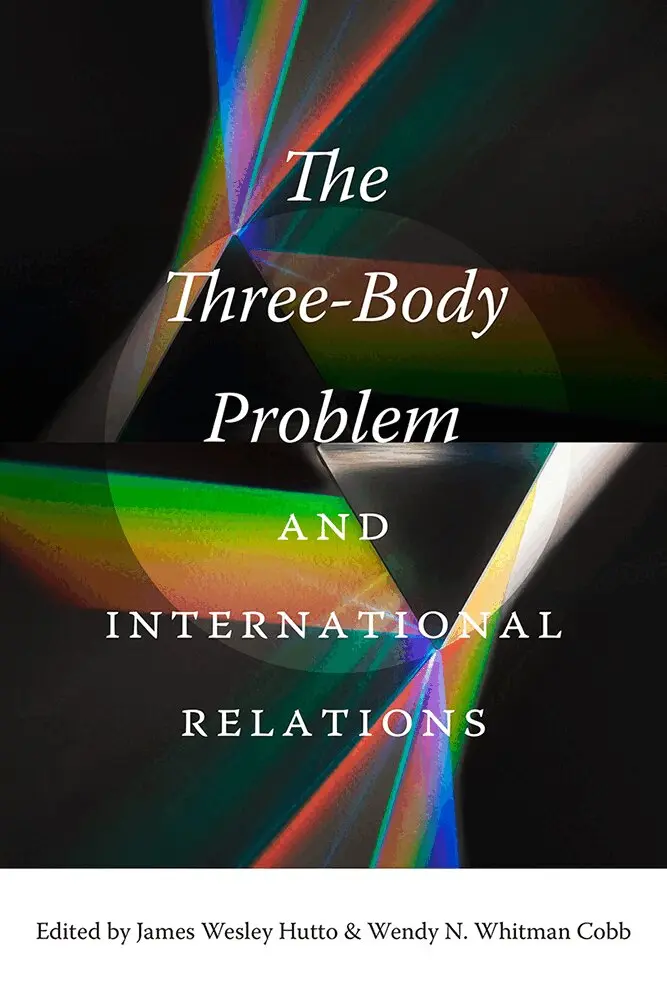
An introduction to key concepts in international relations and strategy through the interstellar narratives of Cixin Liu’s Hugo Award–winning trilogyScience fiction has long examined social, political, and moral issues through imagined worlds. This book uses Chinese author Cixin Liu’s award-winning trilogy as a teaching tool to illustrate complex theories of international relations. Comprising the novels The Three-Body Problem, The Dark Forest, and Death’s End, the trilogy has been recognized for the ways in which, over a galactic scale of time and place, the stories explore how civilizations see each other and engage in strategic conflict. In this book, leading scholars draw on key moments from the trilogy to help demonstrate complex concepts such as deterrence, diplomacy, negotiation, competition, agency, game theory, colonialism, and feminist theory, as well as multiple levels of military strategy. By linking these stories to global politics and strategy, both on Earth and in space, “The Three-Body Problem” and International Relations offers an engaging, accessible introduction to concepts humans currently grapple with in the realms of global politics, foreign policy, and strategy.
394 kr
Skickas inom 10-15 vardagar
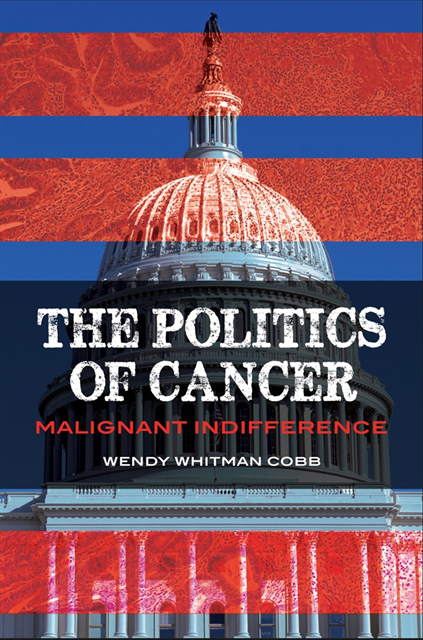
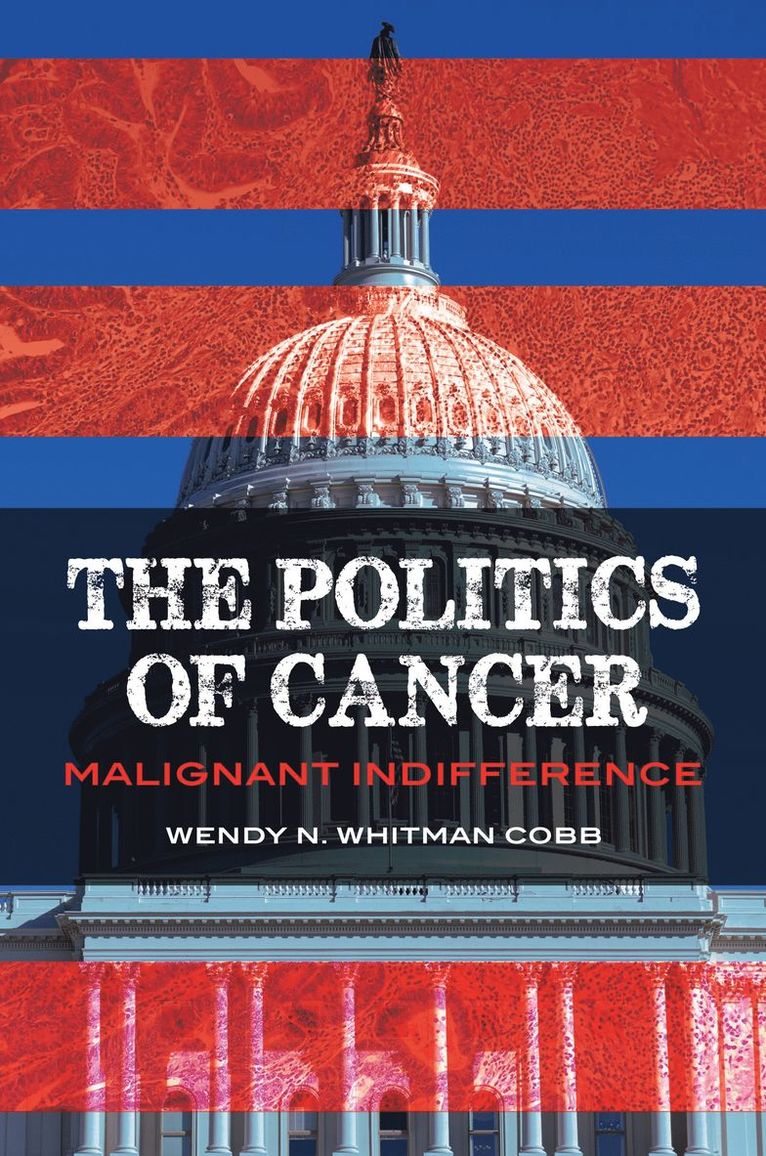
This book examines the politics of cancer, explains how our government is intrinsically tied to cancer research efforts, and documents how major political actors make cancer policy and are influenced in their decision making by political, social, scientific, and economic variables.Is whether we contract cancer—and whether we survive the disease, if we get it—largely just a result of good versus bad luck, or are these outcomes regarding cancer tied to the policies and actions of our federal government? Cancer-treating drug development and approval is overseen by the U.S. Food and Drug Administration, billions of dollars of federal money are devoted towards cancer research, and exposure of citizens to potentially cancer-causing environments or chemicals is regulated by the Environmental Protection Agency. Additionally, all of these factors can be affected by the political motivations of our most powerful politicians.The Politics of Cancer: Malignant Indifference analyzes the policy environment of cancer in America: the actors, the political institutions, the money, and the disease itself, identifying how haphazard U.S. government policy toward cancer research has been and how the president, Congress, government bureaucracies, and even the cancer industry have failed to meet timelines and make the expected discoveries. Whitman Cobb examines funding for the National Cancer Institute and the roles of the executive, Congress, policy entrepreneurs, and the bureaucracy as well as that of the state of cancer science. She argues that despite the so-called "war on cancer," no strategic, comprehensive government policy has been imposed—leading to an indecisive cancer policy that has significantly impeded cancer research.Written from a political science perspective, the book offers insight into the realities of science policy and the ways in which the federal government is both the source of funding for much of cancer research and often deficient in setting comprehensive and consistent anti-cancer policy. Readers will come to understand how Congress, the president, the bureaucracy, and the cancer industry all share responsibility for the current state of cancer policy confusion and consider whether pharmaceutical companies, for-profit cancer treatment hospitals, and interest groups like the American Cancer Society have a personal incentive to keep the fight alive.