Wenfang Tang - Böcker
Visar alla böcker från författaren Wenfang Tang. Handla med fri frakt och snabb leverans.
10 produkter
10 produkter
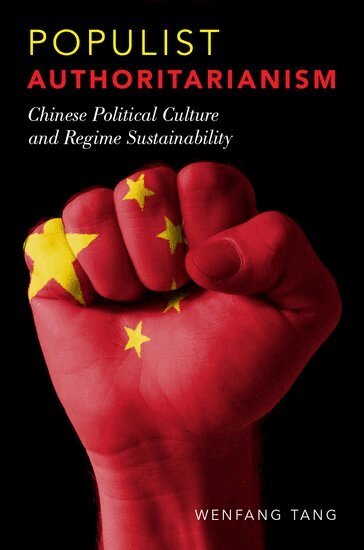
Populist Authoritarianism
Chinese Political Culture and Regime Sustainability
Inbunden, Engelska, 2016
1 757 kr
Skickas inom 5-8 vardagar
Populist Authoritarianism focuses on the Chinese Communist Party, which governs the world's largest population in a single-party authoritarian state. Wenfang Tang attempts to explain the seemingly contradictory trends of the increasing number of protests on the one hand, and the results of public opinion surveys that consistently show strong government support on the other hand. The book points to the continuity from the CCP's revolutionary experiences to its current governing style, even though China has changed in many ways on the surface in the post-Mao era. The book proposes a theoretical framework of Populist Authoritarianism with six key elements, including the Mass Line ideology, accumulation of social capital, public political activism and contentious politics, a government that is responsive to hype, weak political and civil institutions, and a high level of regime trust. These traits of Populist Authoritarianism are supported by empirical evidence drawn from multiple public opinion surveys conducted from 1987 to 2014. Although the CCP currently enjoys strong public support, such a system is inherently vulnerable due to its institutional deficiency. Public opinion can swing violently due to policy failure and the up and down of a leader or an elite faction. The drastic change of public opinion cannot be filtered through political institutions such as elections and the rule of law, creating system-wide political earthquakes.
459 kr
Skickas inom 5-8 vardagar
Populist Authoritarianism focuses on the Chinese Communist Party, which governs the world's largest population in a single-party authoritarian state. Wenfang Tang attempts to explain the seemingly contradictory trends of the increasing number of protests on the one hand, and the results of public opinion surveys that consistently show strong government support on the other hand. The book points to the continuity from the CCP's revolutionary experiences to its current governing style, even though China has changed in many ways on the surface in the post-Mao era. The book proposes a theoretical framework of Populist Authoritarianism with six key elements, including the Mass Line ideology, accumulation of social capital, public political activism and contentious politics, a government that is responsive to hype, weak political and civil institutions, and a high level of regime trust. These traits of Populist Authoritarianism are supported by empirical evidence drawn from multiple public opinion surveys conducted from 1987 to 2014. Although the CCP currently enjoys strong public support, such a system is inherently vulnerable due to its institutional deficiency. Public opinion can swing violently due to policy failure and the up and down of a leader or an elite faction. The drastic change of public opinion cannot be filtered through political institutions such as elections and the rule of law, creating system-wide political earthquakes.
1 456 kr
Skickas inom 3-6 vardagar
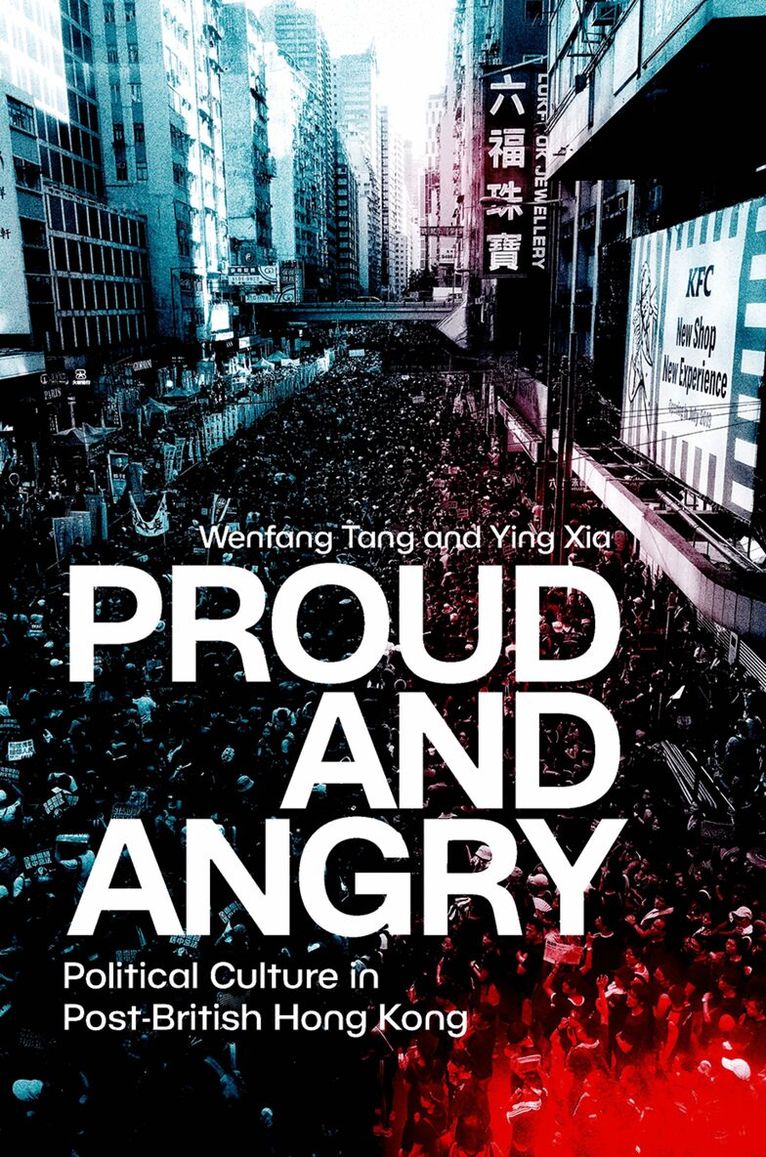
Proud and Angry addresses the question of what drove two million Hongkongers to the streets in 2019 in the largest ever protest in this post-colonial society. It answers this question by examining Hong Kong's unique post-colonial political culture where the former colonists left but the new ruler was unable to establish itself under the institutional design of One Country Two Systems. In this political vacuum, local Hongkongers desperately searched for a new political identity based on Hong Kong's indigenous culture; they felt angry about being abandoned by the British but were too proud to be associated with the Chinese mainlanders who are perceived as newly rich but unsophisticated. They accepted Chinese sovereignty in Hong Kong but resisted being integrated into the Chinese state. They demonstrated a strong populist tendency to protest on the street even after the passage of the Hong Kong National Security Law. As for the factors that encouraged the development of this political culture, the book shows that the resistance to mandarin education, the pro-Western legal system, the anti-China media led by Apple Daily, the refusal to implement patriotic education in schools all contributed to the hostility of Hongkongers toward Beijing. Large-scale protest can still be triggered unless changes are made in language policy, school curriculum, the media environment and the legal system. This study draws solid empirical evidence from a territory-wide public opinion survey. Through multiple embedded survey experiments and an innovative statistical weighting technique, the book detects a large amount of public resistance to the Chinese state that was otherwise hidden due to the respondents' fear of political retribution. In addition to improving public opinion survey methodology, this study contributes to the political culture literature by presenting a distinctive transitional post-colonial culture that follows neither the colonial mentality nor the will of the new ruler.
497 kr
Skickas inom 3-6 vardagar
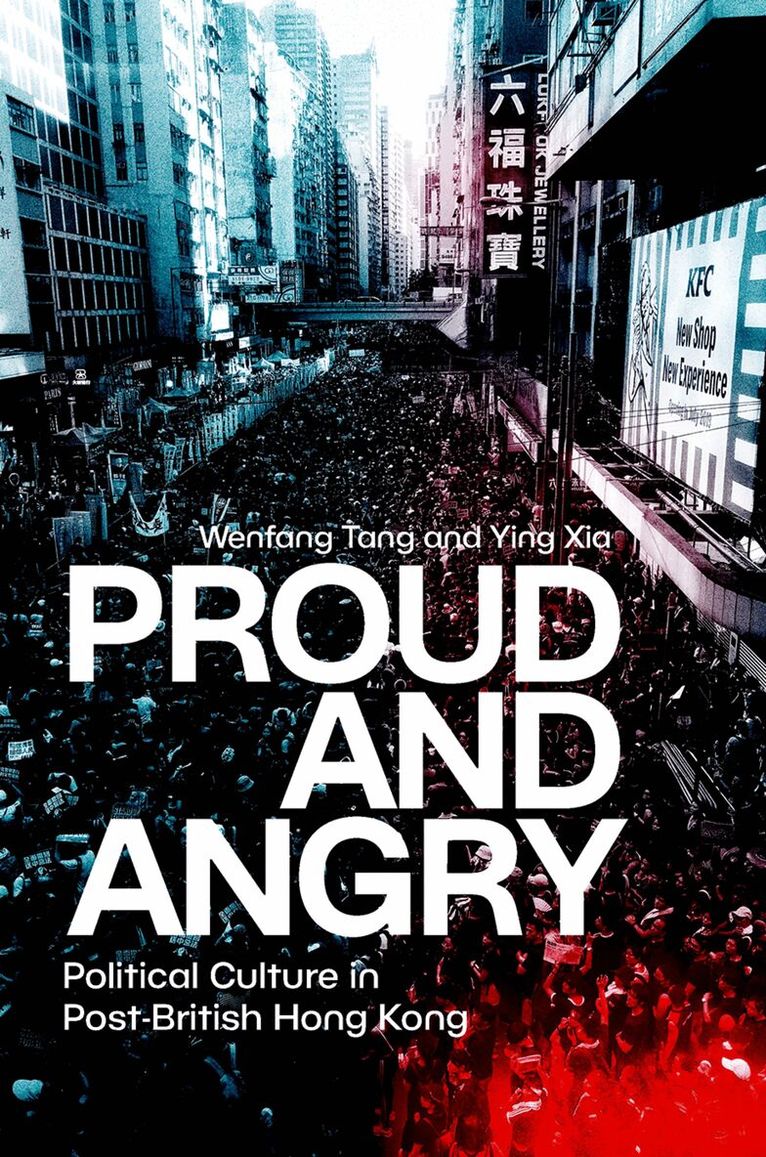
Proud and Angry addresses the question of what drove two million Hongkongers to the streets in 2019 in the largest ever protest in this post-colonial society. It answers this question by examining Hong Kong's unique post-colonial political culture where the former colonists left but the new ruler was unable to establish itself under the institutional design of One Country Two Systems. In this political vacuum, local Hongkongers desperately searched for a new political identity based on Hong Kong's indigenous culture; they felt angry about being abandoned by the British but were too proud to be associated with the Chinese mainlanders who are perceived as newly rich but unsophisticated. They accepted Chinese sovereignty in Hong Kong but resisted being integrated into the Chinese state. They demonstrated a strong populist tendency to protest on the street even after the passage of the Hong Kong National Security Law. As for the factors that encouraged the development of this political culture, the book shows that the resistance to mandarin education, the pro-Western legal system, the anti-China media led by Apple Daily, the refusal to implement patriotic education in schools all contributed to the hostility of Hongkongers toward Beijing. Large-scale protest can still be triggered unless changes are made in language policy, school curriculum, the media environment and the legal system. This study draws solid empirical evidence from a territory-wide public opinion survey. Through multiple embedded survey experiments and an innovative statistical weighting technique, the book detects a large amount of public resistance to the Chinese state that was otherwise hidden due to the respondents' fear of political retribution. In addition to improving public opinion survey methodology, this study contributes to the political culture literature by presenting a distinctive transitional post-colonial culture that follows neither the colonial mentality nor the will of the new ruler.
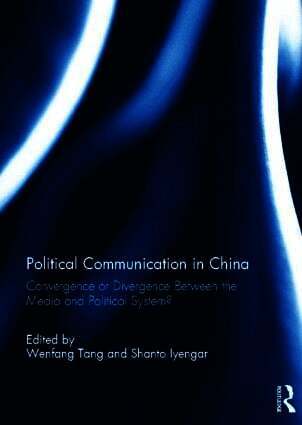
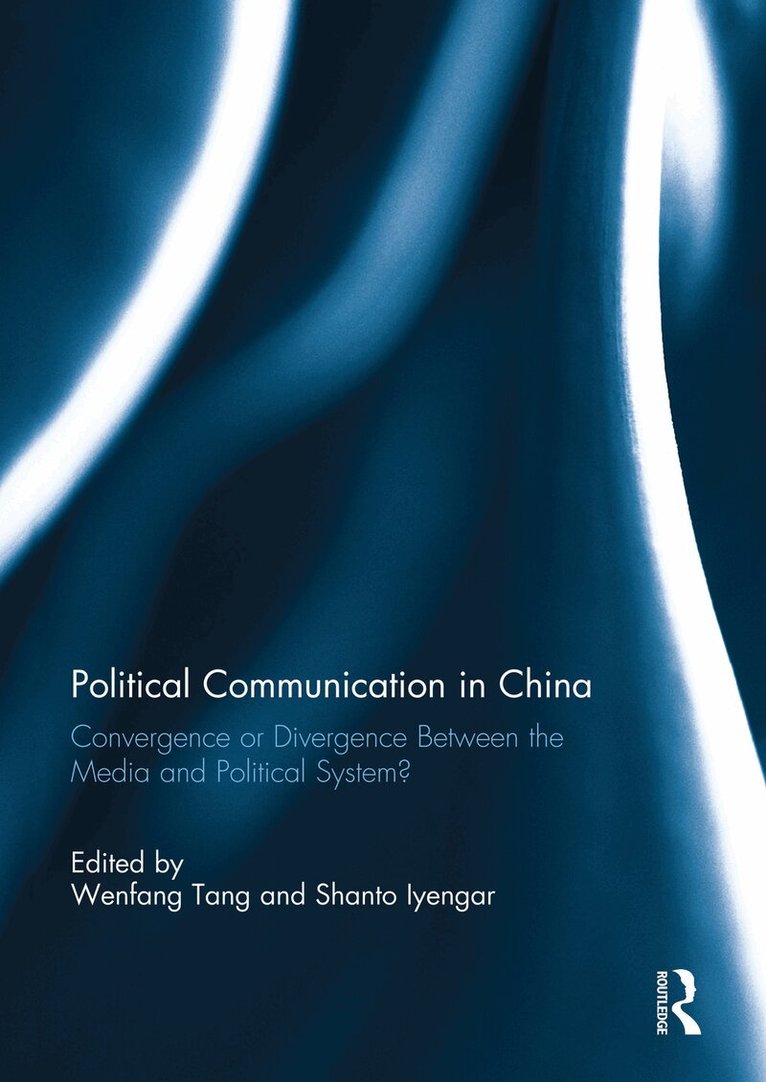
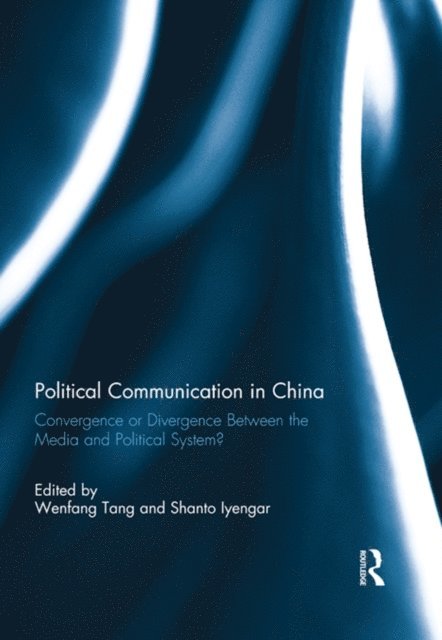
Political Communication in China
Convergence or Divergence Between the Media and Political System?
Inbunden, Engelska, 2012
2 088 kr
Skickas inom 10-15 vardagar
It is widely recognised that the Chinese Communist Party (CCP) uses the media to set the agenda for political discourse, propagate official policies, monitor public opinion, and rally regime support. State agencies in China control the full spectrum of media programming, either through ownership or the power to regulate.Political Communication in China examines the two factors which have contributed to the rapid development of media infrastructure in China: technology and commercialization. Economic development led to technological advancement, which in turn brought about the rapid modernization of all forms of communication, from ‘old’ media such as television to the Internet, cell phones, and satellite communications. This volume examines how these recent developments have affected the relationship between the CCP and the mass media as well as the implications of this evolving relationship for understanding Chinese citizens’ media use, political attitudes, and behaviour.The chapters in this book represent a diverse range of research methods, from surveys, content analysis, and field interviews to the manipulation of aggregate statistical data. The result is a lively debate which creates many opportunities for future research into the fundamental question of convergence between political and media regimes.This book was originally published as a special issue of the journal Political Communication.
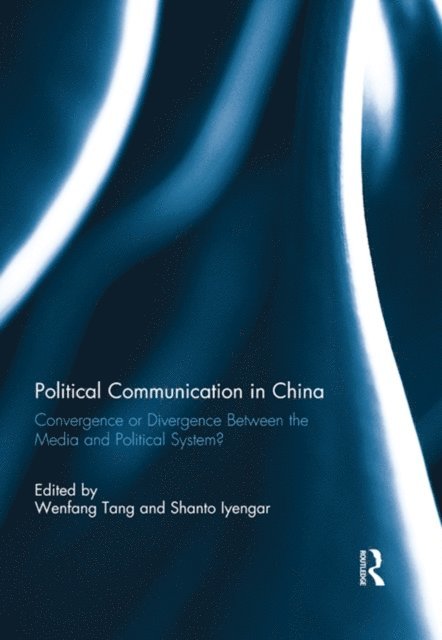
Political Communication in China
Convergence or Divergence Between the Media and Political System?
Häftad, Engelska, 2014
657 kr
Skickas inom 10-15 vardagar
It is widely recognised that the Chinese Communist Party (CCP) uses the media to set the agenda for political discourse, propagate official policies, monitor public opinion, and rally regime support. State agencies in China control the full spectrum of media programming, either through ownership or the power to regulate.Political Communication in China examines the two factors which have contributed to the rapid development of media infrastructure in China: technology and commercialization. Economic development led to technological advancement, which in turn brought about the rapid modernization of all forms of communication, from ‘old’ media such as television to the Internet, cell phones, and satellite communications. This volume examines how these recent developments have affected the relationship between the CCP and the mass media as well as the implications of this evolving relationship for understanding Chinese citizens’ media use, political attitudes, and behaviour.The chapters in this book represent a diverse range of research methods, from surveys, content analysis, and field interviews to the manipulation of aggregate statistical data. The result is a lively debate which creates many opportunities for future research into the fundamental question of convergence between political and media regimes.This book was originally published as a special issue of the journal Political Communication.
563 kr
Skickas inom 7-10 vardagar
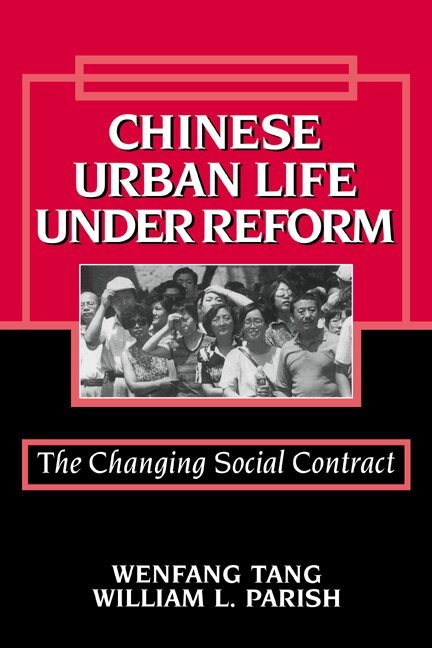
This book provides a rare glimpse into how the Chinese urban population is experiencing the rapid shift from a planned to a market economy. The authors, using a dozen recent national social surveys, give voice to workers, civil servants, intellectuals, and women, who report their grievances and joys at home, at work, and in the public sphere. With fresh data on newly emerging patterns of economic inequality, labor-management relations, popular grievances, political participation, and gender inequality, the book comprehensively analyzes how the shifting social contract influences ordinary people's lives. With comparative data from the more market-based Taiwan, the book illuminates the directions in which China might be headed.
1 287 kr
Skickas inom 10-15 vardagar
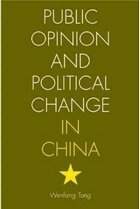
This book describes through case studies how various factors, such as the single-party political system, traditional culture, market reform, and industrialization, shape public opinion and mass political behavior in urban China. Case studies focus on the process of conducting public opinion polls in China's political environment, regime legitimacy and reform support, media control and censorship, interpersonal trust and democratization, mass political participation, labor relations and trade unions, and the role of intellectuals in political change. The book draws most of its empirical evidence from twelve Chinese public opinion surveys conducted between the late 1980s and the late 1990s. The same questions repeated in many of these surveys provide a rare opportunity to examine the changing pattern of the Chinese public mind during this period. The book ends with the provocative conclusion that China's authoritarian political system proved to be less effective than traditional culture, marketization, and industrialization in shaping public opinion and mass political behavior. Liberal ideas and bottom-up political participation can emerge even in the absence of direct elections.
309 kr
Skickas inom 7-10 vardagar
This book describes through case studies how various factors, such as the single-party political system, traditional culture, market reform, and industrialization, shape public opinion and mass political behavior in urban China. Case studies focus on the process of conducting public opinion polls in China's political environment, regime legitimacy and reform support, media control and censorship, interpersonal trust and democratization, mass political participation, labor relations and trade unions, and the role of intellectuals in political change. The book draws most of its empirical evidence from twelve Chinese public opinion surveys conducted between the late 1980s and the late 1990s. The same questions repeated in many of these surveys provide a rare opportunity to examine the changing pattern of the Chinese public mind during this period. The book ends with the provocative conclusion that China's authoritarian political system proved to be less effective than traditional culture, marketization, and industrialization in shaping public opinion and mass political behavior. Liberal ideas and bottom-up political participation can emerge even in the absence of direct elections.
190 kr
Skickas inom 3-6 vardagar