Werner Damm – författare
Visar alla böcker från författaren Werner Damm. Handla med fri frakt och snabb leverans.
11 produkter
11 produkter
Häftad, Tyska, 1987
577 kr
Skickas inom 10-15 vardagar
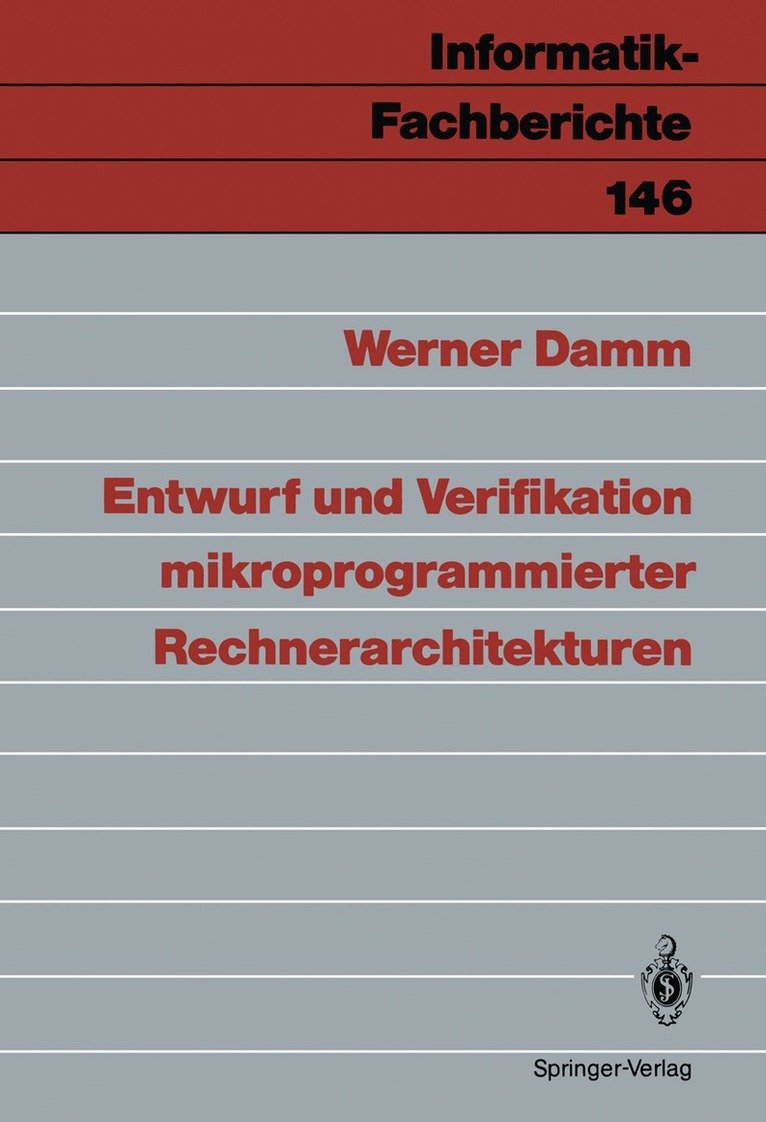
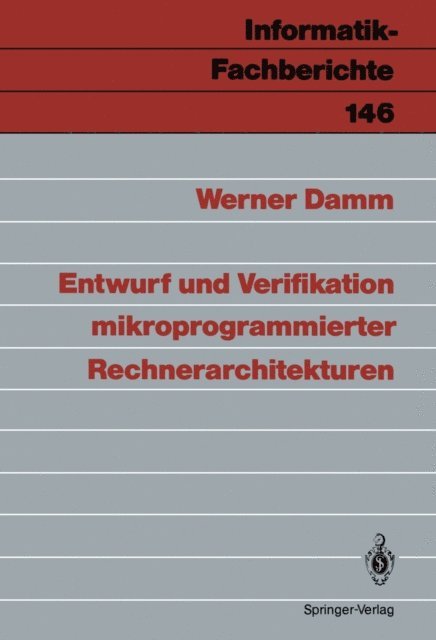
Dieses Buch stellt eine Methodik zum systematischen Entwurf korrekter Mikroprogramme vor. Behandelt werden sämtliche Phasen der Firmwareentwicklung: das Erstellen einer formalen Beschreibung der Anforderungen, Techniken zur hierarchischen Organisation des Entwurfs, die Mikroprogrammierung in einer geeigneten höheren Mikroprogrammiersprache, sowie formale Techniken zur Überprüfung der Korrektheit des Entwurfs. Damit wird erstmals eine Firmwareverifikationsmethode vorgestellt, die sowohl für beliebige Mikroarchitekturen einsetzbar ist als auch eine inkrementelle und modulare Verifikation des Entwurfs ermöglicht. Besonderes Gewicht wurde sowohl auf eine präzise mathematische Durchdringung des Firmwareentwurfs als auch auf die praktische Anwendbarkeit der Entwurfsmethode gelegt. Sämtliche Konzepte und Techniken werden an Hand eines Emulationsbeispiels illustriert. Der Text enthält ein einführendes Kapitel, das sowohl die Grundbegriffe aus dem Bereich der Mikroprogrammierung als auch die verwendeten mathematischen Begriffsbildungen zusammenfaßt. Die beiden Hauptteile behandeln jeweils den Entwurf sowie die Verifikationsmethodik. In Anhängen werden ausführliche Entwurfs- und Verifikationsbeispiele gegeben. Das Buch bietet sowohl dem Entwickler größerer Mikroprogramme als auch dem Ersteller von Firmwareentwicklungswerkzeugen einen geeigneten Rahmen zur Beherrschung der Komplexität von Mikroarchitekturen. Für Studenten der Informatik veranschaulicht der Text die Relevanz mathematischer Modellbildungen in einem konkreten Anwendungesgebiet.
Häftad, Engelska, 2004
562 kr
Skickas inom 10-15 vardagar
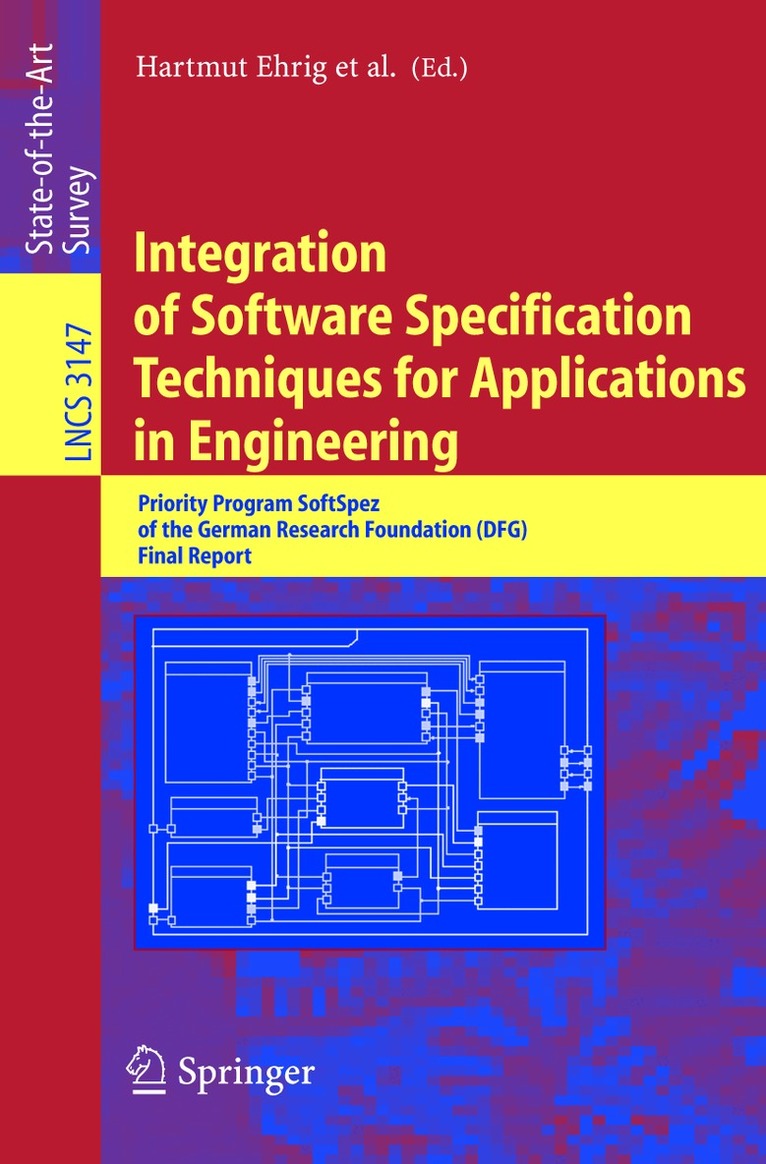
This volume is a documentation of the main results in the research area "In- gration of Software Speci?cation Techniques for Applications in Engineering". On one hand it is based on the Priority Program "Integration von Techniken der Softwarespezi?kation fur .. ingenieurwissenschaftliche Anwendungen", short Soft- Spez,oftheGermanResearchCouncil(DFG). Ontheotherhanditcontainsnew contributions of international experts in this research area, some of which were presented at the third international workshop INT 2004 on "Integration of Sp- i?cation Techniques for Applications in Engineering". INT 2004 was launched as a satellite event of ETAPS in Barcelona, the "European Joint Conferences on Theory and Practice of Software". The Priority Program SoftSpez was initiated by W. Brauer, M. Broy, H. Ehrig, H. J. Kreowski, H. Reichel, and H. Weber concerning di?erent aspects from computer science, and by E. Schnieder and E. Westk. amper concerning two main application areas in engineering, namely "Tra?c Control Systems" and "Production Automation". After acceptance of SoftSpez by the German Research Council for the period of 1998-2004 a call for speci?c projects within this priority program was launched, where 11 projects from about 75 project proposals were accepted for a period of two years.Since 1998 each year the main research proposals and results of the projects have been presented at an annual colloquium of the priority program, and every two years the projects have been evaluated by an independent group of referees appointed by the G- man Research Council. At this point we would like to thank A.
E-bok
PDF, Engelska, 2011708 kr
Läs direkt efter köp
Häftad, Engelska, 2002
546 kr
Skickas inom 10-15 vardagar
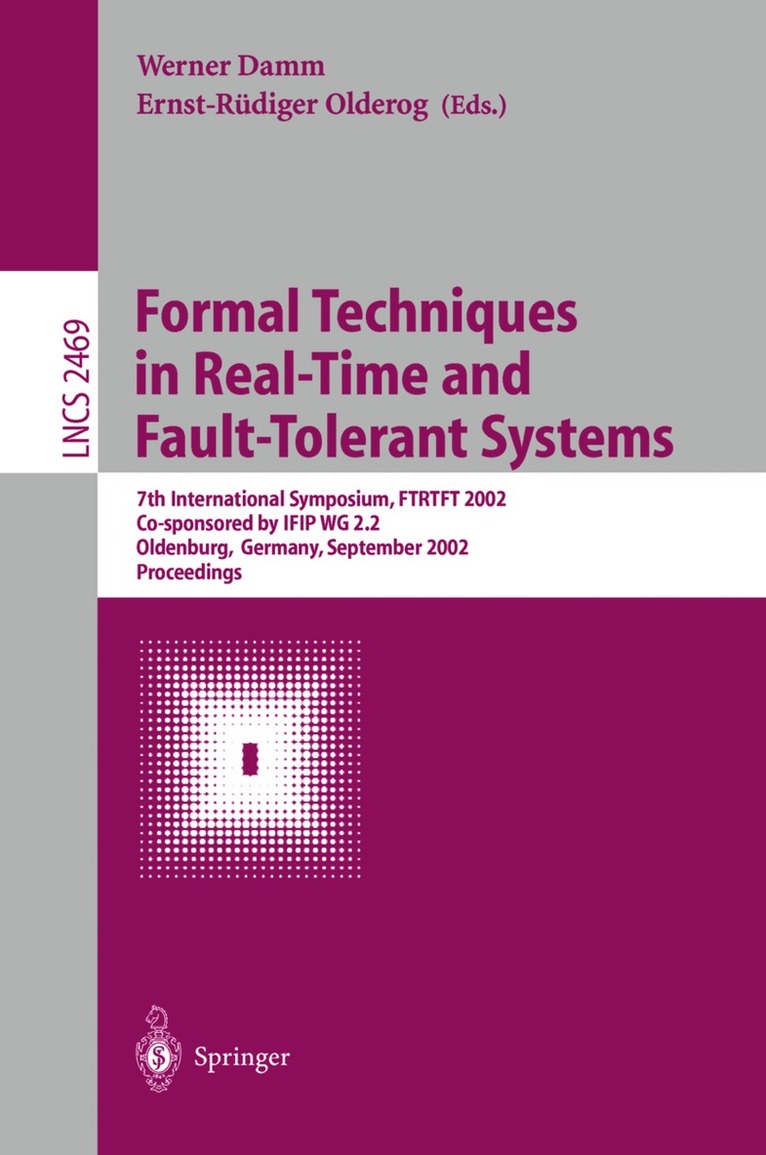
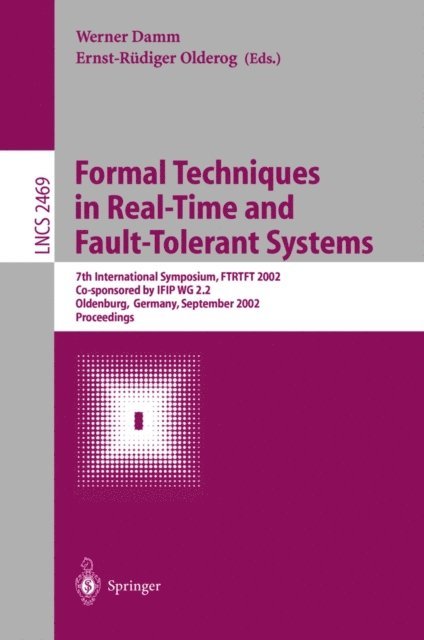
This volume contains the proceedings of FTRTFT 2002, the International S- posium on Formal Techniques in Real-Time and Fault-Tolerant Systems, held at the University of Oldenburg, Germany, 9–12 September 2002. This sym- sium was the seventh in a series of FTRTFT symposia devoted to problems and solutions in safe system design. The previous symposia took place in Warwick 1990, Nijmegen 1992, Lub ¨ eck 1994, Uppsala 1996, Lyngby 1998, and Pune 2000. Proceedings of these symposia were published as volumes 331, 571, 863, 1135, 1486, and 1926 in the LNCS series by Springer-Verlag. This year the sym- sium was co-sponsored by IFIP Working Group 2.2 on Formal Description of Programming Concepts. The symposium presented advances in the development and use of formal techniques in the design of real-time, hybrid, fault-tolerant embedded systems, covering all stages from requirements analysis to hardware and/or software - plementation. Particular emphasis was placed on UML-based development of real-time systems. Through invited presentations, links between the dependable systems and formal methods research communities were strengthened. With the increasing use of such formal techniques in industrial settings, the conference aimed at stimulating cross-fertilization between challenges in industrial usages of formal methods and advanced research. Inresponsetothecallforpapers,39submissionswerereceived.Eachsubm- sion was reviewed by four program committee members assisted by additional referees. At the end of the reviewing process, the program committee accepted 17 papers for presentation at the symposium.
E-bok
PDF, Engelska, 2003734 kr
Läs direkt efter köp
This volume contains the proceedings of FTRTFT 2002, the International S- posium on Formal Techniques in Real-Time and Fault-Tolerant Systems, held at the University of Oldenburg, Germany, 9–12 September 2002. This sym- sium was the seventh in a series of FTRTFT symposia devoted to problems and solutions in safe system design. The previous symposia took place in Warwick 1990, Nijmegen 1992, Lub ¨ eck 1994, Uppsala 1996, Lyngby 1998, and Pune 2000. Proceedings of these symposia were published as volumes 331, 571, 863, 1135, 1486, and 1926 in the LNCS series by Springer-Verlag. This year the sym- sium was co-sponsored by IFIP Working Group 2.2 on Formal Description of Programming Concepts. The symposium presented advances in the development and use of formal techniques in the design of real-time, hybrid, fault-tolerant embedded systems, covering all stages from requirements analysis to hardware and/or software - plementation. Particular emphasis was placed on UML-based development of real-time systems. Through invited presentations, links between the dependable systems and formal methods research communities were strengthened. With the increasing use of such formal techniques in industrial settings, the conference aimed at stimulating cross-fertilization between challenges in industrial usages of formal methods and advanced research. Inresponsetothecallforpapers,39submissionswerereceived.Eachsubm- sion was reviewed by four program committee members assisted by additional referees. At the end of the reviewing process, the program committee accepted 17 papers for presentation at the symposium.
Häftad, Engelska, 1997
562 kr
Skickas inom 10-15 vardagar
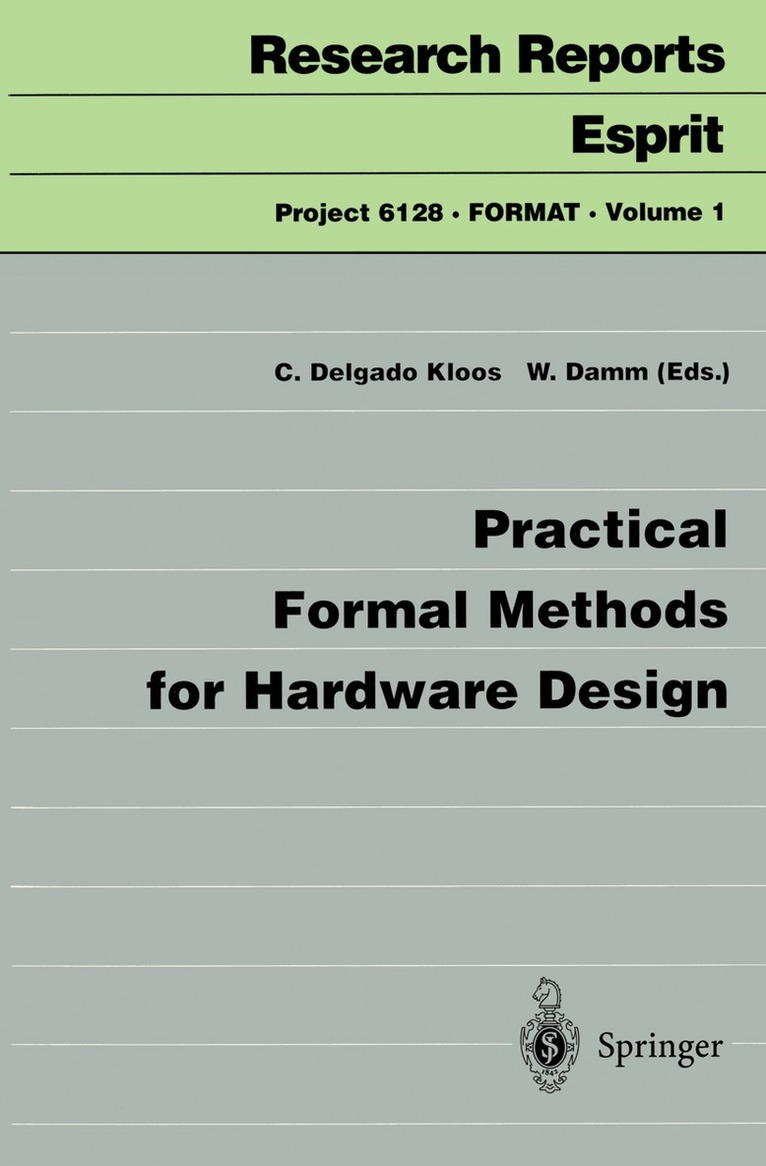
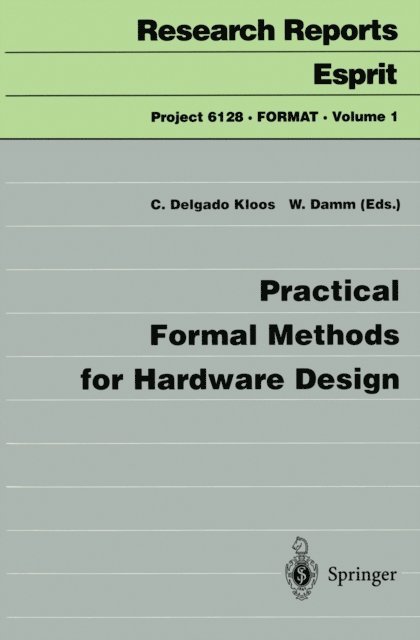
Formal methods for hardware design still find limited use in industry. Yet current practice has to change to cope with decreasing design times and increasing quality requirements. This research report presents results from the Esprit project FORMAT (formal methods in hardware verification) which involved the collaboration of the enterprises Siemens, Italtel, Telefonica I+D, TGI, and AHL, the research institute OFFIS, and the universities of Madrid and Passau. The work presented involves advanced specification languages for hardware design that are intuitive to the designer, like timing diagrams and state based languages, as well as their relation to VHDL and formal languages like temporal logic and a process-algebraic calculus. The results of experimental tests of the tools are also presented.
Häftad, Engelska, 2007
562 kr
Skickas inom 10-15 vardagar
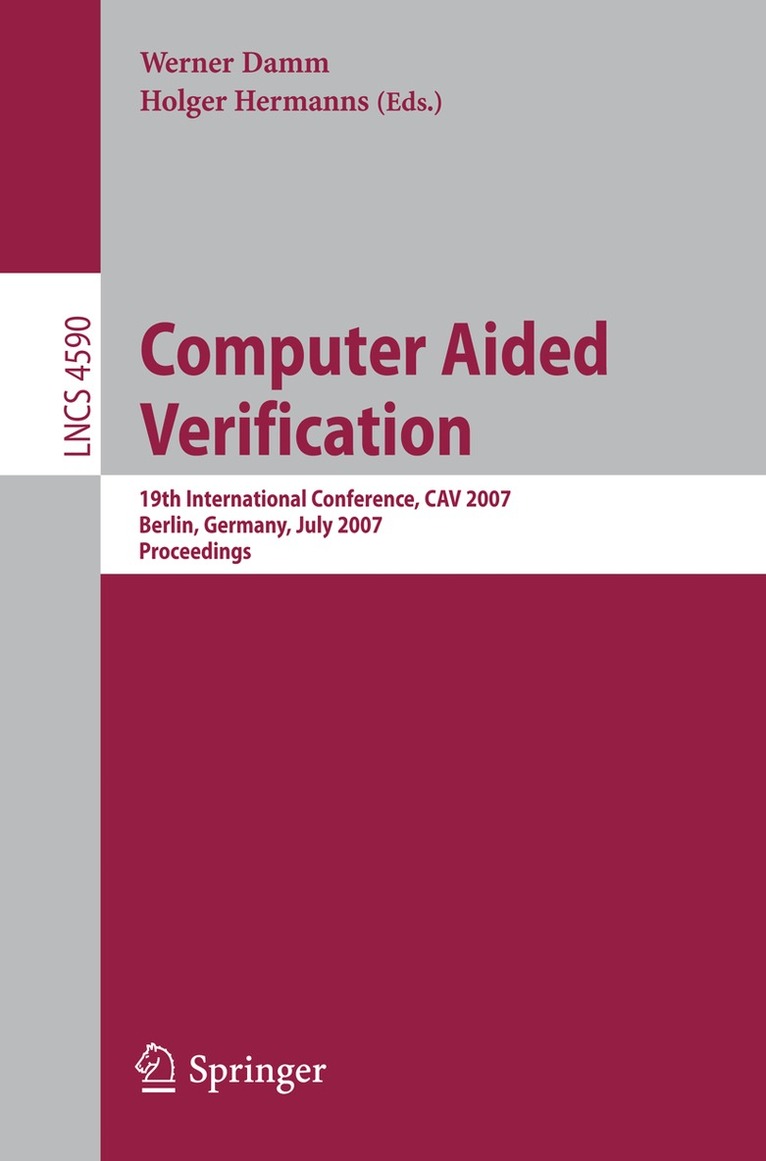
This volume contains the proceedings of the International Conference on C- puter Aided Veri?cation (CAV), held in Berlin, Germany, July 3–7, 2007. CAV 2007 was the 19th in a series of conferences dedicated to the advancement of the theory and practice of computer-assisted formal analysis methods for software and hardware systems. The conference covers the spectrum from theoretical - sults to concrete applications, with an emphasis on practical veri?cation tools and the algorithms and techniques that are needed for their implementation. We received 134 regular paper submissions and 39 tool paper submissions. Of these, the ProgramCommittee selected 33 regularpapersand 14 toolpapers. Each submission was reviewed by at least three members of the Program C- mittee. The reviewing process included a PC review meeting, and – for the ?rst time in the history of CAV – an author feedback period. About 50 additional reviews were provided by experts external to the Program Committee to assure a high quality selection. The CAV 2007 program included three invited talks from industry: – Byron Cook (Microsoft Research) on Automatically Proving Program T- mination, – David Russino? (AMD) on A Mathematical Approach to RTL Veri?cation, and – Thomas Kropf (Bosch) on Software Bugs Seen from an Industrial Persp- tive.
E-bok
PDF, Engelska, 2007734 kr
Läs direkt efter köp
This volume contains the proceedings of the International Conference on C- puter Aided Veri?cation (CAV), held in Berlin, Germany, July 3–7, 2007. CAV 2007 was the 19th in a series of conferences dedicated to the advancement of the theory and practice of computer-assisted formal analysis methods for software and hardware systems. The conference covers the spectrum from theoretical - sults to concrete applications, with an emphasis on practical veri?cation tools and the algorithms and techniques that are needed for their implementation. We received 134 regular paper submissions and 39 tool paper submissions. Of these, the ProgramCommittee selected 33 regularpapersand 14 toolpapers. Each submission was reviewed by at least three members of the Program C- mittee. The reviewing process included a PC review meeting, and – for the ?rst time in the history of CAV – an author feedback period. About 50 additional reviews were provided by experts external to the Program Committee to assure a high quality selection. The CAV 2007 program included three invited talks from industry: – Byron Cook (Microsoft Research) on Automatically Proving Program T- mination, – David Russino? (AMD) on A Mathematical Approach to RTL Veri?cation, and – Thomas Kropf (Bosch) on Software Bugs Seen from an Industrial Persp- tive.
E-bok
PDF, Tyska, 2013571 kr
Läs direkt efter köp
Dieses Buch stellt eine Methodik zum systematischen Entwurf korrekter Mikroprogramme vor. Behandelt werden sämtliche Phasen der Firmwareentwicklung: das Erstellen einer formalen Beschreibung der Anforderungen, Techniken zur hierarchischen Organisation des Entwurfs, die Mikroprogrammierung in einer geeigneten höheren Mikroprogrammiersprache, sowie formale Techniken zur Überprüfung der Korrektheit des Entwurfs. Damit wird erstmals eine Firmwareverifikationsmethode vorgestellt, die sowohl für beliebige Mikroarchitekturen einsetzbar ist als auch eine inkrementelle und modulare Verifikation des Entwurfs ermöglicht. Besonderes Gewicht wurde sowohl auf eine präzise mathematische Durchdringung des Firmwareentwurfs als auch auf die praktische Anwendbarkeit der Entwurfsmethode gelegt. Sämtliche Konzepte und Techniken werden an Hand eines Emulationsbeispiels illustriert. Der Text enthält ein einführendes Kapitel, das sowohl die Grundbegriffe aus dem Bereich der Mikroprogrammierung als auch die verwendeten mathematischen Begriffsbildungen zusammenfaßt. Die beiden Hauptteile behandeln jeweils den Entwurf sowie die Verifikationsmethodik. In Anhängen werden ausführliche Entwurfs- und Verifikationsbeispiele gegeben. Das Buch bietet sowohl dem Entwickler größerer Mikroprogramme als auch dem Ersteller von Firmwareentwicklungswerkzeugen einen geeigneten Rahmen zur Beherrschung der Komplexität von Mikroarchitekturen. Für Studenten der Informatik veranschaulicht der Text die Relevanz mathematischer Modellbildungen in einem konkreten Anwendungesgebiet.
E-bok
PDF, Engelska, 2012734 kr
Läs direkt efter köp
Formal methods for hardware design still find limited use in industry. Yet current practice has to change to cope with decreasing design times and increasing quality requirements. This research report presents results from the Esprit project FORMAT (formal methods in hardware verification) which involved the collaboration of the enterprises Siemens, Italtel, Telefonica I+D, TGI, and AHL, the research institute OFFIS, and the universities of Madrid and Passau. The work presented involves advanced specification languages for hardware design that are intuitive to the designer, like timing diagrams and state based languages, as well as their relation to VHDL and formal languages like temporal logic and a process-algebraic calculus. The results of experimental tests of the tools are also presented.
Inbunden, Tyska, 2012
206 kr
Skickas inom 3-6 vardagar