W.H.J. Feijen – författare
Visar alla böcker från författaren W.H.J. Feijen. Handla med fri frakt och snabb leverans.
6 produkter
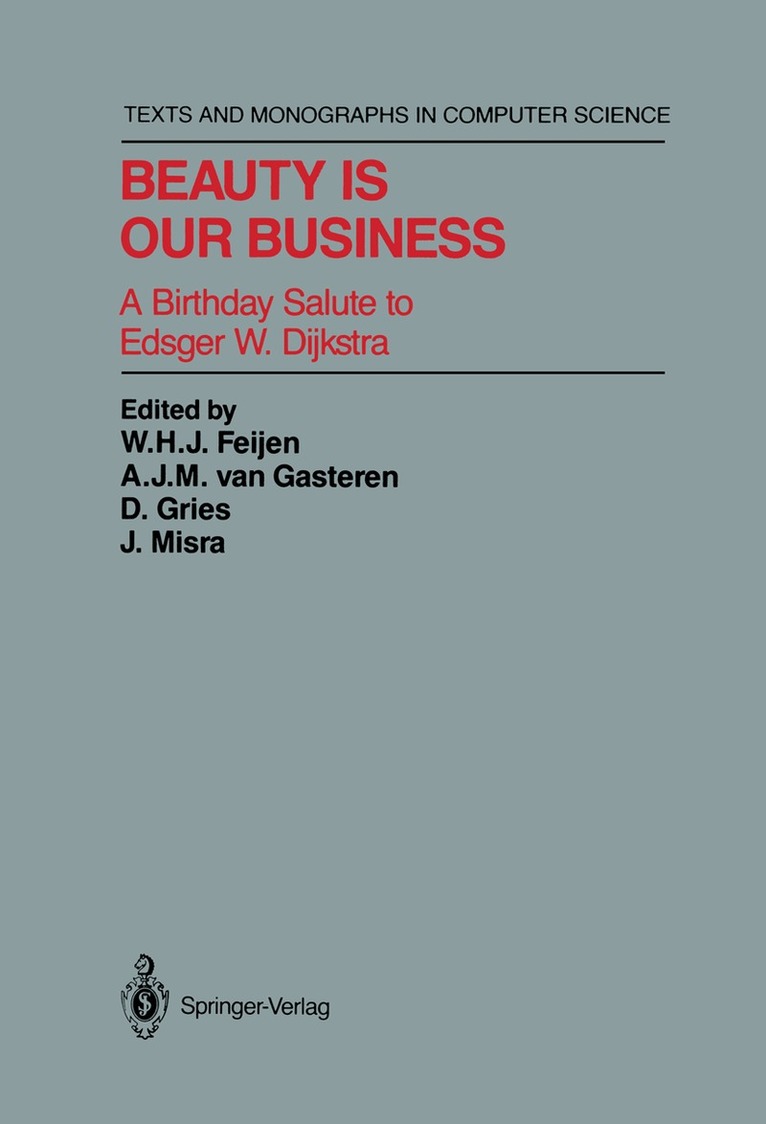
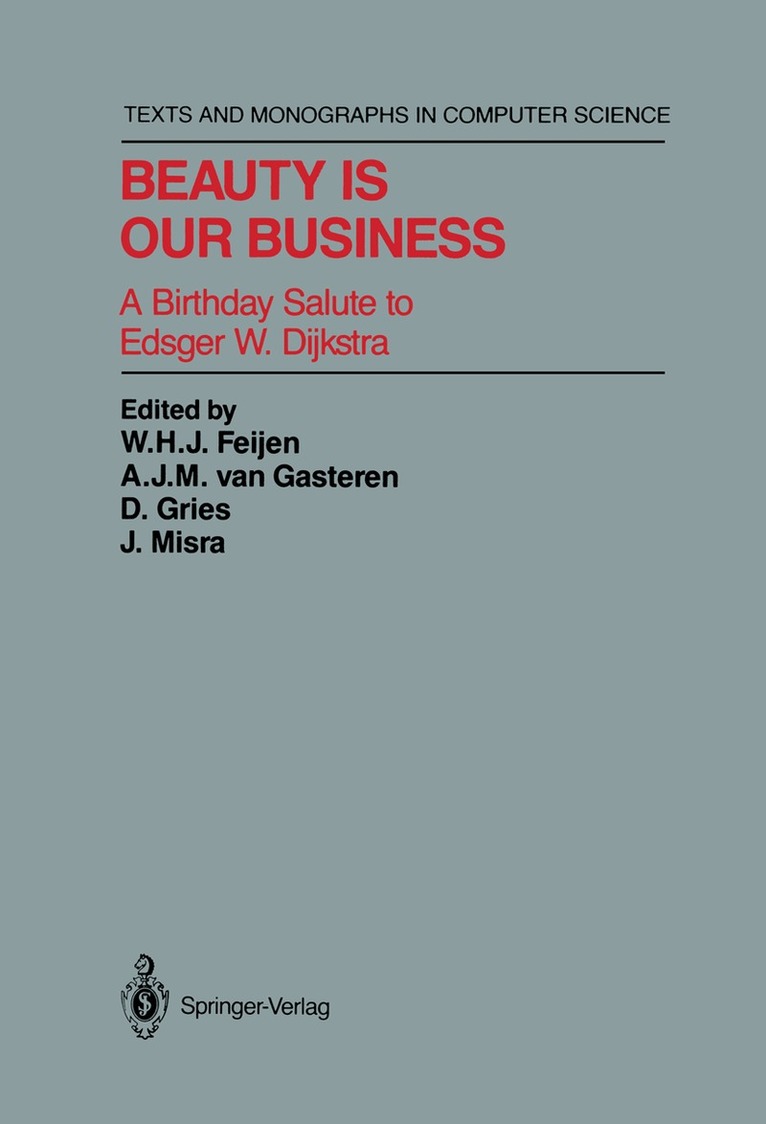
Beauty Is Our Business
A Birthday Salute to Edsger W. Dijkstra
Av W.H.J. Feijen, A.J.M. van Gasteren m. fl.
Inbunden, 1990
2245 kr
Lägg i varukorg
More than anything else, this book is a tribute to Edsger W. Dijkstra, on the occasion of his sixtieth birthday, by just a few of those fortunate enough to be influenced by him and his work and to be called his friend or relation, his master, colleague, or pupil. This book contains fifty-four …
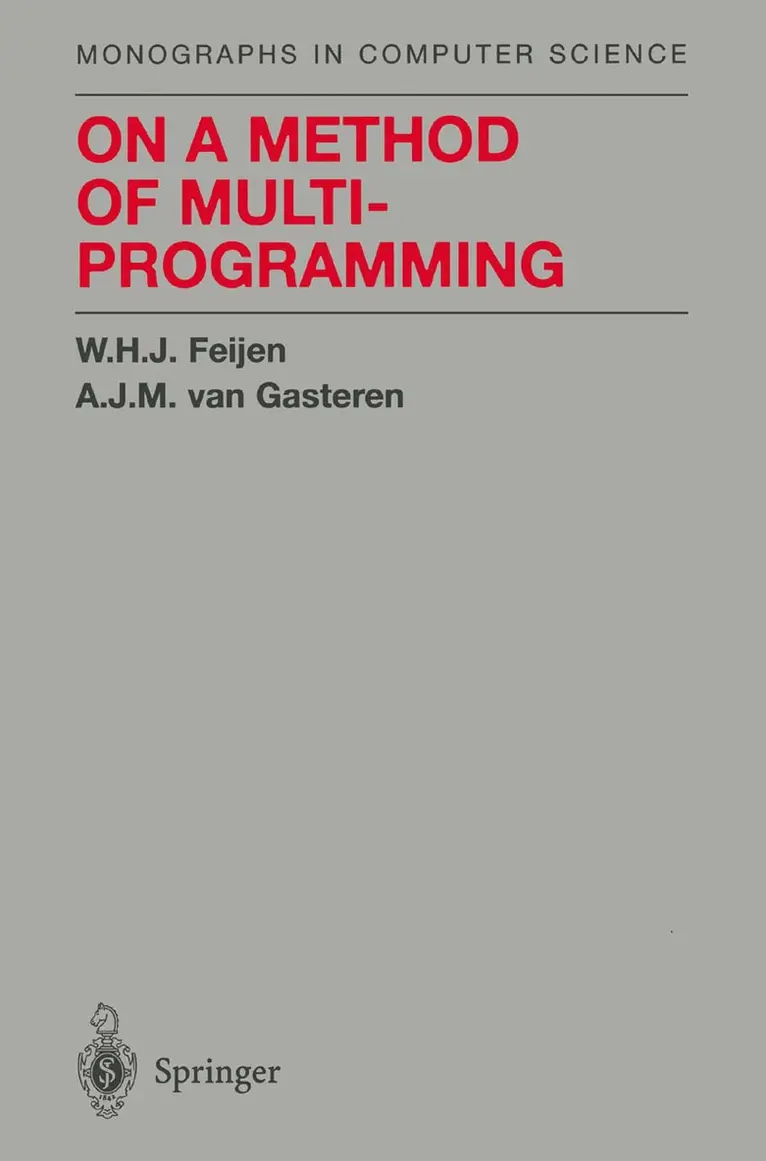
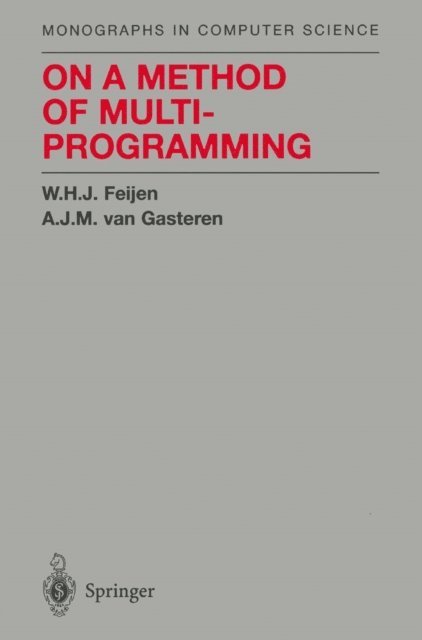
On a Method of Multiprogramming
Av W.H.J. Feijen, A.J.M. van Gasteren
Inbunden, 1999
1686 kr
Lägg i varukorg
Among all the interests in parallelism, there is an essential and fundamental one that has remained largely unexplored, namely the question of how to design parallel programs from their specification. And that is what this book is about. It proposes a method for the formal development of parallel …
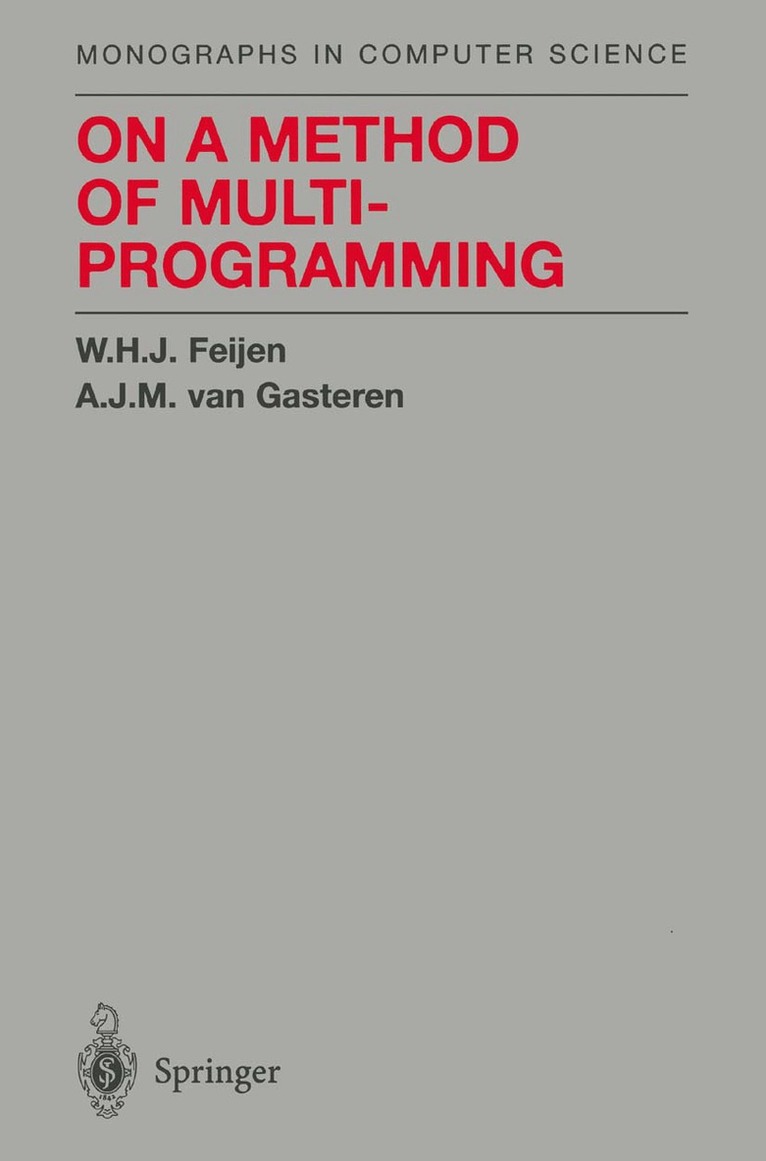
On a Method of Multiprogramming
Av W.H.J. Feijen, A.J.M. van Gasteren
Häftad, 2010
1688 kr
Lägg i varukorg
Among all the interests in parallelism, there is an essential and fundamental one that has remained largely unexplored, namely the question of how to design parallel programs from their specification. And that is what this book is about. It proposes a method for the formal development of parallel …
Beauty Is Our Business
A Birthday Salute to Edsger W. Dijkstra
Av J. Misra, David Gries m. fl.
E-bok, 2012
3013 kr
Lägg i varukorg
More than anything else, this book is a tribute to Edsger W. Dijkstra, on the occasion of his sixtieth birthday, by just a few of those fortunate enough to be influenced by him and his work and to be called his friend or relation, his master, colleague, or pupil. This book contains fifty-four …
Beauty Is Our Business
A Birthday Salute to Edsger W. Dijkstra
Av W.H.J. Feijen, A.J.M. van Gasteren m. fl.
Häftad, 2011
2245 kr
Lägg i varukorg
More than anything else, this book is a tribute to Edsger W. Dijkstra, on the occasion of his sixtieth birthday, by just a few of those fortunate enough to be influenced by him and his work and to be called his friend or relation, his master, colleague, or pupil. This book contains fifty-four …
On a Method of Multiprogramming
Av A.J.M. van Gasteren, W.H.J. Feijen
E-bok, 2013
2110 kr
Lägg i varukorg
Among all the interests in parallelism, there is an essential and fundamental one that has remained largely unexplored, namely the question of how to design parallel programs from their specification. And that is what this book is about. It proposes a method for the formal development of parallel …