Wiebke Denecke - Böcker
Visar alla böcker från författaren Wiebke Denecke. Handla med fri frakt och snabb leverans.
4 produkter
4 produkter
1 067 kr
Skickas inom 3-6 vardagar
This volume introduces readers to classical Chinese literature from its beginnings (ca. 10th century BCE) to the tenth century CE. It asks basic questions such as: How did reading and writing practices change over these two millennia? How did concepts of literature evolve? What were the factors that shaped literary production and textual transmission? How do traditional bibliographic categories, modern conceptions of genre, and literary theories shape our understanding of classical Chinese literature? What are the recurrent and evolving concerns of writings within the period under purview? What are the dimensions of human experience they address? Why is classical Chinese literature important for our understanding of pre-modern East Asia? How does the transmission of this literature in Japan, Korea, and Vietnam define cultural boundaries? And what, in turn, can we learn from the Chinese-style literatures of Japan, Korea, and Vietnam, about Chinese literature? In addressing these questions, The Oxford Handbook of Classical Chinese Literature departs from standard literary histories and sourcebooks. It does not simply categorize literary works according to periods, authors, or texts. Its goal is to offer a new conceptual framework for thinking about classical Chinese literature by defining a four-part structure. The first section discusses the basics of literacy and includes topics such as writing systems, manuscript culture, education, and loss and preservation in textual transmission. It is followed by a second section devoted to conceptions of genre, textual organization, and literary signification throughout Chinese history. A third section surveys literary tropes and themes. The final section takes us beyond China to the surrounding cultures that adopted Chinese culture and produced Chinese style writing adapted to their own historical circumstances. The volume is sustained by a dual foci: the recuperation of historical perspectives for the period it surveys and the attempt to draw connections between past and present, demonstrating how the viewpoints and information in this volume yield insights into modern China and east Asia.
2 522 kr
Skickas inom 5-8 vardagar
This volume introduces readers to classical Chinese literature from its beginnings (ca. 10th century BCE) to the tenth century CE. It asks basic questions such as: How did reading and writing practices change over these two millennia? How did concepts of literature evolve? What were the factors that shaped literary production and textual transmission? How do traditional bibliographic categories, modern conceptions of genre, and literary theories shape our understanding of classical Chinese literature? What are the recurrent and evolving concerns of writings within the period under purview? What are the dimensions of human experience they address? Why is classical Chinese literature important for our understanding of pre-modern East Asia? How does the transmission of this literature in Japan, Korea, and Vietnam define cultural boundaries? And what, in turn, can we learn from the Chinese-style literatures of Japan, Korea, and Vietnam, about Chinese literature? In addressing these questions, The Oxford Handbook of Classical Chinese Literature departs from standard literary histories and sourcebooks. It does not simply categorize literary works according to periods, authors, or texts. Its goal is to offer a new conceptual framework for thinking about classical Chinese literature by defining a four-part structure. The first section discusses the basics of literacy and includes topics such as writing systems, manuscript culture, education, and loss and preservation in textual transmission. It is followed by a second section devoted to conceptions of genre, textual organization, and literary signification throughout Chinese history. A third section surveys literary tropes and themes. The final section takes us beyond China to the surrounding cultures that adopted Chinese culture and produced Chinese style writing adapted to their own historical circumstances. The volume is sustained by a dual foci: the recuperation of historical perspectives for the period it surveys and the attempt to draw connections between past and present, demonstrating how the viewpoints and information in this volume yield insights into modern China and east Asia.
1 760 kr
Skickas inom 5-8 vardagar
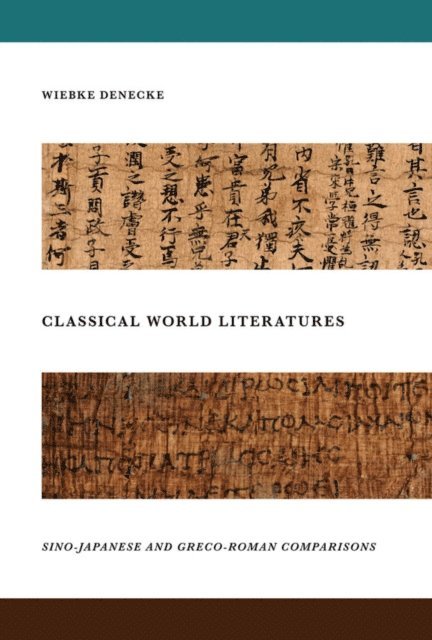
Ever since Karl Jasper's "axial age" paradigm, there have been a number of influential studies comparing ancient East Asian and Greco-Roman history and culture. Most of these have centered on the emergence of the world's philosophical and religious traditions, or on models of empire building. However, to date there has been no comparative study involving literatures of multiple traditions in the ancient East Asian and Mediterranean cultural spheres. At first glance, it would appear that the literary cultures of early Japan and Rome share little in common with each other. Yet both were intimately connected with the literature of antecedent "reference cultures," China and Greece respectively. These connections had far-reaching legal, ethical, material, linguistic, bibliographical, and literary consequences that made for distinctive Sino-Japanese and Greco-Roman dynamics. Exploring writers from Ôtomo no Yakamochi to Sugawara no Michizane and Sei Shônagon and from Cicero and Virgil to Ovid and Martianus Capella, Classical World Literatures captures the striking similarities between the ways Early Japanese writers wrote their own literature through and against the literary precedents of China and the ways Latin writers engaged and contested Greek precedents. Chapters engage in issues ranging from early narratives of literary history, cultural foundation figures, literature of the capital and poetry of exile, to strategies of cultural comparison in the form of parody and satire or synoptic texts. The book also brings to light suggestive divergences that are rooted in geopolitical, linguistic, sociohistorical, and aesthetic differences between Early Japanese and Roman literary cultures. Author Wiebke Denecke examines how Japanese and Latin writers were affected by an awareness of their own belatedness, how their strategies in telling of the origins of their own literatures evolved, and how notions about simplicity, ornateness, and cultural decline came to be blamed on the influence of their cultural ancestors. Proposing an innovative methodology of "deep comparison" for the cross-cultural comparison of premodern literary cultures and calling for an expansion of world literature debates into the ancient and medieval worlds, Classical World Literatures is both a theoretical intervention and an invitation to reading and re-reading four major literary traditions of the classical world in an innovative and illuminating light.
541 kr
Skickas inom 5-8 vardagar
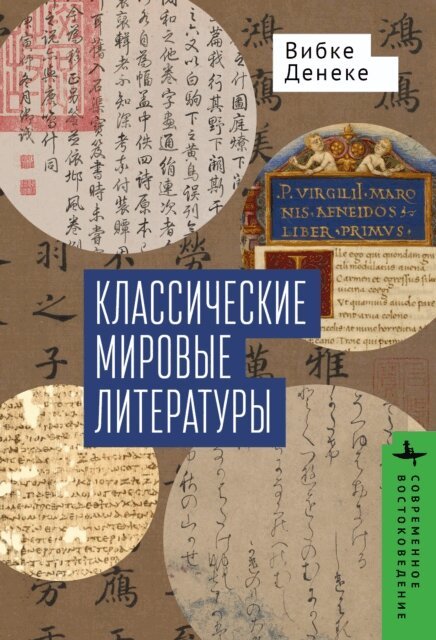
ENGEver since Karl Jaspers's "axial age" paradigm, there have been a number of influential studies comparing ancient East Asian and Greco-Roman history and culture. However, to date there has been no comparative study involving multiple literary traditions in these cultural spheres. This book compares the dynamics between the younger literary cultures of Japan and Rome and the literatures of their venerable predecessors, China and Greece. How were writers of the younger cultures of Rome and Japan affected by the presence of an older "reference culture," whose sophistication they admired, even as they anxiously strove to assert their own distinctive identity? How did they tackle the challenge of adopting the reference culture's literary genres, rhetorical refinement, and conceptual vocabulary for writing texts in different languages and within distinct political and cultural contexts?Classical World Literatures captures the striking similarities between the ways early Japanese authors wrote their own literature through and against the literary precedents of China, and the ways Latin writers engaged and contested Greek precedents. But it also brings to light suggestive divergences that are rooted in geopolitical, linguistic, sociohistorical, and aesthetic differences between early Japanese and Roman literary cultures. Proposing a methodology of "deep comparison" for the cross-cultural comparison of premodern literary cultures and calling for an expansion of world literature debates into the ancient and medieval worlds, Classical World Literatures is both a theoretical intervention and an invitation to read and re-read four major literary traditions in an innovative and illuminating light.RUSВ этой книге сравнивается культурная динамика японо-китайской и греко-римской литератур и исследуются способы, с помощью которых «молодые» культуры соотносятся со своими почтенными предшественниками. Как на писателей Рима и Японии влияло присутствие более древней, «эталонной» культуры, утонченностью которой они восхищались, стремясь при этом утвердить и свою собственную самобытность. Исследуя труды писателей от Сугавара-но Митидзанэ до Сэй Сёнагон, от Цицерона до Овидия и Марциана, Вибке Денеке демонстрирует поразительное сходство между тем, как ранние японские писатели писали свою собственную литературу с опорой на художественные достижения Китая, и тем, как латинские писатели использовали и оспаривали греческий опыт.