Wilfred G. van Gorp – författare
Visar alla böcker från författaren Wilfred G. van Gorp. Handla med fri frakt och snabb leverans.
6 produkter
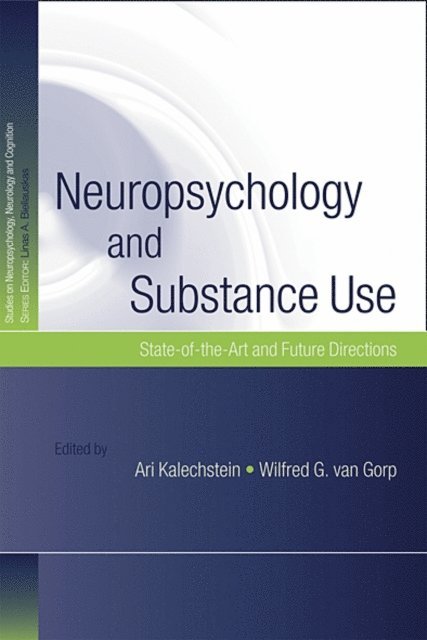
Neuropsychology and Substance Use
State-of-the-Art and Future Directions
Av Wilfred G. van Gorp, Ari Kalechstein
E-bok, 2011
1106 kr
Lägg i varukorg
Substance use continues to be a major public health problem, and the ramifications of this are manifold. For instance, at present, on a yearly basis, the total economic cost of substance misuse is literally hundreds of billions of dollars. These costs are related to a number of factors, including, …
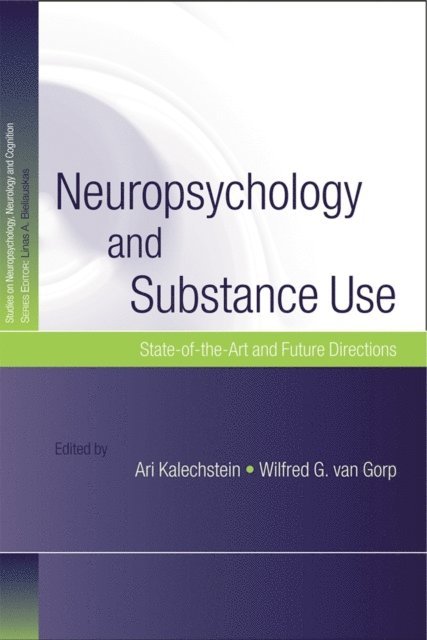
Neuropsychology and Substance Use
State-of-the-Art and Future Directions
Av Wilfred G. van Gorp, Ari Kalechstein
E-bok, 2011
1082 kr
Lägg i varukorg
Substance use continues to be a major public health problem, and the ramifications of this are manifold. For instance, at present, on a yearly basis, the total economic cost of substance misuse is literally hundreds of billions of dollars. These costs are related to a number of factors, including, …
Neuropsychology and Substance Use
State-of-the-Art and Future Directions
Av Ari Kalechstein, Wilfred G. van Gorp
Häftad, 2014
937 kr
Lägg i varukorg
Substance use continues to be a major public health problem, and the ramifications of this are manifold. For instance, at present, on a yearly basis, the total economic cost of substance misuse is literally hundreds of billions of dollars. These costs are related to a number of factors, including, …
Neuropsychology Casebook
Av Kyle B. Boone, Wilfred G. Van Gorp m. fl.
E-bok, 2013
732 kr
Lägg i varukorg
The Neuropsychology Casebook was developed to fill the existing gap in the cur rent body of literature on clinical neuropsychology. Although texts are available that describe neuropsychological tests and others provide information on syn dromes, this volume provides descriptions of …
Neuropsychology Casebook
Av Donna L. Orsini, Wilfred G. Van Gorp m. fl.
Häftad, 2011
570 kr
Lägg i varukorg
The Neuropsychology Casebook was developed to fill the existing gap in the cur rent body of literature on clinical neuropsychology. Although texts are available that describe neuropsychological tests and others provide information on syn dromes, this volume provides descriptions of …
Neuropsychology and Substance Use
State-of-the-Art and Future Directions
Av Ari Kalechstein, Wilfred G. van Gorp
Inbunden, 2007
2595 kr
Lägg i varukorg
Substance use continues to be a major public health problem, and the ramifications of this are manifold. For instance, at present, on a yearly basis, the total economic cost of substance misuse is literally hundreds of billions of dollars. These costs are related to a number of factors, including, …