Will Norman - Böcker
Visar alla böcker från författaren Will Norman. Handla med fri frakt och snabb leverans.
5 produkter
5 produkter
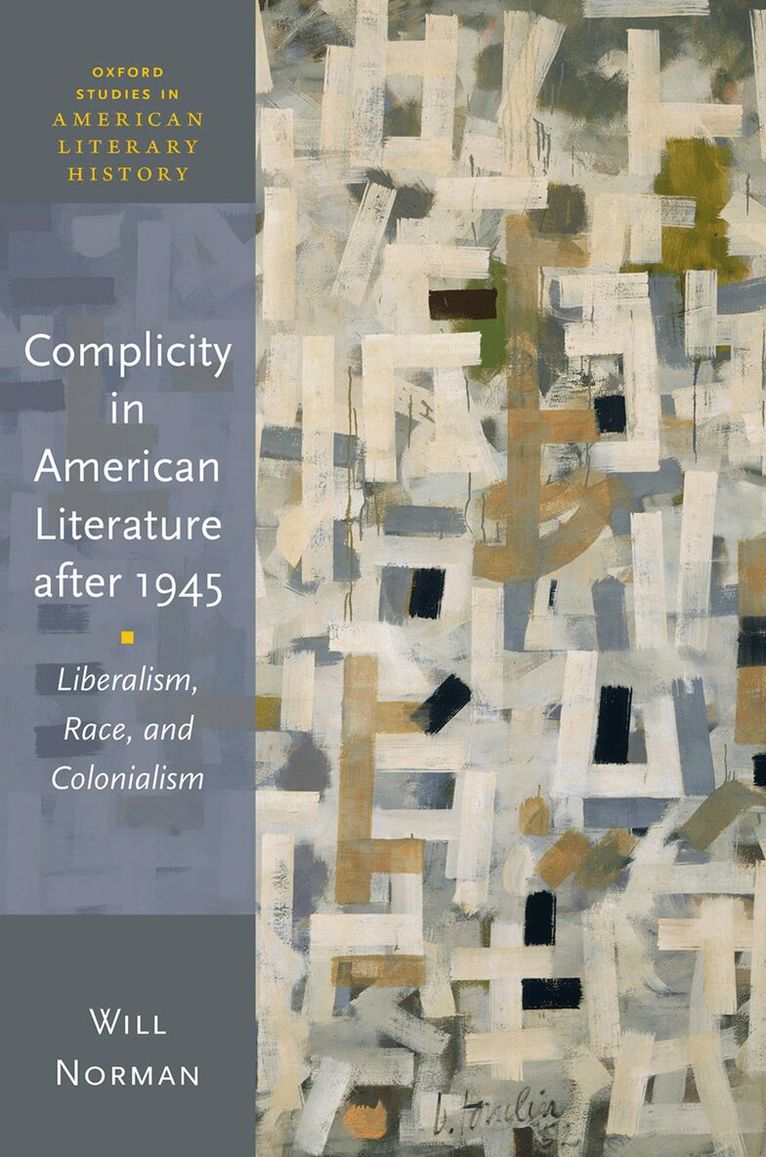
Complicity in American Literature after 1945
Liberalism, Race, and Colonialism
Inbunden, Engelska, 2025
1 208 kr
Skickas inom 5-8 vardagar
Complicity in American Literature after 1945 offers a literary and intellectual history of the idea of complicity in the United States, proposing a new frame for understanding American literature in the period. The term “complicity” derives etymologically from the Latin complicãre, which means “to fold.” If one is complicit, one is folded into a larger system of social harm over which one has little or no direct control. In the period from 1945 to the early 1970s, complicity with structural racism became a central concern for American writing and thought, as it grappled with the Holocaust, colonialism, the Vietnam War, and racial domination at home in the United States. Writers and thinkers grasped complicity both as a social phenomenon to be represented and as a problem threatening to enfold writing itself. In addressing complicity, intellectuals were obliged to reconsider their social role and to innovate means of literary expression capable of articulating new experiences of guilt and responsibility. Complicity in American Literature after 1945 tells the story of that process as it took place across several genres, from highbrow short stories to crime fiction, and from experimental metafiction to the reportage essays of the New Journalism. It argues that the history of racial complicity is inseparable from the history of liberalism, and shows how we can make sense of our present preoccupations with complicity by studying its origins in the past.
2 488 kr
Skickas inom 10-15 vardagar
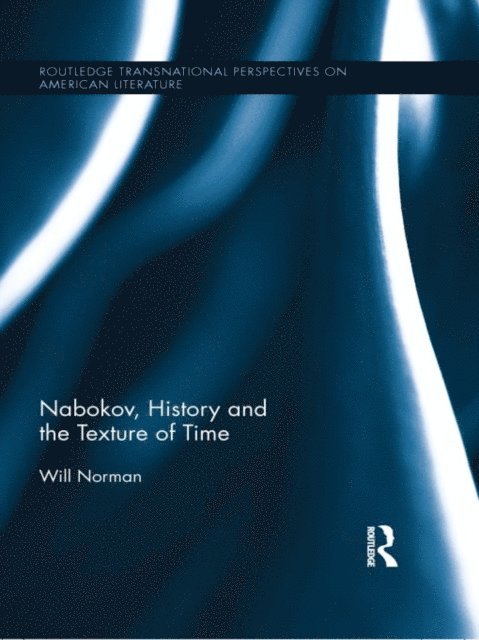
This book argues that the apparent evasion of history in Vladimir Nabokov’s fiction conceals a profound engagement with social, and therefore political, temporalities. While Nabokov scholarship has long assumed the same position as Nabokov himself — that his works exist in a state of historical exceptionalism — this study restores the content, context, and commentary to Nabokovian time by reading his American work alongside the violent upheavals of twentieth-century ideological conflicts in Europe and the United States. This approach explores how the author’s characteristic temporal manipulations and distortions function as a defensive dialectic against history, an attempt to salvage fiction for autonomous aesthetics. Tracing Nabokov’s understanding of the relationship between history and aesthetics from nineteenth-century Russia through European modernism to the postwar American academy, the book offers detailed contextualized readings of Nabokov’s major writings, exploring the tensions, fissures, and failures in Nabokov’s attempts to assert aesthetic control over historical time. In reading his response to the rise of totalitarianism, the Holocaust, and Cold War, Norman redresses the commonly-expressed admiration for Nabokov’s heroic resistance to history by suggesting the ethical, aesthetic, and political costs of reading and writing in its denial. This book offers a rethinking of Nabokov’s location in literary history, the ideological impulses which inform his fiction, and the importance of temporal aesthetics in negotiating the matrices of modernism.
783 kr
Skickas inom 10-15 vardagar
This book argues that the apparent evasion of history in Vladimir Nabokov’s fiction conceals a profound engagement with social, and therefore political, temporalities. While Nabokov scholarship has long assumed the same position as Nabokov himself — that his works exist in a state of historical exceptionalism — this study restores the content, context, and commentary to Nabokovian time by reading his American work alongside the violent upheavals of twentieth-century ideological conflicts in Europe and the United States. This approach explores how the author’s characteristic temporal manipulations and distortions function as a defensive dialectic against history, an attempt to salvage fiction for autonomous aesthetics. Tracing Nabokov’s understanding of the relationship between history and aesthetics from nineteenth-century Russia through European modernism to the postwar American academy, the book offers detailed contextualized readings of Nabokov’s major writings, exploring the tensions, fissures, and failures in Nabokov’s attempts to assert aesthetic control over historical time. In reading his response to the rise of totalitarianism, the Holocaust, and Cold War, Norman redresses the commonly-expressed admiration for Nabokov’s heroic resistance to history by suggesting the ethical, aesthetic, and political costs of reading and writing in its denial. This book offers a rethinking of Nabokov’s location in literary history, the ideological impulses which inform his fiction, and the importance of temporal aesthetics in negotiating the matrices of modernism.
616 kr
Skickas
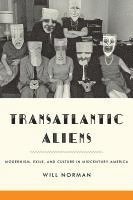
The intellectual migration to the United States of European writers, intellectuals, and artists in the 1930s and 1940s has often been narrowly seen as a clash between a rarefied European modernist sensibility and a debased American mass culture. In Transatlantic Aliens, Will Norman reorients our understanding of midcentury American culture by thinking dialectically about the interfusion of aesthetic and intellectual practices across both the cultural hierarchy and the Atlantic. The transatlantic exchanges of midcentury emerge in the book as a crisis point for modernism at which claims for the autonomy of high culture became increasingly untenable, the geographical center of cultural authority was displaced, and the governing principles of the American cultural field went through a phase of dramatic instability. Norman relays this critical narrative through a series of interlinked case studies of key figures, including C. L. R. James, Theodor Adorno, George Grosz, Raymond Chandler, Simone de Beauvoir, Vladimir Nabokov, and Saul Steinberg.He discovers the strange afterlives of European modernism in disorientating and uncanny juxtapositions: the aesthetics of French symbolism flicker among the neon signs of a small town in the dead of night, and echoes of Mondrian's grids are observed in the form of a boardroom sales chart. At the heart of Transatlantic Aliens is a conception of alienation that encompasses both its political and aesthetic valences. What unites the exilic figures it addresses is the desire to transform the practical experience of alienation into a positive resource for criticizing and coping with a reconfigured postwar landscape. Addressed to scholars and readers of American and comparative literatures as well as of cultural history and visual culture, the book combines assessments of individual artworks, novels, and other texts with more distant readings spanning time and space. A gallery of color plates beautifully illuminates the book's analysis. Examining hardboiled fiction through Flaubert, New Yorker cartoons through modernist painting, and Bette Davis through Hegel and Marx, Transatlantic Aliens challenges and changes the way we understand modernism's place in midcentury American culture.
1 171 kr
Skickas inom 5-8 vardagar
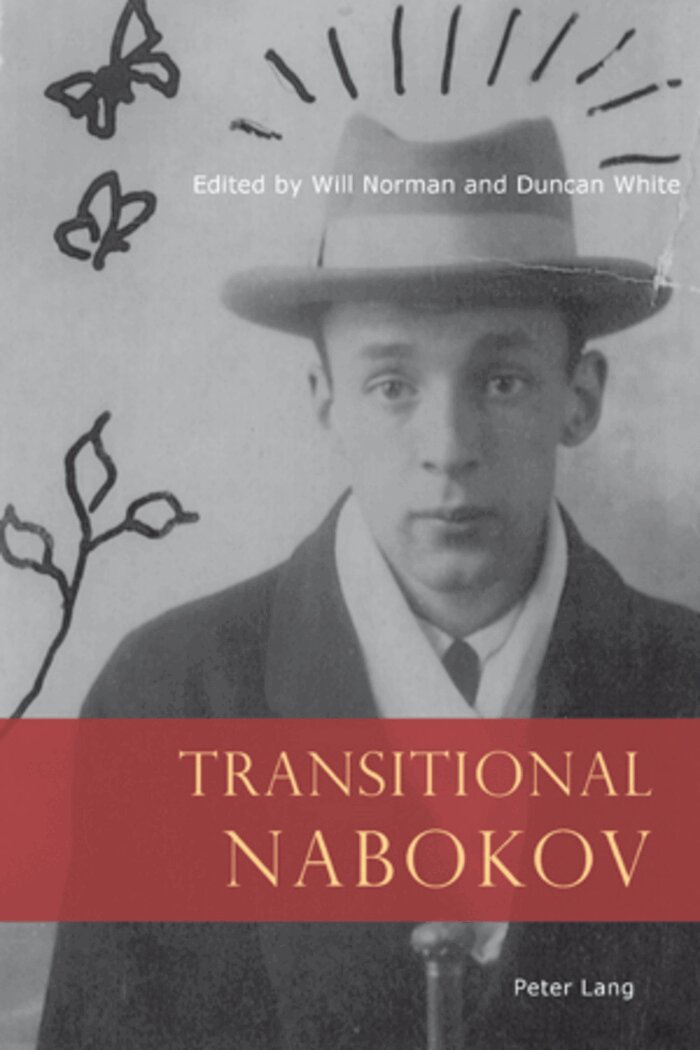
This collection of original essays is concerned with one of the most important writers of the twentieth century: Vladimir Nabokov. The book features contributions from both well-established and new scholars, and represents the latest developments in research. The essays all address the possibility of reading Nabokov’s works as operating between categories of various kinds – whether linguistic, formal, historical or national. In doing so, they explore exciting new paradigms for approaching Nabokov’s oeuvre. The volume brings together a diverse range of critical voices from around the world, to respond to some of the most urgent questions raised about Nabokov’s work. Topics covered include the relationship between his artistic and scientific work, his influences on contemporary fiction, and the development of his aesthetics over his career. Drawing variously on archive research, alternative readings of key texts, and fresh theoretical approaches, this book injects new impetus into Nabokov studies as it continues to evolve as a discipline.