William C. Meadows – författare
Visar alla böcker från författaren William C. Meadows. Handla med fri frakt och snabb leverans.
11 produkter
11 produkter
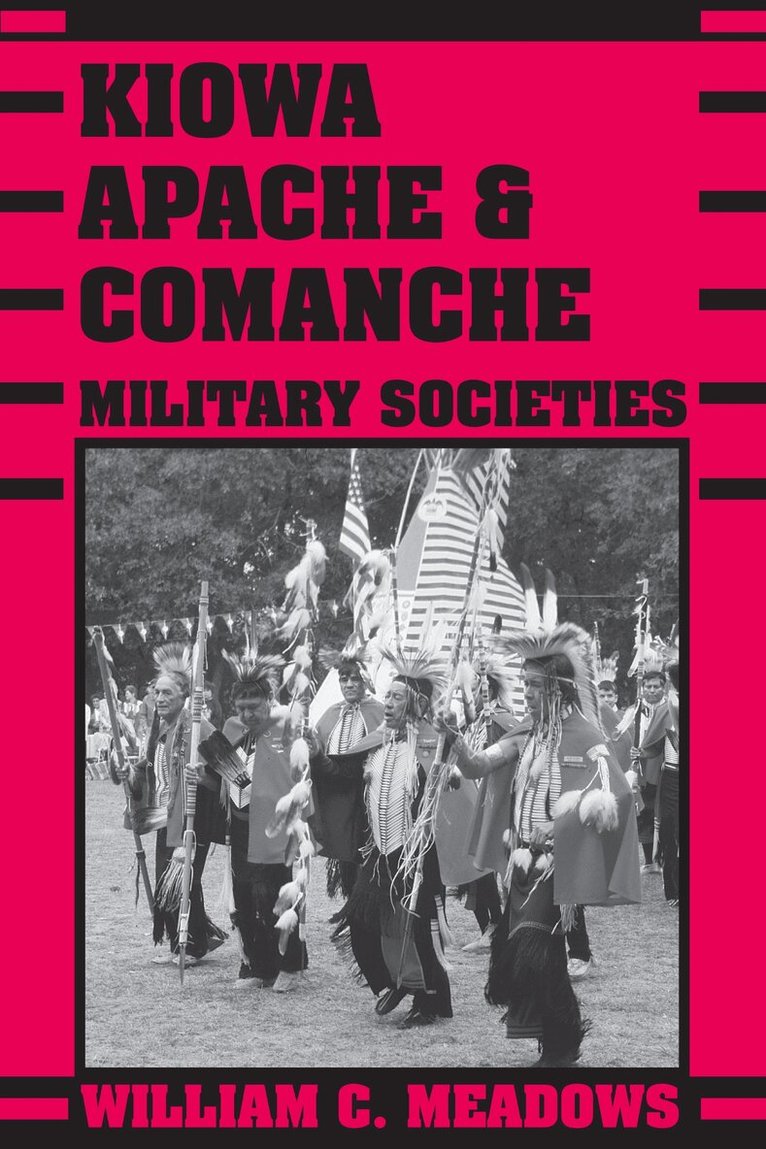
Kiowa, Apache, and Comanche Military Societies
Enduring Veterans, 1800 to the Present
Häftad, Engelska, 2002
508 kr
Skickas inom 7-10 vardagar
A CHOICE Outstanding Academic BookFor many Plains Indians, being a warrior and veteran has long been the traditional pathway to male honor and status. Men and boys formed military societies to celebrate victories in war, to perform community service, and to prepare young men for their role as warriors and hunters. By preserving cultural forms contained in song, dance, ritual, language, kinship, economics, naming, and other semireligious ceremonies, these societies have played an important role in maintaining Plains Indian culture from the pre-reservation era until today.In this book, Williams C. Meadows presents an in-depth ethnohistorical survey of Kiowa, Apache, and Comanche military societies, drawn from extensive interviews with tribal elders and military society members, unpublished archival sources, and linguistic data. He examines their structure, functions, rituals, and martial symbols, showing how they fit within larger tribal organizations. And he explores how military societies, like powwows, have become a distinct public format for cultural and ethnic continuity.
368 kr
Skickas inom 10-15 vardagar
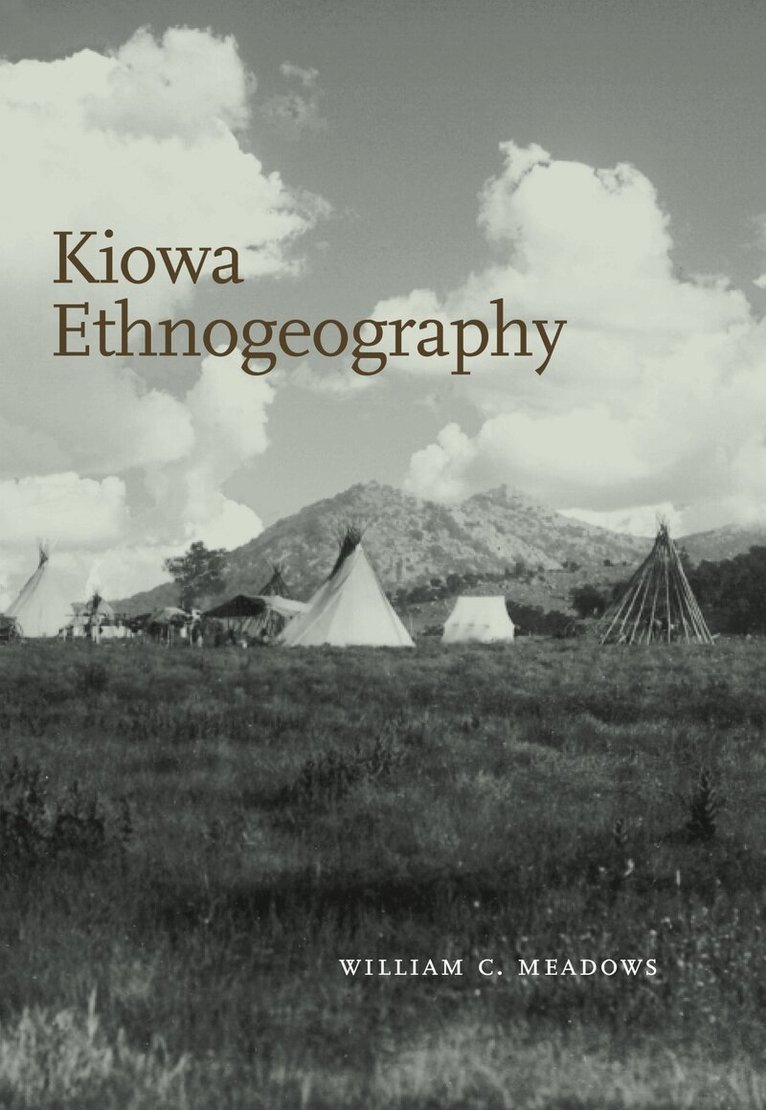
Examining the place names, geographical knowledge, and cultural associations of the Kiowa from the earliest recorded sources to the present, Kiowa Ethnogeography is the most in-depth study of its kind in the realm of Plains Indian tribal analysis. Linking geography to political and social changes, William Meadows applies a chronological approach that demonstrates a cultural evolution within the Kiowa community. Preserved in both linguistic and cartographic forms, the concepts of place, homeland, intertribal sharing of land, religious practice, and other aspects of Kiowa life are clarified in detail. Native religious relationships to land (termed "geosacred" by the author) are carefully documented as well. Meadows also provides analysis of the only known extant Kiowa map of Black Goose, its unique pictographic place labels, and its relationship to reservation-era land policies. Additional coverage of rivers, lakes, and military forts makes this a remarkably comprehensive and illuminating guide.
319 kr
Skickas inom 7-10 vardagar
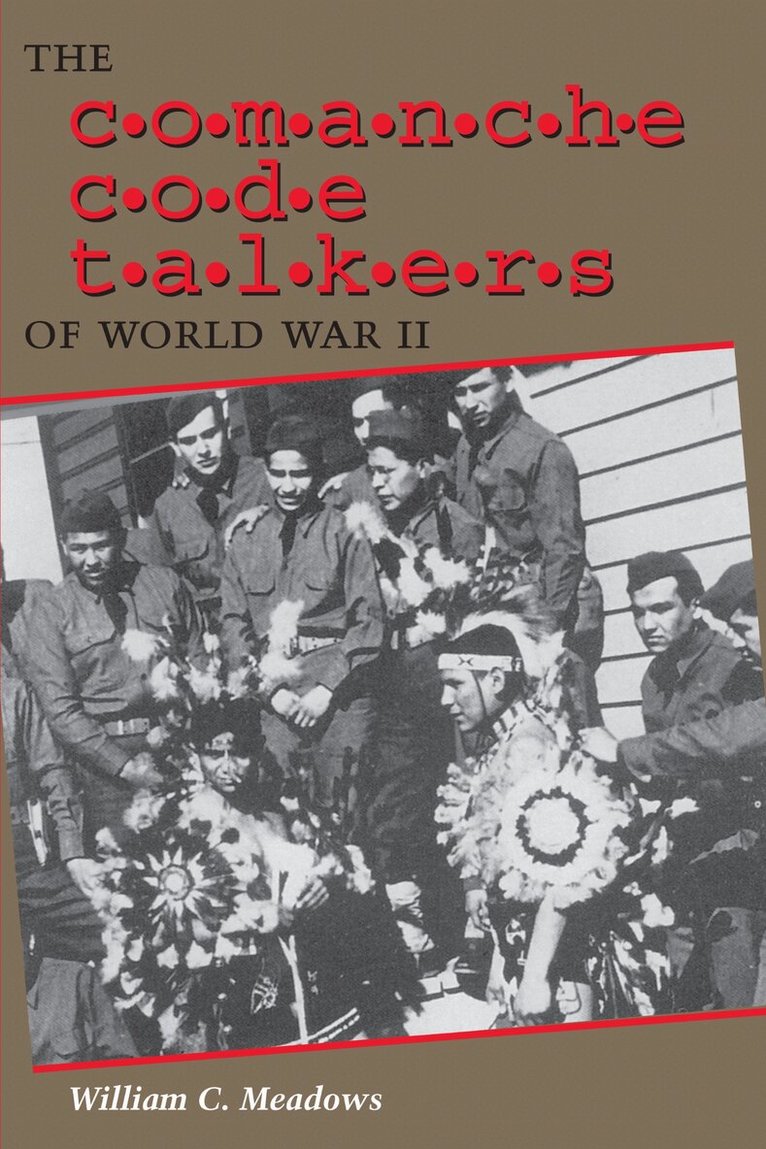
Among the allied troops that came ashore in Normandy on D-Day, June 6, 1944, were thirteen Comanches in the 4th Infantry Division, 4th Signal Company. Under German fire they laid communications lines and began sending messages in a form never before heard in Europe-coded Comanche. For the rest of World War II, the Comanche Code Talkers played a vital role in transmitting orders and messages in a code that was never broken by the Germans.This book tells the full story of the Comanche Code Talkers for the first time. Drawing on interviews with all surviving members of the unit, their original training officer, and fellow soldiers, as well as military records and news accounts, William C. Meadows follows the group from their recruitment and training to their active duty in World War II and on through their postwar lives up to the present. He also provides the first comparison of Native American code talking programs, comparing the Comanche Code Talkers with their better-known Navajo counterparts in the Pacific and with other Native Americans who used their languages, coded or not, for secret communication. Meadows sets this history in a larger discussion of the development of Native American code talking in World Wars I and II, identifying two distinct forms of Native American code talking, examining the attitudes of the American military toward Native American code talkers, and assessing the complex cultural factors that led Comanche and other Native Americans to serve their country in this way.
833 kr
Skickas inom 10-15 vardagar
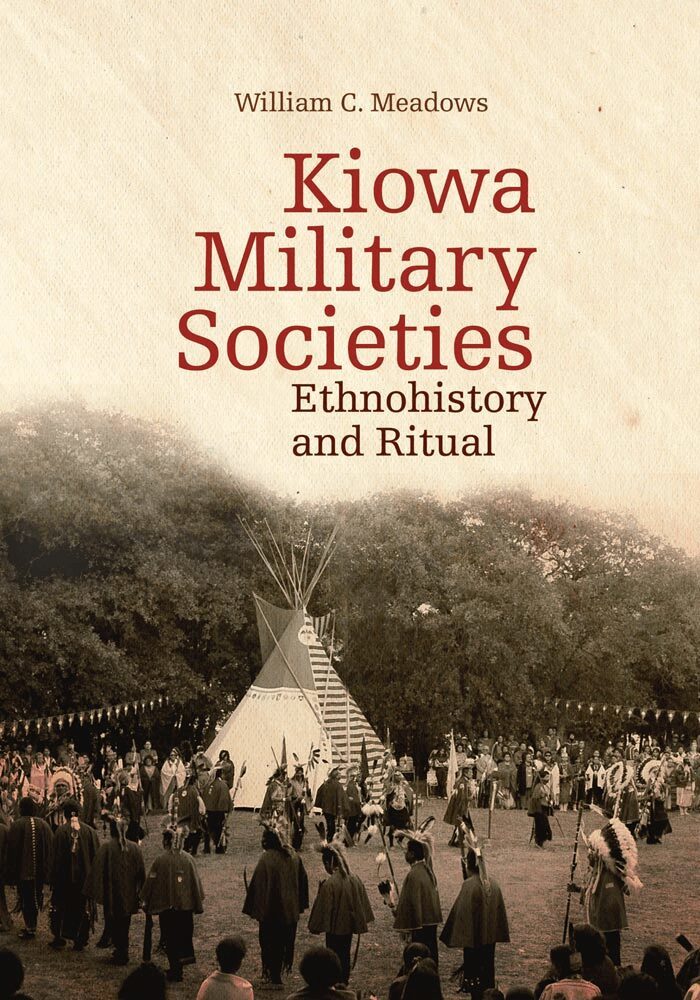
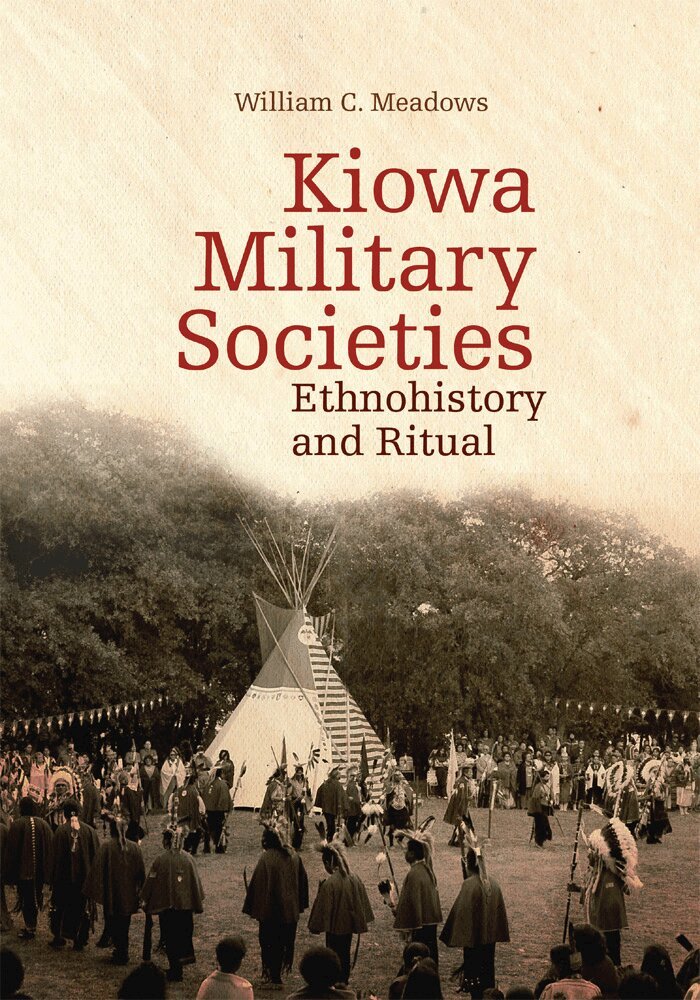
Warrior culture has long been an important facet of Plains Indian life. For Kiowa Indians, military societies have special significance. They serve not only to honor veterans and celebrate and publicize martial achievements but also to foster strong role models for younger tribal members. To this day, these societies serve to maintain traditional Kiowa values, culture, and ethnic identity.Previous scholarship has offered only glimpses of Kiowa military societies. William C. Meadows now provides a detailed account of the ritual structures, ceremonial composition, and historical development of each society: Rabbits, Mountain Sheep, Horses Headdresses, Black Legs, Skunkberry /Unafraid of Death, Scout Dogs, Kiowa Bone Strikers, and Omaha, as well as past and present women's groups.Two dozen illustrations depict personages and ceremonies, and an appendix provides membership rosters from the late 1800s.The most comprehensive description ever published on Kiowa military societies, this work is unmatched by previous studies in its level of detail and depth of scholarship. It demonstrates the evolution of these groups within the larger context of American Indian history and anthropology, while documenting and preserving tribal traditions.
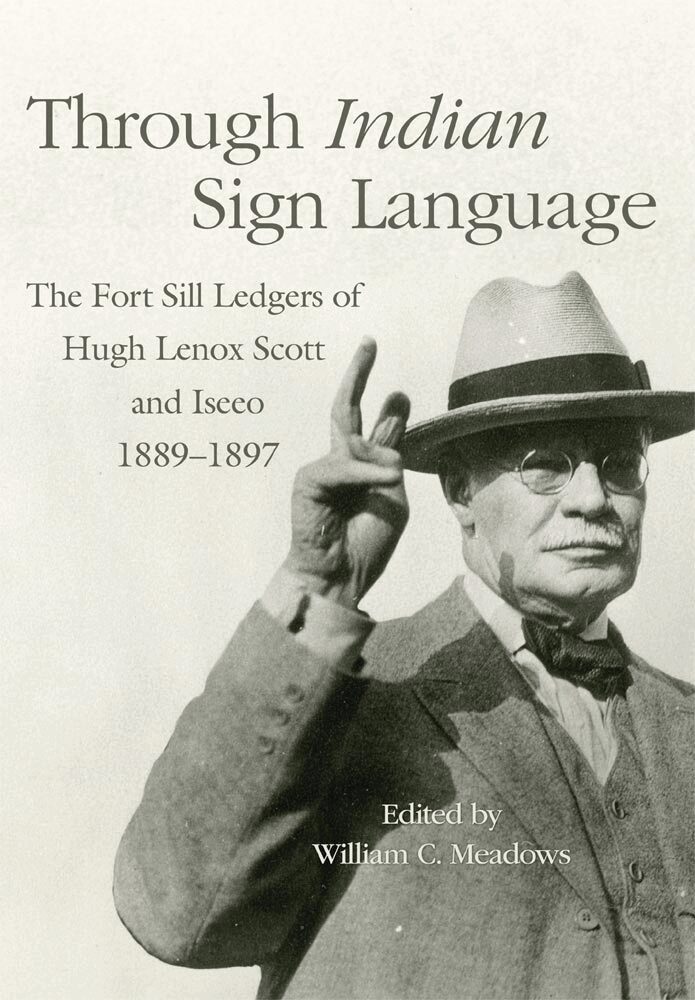
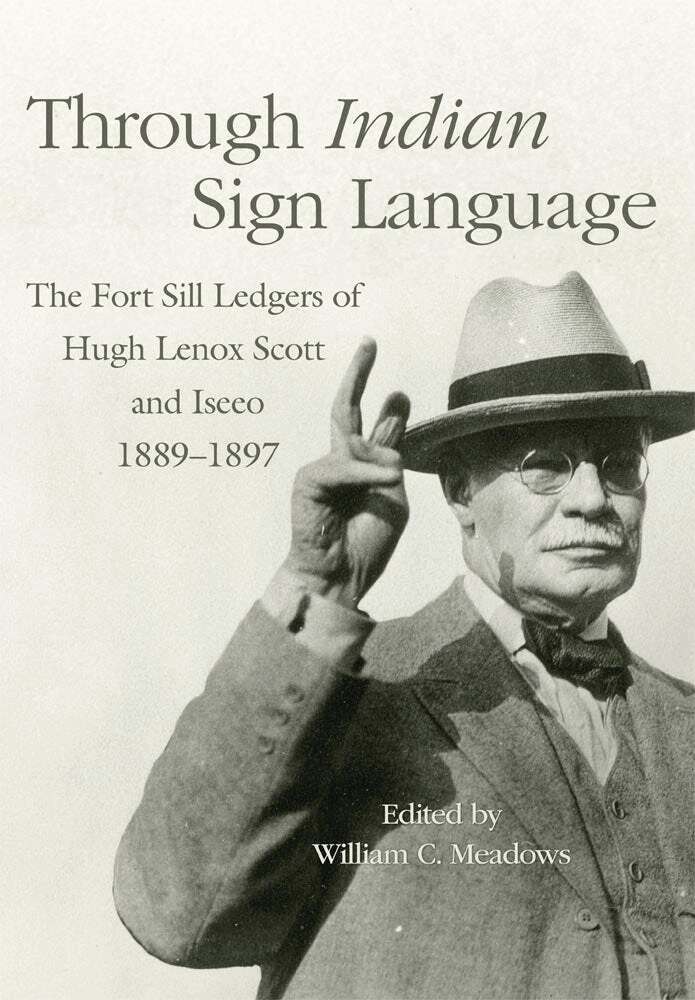
Through Indian Sign Language
The Fort Sill Ledgers of Hugh Lenox Scott and Iseeo, 1889–1897
Inbunden, Engelska, 2015
613 kr
Skickas inom 10-15 vardagar
Hugh Lenox Scott, who would one day serve as chief of staff of the U.S. Army, spent a portion of his early career at Fort Sill, in Indian and, later, Oklahoma Territory. There, from 1891 to 1897, he commanded Troop L, 7th Cavalry, an all-Indian unit. From members of this unit, in particular a Kiowa soldier named Iseeo, Scott collected three volumes of information on American Indian life and culture - a body of ethnographic material conveyed through Plains Indian Sign Language (in which Scott was highly accomplished) and recorded in handwritten English. This remarkable resource - the largest of its kind before the late twentieth century - appears here in full for the first time, put into context by noted scholar William C. Meadows.The Scott ledgers contain an array of historical, linguistic, and ethnographic data - a wealth of primary-source material on Southern Plains Indian people. Meadows describes Plains Indian Sign Language, its origins and history, and its significance to anthropologists. He also sketches the lives of Scott and Iseeo, explaining how they met, how Scott learned the language, and how their working relationship developed and served them both. The ledgers, which follow, recount a variety of specific Plains Indian customs, from naming practices to eagle catching. Scott also recorded his informants' explanations of the signs, as well as a multitude of myths and stories.On his fellow officers' indifference to the sign language, Lieutenant Scott remarked: ""I have often marveled at this apathy concerning such a valuable instrument, by which communication could be held with every tribe on the plains of the buffalo, using only one language."" Here, with extensive background information, Meadows's incisive analysis, and the complete contents of Scott's Fort Sill ledgers, this ""valuable instrument"" is finally and fully accessible to scholars and general readers interested in the history and culture of Plains Indians.
406 kr
Skickas inom 10-15 vardagar
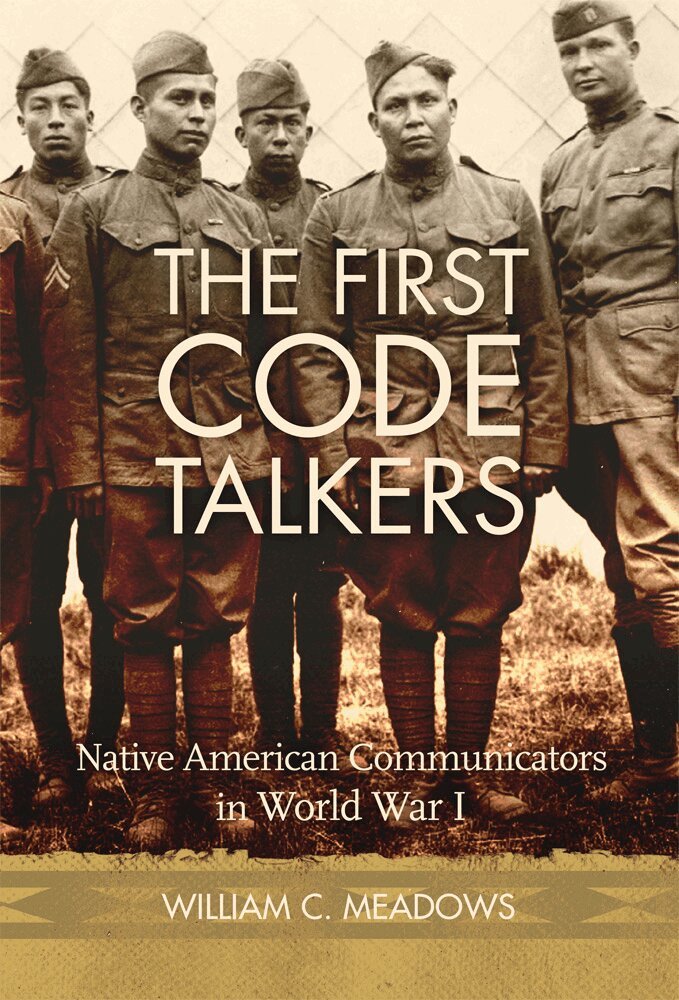
Many Americans know something about the Navajo code talkers in World War II - but little else about the military service of Native Americans, who have served in our armed forces since the American Revolution, and still serve in larger numbers than any other ethnic group. But, as we learn in this splendid work of historical restitution, code talking originated in World War I among Native soldiers whose extraordinary service resulted, at long last, in U.S. citizenship for all Native Americans.The first full account of these forgotten soldiers in our nation's military history, The First Code Talkers covers all known Native American code talkers of World War I - members of the Choctaw, Oklahoma Cherokee, Comanche, Osage, and Sioux nations, as well as the Eastern Band of Cherokee and Ho-Chunk, whose veterans have yet to receive congressional recognition. William C. Meadows, the foremost expert on the subject, describes how Native languages, which were essentially unknown outside tribal contexts and thus could be as effective as formal encrypted codes, came to be used for wartime communication. While more than thirty tribal groups were eventually involved in World Wars I and II, this volume focuses on Native Americans in the American Expeditionary Forces during the First World War.Drawing on nearly thirty years of research - in U.S. military and Native American archives, surviving accounts from code talkers and their commanding officers, family records, newspaper accounts, and fieldwork in descendant communities - the author explores the origins, use, and legacy of the code talkers. In the process, he highlights such noted decorated veterans as Otis Leader, Joseph Oklahombi, and Calvin Atchavit and scrutinizes numerous misconceptions and popular myths about code talking and the secrecy surrounding the practice.With appendixes that include a timeline of pertinent events, biographies of known code talkers, and related World War I data, this book is the first comprehensive work ever published on Native American code talkers in the Great War and their critical place in American military history.
434 kr
Skickas inom 10-15 vardagar
Warrior culture has long been an important facet of Plains Indian life. For Kiowa Indians, military societies have special significance. They serve not only to honor veterans and celebrate and publicize martial achievements but also to foster strong role models for younger tribal members. To this day, these societies serve to maintain traditional Kiowa values, culture, and ethnic identity.Previous scholarship has offered only glimpses of Kiowa military societies. William C. Meadows now provides a detailed account of the ritual structures, ceremonial composition, and historical development of each society: Rabbits, Mountain Sheep, Horses Headdresses, Black Legs, Skunkberry /Unafraid of Death, Scout Dogs, Kiowa Bone Strikers, and Omaha, as well as past and present women’s groups.Two dozen illustrations depict personages and ceremonies, and an appendix provides membership rosters from the late 1800s.The most comprehensive description ever published on Kiowa military societies, this work is unmatched by previous studies in its level of detail and depth of scholarship. It demonstrates the evolution of these groups within the larger context of American Indian history and anthropology, while documenting and preserving tribal traditions.
269 kr
Skickas inom 10-15 vardagar
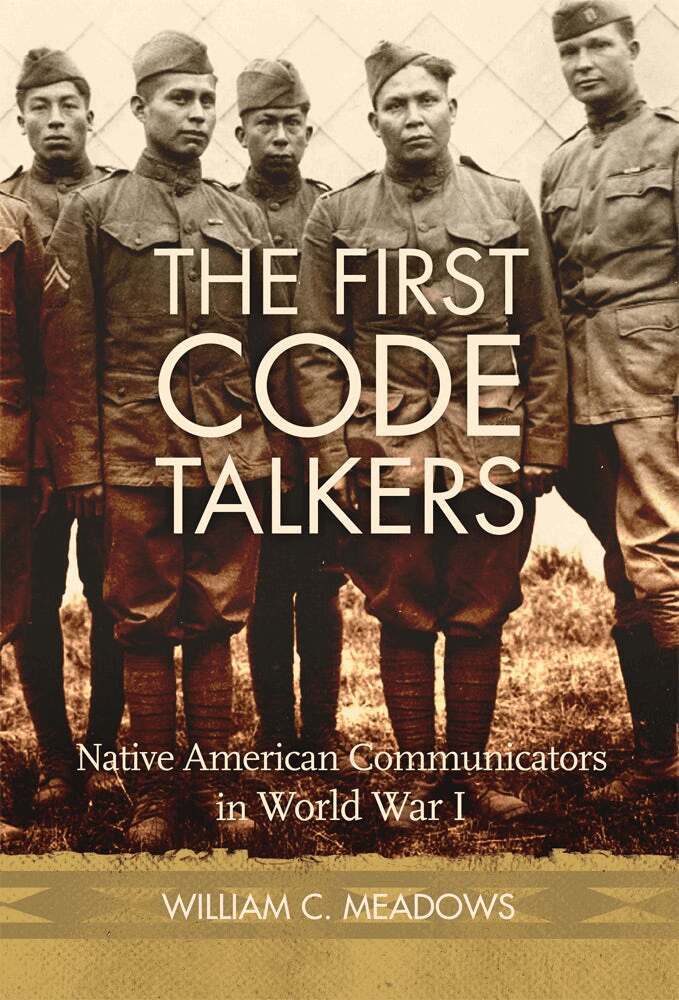
Many Americans know something about the Navajo code talkers in World War II—but little else about the military service of Native Americans, who have served in our armed forces since the American Revolution, and still serve in larger numbers than any other ethnic group. But, as we learn in this splendid work of historical restitution, code talking originated in World War I among Native soldiers whose extraordinary service resulted, at long last, in U.S. citizenship for all Native Americans.The first full account of these forgotten soldiers in our nation’s military history, The First Code Talkers covers all known Native American code talkers of World War I—members of the Choctaw, Oklahoma Cherokee, Comanche, Osage, and Sioux nations, as well as the Eastern Band of Cherokee and Ho-Chunk, whose veterans have yet to receive congressional recognition. William C. Meadows, the foremost expert on the subject, describes how Native languages, which were essentially unknown outside tribal contexts and thus could be as effective as formal encrypted codes, came to be used for wartime communication. While more than thirty tribal groups were eventually involved in World Wars I and II, this volume focuses on Native Americans in the American Expeditionary Forces during the First World War.Drawing on nearly thirty years of research—in U.S. military and Native American archives, surviving accounts from code talkers and their commanding officers, family records, newspaper accounts, and fieldwork in descendant communities—the author explores the origins, use, and legacy of the code talkers. In the process, he highlights such noted decorated veterans as Otis Leader, Joseph Oklahombi, and Calvin Atchavit and scrutinizes numerous misconceptions and popular myths about code talking and the secrecy surrounding the practice.With appendixes that include a timeline of pertinent events, biographies of known code talkers, and related World War I data, this book is the first comprehensive work ever published on Native American code talkers in the Great War and their critical place in American military history.
Through Indian Sign Language
The Fort Sill Ledgers of Hugh Lenox Scott and Iseeo, 1889–1897
Häftad, Engelska, 2022
434 kr
Skickas inom 10-15 vardagar
Hugh Lenox Scott, who would one day serve as chief of staff of the U.S. Army, spent a portion of his early career at Fort Sill, in Indian and, later, Oklahoma Territory. There, from 1891 to 1897, he commanded Troop L, 7th Cavalry, an all-Indian unit. From members of this unit, in particular a Kiowa soldier named Iseeo, Scott collected three volumes of information on American Indian life and culture—a body of ethnographic material conveyed through Plains Indian Sign Language (in which Scott was highly accomplished) and recorded in handwritten English. This remarkable resource—the largest of its kind before the late twentieth century—appears here in full for the first time, put into context by noted scholar William C. Meadows.The Scott ledgers contain an array of historical, linguistic, and ethnographic data—a wealth of primary-source material on Southern Plains Indian people. Meadows describes Plains Indian Sign Language, its origins and history, and its significance to anthropologists. He also sketches the lives of Scott and Iseeo, explaining how they met, how Scott learned the language, and how their working relationship developed and served them both. The ledgers, which follow, recount a variety of specific Plains Indian customs, from naming practices to eagle catching. Scott also recorded his informants’ explanations of the signs, as well as a multitude of myths and stories.On his fellow officers’ indifference to the sign language, Lieutenant Scott remarked: “I have often marveled at this apathy concerning such a valuable instrument, by which communication could be held with every tribe on the plains of the buffalo, using only one language.” Here, with extensive background information, Meadows’s incisive analysis, and the complete contents of Scott’s Fort Sill ledgers, this “valuable instrument” is finally and fully accessible to scholars and general readers interested in the history and culture of Plains Indians.
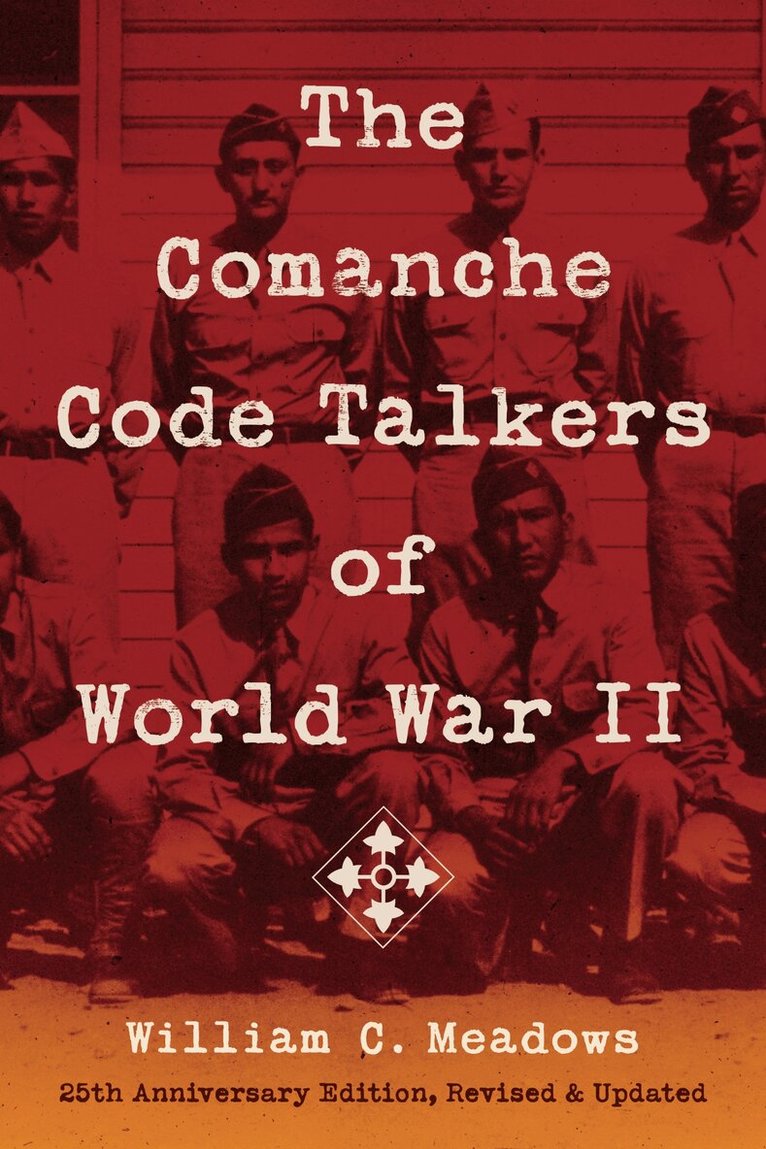
Comanche Code Talkers of World War II
25th Anniversary Edition, Revised and Updated
Häftad, Engelska, 2027
432 kr
Kommande
An updated edition of a popular study of the Comanche Code Talkers of WWII.Among the Allied troops who came ashore in Normandy on D-Day were thirteen Comanches in the 4th Infantry Division's 4th Signal Company. Under German fire they laid communications lines and sent messages in a form never before heard in Europe—coded Comanche. For the rest of World War II, the Comanche Code Talkers played a vital role transmitting orders in a code the Germans never broke. Drawing on interviews with surviving members of the unit, their training officer, and fellow soldiers, as well as archival records, William C. Meadows traces the Comanche Code Talkers from recruitment and training through wartime service and into their postwar lives. He also places their story within the broader history of Native American code talking in the world wars, comparing the Comanche program with the better-known Navajo Code Talkers and examining the military's use of Native languages for secure communication.This twenty-fifth anniversary edition adds a new chapter and photographs documenting long-overdue recognition for the Comanche Code Talkers, in the form of congressional medals, museum exhibits, films, and memorials, along with updates in several areas that clarify the development of code talking, add key details of the unit's history, and highlight the enduring legacy of these soldiers and their once-secret contribution to Allied victory.
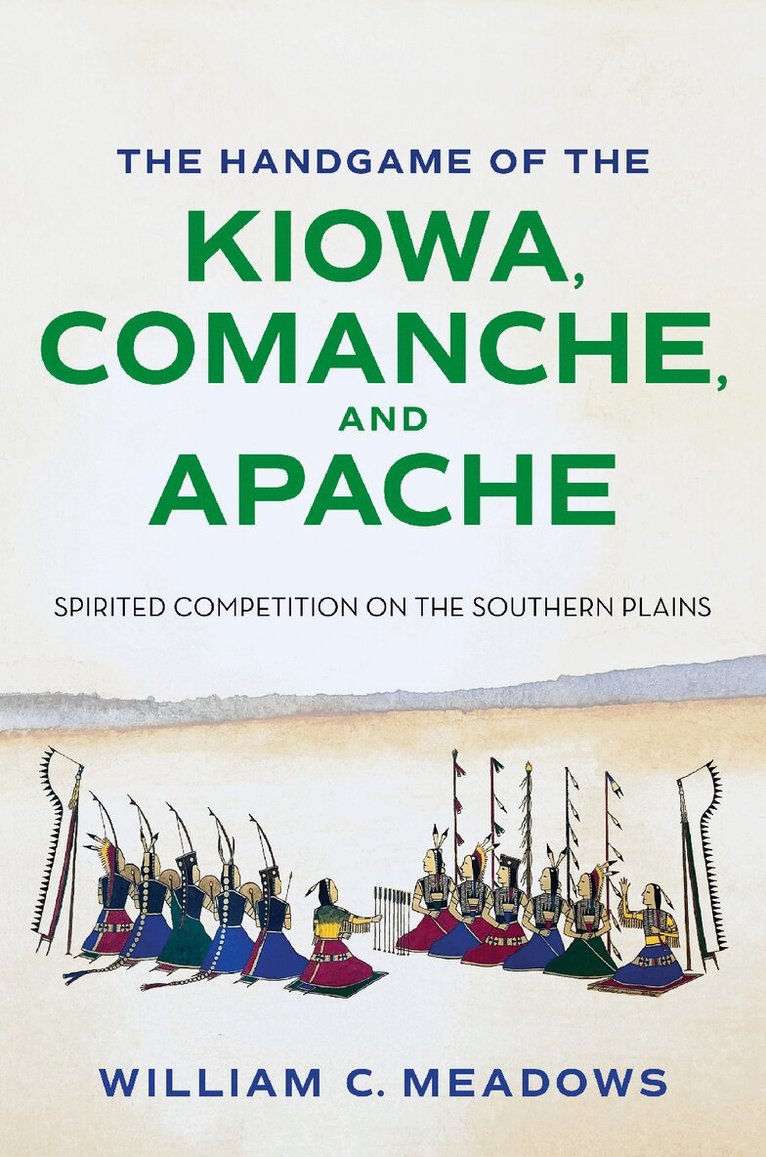
Handgame of the Kiowa, Comanche, and Apache
Spirited Competition on the Southern Plains
Inbunden, Engelska, 2025
534 kr
Skickas inom 7-10 vardagar
The North American handgame has a long lineage, attested in the myth, oral traditions, and archaeological records of Native American people. In The Handgame of the Kiowa, Comanche, and Apache: Spirited Competition on the Southern Plains, noted scholar William C. Meadows examines the game’s history, evolution, and practice from origin accounts to the present day among people of the Southern Plains American Indian nations. According to Meadows, the handgame, once primarily a source of winter recreation, now includes round-robin tournaments as well as public school and university teams. In fact, it has evolved to occupy an important social arena in Native American life. Based on ethnographic fieldwork and the author’s own participation since the early 1990s, the book also incorporates extensive archival research in ethnographic, archaeological, and historical sources. Examining such topics as the handgame’s relation to language, gender roles, economics, and tribal sovereignty, Meadows argues that the game is just as important in tribal contexts as other more widely known activities such as powwows, dances, sweat lodges, and stickball in maintaining American Indian culture and ethnicity. The Handgame of the Kiowa, Comanche, and Apache affords readers a greater sense of how this traditional game has developed, how its practitioners feel about it, how it is played, and why it is, in the words of the author, “so spirited, popular, and infectious as an activity.”