
William Callison – författare
Visar alla böcker från författaren William Callison. Handla med fri frakt och snabb leverans.
3 produkter
3 produkter
512 kr
Skickas
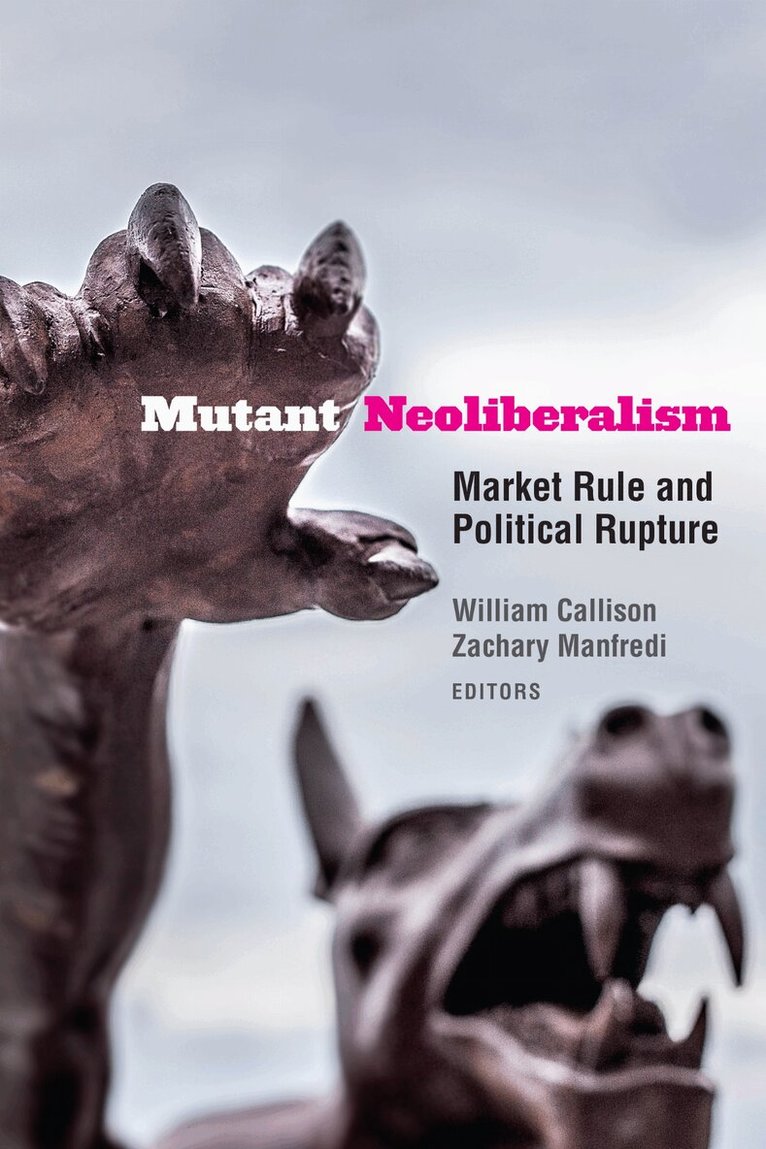
Tales of neoliberalism's death are serially overstated. Following the financial crisis of 2008, neoliberalism was proclaimed a "zombie," a disgraced ideology that staggered on like an undead monster. After the political ruptures of 2016, commentators were quick to announce "the end" of neoliberalism yet again, pointing to both the global rise of far-right forces and the reinvigoration of democratic socialist politics. But do new political forces sound neoliberalism's death knell or will they instead catalyze new mutations in its dynamic development?Mutant Neoliberalism brings together leading scholars of neoliberalism—political theorists, historians, philosophers, anthropologists and sociologists—to rethink transformations in market rule and their relation to ongoing political ruptures. The chapters show how years of neoliberal governance, policy, and depoliticization created the conditions for thriving reactionary forces, while also reflecting on whether recent trends will challenge, reconfigure, or extend neoliberalism's reach. The contributors reconsider neoliberalism's relationship with its assumed adversaries and map mutations in financialized capitalism and governance across time and space—from Europe and the United States to China and India. Taken together, the volume recasts the stakes of contemporary debate and reorients critique and resistance within a rapidly changing landscape.Contributors: Étienne Balibar, Sören Brandes, Wendy Brown, Melinda Cooper, Julia Elyachar, Michel Feher, Megan Moodie, Christopher Newfield, Dieter Plehwe, Lisa Rofel, Leslie Salzinger, Quinn Slobodian
1 871 kr
Skickas inom 10-15 vardagar
Tales of neoliberalism's death are serially overstated. Following the financial crisis of 2008, neoliberalism was proclaimed a "zombie," a disgraced ideology that staggered on like an undead monster. After the political ruptures of 2016, commentators were quick to announce "the end" of neoliberalism yet again, pointing to both the global rise of far-right forces and the reinvigoration of democratic socialist politics. But do new political forces sound neoliberalism's death knell or will they instead catalyze new mutations in its dynamic development?Mutant Neoliberalism brings together leading scholars of neoliberalism—political theorists, historians, philosophers, anthropologists and sociologists—to rethink transformations in market rule and their relation to ongoing political ruptures. The chapters show how years of neoliberal governance, policy, and depoliticization created the conditions for thriving reactionary forces, while also reflecting on whether recent trends will challenge, reconfigure, or extend neoliberalism's reach. The contributors reconsider neoliberalism's relationship with its assumed adversaries and map mutations in financialized capitalism and governance across time and space—from Europe and the United States to China and India. Taken together, the volume recasts the stakes of contemporary debate and reorients critique and resistance within a rapidly changing landscape.Contributors: Étienne Balibar, Sören Brandes, Wendy Brown, Melinda Cooper, Julia Elyachar, Michel Feher, Megan Moodie, Christopher Newfield, Dieter Plehwe, Lisa Rofel, Leslie Salzinger, Quinn Slobodian
180 kr
Kommande
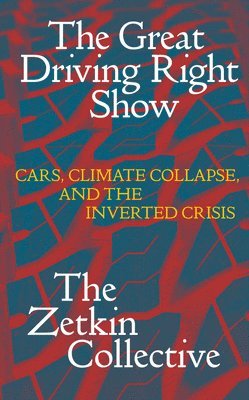
Apocalypse is in the air. And the far right knows it. Since the pandemic, it has successfully cultivated crises, conspiracy theories, and coalitions to fight a green energy transition. Mobilising online and in the streets, far-right actors cast decarbonisation measures as a 'war on cars' endangering individual liberty, the nuclear family, the nation, and western civilisation.In The Great Driving Right Show, the Zetkin Collective traces the evolution of these conflicts and shows how, as the climate crisis worsens, the political right constructs an 'inverted crisis' in which climate action - not climate change - represents the gravest existential threat. Rising through this shared strategy are movements and parties from anti-road-pricing saboteurs, 'freedom' convoys and farmers' protests, to the Trump-led opposition to electric vehicles. Powering such actors are not only fossil-fuel and automobile interests, but an ever-expanding cycle of moral panics about climate and racial justice protesters, trans people, and migrants.With the planet at stake, we must confront the new climate denialism and the violent mobility regime fuelling the rise of fossil fascism.