William Demopoulos - Böcker
Visar alla böcker från författaren William Demopoulos. Handla med fri frakt och snabb leverans.
8 produkter
8 produkter
386 kr
Skickas inom 10-15 vardagar
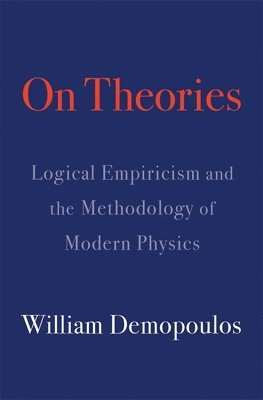
A renowned philosopher’s final work, illuminating how the logical empiricist tradition has failed to appreciate the role of actual experiments in forming its philosophy of science.The logical empiricist treatment of physics dominated twentieth-century philosophy of science. But the logical empiricist tradition, for all it accomplished, does not do justice to the way in which empirical evidence functions in modern physics.In his final work, the late philosopher of science William Demopoulos contends that philosophers have failed to provide an adequate epistemology of science because they have failed to appreciate the tightly woven character of theory and evidence. As a consequence, theory comes apart from evidence. This trouble is nowhere more evident than in theorizing about particle and quantum physics. Arguing that we must consider actual experiments as they have unfolded across history, Demopoulos provides a new epistemology of theories and evidence, albeit one that stands on the shoulders of giants.On Theories finds clarity in Isaac Newton’s suspicion of mere “hypotheses.” Newton’s methodology lies in the background of Jean Perrin’s experimental investigations of molecular reality and of the subatomic investigations of J. J. Thomson and Robert Millikan. Demopoulos extends this account to offer novel insights into the distinctive nature of quantum reality, where a logico-mathematical reconstruction of Bohrian complementarity meets John Stewart Bell’s empirical analysis of Einstein’s “local realism.” On Theories ultimately provides a new interpretation of quantum probabilities as themselves objectively representing empirical reality.
484 kr
Skickas inom 10-15 vardagar
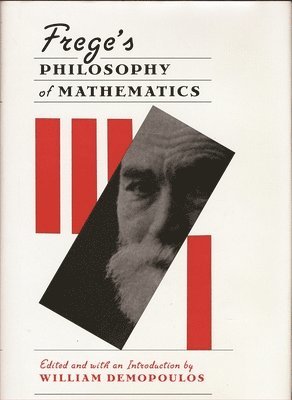
Widespread interest in Frege’s general philosophical writings is, relatively speaking, a fairly recent phenomenon. But it is only very recently that his philosophy of mathematics has begun to attract the attention it now enjoys. This interest has been elicited by the discovery of the remarkable mathematical properties of Frege’s contextual definition of number and of the unique character of his proposals for a theory of the real numbers.This collection of essays addresses three main developments in recent work on Frege’s philosophy of mathematics: the emerging interest in the intellectual background to his logicism; the rediscovery of Frege’s theorem; and the reevaluation of the mathematical content of The Basic Laws of Arithmetic. Each essay attempts a sympathetic, if not uncritical, reconstruction, evaluation, or extension of a facet of Frege’s theory of arithmetic. Together they form an accessible and authoritative introduction to aspects of Frege’s thought that have, until now, been largely missed by the philosophical community.
Del 9 - Studies in Theoretical Psycholinguistics
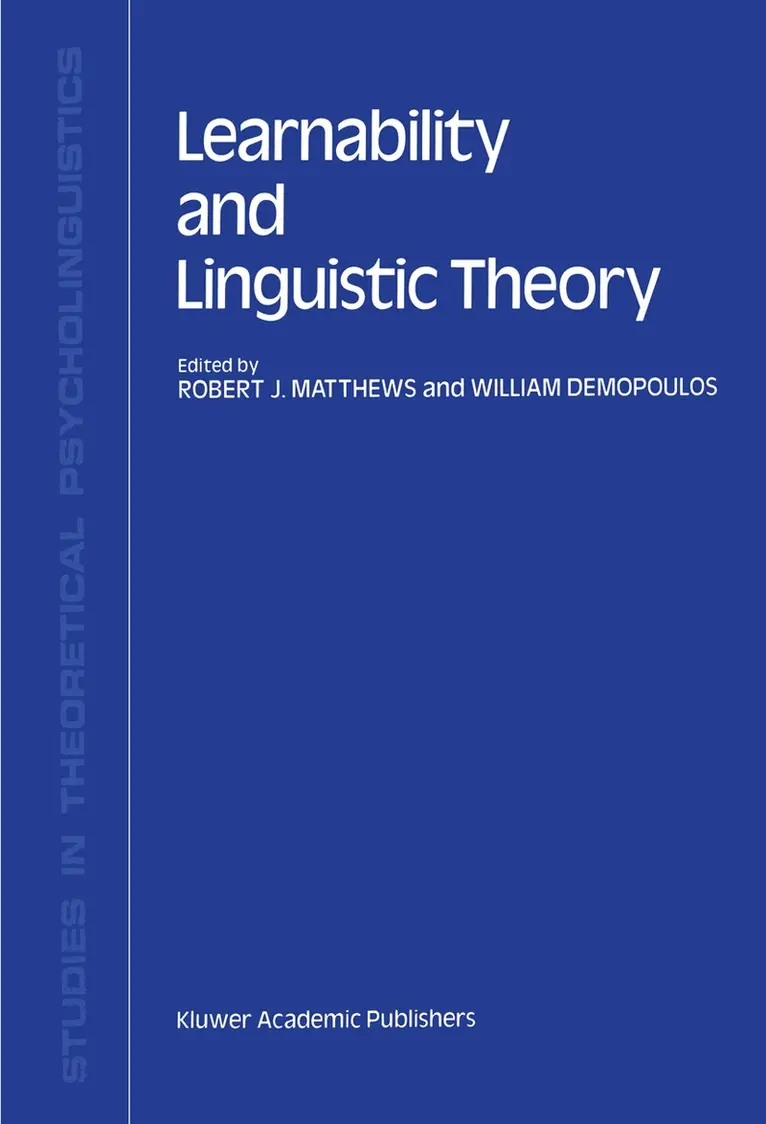
Learnability and Linguistic Theory
Häftad, Engelska, 1989
556 kr
Skickas inom 10-15 vardagar
The impetus for this volume developed from the 1982 University of Western Ontario Learnability Workshop, which was organized by the editors and sponsored by that University's Department of Philosophy and the Centre for Cognitive Science. The volume e~plores the import of learnability theory for contemporary linguistic theory, focusing on foundational learning-theoretic issues associated with the parametrized Government-Binding (G-B) framework. Written by prominent re searchers in the field, all but two of the eight contributions are pre viously unpublished. The editor's introduction provides an overview that interrelates the separate papers and elucidates the foundational issues addressed by the volume. Osherson, Stob, and Weinstein's "Learning Theory and Natural Language" first appeared in Cognition (1984); Matthews's "The Plausi bility of Rationalism" was published in the Journal of Philosophy (1984). The editors would like to thank the publishers for permission to reprint these papers. Mr. Marin Marinov assisted with the preparation of the indices for the volume. VB ROBERT 1. MATTHEWS INTRODUCTION: LEARNABILITY AND LINGUISTIC THEORY 1. INTRODUCTION Formal learning theory, as the name suggests, studies the learnability of different classes of formal objects (languages, grammars, theories, etc.) under different formal models of learning. The specification of such a model, which specifies (a) a learning environment, (b) a learn ing strategy, and (c) a criterion for successful learning, determines (d) a class of formal objects, namely, the class that can be acquired to the level of the specified success criterion by a learner implementing the specified strategy in the specified enviroment.
1 039 kr
Skickas inom 10-15 vardagar
This volume features work on learning by researchers in various disciplines who share an interest in the systematic study of cognition and in the study of the formal and semantic aspects of language acquisition. A recurring theme is that language learning involves the acquisition of certain competencies and the formation of a system of beliefs which are significantly underdetermined by the linguistic and nonlinguistic inputs available to the learner. Theories of language learning must confront the epistemological problem of how it is possible to induce and fixate a belief-system on the basis of exposure to limited data. A typical strategy in dealing with this problem has been to specify various types of formal and empirical constraints on linguistic and conceptual development in terms of specific hypotheses about the character of what is learned and about the kinds of resources and strategies available to the learner. Most of the contributions in this volume are concerned with the specification and evaluation of such constraints.
732 kr
Skickas inom 7-10 vardagar
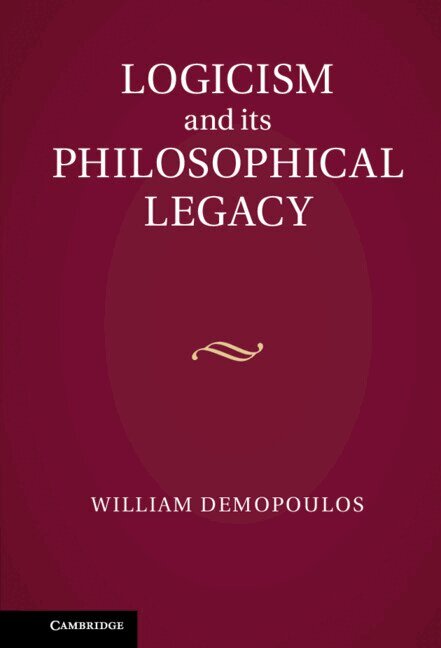
The idea that mathematics is reducible to logic has a long history, but it was Frege who gave logicism an articulation and defense that transformed it into a distinctive philosophical thesis with a profound influence on the development of philosophy in the twentieth century. This volume of classic, revised and newly written essays by William Demopoulos examines logicism's principal legacy for philosophy: its elaboration of notions of analysis and reconstruction. The essays reflect on the deployment of these ideas by the principal figures in the history of the subject - Frege, Russell, Ramsey and Carnap - and in doing so illuminate current concerns about the nature of mathematical and theoretical knowledge. Issues addressed include the nature of arithmetical knowledge in the light of Frege's theorem; the status of realism about the theoretical entities of physics; and the proper interpretation of empirical theories that postulate abstract structural constraints.
428 kr
Skickas inom 7-10 vardagar
The idea that mathematics is reducible to logic has a long history, but it was Frege who gave logicism an articulation and defense that transformed it into a distinctive philosophical thesis with a profound influence on the development of philosophy in the twentieth century. This volume of classic, revised and newly written essays by William Demopoulos examines logicism's principal legacy for philosophy: its elaboration of notions of analysis and reconstruction. The essays reflect on the deployment of these ideas by the principal figures in the history of the subject - Frege, Russell, Ramsey and Carnap - and in doing so illuminate current concerns about the nature of mathematical and theoretical knowledge. Issues addressed include the nature of arithmetical knowledge in the light of Frege's theorem; the status of realism about the theoretical entities of physics; and the proper interpretation of empirical theories that postulate abstract structural constraints.
1 073 kr
Skickas inom 10-15 vardagar
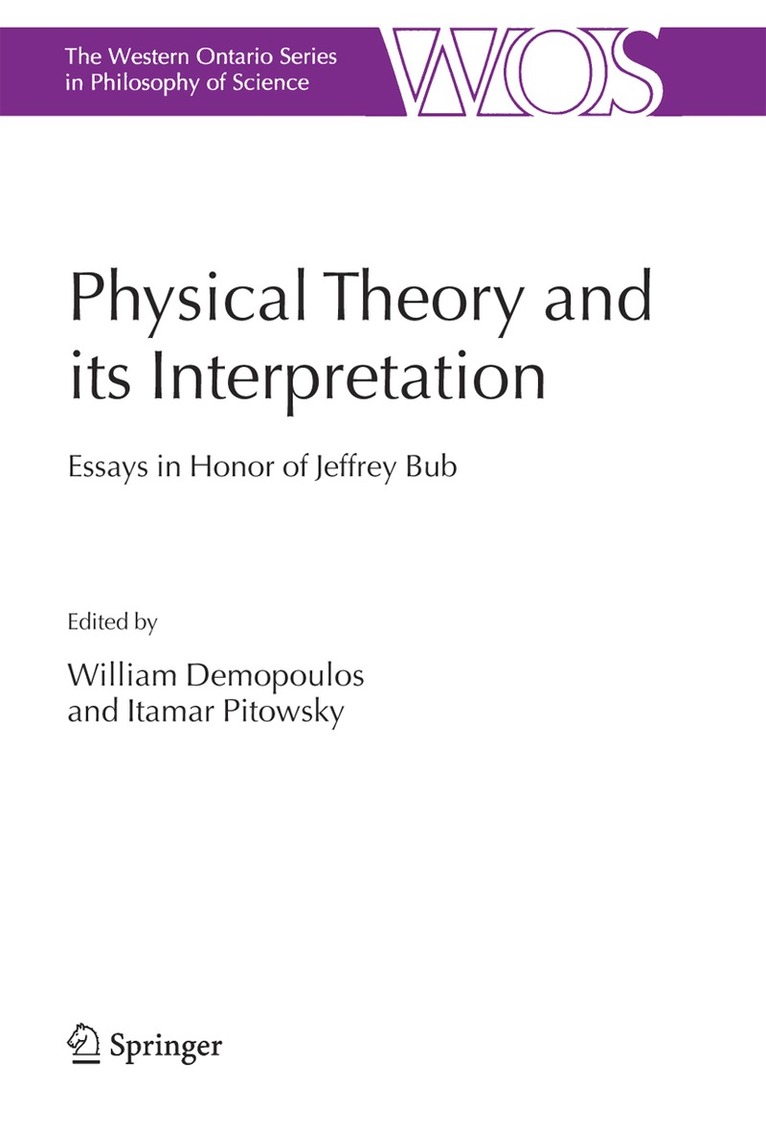
JeffandImetwhenIwasagraduatestudentattheUniversityofMinnesotaandhewas a post doctoral fellow, first in the Chemistry Department, and then in the Center for Philosophy of Science. Later we were colleagues atWestern Ontario. Our friendship and collaboration owe a great deal to both these institutions. In the mid-1960s the Center enjoyed great success under Feigl’s directorship. The history of the Center has been only very partially documented. Feyerabend’s recollections,reportedinhisAutobiography,andsomeyearsearlierinhisremarksfor Feigl’s Festschrift, possess an immediacy that makes them particularly noteworthy, even if all too brief. The Center was the first American institution of its kind and a bastion of positivist and neo-positivist thought. At the time Jeff and I were there, the staff included, in addition to Feigl and Maxwell, Paul Meehl, Roger Steuwer and Keith Gunderson. There were many enthusiastic graduate students, and there was participation, on occasion, from the members of the Philosophy Department, as well as the departments of physics, psychology, mathematics and chemistry. The extent to which this (to us ideal) environment was held together by the force of Feigl’s personality became evident only many years later. The political liberalism of the Viennese Positivists was very much reflected in the philosophicalatmosphereFeiglcreated,anatmospherethatwasmarkedbyopenness, collegiality and intellectual freedom. Combined with its excellent permanent faculty and steady stream of distinguished visitors, the Center was especially well-suited to Jeff’s and my early friendship, our analytic and speculative interests, and our early collaboration.This collaboration was continued when we were members of the Philosophy Department at Western Ontario.
1 073 kr
Skickas inom 10-15 vardagar
JeffandImetwhenIwasagraduatestudentattheUniversityofMinnesotaandhewas a post doctoral fellow, first in the Chemistry Department, and then in the Center for Philosophy of Science. Later we were colleagues atWestern Ontario. Our friendship and collaboration owe a great deal to both these institutions. In the mid-1960s the Center enjoyed great success under Feigl’s directorship. The history of the Center has been only very partially documented. Feyerabend’s recollections,reportedinhisAutobiography,andsomeyearsearlierinhisremarksfor Feigl’s Festschrift, possess an immediacy that makes them particularly noteworthy, even if all too brief. The Center was the first American institution of its kind and a bastion of positivist and neo-positivist thought. At the time Jeff and I were there, the staff included, in addition to Feigl and Maxwell, Paul Meehl, Roger Steuwer and Keith Gunderson. There were many enthusiastic graduate students, and there was participation, on occasion, from the members of the Philosophy Department, as well as the departments of physics, psychology, mathematics and chemistry. The extent to which this (to us ideal) environment was held together by the force of Feigl’s personality became evident only many years later. The political liberalism of the Viennese Positivists was very much reflected in the philosophicalatmosphereFeiglcreated,anatmospherethatwasmarkedbyopenness, collegiality and intellectual freedom. Combined with its excellent permanent faculty and steady stream of distinguished visitors, the Center was especially well-suited to Jeff’s and my early friendship, our analytic and speculative interests, and our early collaboration.This collaboration was continued when we were members of the Philosophy Department at Western Ontario.