William E. Conklin – författare
Visar alla böcker från författaren William E. Conklin. Handla med fri frakt och snabb leverans.
11 produkter
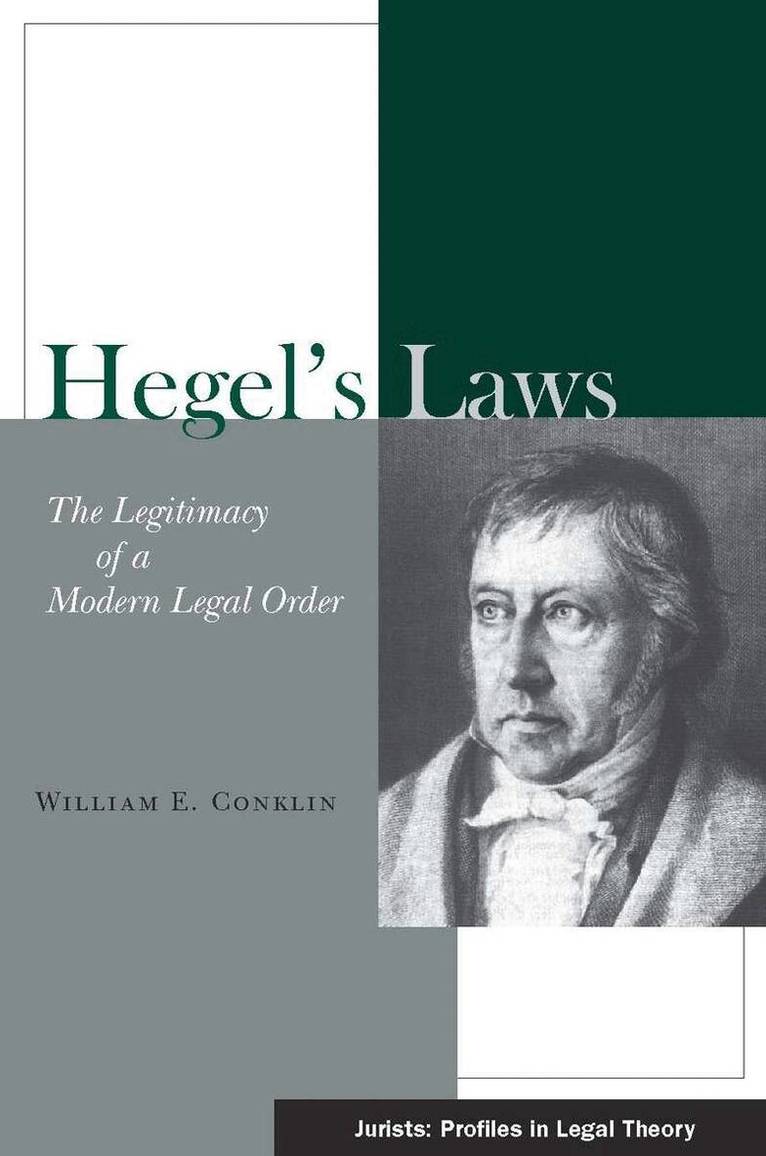
Hegel's Laws
The Legitimacy of a Modern Legal Order
Inbunden, 2008
786 kr
Lägg i varukorg
Hegel's Laws serves as an accessible introduction to Hegel's ideas on the nature of law. In this book, William Conklin examines whether state-centric domestic and international laws are binding upon autonomous individuals. The author also explores why Hegel assumes that this arrangement is more …
Images of a Constitution
Inbunden, 2024
2131 kr
Lägg i varukorg
Originally published in 1989, in this remarkable conjunction of constitutional theory, jurisprudence, literary theory, constitutional law, and political theory, William Conklin first tells us what a constitution is not: it is not a text, nor a compendium of judicial and legislative decisions …
Images of a Constitution
Häftad, 2026
502 kr
Lägg i varukorg
Originally published in 1989, in this remarkable conjunction of constitutional theory, jurisprudence, literary theory, constitutional law, and political theory, William Conklin first tells us what a constitution is not: it is not a text, nor a compendium of judicial and legislative decisions …
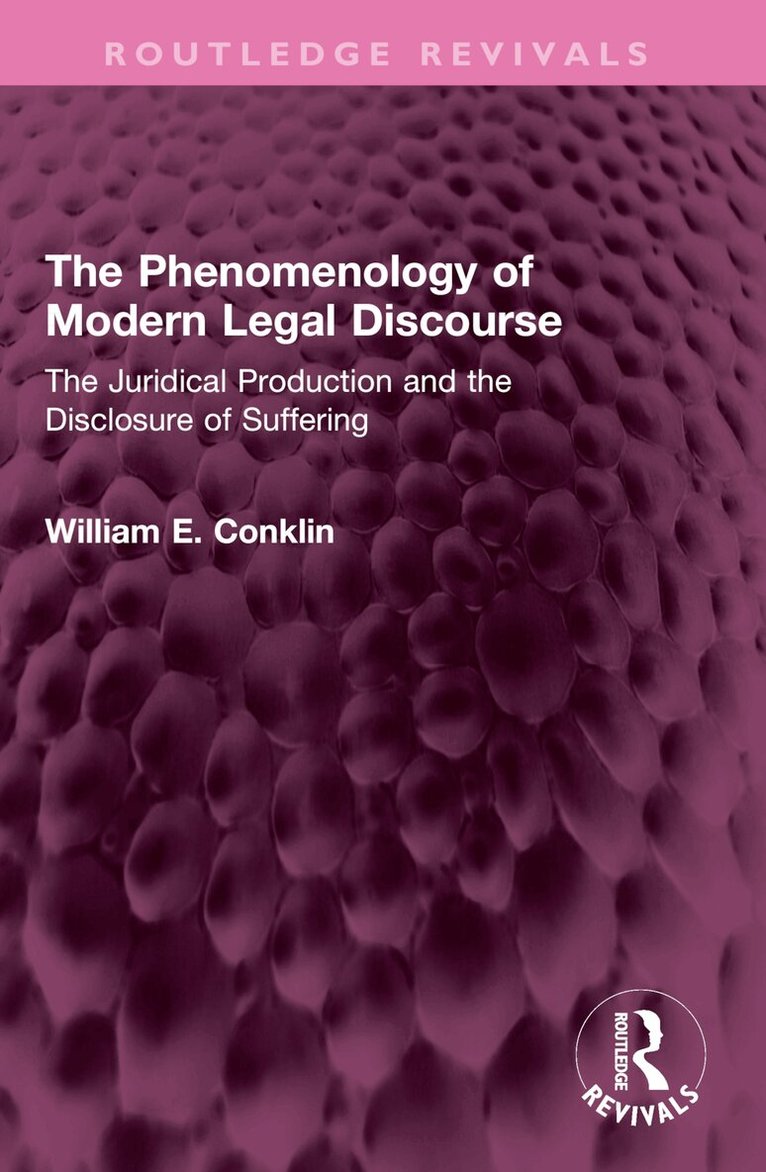
Phenomenology of Modern Legal Discourse
The Juridical Production and the Disclosure of Suffering
E-bok, 2024
542 kr
Lägg i varukorg
Originally published in 1998, The Phenomenology of Modern Legal Discourse recovers the suffering which is concealed as lawyers, judges and other legal officials resignify a harm through the special vocabulary and grammar which constitutes legal language. At the moment of re-signification, an …
Phenomenology of Modern Legal Discourse
The Juridical Production and the Disclosure of Suffering
E-bok, 2024
542 kr
Lägg i varukorg
Originally published in 1998, The Phenomenology of Modern Legal Discourse recovers the suffering which is concealed as lawyers, judges and other legal officials resignify a harm through the special vocabulary and grammar which constitutes legal language. At the moment of re-signification, an …
Images of a Constitution
E-bok, 2024
542 kr
Lägg i varukorg
Originally published in 1989, in this remarkable conjunction of constitutional theory, jurisprudence, literary theory, constitutional law, and political theory, William Conklin first tells us what a constitution is not: it is not a text, nor a compendium of judicial and legislative decisions …
Images of a Constitution
E-bok, 2024
542 kr
Lägg i varukorg
Originally published in 1989, in this remarkable conjunction of constitutional theory, jurisprudence, literary theory, constitutional law, and political theory, William Conklin first tells us what a constitution is not: it is not a text, nor a compendium of judicial and legislative decisions …
Phenomenology of Modern Legal Discourse
The Juridical Production and the Disclosure of Suffering
Inbunden, 2024
2131 kr
Lägg i varukorg
Originally published in 1998, The Phenomenology of Modern Legal Discourse recovers the suffering which is concealed as lawyers, judges and other legal officials resignify a harm through the special vocabulary and grammar which constitutes legal language. At the moment of re-signification, an …
Phenomenology of Modern Legal Discourse
The Juridical Production and the Disclosure of Suffering
Häftad, 2025
502 kr
Lägg i varukorg
Originally published in 1998, The Phenomenology of Modern Legal Discourse recovers the suffering which is concealed as lawyers, judges and other legal officials resignify a harm through the special vocabulary and grammar which constitutes legal language. At the moment of re-signification, an …
Common Law and Civil Law Today - Convergence and Divergence
Av Augusto Sinagra, Anna Valvo m. fl.
Inbunden, 2019
864 kr
Lägg i varukorg
Common Law and Civil Law Today - Convergence and Divergence
Convergence and Divergence
Av Augusto Sinagra, Anna Valvo m. fl.
Häftad, 2019
801 kr
Lägg i varukorg