William E. Hiestand - Böcker
Visar alla böcker från författaren William E. Hiestand. Handla med fri frakt och snabb leverans.
11 produkter
11 produkter
185 kr
Skickas inom 7-10 vardagar
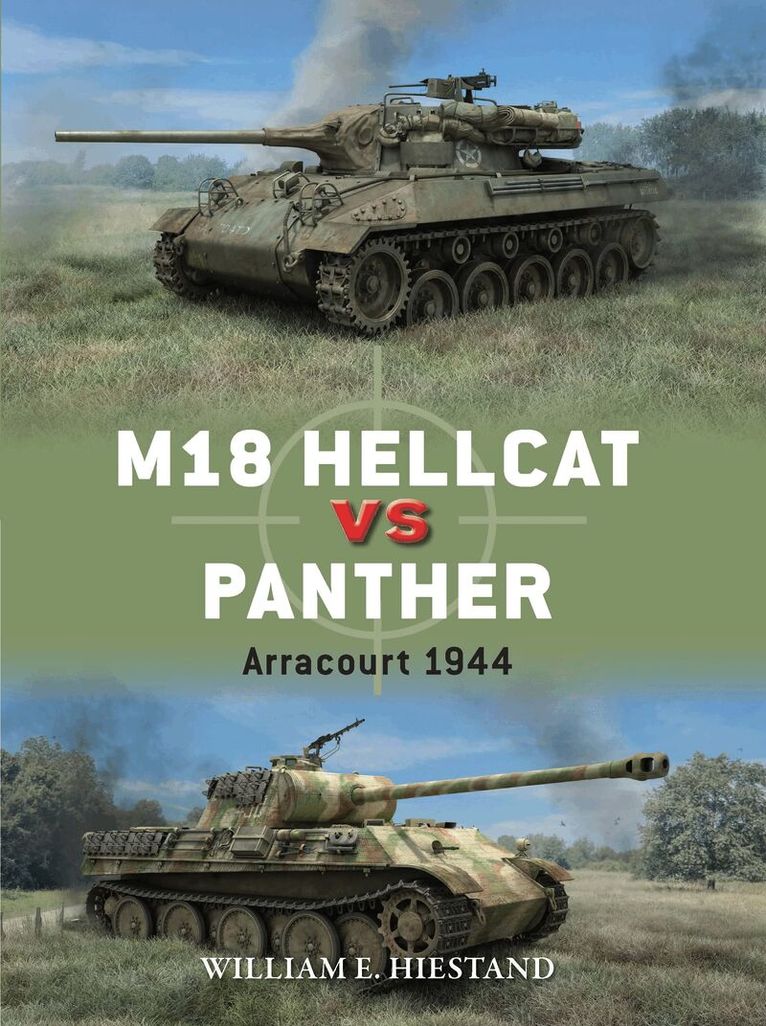
This fully illustrated study examines the bloody battle between the US Army's M18 tank destroyer and Germany's formidable Panther tank at Arracourt in September 1944.In response to Germany’s Blitzkrieg victories of 1939–41, the US Army created a dedicated tank-destroyer force intended to encircle and destroy the massed attacking armored divisions. Fast, relatively well-armed, but weakly armored, the M18 was designed from the start as a tank destroyer, unlike the M10 and M36. By September 1944, the German Army’s armored divisions fielded the Panther tank alongside the PzKpfw IV. In this book, William Hiestand notes that the Panther’s combination of long-range firepower, impressive armour, and good mobility won it a fearsome reputation, but shows how the M18 proved to be a very able opponent when the two types clashed on a foggy September morning during the battle of Arracourt.Fully illustrated with specially commissioned artwork and mapping alongside archive photographs, this lively study examines the origins, development, strengths, and limitations of the two AFVs as well as their crews’ training, doctrine, and combat effectiveness. It also provides a detailed account of the momentous battle between the US 704th Tank Destroyer Battalion and the German Panzer-Brigade 113 at Arracourt, where the two types clashed in a surprising encounter that challenges our preconceptions about armored warfare in World War II.
Del 303 - New Vanguard
Tanks in the Easter Offensive 1972
The Vietnam War's great conventional clash
Häftad, Engelska, 2022
141 kr
Skickas inom 7-10 vardagar
This study explains how the armies of North and South Vietnam, newly equipped with the most modern Soviet and US tanks and weaponry, fought the decisive armored battles of the Easter Offensive.Wearied by years of fighting against Viet Cong guerillas and North Vietnamese regulars, the United States had almost completely withdrawn its forces from Vietnam by early 1972. Determined to halt the expansion and improvement of South Vietnamese forces under the U.S. “Vietnamization” program, North Vietnam launched a major fourteen-division attack in March 1972 against the South that became known as the “Easter Offensive.”Hanoi’s assault was spearheaded by 1,200 tanks and was counteracted on the opposite side by Saigon’s newly equipped armored force using U.S. medium tanks. The result was ferocious fighting between major Cold War-era U.S. and Soviet tanks and mechanized equipment, pitting M-48 medium and M-41 light tanks against their T- 54 and PT-76 rivals in a variety of combat environments ranging from dense jungle to urban terrain. Both sides employed cutting-edge weaponry for the first time, including the U.S. TOW and Soviet 9M14 Malyutk wire-guided anti-tank missiles.This volume examines the tanks, armored forces and weapons that clashed in this little-known campaign in detail, using after-action reports from the battlefield and other primary sources to analyze the technical and organizational factors that shaped the outcome. Despite the ARVN’s defensive success in October 1972, North Vietnam massively expanded its armor forces over the next two years while U.S. support waned. This imbalance with key strategic misjudgments by the South Vietnamese President led to the stunning defeat of the South in 1975 when T54 tanks crashed through the fence surrounding the Presidential palace and took Saigon on 30 April 1975.
Del 316 - New Vanguard
Soviet Tanks in Manchuria 1945
The Red Army's ruthless last blitzkrieg of World War II
Häftad, Engelska, 2023
152 kr
Skickas inom 7-10 vardagar
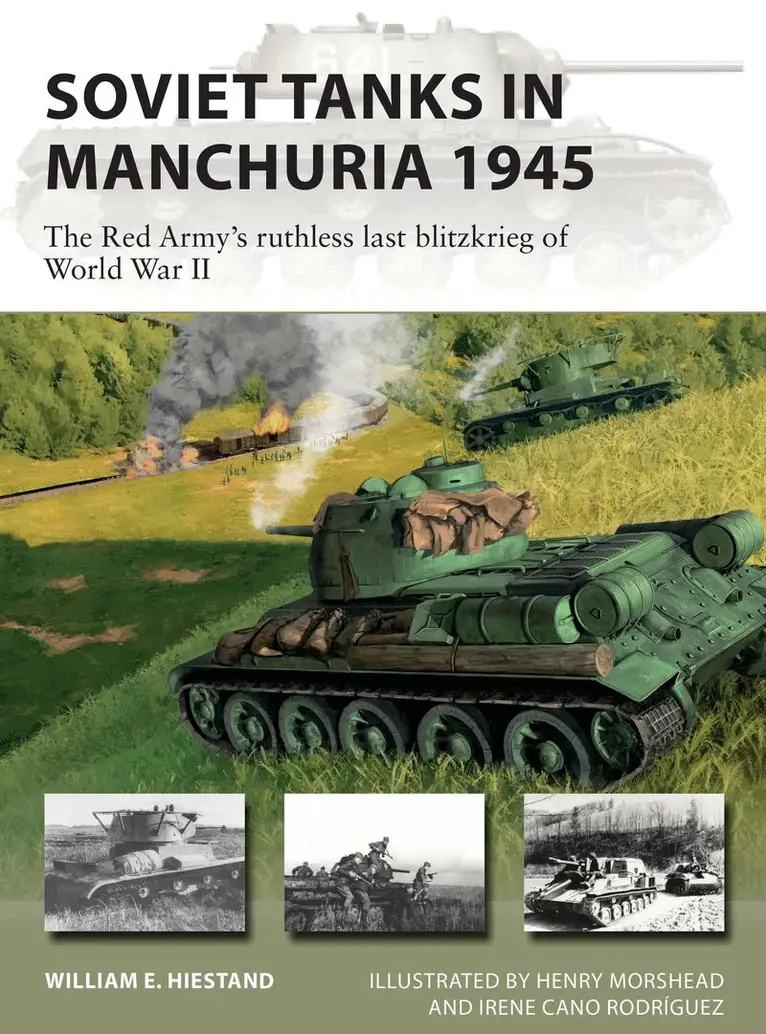
A new illustrated study of the devastating, but little-known, Soviet armored blitzkrieg against the Japanese in the last weeks of World War II, and how it influenced Soviet tank doctrine as the Cold War dawned.Although long overshadowed in the West by the dropping of the atomic bombs on Hiroshima and Nagasaki, the USSR’s lightning strike into Manchuria in August 1945 was one of the most successful and unique campaigns of the era. Soviet forces, led by over 5,500 tanks and self-propelled guns, attacked across huge distances and deserts, marshes, and mountains to smash Japan’s million-strong Kwantung Army in a matter of days.Japanese forces were short of training and equipment, but nevertheless fought fiercely, inflicting 32,000 casualties on the Soviets. Red Army operations were characterized by surprise, speed, and deep penetrations by tank-heavy forces born of the brutal lessons they had learned during years fighting the Wehrmacht. Lessons from the campaign directly shaped Soviet Cold War force structure and planning for mechanized operations against the West.Illustrated with contemporary artwork and rare photos from one of the best collections of Soviet military photos in the West, this fascinating book explains exactly how the last blitzkrieg of World War II was planned, fought, and won, and how it influenced the Red Army's plans for tank warfare against NATO in Europe.
Del 34 - Air Campaign
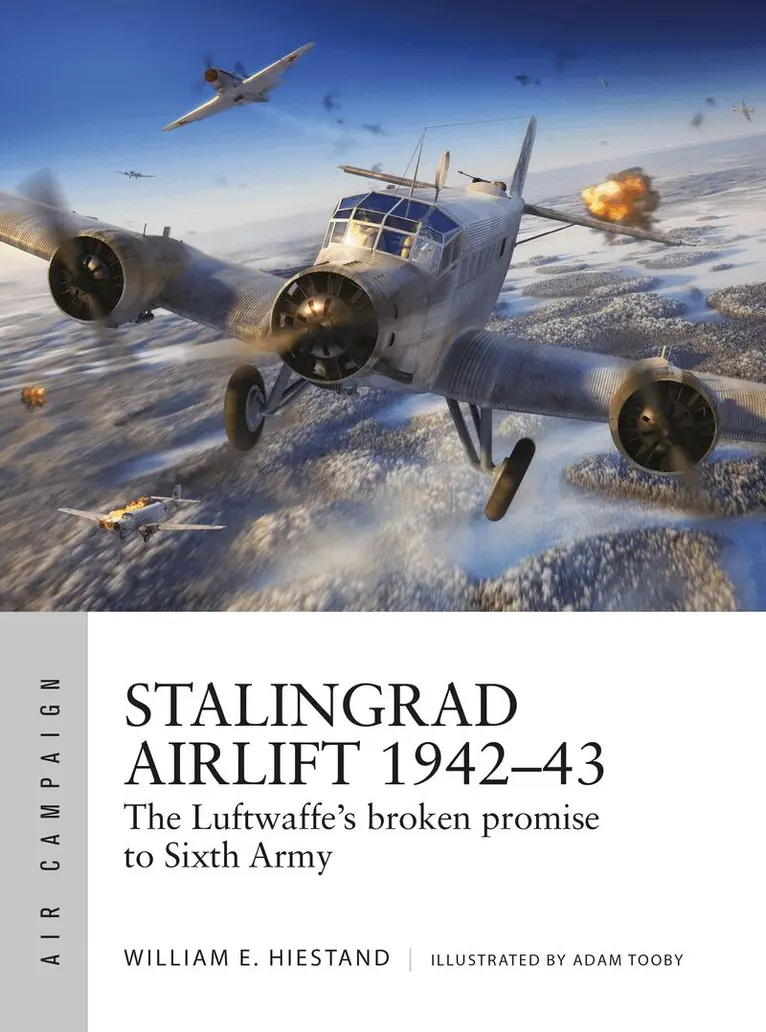
Stalingrad Airlift 1942–43
The Luftwaffe's broken promise to Sixth Army
Häftad, Engelska, 2023
196 kr
Skickas inom 7-10 vardagar
The story of what really led to Germany losing the battle of Stalingrad - the inability of the Luftwaffe to keep Sixth Army supplied throughout the winter of 1942–43 - and why this crucial airlift failed.Luftwaffe chief Hermann Goering’s failure to deliver his promise to keep Sixth Army supplied at Stalingrad was one of the most hard-hitting strategic air failures of World War II. 300 tons a day of supplies were required to sustain the Sixth Army, flown in against a Soviet fighter force whose capabilities were rapidly being transformed. The Luftwaffe's failure left Sixth Army trapped, vulnerable and too weak to attempt a breakout.The destruction of Sixth Army was one of the major turning points in World War II but the Luftwaffe’s crucial role in this disaster has often been overlooked. Some claim the attempt was doomed from the beginning but, in this intriguing book, author William E. Hiestand explains how the Germans had amassed sufficient aircraft to, at least theoretically, provide the supplies needed. Demands of aircraft maintenance, awful weather and, in particular, the Soviet air blockade crippled the airlift operation. In addition, the employment of increasing numbers of modern aircraft by the Soviet Air Force using more flexible tactics, coupled with Chief Marshal Novikov’s superior Air Army organisation proved decisive. The Luftwaffe did eventually recover and mounted focused operations for control of limited areas of the Eastern Front, but overall it had lost its dominance. Packed with strategic diagrams and maps, archive photos and artwork of aerial battles over Stalingrad, and including bird's eye views of Operation Winter Storm and airlift operations and tactics, this title clearly demonstrates how the Luftwaffe lost its strategic initiative in the air.
196 kr
Skickas inom 7-10 vardagar
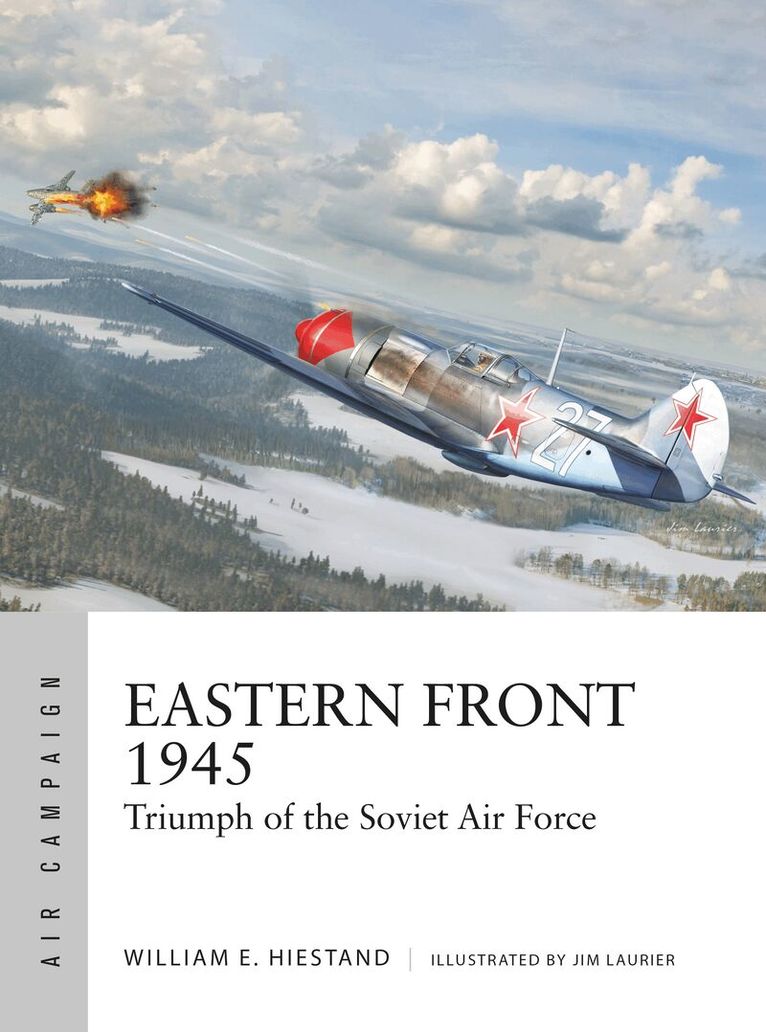
A detailed, illustrated account of the air campaign that accompanied the Red Army's final push towards Berlin, in which massed Soviet air power defeated the Luftwaffe's high-tech Me 262 jets and Mistel exploding drones. The last months of World War II on the Eastern Front saw a ferocious fight between two very different air forces. Soviet Air Force (VVS) Commander-in-Chief Alexander Novikov assembled 7,500 aircraft in three powerful air armies to support the final assault on Berlin. The Luftwaffe employed some of its most advanced weapons including the Me 262 jet and Mistel remotely-guided bomb aircraft. Using photos, 3D diagrams, maps and battlescene artwork, William E. Hiestand, a military analyst with a longstanding interest in Soviet military history, explains how Germany's use of high-tech weaponry and massed Soviet air assaults was not just the culmination of World War II air combat, but also pointed to how the future rivalry with NATO would play out. The VVS used powerful and flexible air armies to control and employ its huge force of aircraft – organizational and employment concepts that would shape Soviet plans and preparations for combat during the Cold War. For the first time, this volume explains how air power helped win the war on the Eastern Front, and how victory shaped Soviet air power doctrine for the decades to come.
152 kr
Skickas inom 7-10 vardagar
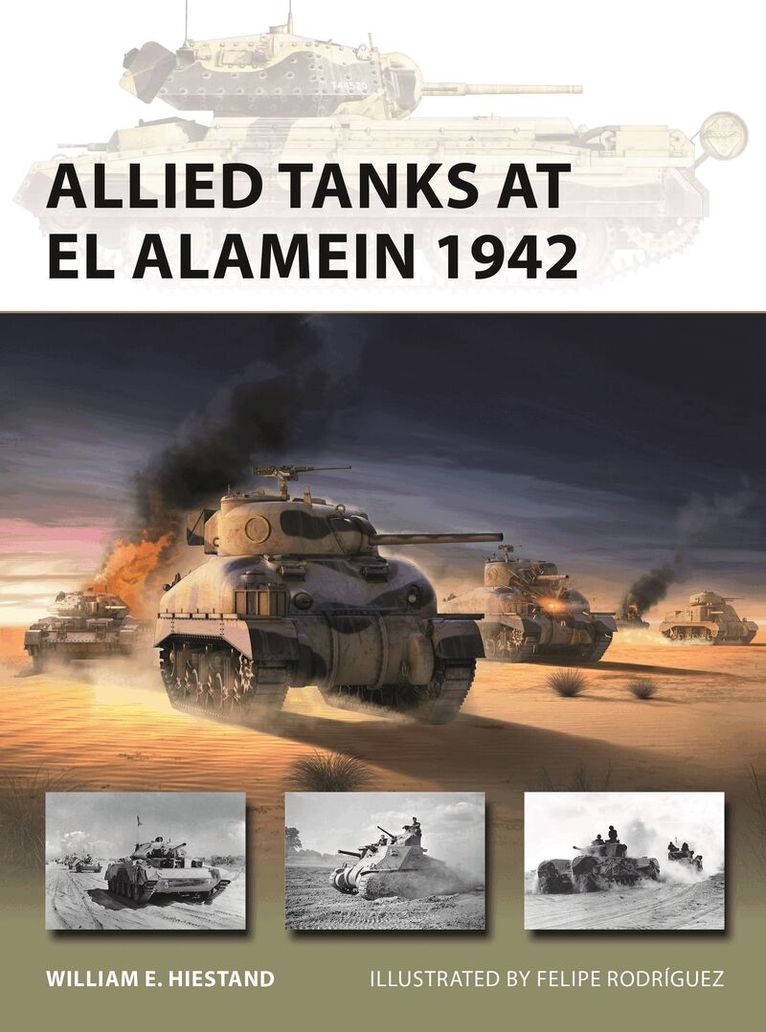
Examines Eighth Army's 1,000-strong tank force – rebuilt, reorganized, and equipped with brand-new Sherman and Churchill tanks – that secured victory at the Second Battle of El Alamein.When Eighth Army retired into the defensive line at El Alamein on 30 June 1942, it was tired, dispirited and had lost almost all its tanks during a string of defeats at Gazala, Tobruk and Mersa Matruh. After savage defensive fighting at First Alamein, the reinforced Desert Rats defeated Rommel’s last offensive in a tank-to-tank clash at Alam Halfa in September. The next month, a completely rebuilt and reorganized Eighth Army, equipped with over 1,000 tanks including the American M4 Sherman, launched the offensive that would finally drive Rommel out of Africa.Montgomery shaped the Eighth Army according to his own military ideas, and on 23 October was able to attack the Axis defenses with the largest force of armoured divisions in its history, with the 1st, 8th and 10th united in a new 'corps de chasse' intended to defeat the Afrika Korps at its own game, and the 7th and two infantry support tank brigades assigned to support the XXX and XIII Corps. With the exception of the A9, 10 and 13 cruisers of 1940-41, as the offensive began, the Eighth Army contained every type of tank employed during the North Africa campaign.Using detailed illustrations of the tanks involved with an analysis of the tactics employed for battle, this is a focused examination of the tank forces that won the Second Battle of El Alamein - the most famous British Army victory of World War II, and one of the turning points of the war.
152 kr
Skickas inom 7-10 vardagar
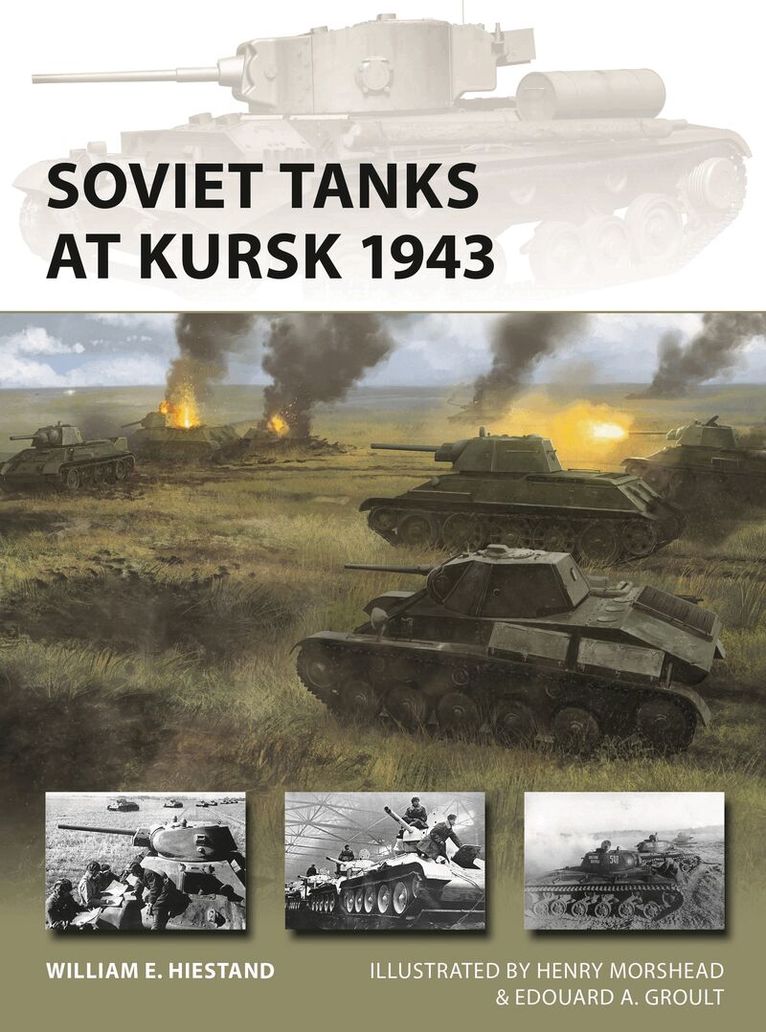
Illustrated throughout, this book explains the composition and qualities of the Soviet tank force that fought Germany’s mighty Panzers at the biggest tank battle in history. In the summer of 1943, Hitler’s army had rebuilt its Panzer forces after defeat at Stalingrad and retreat from the Caucasus. New types, including the Panther, Tiger, and Elefant, at last added technical superiority to the traditional tactical edge enjoyed by the Panzer divisions. The plan was to begin offensive operations by striking from the north and south to cut off Soviet forces in the Kursk salient. In this book, Soviet military specialist William E. Hiestand explores the armor that met this Panzer force, in the biggest tank battle of World War II. The Soviets had benefited from their prodigious production capabilities but the tanks at Kursk varied widely. Still short of tanks, the Soviets also still operated weak T-60 and T-70 light tanks, along with the increasingly obsolete KV-1 heavy tank. Significant numbers of Lend-Lease tanks also fought, including M3 Lees, Valentines, Stuarts, Churchills, and the first Shermans to join the Red Army. The Soviets also benefited from the firepower of the first generation of Soviet self-propelled guns – the SU-76, SU-122, and SU-152. With meticulously researched tank illustrations and rare archive photos, this is an expert account of the Soviet tank forces in the climactic clash on the Eastern Front.
Del 47 - Air Campaign
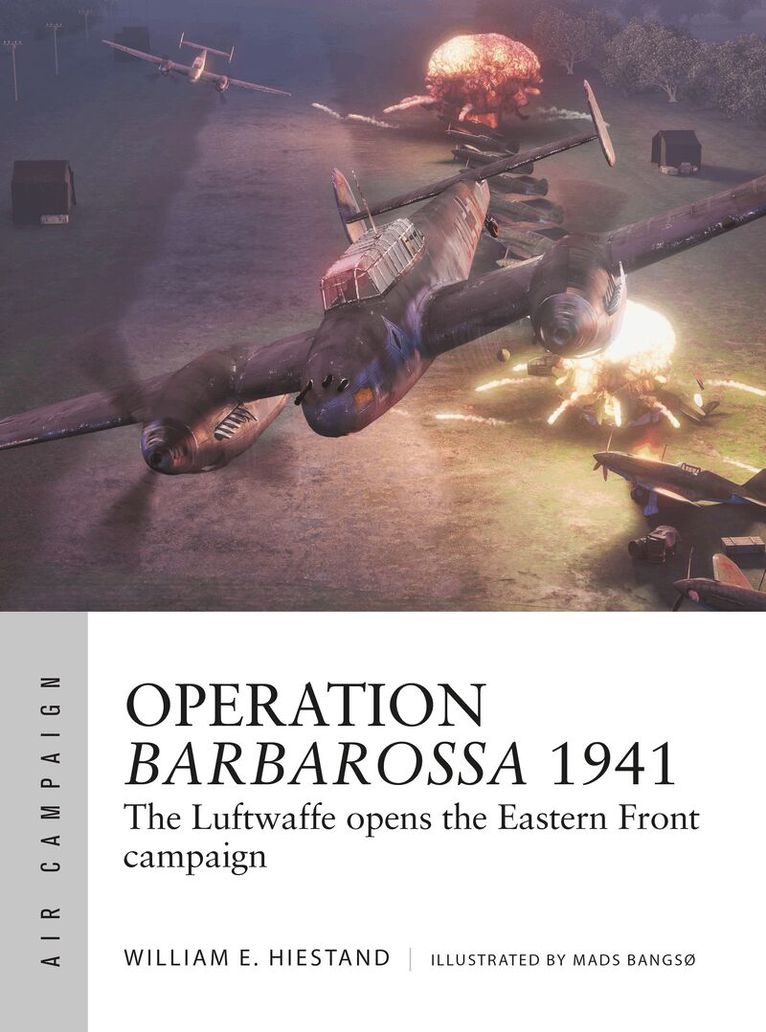
Operation Barbarossa 1941
The Luftwaffe opens the Eastern Front campaign
Häftad, Engelska, 2024
196 kr
Skickas inom 7-10 vardagar
Barbarossa was the biggest German invasion of World War II. Comprehensively illustrated, this study explores the air campaign that spearheaded it, and how it evolved during the rest of 1941.The German invasion of the USSR, Operation Barbarossa, was the apex of Hitler’s aggression. The strength of the Luftwaffe was gathered from across Europe for its opening strikes, where it faced a huge but badly equipped and ill-prepared Soviet Air Force (VVS) of 20,000 aircraft, which it quickly destroyed.In this book, Eastern Front expert William E. Hiestand examines this shattering first campaign, as well as how the Barbarossa air war developed over the following months. He describes how between June and December 1941, Luftwaffe losses rose and aircraft readiness steadily decreased under the pressure of combat. He also analyses the evacuation of Soviet industry – including aircraft production – to the Urals, and the rebuilding of the VVS; by the time German columns stalled 25km from Moscow, the VVS had more operational aircraft at the front than the Luftwaffe. He also covers aspects such as the abortive VVS strikes on Berlin and other strategic targets, and the Luftwaffe’s strategic bombing raids on Moscow. With striking original artwork, 3D diagrams, maps and rare photos, this book reveals the full story of the aerial campaign in Barbarossa, as the devastation began in the most brutal theatre of World War II.
Del 55 - Air Campaign
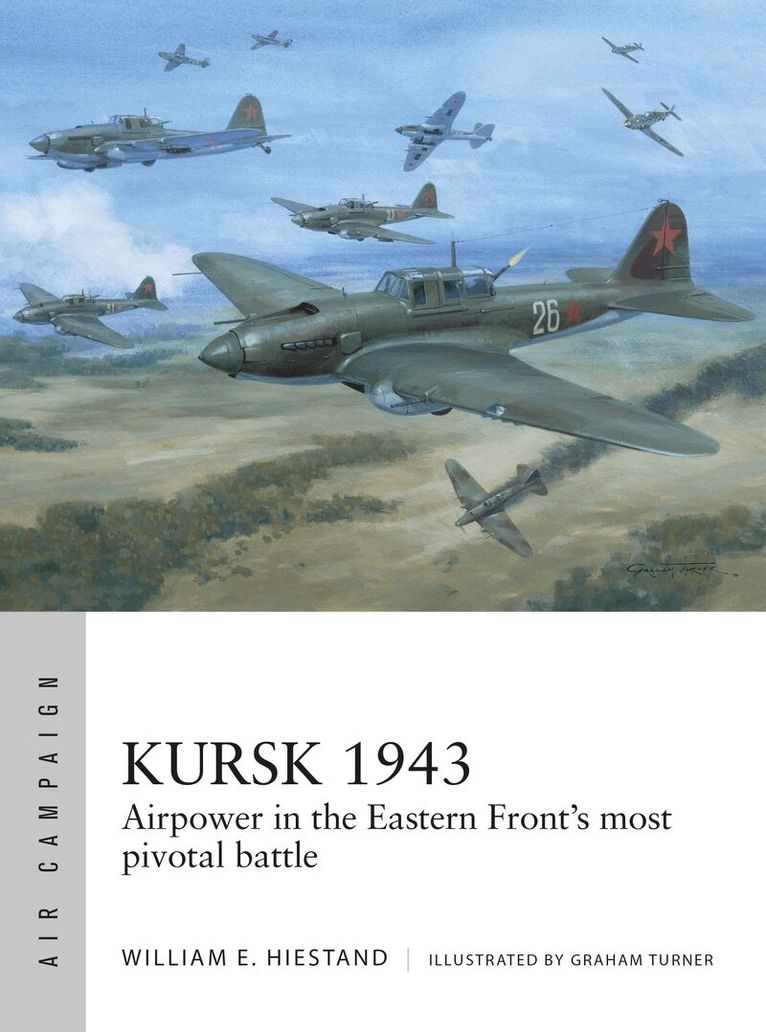
Kursk 1943
Airpower in the Eastern Front's most pivotal battle
Häftad, Engelska, 2025
191 kr
Skickas inom 7-10 vardagar
A history and analysis of the fierce air war over the huge battlefield of Kursk, where the Soviets for the first time fought the all-conquering Luftwaffe to a standstill.The battle of Kursk was the last opportunity for the Luftwaffe to fully support a large-scale offensive, and was the Soviet air forces’ first success in battling their opponents to a standstill during summer months. Aiming to gain a success to stabilize the Eastern Front for the summer, Hitler ordered a concerted attack intended to cut off and destroy Red Army forces holding the Kursk salient. It turned into the greatest tank clash of the war. In this book Soviet military expert William E. Hiestand explains how the complex air war over Kursk played out. With both sides deploying new aircraft specifically designed for destroying tanks, massive engagements took place above the clashes of armor. It was a simultaneous struggle to attain air superiority while bringing their Stukas, Hs 129s, and Il-2 Shturmoviks down for repeated low-level attack runs in the face of enemy fighters and antiaircraft fire. But the campaign also involved strategic bombing behind the front lines, attacking airfields and rail junctions. Offering a day-by-day examination of the air forces’ actions, this book reveals the scale and intensity of the combat over the Kursk salient, the great turning point of the Eastern Front campaign.
152 kr
Skickas inom 7-10 vardagar
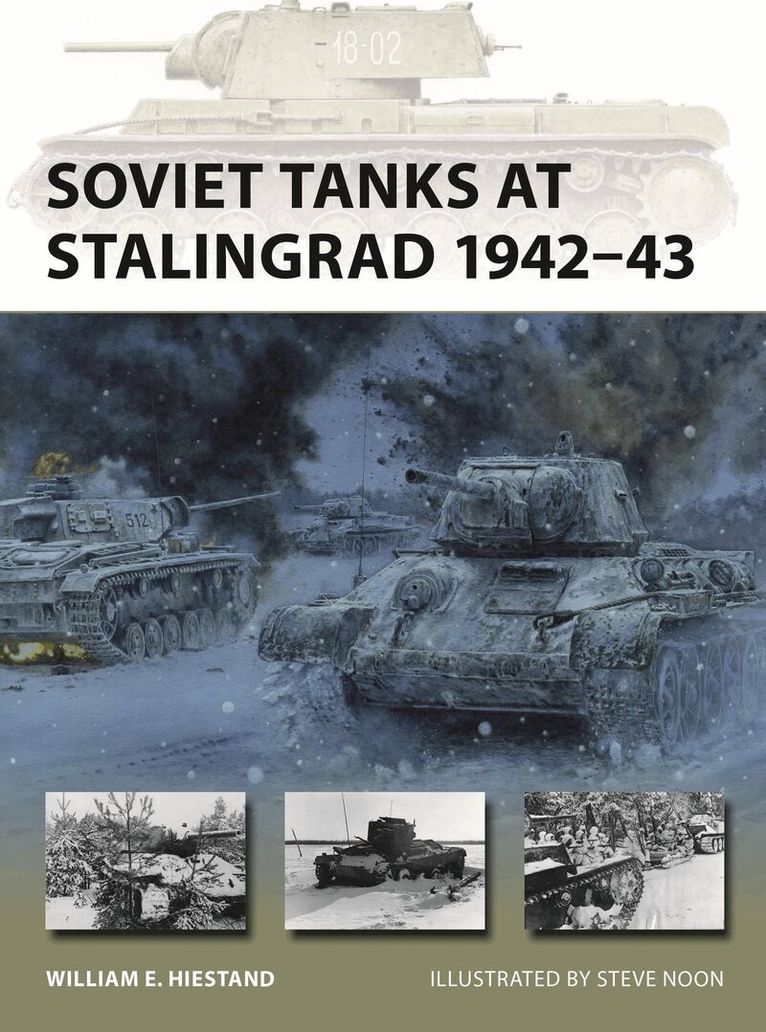
Examines and analyses how the Soviet tank forces that fought at Stalingrad were rejuvenated in the months leading up to the battle, and the role they played in this iconic campaign. The Stalingrad campaign was a major turning point of World War II. The German Sixth Army’s 22 divisions and 250,000 troops were encircled and destroyed, while the Soviet 62nd Army’s desperate defense of the city and the suffering of the starving German troops receives much justifiable attention. Here, Soviet armor expert William E. Hiestand draws attention to the less-covered element of the battle: the reborn Soviet tank and mechanized corps that delivered the death blow to Hitler’s hopes. He explains how in summer 1942, the Soviet tank forces were failing to reach their potential; despite being equipped with superb T-34 and heavily armored KV-1 tanks, the Red Army’s newly formed tank corps were unable to integrate their armored thrusts with supporting infantry and artillery, and their disjoined attacks were repeatedly shattered. By November 19, however, Soviet organization, command and control, training, and tactics had matured, allowing the Fifth Tank Army to launch the decisive penetration through the Romanian Third Army.Packed with rare archive photos and superb profiles of the tanks involved, this book shows that it was at Stalingrad that the Red Army’s armored spearhead evolved into a force that could dominate the Eastern Front.
152 kr
Kommande
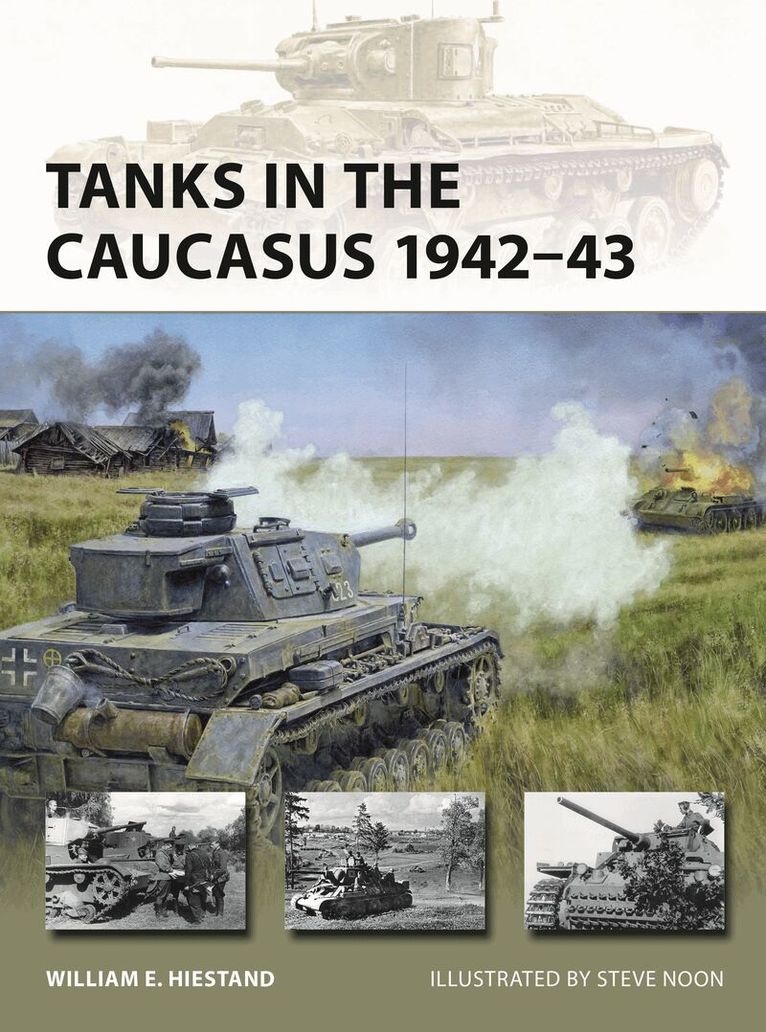
Illustrated throughout, this is the first book to study the Soviet and German armoured forces that fought the campaign for the Eastern Front’s vital oilfields. Although Sixth Army’s battle for Stalingrad dominates accounts of the German summer 1942 offensive, the parallel thrust by von Kleist’s elite First Panzer Army actually came closer to Hitler’s main strategic objective of 1942: the Caucasus oilfields. In this book, military historian William E. Hiestand presents an analysis of the armoured forces that fought this campaign. The Germans struggled with difficult terrain, stiffening Soviet resistance, and extraordinarily long lines of communications, but the campaign would see the Panzers battle into the mountains and towards the Caspian Sea, marking the Wehrmacht’s deepest thrust eastward. The Soviet defenders had to make do with tank brigades of obsolete T-26s and inferior T-70s, with limited T-34s and KV-1s, as most T-34 production was funnelled towards Stalingrad. However the Western Allies had opened the Persian Corridor to the USSR, and the Caucasus defenders made extensive use of Lend-Lease Valentine and M3 Lee tanks. Illustrated with rare photos and detailed new profiles of the tanks on both sides, this book explores how armour fought the campaign, until the collapse of German forces around Stalingrad forced von Kleist’s Panzers to retreat, ending German hopes of securing the vital oil.