William E. Mierse - Böcker
Visar alla böcker från författaren William E. Mierse. Handla med fri frakt och snabb leverans.
3 produkter
3 produkter
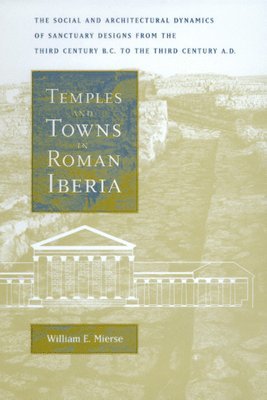
Temples and Towns in Roman Iberia
The Social and Architectural Dynamics of Sanctuary Designs, from the Third Century B.C. to the Third Century A.D.
Inbunden, Engelska, 1999
650 kr
Skickas inom 7-10 vardagar
This is the first comparative study of Roman architecture on the Iberian peninsula, covering six centuries from the arrival of the Romans in the third century B.C. until the decline of urban life on the peninsula in the third century A.D. During this period, the peninsula became an influential cultural and political region in the Roman world. Iberia supplied writers, politicians, and emperors, a fact acknowledged by Romanists for centuries, though study of the peninsula itself has too often been brushed aside as insignificant and uninteresting. In this book William E. Mierse challenges such a view. By examining in depth the changing forms of temples and their placement within the urban fabric, Mierse shows that architecture on the peninsula displays great variation and unexpected connections. It was never a slavish imitation of an imported model but always a novel experiment. Sometimes the architectural forms are both new and unexpected; in some cases specific prototypes can be seen, but the Iberian form has been significantly altered to suit local needs. What at first may seem a repetition of forms upon closer investigation turns out to be theme and variation.Mierse brings to his quest an impressive learning, including knowledge of several modern and ancient languages and the archaeology of the Roman East, which allows him a unique perspective on the interaction between events and architecture.
1 177 kr
Skickas inom 10-15 vardagar
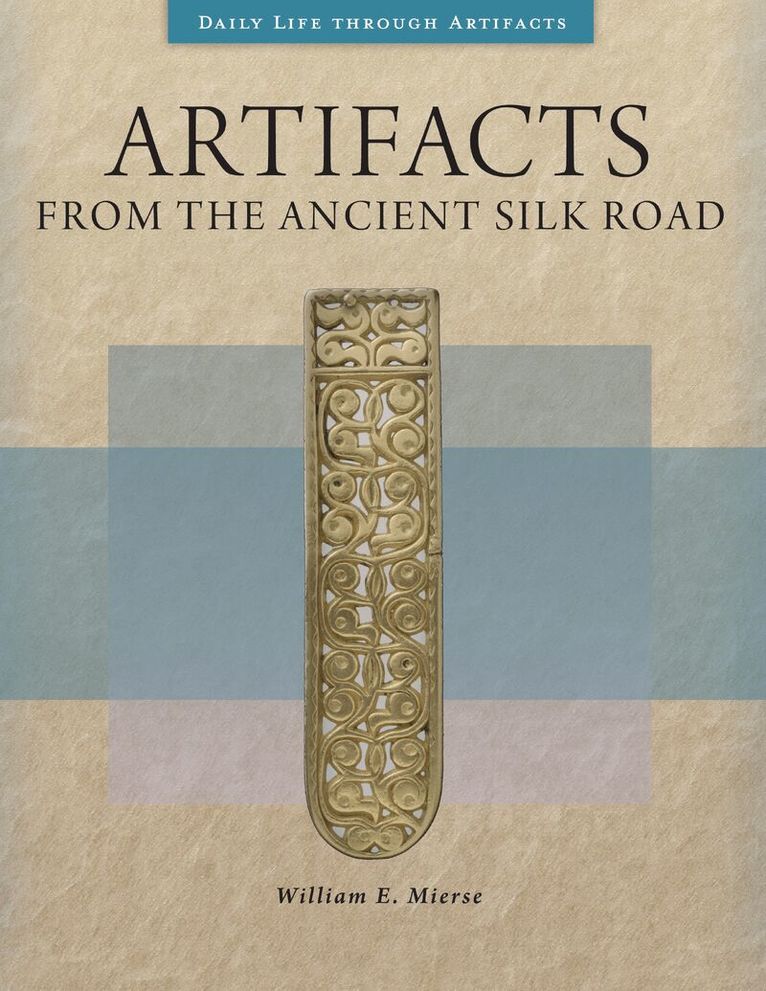
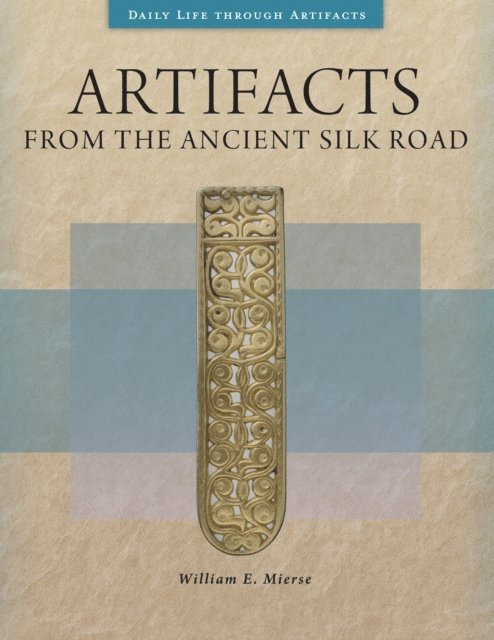
Artifacts from the Ancient Silk Road explores the interconnectivity of the Eurasian continent from 4000 BCE to 1000 CE. It focuses on the role played by Central Asia through which passed the major trade routes, the Silk Roads.Artifacts from the Ancient Silk Road covers life along the Silk Road over 5000 years as it can be understood by considering objects. In this first object-based study to consider all of the peoples involved on the Silk Roads, objects provide the vehicles for explorations of different aspects of life for the various peoples of the Silk Roads, including the sedentary peoples who established urban life on the Silk Roads, the steppe nomads who regularly interacted with the settled peoples, and the peoples at either end of the Silk Roads who drove certain kinds of economic exchanges.The book looks at Central Asia as an international zone during ancient times when multiple religious, political, and technological ideas found acceptance in the region and allows for a better understanding of how some ideas and forms developed in Central Asia while others passed through or were modified.
Del 4 - History, Archaeology, and Culture of the Levant
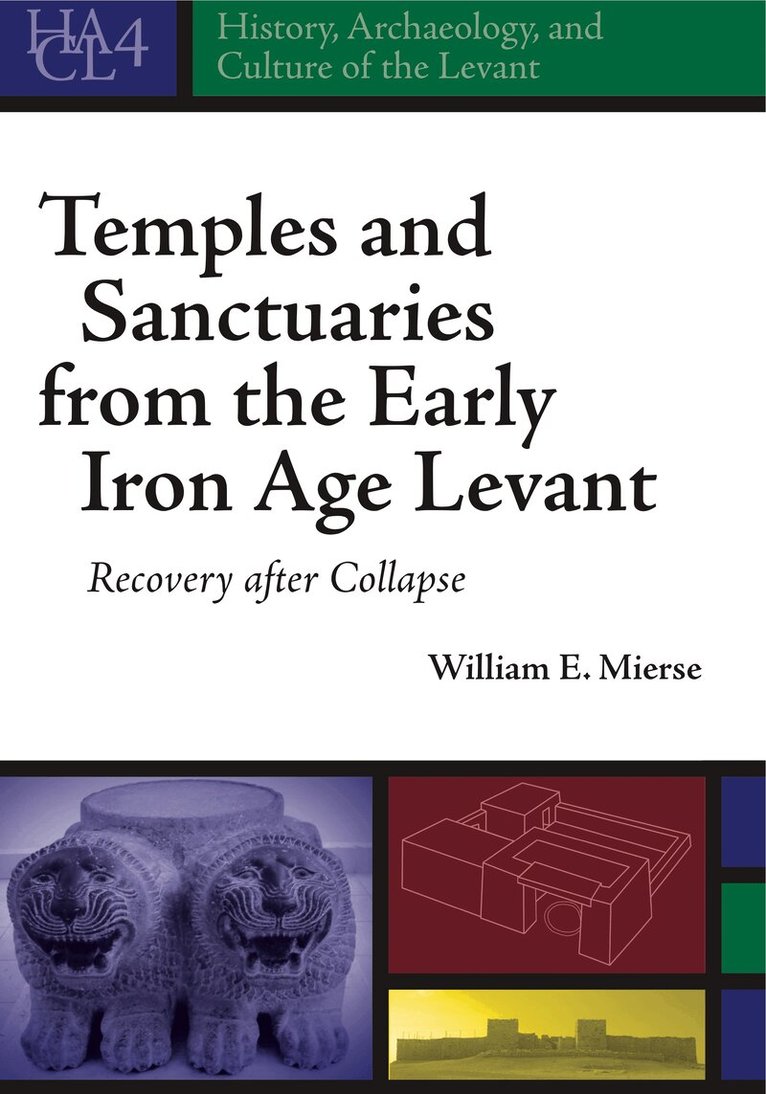
Temples and Sanctuaries from the Early Iron Age Levant
Recovery After Collapse
Inbunden, Engelska, 2012
912 kr
Skickas inom 5-8 vardagar
The vision for this impressive work on temple architecture in the Levant grew out of the author’s work on Roman temple designs on the Iberian Peninsula and continual references to Semitic influences on the designs of sanctuaries both on the Peninsula and in North Africa. It was assumed that Phoenician colonization had brought with it the full flowering of Levantine architectural forms. As Mierse began to search for relevant material on the ancient Levant, however, he discovered that no overall synthesis had ever been written, and it was virtually impossible to recognize and isolate Semitic elements in architectural forms. This book addresses this need.The analysis presented here is comparative and follows the methodology most commonly employed by architectural historians throughout the twentieth century. It is a formalist approach and permits the isolation of lines of continuity and the detection of discontinuity. While Mierse relies heavily on this traditional method, he also introduces some approaches from the postprocessual school of archaeology in its attempts to discern an appropriate way for cult to be investigated by archaeology.The sanctuaries that this book presents were erected between the end of the Late Bronze Age (conventionally assigned the date of 1200 B.C.E.) and the annexation of the Levantine region into the Assyrian Empire (when Mesopotamia again became highly influential in the region). The topic concerns temples that were produced during the period when the Levant was its own entity and politically independent of Egypt, Mesopotamia, or Anatolia. During this period, the designs chosen for inclusion in this book must reflect local choices rather than resulting from imposed outside concepts.The architecture that emerged in the wake of the downfall of the Late Bronze Age and the subsequent reemergence of social cohesiveness manifested significant changes in form and function. The five centuries under review reveal exciting developments in sacred architecture and show that, although the architects of the first millennium B.C.E. maintained important lines of continuity with the developments of the previous two millennia, they were also capable of creating novel forms to meet new needs.Included in this fascinating volume are 90 pages of photos, drawings, floor plans, and maps.