William Earl Weeks - Böcker
Visar alla böcker från författaren William Earl Weeks. Handla med fri frakt och snabb leverans.
4 produkter
4 produkter
454 kr
Skickas inom 3-6 vardagar
This is the story of a man, a treaty, and a nation. The man was John Quincy Adams, regarded by most historians as America's greatest secretary of state. The treaty was the Transcontinental Treaty of 1819, of which Adams was the architect. It acquired Florida for the young United States, secured a western boundary extending to the Pacific, and bolstered the nation's position internationally. As William Weeks persuasively argues, the document also represented the first determined step in the creation of an American global empire.Weeks follows the course of the often labyrinthine negotiations by which Adams wrested the treaty from a recalcitrant Spain. The task required all of Adams's skill in diplomacy, for he faced a tangled skein of domestic and international controversies when he became secretary of state in 1817. The final document provided the United States commercial access to the Orient--a major objective of the Monroe administration that paved the way for the Monroe Doctrine of 1823.Adams, the son of a president and later himself president, saw himself as destined to play a crucial role in the growth and development of the United States. In this he succeeded. Yet his legendary statecraft proved bittersweet. Adams came to repudiate the slave society whose interests he had served by acquiring Florida, he was disgusted by the rapacity of the Jacksonians, and he experienced profound guilt over his own moral transgressions while secretary of state. In the end, Adams understood that great virtue cannot coexist with great power.Weeks's book, drawn in part from articles that won the Stuart Bernath Prize, makes a lasting contribution to our understanding of American foreign policy and adds significantly to our picture of one of the nation's most important statesmen.
550 kr
Skickas inom 7-10 vardagar
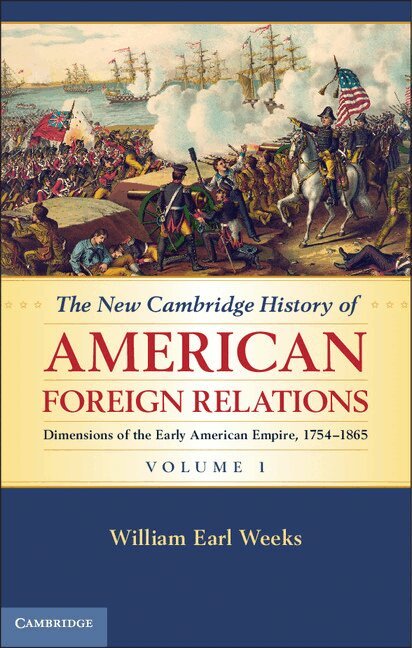
Since their first publication, the four volumes of the Cambridge History of American Foreign Relations have served as the definitive source for the topic, from the colonial period to the Cold War. This entirely new first volume narrates the British North American colonists' pre-existing desire for expansion, security and prosperity and argues that these desires are both the essence of American foreign relations and the root cause for the creation of the United States. They required the colonists to unite politically, as individual colonies could not dominate North America by themselves. Although ingrained localist sentiments persisted, a strong, durable Union was required for mutual success, thus American nationalism was founded on the idea of allegiance to the Union. Continued tension between the desire for expansion and the fragility of the Union eventually resulted in the Union's collapse and the Civil War.
The New Cambridge History of American Foreign Relations: Volume 1, Dimensions of the Early American Empire, 1754-1865
Häftad, Engelska, 2015
409 kr
Skickas inom 7-10 vardagar
Since their first publication, the four volumes of the Cambridge History of American Foreign Relations have served as the definitive source for the topic, from the colonial period to the Cold War. This entirely new first volume narrates the British North American colonists' pre-existing desire for expansion, security and prosperity and argues that these desires are both the essence of American foreign relations and the root cause for the creation of the United States. They required the colonists to unite politically, as individual colonies could not dominate North America by themselves. Although ingrained localist sentiments persisted, a strong, durable Union was required for mutual success, thus American nationalism was founded on the idea of allegiance to the Union. Continued tension between the desire for expansion and the fragility of the Union eventually resulted in the Union's collapse and the Civil War.
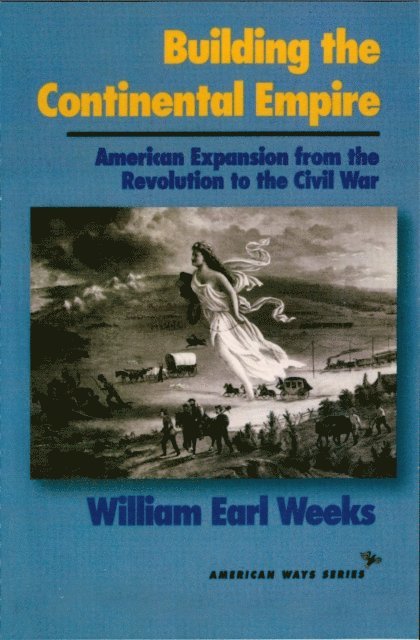
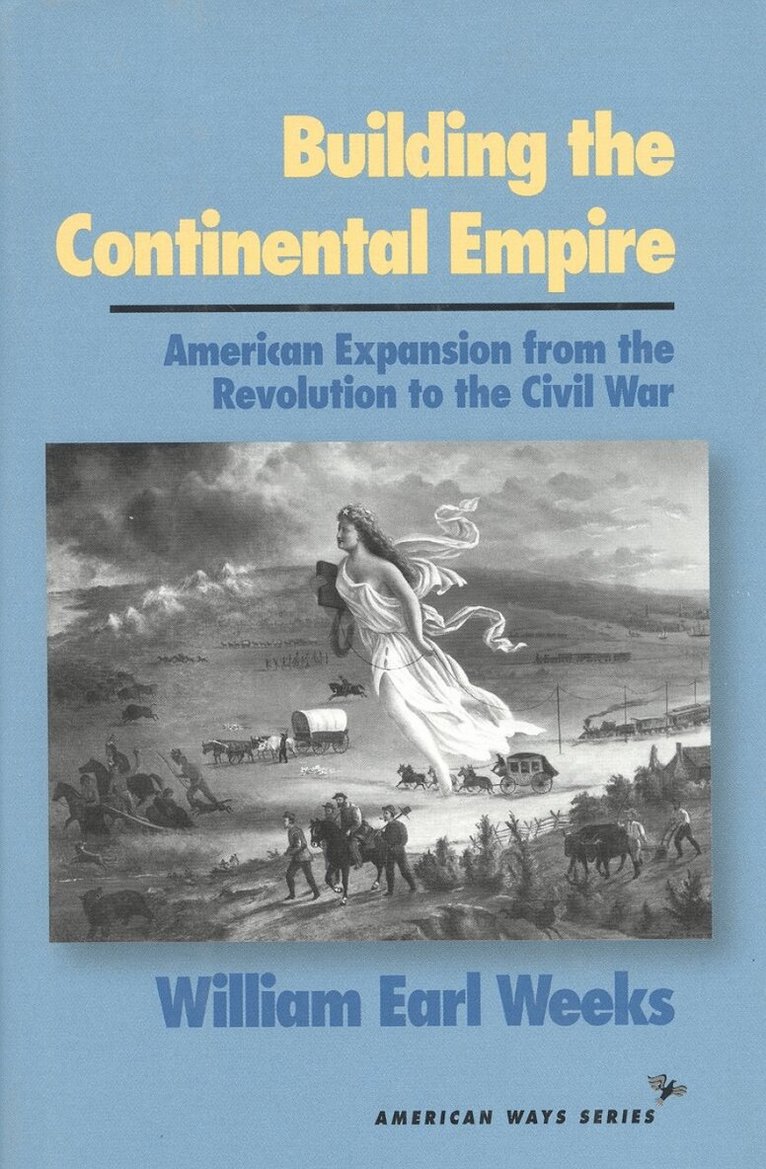
Building the Continental Empire
American Expansion from the Revolution to the Civil War
Häftad, Engelska, 1997
213 kr
Skickas inom 10-15 vardagar
In this fresh survey of foreign relations in the early years of the American republic, William Earl Weeks argues that the construction of the new nation went hand in hand with the building of the American empire. Mr. Weeks traces the origins of this initiative to the 1750s, when the Founding Fathers began to perceive the advantages of colonial union and the possibility of creating an empire within the British Empire that would provide security and the potential for commercial and territorial expansion. After the adoption of the Constitution—and a far stronger central government than had been popularly imagined—the need to expand combined with a messianic American nationalism. The result was aggressive diplomacy by successive presidential administrations. From the acquisition of Louisiana and Florida to the Mexican War, from the Monroe Doctrine to the annexation of Texas, Mr. Weeks describes the ideology and scope of American expansion in what has become known as the age of Manifest Destiny. Relations with Great Britain, France, and Spain; the role of missionaries, technology, and the federal government; and the issue of slavery are key elements in this succinct and thoughtful view of the making of the continental nation.