William Echard - Böcker
Visar alla böcker från författaren William Echard. Handla med fri frakt och snabb leverans.
3 produkter
3 produkter
926 kr
Skickas inom 7-10 vardagar
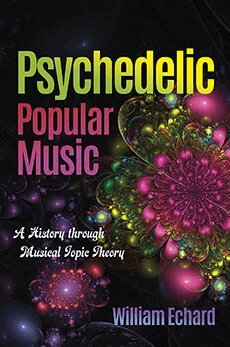
Recognized for its distinctive musical features and its connection to periods of social innovation and ferment, the genre of psychedelia has exerted long-term influence in many areas of cultural production, including music, visual art, graphic design, film, and literature. William Echard explores the historical development of psychedelic music and its various stylistic incarnations as a genre unique for its fusion of rock, soul, funk, folk, and electronic music. Through the theory of musical topics—highly conventional musical figures that signify broad cultural concepts—and musical meaning, Echard traces the stylistic evolution of psychedelia from its inception in the early 1960s, with the Beatles' Rubber Soul and Revolver and the Kinks and Pink Floyd, to the German experimental bands and psychedelic funk of the 1970s, with a special emphasis on Parliament/Funkadelic. He concludes with a look at the 1980s and early 1990s, touching on the free festival scene, rave culture, and neo–jam bands. Set against the cultural backdrop of these decades, Echard's study of psychedelia lays the groundwork and offers lessons for analyzing the topic of popular music in the twentieth and twenty-first centuries.
372 kr
Skickas inom 7-10 vardagar
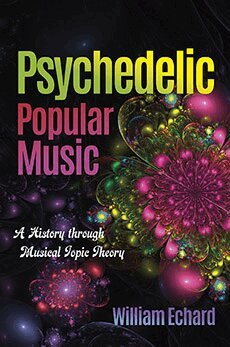
Recognized for its distinctive musical features and its connection to periods of social innovation and ferment, the genre of psychedelia has exerted long-term influence in many areas of cultural production, including music, visual art, graphic design, film, and literature. William Echard explores the historical development of psychedelic music and its various stylistic incarnations as a genre unique for its fusion of rock, soul, funk, folk, and electronic music. Through the theory of musical topics—highly conventional musical figures that signify broad cultural concepts—and musical meaning, Echard traces the stylistic evolution of psychedelia from its inception in the early 1960s, with the Beatles' Rubber Soul and Revolver and the Kinks and Pink Floyd, to the German experimental bands and psychedelic funk of the 1970s, with a special emphasis on Parliament/Funkadelic. He concludes with a look at the 1980s and early 1990s, touching on the free festival scene, rave culture, and neo–jam bands. Set against the cultural backdrop of these decades, Echard's study of psychedelia lays the groundwork and offers lessons for analyzing the topic of popular music in the twentieth and twenty-first centuries.
213 kr
Skickas inom 10-15 vardagar
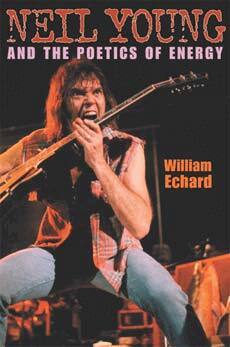
"This book uniquely and successfully sustains a cohesive analysis of the work, career, and reception of a single artist. That the artist is Neil Young, one of the most confounding and mysterious of rock stars, is an added bonus. Finally someone will explain what's been going on all these years!" —Daniel Cavicchi, author of Tramps Like Us: Music and Meaning among Springsteen FansAs a writer in Wired magazine puts it, Neil Young is a "folk-country-grunge dinosaur [who has been] reborn (again) as an Internet-friendly, biodiesel-driven, multimedia machine." In Neil Young and the Poetics of Energy, William Echard stages an encounter between Young's challenging and ever-changing work and current theories of musical meaning—an encounter from which both emerge transformed.Echard roots his discussion in an extensive review of writings from the rock press as well as his own engagement as a fan and critical theorist. How is it that Neil Young is both a perpetual outsider and critic of rock culture, and also one of its most central icons? And what are the unique properties that have lent his work such expressive force? Echard delves into concepts of musical persona, space, and energy, and in the process illuminates the complex interplay between experience, musical sound, social actors, genres, styles, and traditions.Readers interested primarily in Neil Young, or rock music in general, will find a new way to think and talk about the subject, and readers interested primarily in musical or cultural theory will find a new way to articulate and apply some of the most exciting current perspectives on meaning, music, and subjectivity.