William F. Keegan – författare
Visar alla böcker från författaren William F. Keegan. Handla med fri frakt och snabb leverans.
11 produkter
The Caribbean before Columbus
Av William F. Keegan, Corinne L. Hofman
Inbunden, 2017
2705 kr
Lägg i varukorg
The Caribbean before Columbus is a new synthesis of the region's insular history. It combines the results of the authors' 55 years of archaeological research on almost every island in the three archipelagoes with that of their numerous colleagues and collaborators. The presentation operates on …
The Caribbean before Columbus
Av William F. Keegan, Corinne L. Hofman
Häftad, 2017
1031 kr
Lägg i varukorg
The Caribbean before Columbus is a new synthesis of the region's insular history. It combines the results of the authors' 55 years of archaeological research on almost every island in the three archipelagoes with that of their numerous colleagues and collaborators. The presentation operates on …
Caribbean before Columbus
Av Corinne L. Hofman, William F. Keegan
E-bok, 2017
737 kr
Lägg i varukorg
The islands of the Caribbean are remarkably diverse, environmentally and culturally. They range from low limestone islands barely above sea level to volcanic islands with mountainous peaks; from large islands to small cays; from islands with tropical rainforests to those with desert habitats. …
Caribbean before Columbus
Av Corinne L. Hofman, William F. Keegan
E-bok, 2017
737 kr
Lägg i varukorg
The islands of the Caribbean are remarkably diverse, environmentally and culturally. They range from low limestone islands barely above sea level to volcanic islands with mountainous peaks; from large islands to small cays; from islands with tropical rainforests to those with desert habitats. …
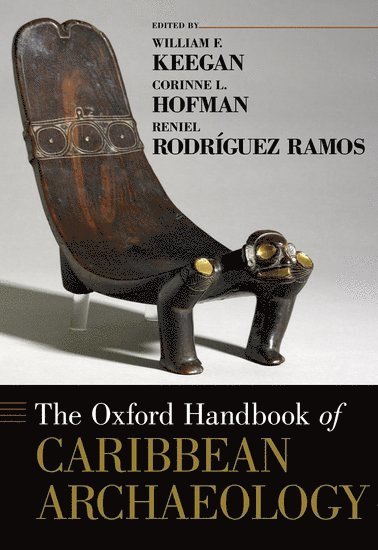
The Oxford Handbook of Caribbean Archaeology
Av William F. Keegan, Corinne L. Hofman m. fl.
Inbunden, 2013
3112 kr
Lägg i varukorg
The Oxford Handbook of Caribbean Archaeology provides an overview of archaeological investigations in the insular Caribbean, understood here as the islands whose shores surround the Caribbean Sea and the islands of the Bahama Archipelago. Though these islands were never isolated from the …
Oxford Handbook of Caribbean Archaeology
Av Reniel Rodriguez Ramos, Corinne L. Hofman m. fl.
E-bok, 2013
2247 kr
Lägg i varukorg
The Oxford Handbook of Caribbean Archaeology provides an overview of archaeological investigations in the insular Caribbean, understood here as the islands whose shores surround the Caribbean Sea and the islands of the Bahama Archipelago. Though these islands were never isolated from the …
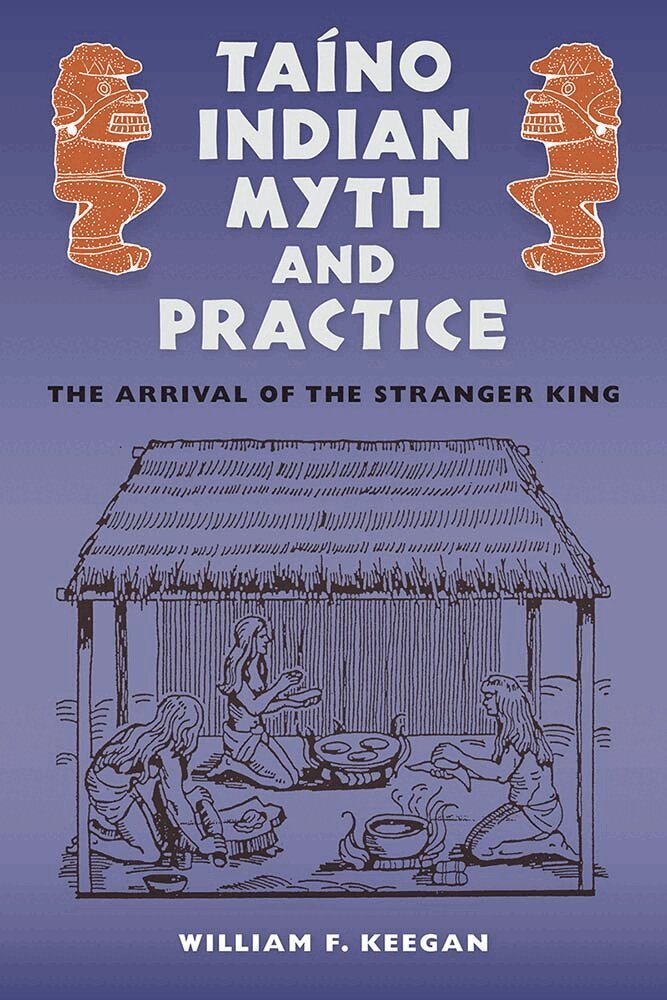
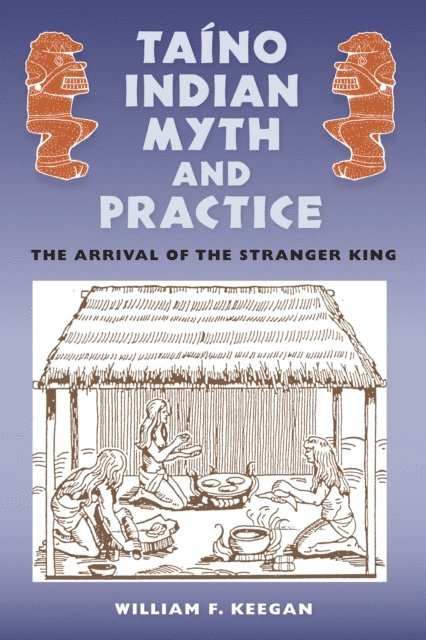
Taíno Indian Myth and Practice
The Arrival of the Stranger King
Häftad, 2022
313 kr
Lägg i varukorg
Applying the legend of the "stranger king" to Caonabo, the mythologized Taino chief of the Hispaniola settlement Columbus invaded in 1492, Keegan examines how myths come to resonate as history--created by the chaotic interactions of the individuals who lived the events of the past as well as those …
Taino Indian Myth and Practice
The Arrival of the Stranger King
E-bok, 2022
1427 kr
Lägg i varukorg
Applying the legend of the "stranger king" to Caonabo, the mythologized Taino chief of the Hispaniola settlement Columbus invaded in 1492, Keegan examines how myths come to resonate as history--created by the chaotic interactions of the individuals who lived the events of the past as well as those …
Taino Indian Myth and Practice
The Arrival of the Stranger King
E-bok, 2022
500 kr
Lägg i varukorg
Applying the legend of the "stranger king" to Caonabo, the mythologized Taino chief of the Hispaniola settlement Columbus invaded in 1492, Keegan examines how myths come to resonate as history--created by the chaotic interactions of the individuals who lived the events of the past as well as those …
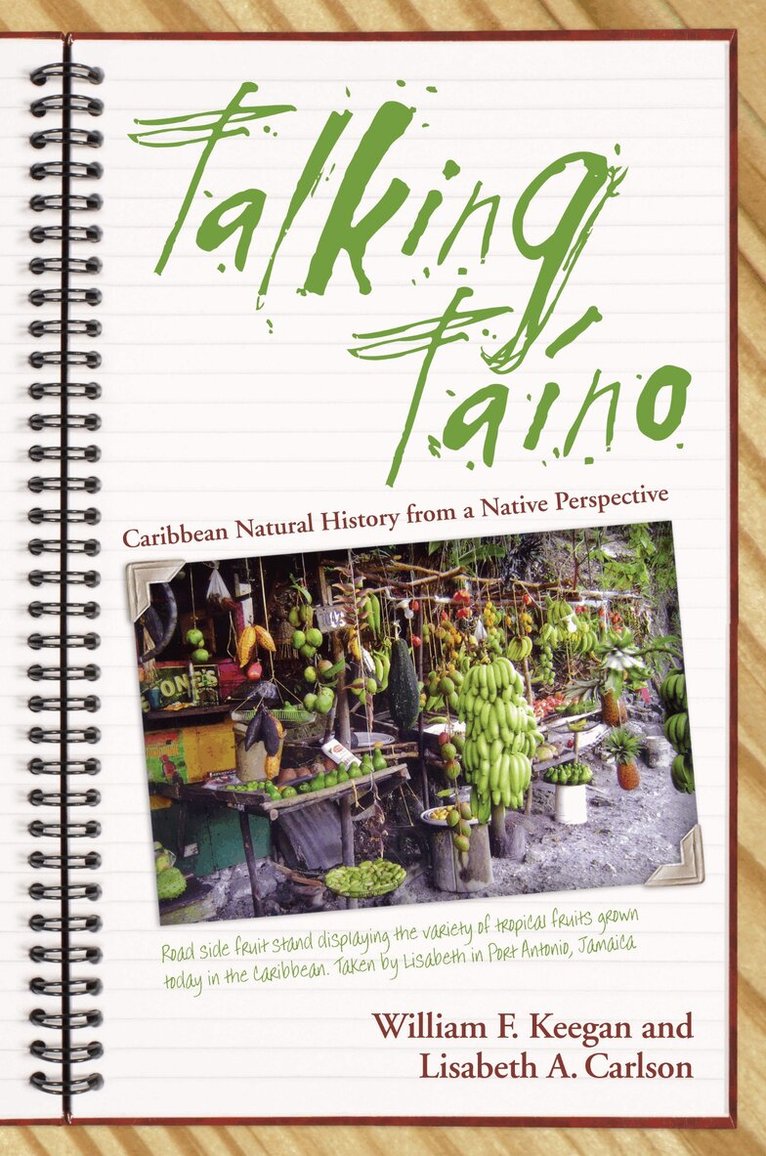
Talking Taino
Caribbean Natural History from a Native Perspective
Av William F. Keegan, Lisabeth A. Carlson
Häftad, 2008
339 kr
Lägg i varukorg
Talking Taino combines more than 45 years that the authors spent conducting archaeological research in the Caribbean, directing projects in Trinidad, Grenada, St. Lucia, Puerto Rico, the Dominican Republic, Haiti, Cuba, Jamaica, Grand Cayman, the Turks & Caicos Islands, and throughout the Bahamas. …
Talking Taino
Caribbean Natural History from a Native Perspective
Av Lisabeth A. Carlson, William F. Keegan
E-bok, 2010
426 kr
Lägg i varukorg
Keegan and Carlson, combined, have spent over 45 years conducting archaeological research in the Caribbean, directing projects in Trinidad, Grenada, St. Lucia, Puerto Rico, the Dominican Republic, Haiti, Cuba, Jamaica, Grand Cayman, the Turks & Caicos Islands, and throughout the Bahamas. Walking …