Corinne L. Hofman - Böcker
Visar alla böcker från författaren Corinne L. Hofman. Handla med fri frakt och snabb leverans.
6 produkter
6 produkter
1 720 kr
Skickas inom 5-8 vardagar
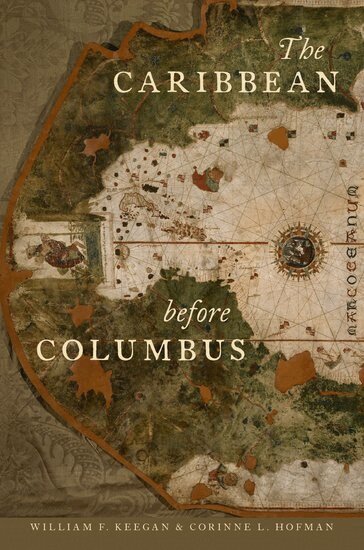
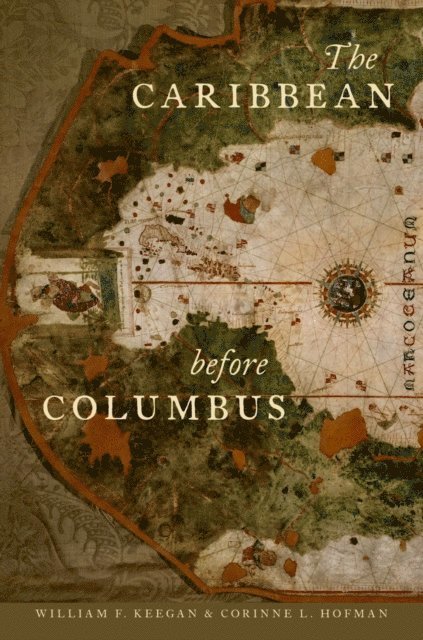
The Caribbean before Columbus is a new synthesis of the region's insular history. It combines the results of the authors' 55 years of archaeological research on almost every island in the three archipelagoes with that of their numerous colleagues and collaborators. The presentation operates on multiple scales: temporal, spatial, local, regional, environmental, social, and political. In addition, individual sites are used to highlight specific issues. For the first time, the complete histories of the major islands and island groups are elucidated, and new insights are gained through inter-island comparisons. The book takes a step back from current debates regarding nomenclature to offer a common foundation and the opportunity for a fresh beginning. In this regard the original concepts of series and ages provide structure, and the diversity of expressions subsumed by these concepts is embraced. Historical names, such as Taíno and Lucayan, are avoided. The authors challenge the long-held conventional wisdom concerning island colonization, societal organization, interaction and transculturation, inter- and intra-regional transactions (exchange), and other basic elements of cultural development and change. The emphasis is on those elements that unite the Bahamas, Lesser Antilles, and Greater Antilles as a culture area, and also on their divergent pathways. Colonization is presented as a multifaceted wave-like process. Continuing ties to the surrounding mainland are highlighted. Interactions between residents and new colonists are recognized, with individual histories contingent on these historical interactions. New solutions are offered to the "Huecoid problem" the "Carib problem," the "Taíno problem," and the evolution of social complexity, especially in Puerto Rico.These solutions required a rethinking of social organization and its expression on the landscape. There comes a time when the old foundation can no longer support the structure that was built upon it; this is that time.
518 kr
Skickas inom 5-8 vardagar
The Caribbean before Columbus is a new synthesis of the region's insular history. It combines the results of the authors' 55 years of archaeological research on almost every island in the three archipelagoes with that of their numerous colleagues and collaborators. The presentation operates on multiple scales: temporal, spatial, local, regional, environmental, social, and political. In addition, individual sites are used to highlight specific issues. For the first time, the complete histories of the major islands and island groups are elucidated, and new insights are gained through inter-island comparisons. The book takes a step back from current debates regarding nomenclature to offer a common foundation and the opportunity for a fresh beginning. In this regard the original concepts of series and ages provide structure, and the diversity of expressions subsumed by these concepts is embraced. Historical names, such as Taíno and Lucayan, are avoided. The authors challenge the long-held conventional wisdom concerning island colonization, societal organization, interaction and transculturation, inter- and intra-regional transactions (exchange), and other basic elements of cultural development and change. The emphasis is on those elements that unite the Bahamas, Lesser Antilles, and Greater Antilles as a culture area, and also on their divergent pathways. Colonization is presented as a multifaceted wave-like process. Continuing ties to the surrounding mainland are highlighted. Interactions between residents and new colonists are recognized, with individual histories contingent on these historical interactions. New solutions are offered to the "Huecoid problem" the "Carib problem," the "Taíno problem," and the evolution of social complexity, especially in Puerto Rico.These solutions required a rethinking of social organization and its expression on the landscape. There comes a time when the old foundation can no longer support the structure that was built upon it; this is that time.
2 799 kr
Skickas inom 7-10 vardagar
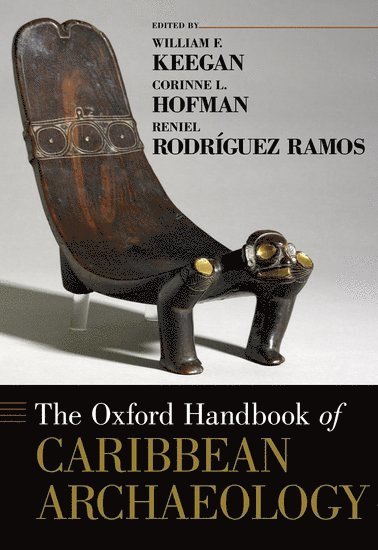
The Oxford Handbook of Caribbean Archaeology provides an overview of archaeological investigations in the insular Caribbean, understood here as the islands whose shores surround the Caribbean Sea and the islands of the Bahama Archipelago. Though these islands were never isolated from the surrounding mainland, their histories are sufficiently diverse to warrant their identification as distinct areas of culture. Over the past 20 years, Caribbean archaeology has been transformed from a focus on reconstructing culture histories to one on the mobility and exchange expressed in cultural and social dynamics. This Handbook brings together, for the first time, examples of the best research conducted by scholars from across the globe to address the complexity of the Caribbean past.The Handbook is divided into five sections. Part I, Islands of History and the Precolonial History of the Caribbean Islands, provides an introduction to Caribbean Archaeology and its history. The papers in the following Ethnohistory section address the diversity of cultural practices expressed in the insular Caribbean and develop historical descriptions in concert with archaeological evidence in order to place language, social organization, and the native Taínos and Island Caribs in perspective. The following section, Culture History, provides the latest research on specific geographical locations and cross-cultural engagements, from Jamaica and the Bahama archigelago to the Saladoid and the Isthmo-Antillean Engagements. Creating History, the fourth section, includes papers on specific issues related to the field, such as Zooarchaeology, Rock Art, and DNA analysis, among others. The final section, World History, centers on the consequences of European colonization.
1 403 kr
Skickas inom 5-8 vardagar
801 kr
Skickas inom 3-6 vardagar
Communities in Contact represents the outcome of the Fourth International Leiden in the Caribbean symposium entitled From Prehistory to Ethnography in the circum-Caribbean. The contributions included in this volume cover a wide range of topics from a variety of disciplines - archaeology, bioarchaeology, ethnohistory and ethnography - revolving around the themes of mobility and exchange, culture contact, and settlement and community. The application of innovative approaches and the multi-dimensional character of these essays have provided exiting new perspectives on the indigenous communities of the circum-Caribbean and Amazonian regions throughout prehistory until the present.
689 kr
Skickas inom 3-6 vardagar
Caribbean archaeological heritage is threatened by natural impacts but also increasingly by economic developments, often resulting from the tourist industry. The continuous construction of specific projects for tourists, accompanied by illegal practices such as looting and sand mining, have major impacts on the region’s archaeological heritage. The geopolitical and cultural diversity of the Caribbean, the general lack of awareness of island histories and multiple stakeholders involved in the preservation process, have in many cases slowed down the effective enforcement of regulations and heritage legislation.The development of archaeological heritage management (AHM) in the Dutch Caribbean islands started slowly in the early years of their semi-autonomy within the Kingdom of the Netherlands from 1954 onwards. With the dissolution of the Netherlands Antilles on 10 November 2010, Curaçao and St. Martin obtained a more autonomous status within the Kingdom, similar to Aruba has since 1986. Simultaneously, Bonaire, Saba and St. Eustatius became special overseas municipalities of the Kingdom of the Netherlands. Consequently, these three islands now fall under Dutch regulations for cultural resource management. Irrespective of these geopolitical changes, AHM has been developing on the six islands over the past 25 years, partly because of the active role of localized island-specific archaeological institutions.This volume provides a background to the history of archaeological research in the Dutch Caribbean and compiles a number of compliance archaeology projects that have been carried out under and in the spirit of the Valetta Treaty. Furthermore, this volume represents a unique contribution to AHM in a wider regional perspective, with its discussion of the successful creation of localized community-based archaeological heritage associations which serve as an excellent model for all island communities in the Caribbean.ContentsIntroduction: the current status of archaeological heritage management (AHM) in the Dutch CaribbeanCorinne L. Hofman and Jay B. HaviserA review of archaeological research in the Dutch CaribbeanJay B. Haviser and Corinne L. HofmanAchieving sustainable Archaeological Heritage Management in ArubaRaymundo A.C.F. Dijkhoff and Marlene S. LinvilleHeritage Management on Bonaire and Curaçao: a step towards an integral approach to heritageRichenel Ansano and Claudia T. KraanHeritage Management and the Public Sphere: doing archaeology on SabaRyan EspersenSkeletons in the closet: Future avenues for the curation of archaeological human skeletal remains in the Dutch Caribbean and the region as a whole.Hayley L. MickleburghCommunity Archaeology as an essential element for successful Heritage ManagementJay B. HaviserCommunity engagement, local identity and museums: A review of past heritage initiatives and recent developments on the island of SabaHelena BoehmAmateur archaeological research on CuraçaoFrançois van der Hoeven and Fred M. ChumaceiroArchaeological assessment in compliance with the Valetta Treaty: Spanish Water, CuraçaoMenno L.P. Hoogland and Corinne L. HofmanEarly Valetta Treaty application at Slagbaai-Gotomeer, BonaireJay B. HaviserArchaeological research at Bethlehem, St. Maarten: an early Valetta Treaty project in the Dutch Windward IslandsMenno L.P. Hoogland, Corinne L. Hofman and R. Grant Gilmore III“An emporium for all the world”: commercial archaeology in Lower Town, St. EustatiusRuud SteltenThree early examples of Valetta Treaty application in the Dutch Windward IslandsJay B. HaviserAn archaeological assessment of Cul-de-Sac (The Farm), St. Eustatius: the Nustar projectR. Grant Gilmore III, Menno L.P. Hoogland and C.L. HofmanArchaeology on St. Eustatius: heritage management of an 18th-century slave village at Schotsenhoek plantationRuud SteltenHeritage Management on St. Eustatius: the Dutch West Indies headquarters projectR. Grant Gilmore III and Louis A. NelsonMapping sites, mapping expectancies, mapping heritage: The archaeological maps of St. Eustatius, Saba and Sint MaartenMaaike S. de Waal, Jochem Lesparre, Jay B. Haviser, Menno L.P. Hoogland, Ryan Espersen and Ruud SteltenInto the future for Archaeological Heritage Management in the Dutch CaribbeanCorinne L. Hofman and Jay B. Haviser