Jay B Haviser - Böcker
Visar alla böcker från författaren Jay B Haviser. Handla med fri frakt och snabb leverans.
3 produkter
3 produkter
2 305 kr
Skickas inom 10-15 vardagar
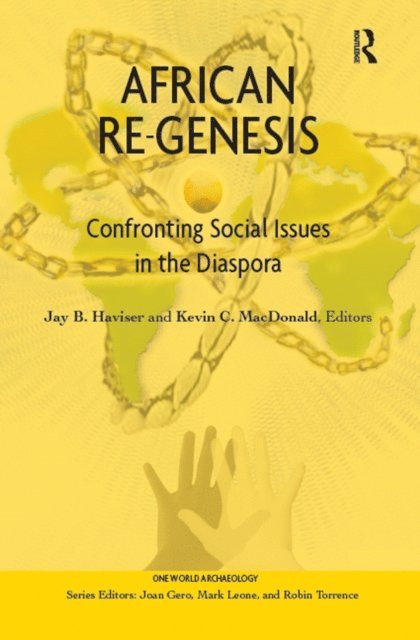
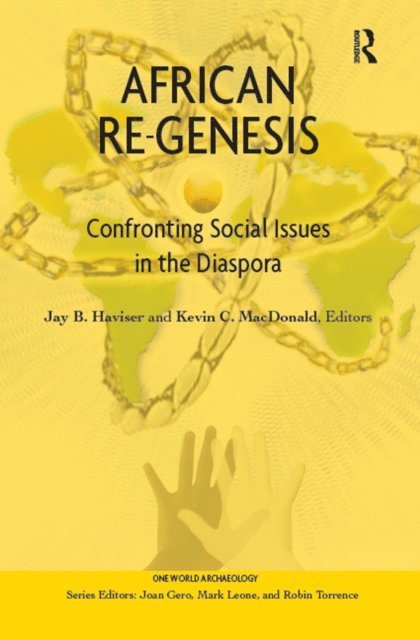
Ripped from motherland and family, ethnically mixed to quell the potential of uprisings, and brutalized by regimes of hard labor, the heart - the spirit - of Africa did not stop beating in the New World. Rather, it survived and has re-emerged; changed by contacts with new cultures and environments, but still part of the continuum of African tradition: an African Re-Genesis. This is the first volume in its field to emphasize the interdisciplinary temporal and geographic comparative research of Archaeology, Anthropology, History and Linguistics to allow us to form unique perspectives on broader trends in the transformation and (re-) emergence of African Diaspora cultures. African Re-Genesis confirms that regardless of discipline, from continental Africa to Europe, the Western Hemisphere and Indian Ocean, all Diaspora research requires a relevance to modern communities and sensitivity to the interplay with contemporary cultural identities. Matters concerning race and cultural diversity, though ostensibly de-fused by the vocabulary of political correctness, remain contentious. Indeed, the topic of racial relations has become to the twenty-first century what sex was to the nineteenth century - something best not discussed in public, and better talked around than confronted directly. African Re-Genesis strikes at the nerve of urgency that the past, present and future globalization of African cultures, is a cornerstone of the entire human experience, and it thus deserves recognition as such.
592 kr
Skickas inom 10-15 vardagar
Ripped from motherland and family, ethnically mixed to quell the potential of uprisings, and brutalized by regimes of hard labor, the heart - the spirit - of Africa did not stop beating in the New World. Rather, it survived and has re-emerged; changed by contacts with new cultures and environments, but still part of the continuum of African tradition: an African Re-Genesis. This is the first volume in its field to emphasize the interdisciplinary temporal and geographic comparative research of Archaeology, Anthropology, History and Linguistics to allow us to form unique perspectives on broader trends in the transformation and (re-) emergence of African Diaspora cultures. African Re-Genesis confirms that regardless of discipline, from continental Africa to Europe, the Western Hemisphere and Indian Ocean, all Diaspora research requires a relevance to modern communities and sensitivity to the interplay with contemporary cultural identities. Matters concerning race and cultural diversity, though ostensibly de-fused by the vocabulary of political correctness, remain contentious. Indeed, the topic of racial relations has become to the twenty-first century what sex was to the nineteenth century - something best not discussed in public, and better talked around than confronted directly. African Re-Genesis strikes at the nerve of urgency that the past, present and future globalization of African cultures, is a cornerstone of the entire human experience, and it thus deserves recognition as such.
689 kr
Skickas inom 3-6 vardagar
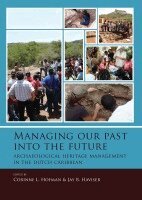
Caribbean archaeological heritage is threatened by natural impacts but also increasingly by economic developments, often resulting from the tourist industry. The continuous construction of specific projects for tourists, accompanied by illegal practices such as looting and sand mining, have major impacts on the region’s archaeological heritage. The geopolitical and cultural diversity of the Caribbean, the general lack of awareness of island histories and multiple stakeholders involved in the preservation process, have in many cases slowed down the effective enforcement of regulations and heritage legislation.The development of archaeological heritage management (AHM) in the Dutch Caribbean islands started slowly in the early years of their semi-autonomy within the Kingdom of the Netherlands from 1954 onwards. With the dissolution of the Netherlands Antilles on 10 November 2010, Curaçao and St. Martin obtained a more autonomous status within the Kingdom, similar to Aruba has since 1986. Simultaneously, Bonaire, Saba and St. Eustatius became special overseas municipalities of the Kingdom of the Netherlands. Consequently, these three islands now fall under Dutch regulations for cultural resource management. Irrespective of these geopolitical changes, AHM has been developing on the six islands over the past 25 years, partly because of the active role of localized island-specific archaeological institutions.This volume provides a background to the history of archaeological research in the Dutch Caribbean and compiles a number of compliance archaeology projects that have been carried out under and in the spirit of the Valetta Treaty. Furthermore, this volume represents a unique contribution to AHM in a wider regional perspective, with its discussion of the successful creation of localized community-based archaeological heritage associations which serve as an excellent model for all island communities in the Caribbean.ContentsIntroduction: the current status of archaeological heritage management (AHM) in the Dutch CaribbeanCorinne L. Hofman and Jay B. HaviserA review of archaeological research in the Dutch CaribbeanJay B. Haviser and Corinne L. HofmanAchieving sustainable Archaeological Heritage Management in ArubaRaymundo A.C.F. Dijkhoff and Marlene S. LinvilleHeritage Management on Bonaire and Curaçao: a step towards an integral approach to heritageRichenel Ansano and Claudia T. KraanHeritage Management and the Public Sphere: doing archaeology on SabaRyan EspersenSkeletons in the closet: Future avenues for the curation of archaeological human skeletal remains in the Dutch Caribbean and the region as a whole.Hayley L. MickleburghCommunity Archaeology as an essential element for successful Heritage ManagementJay B. HaviserCommunity engagement, local identity and museums: A review of past heritage initiatives and recent developments on the island of SabaHelena BoehmAmateur archaeological research on CuraçaoFrançois van der Hoeven and Fred M. ChumaceiroArchaeological assessment in compliance with the Valetta Treaty: Spanish Water, CuraçaoMenno L.P. Hoogland and Corinne L. HofmanEarly Valetta Treaty application at Slagbaai-Gotomeer, BonaireJay B. HaviserArchaeological research at Bethlehem, St. Maarten: an early Valetta Treaty project in the Dutch Windward IslandsMenno L.P. Hoogland, Corinne L. Hofman and R. Grant Gilmore III“An emporium for all the world”: commercial archaeology in Lower Town, St. EustatiusRuud SteltenThree early examples of Valetta Treaty application in the Dutch Windward IslandsJay B. HaviserAn archaeological assessment of Cul-de-Sac (The Farm), St. Eustatius: the Nustar projectR. Grant Gilmore III, Menno L.P. Hoogland and C.L. HofmanArchaeology on St. Eustatius: heritage management of an 18th-century slave village at Schotsenhoek plantationRuud SteltenHeritage Management on St. Eustatius: the Dutch West Indies headquarters projectR. Grant Gilmore III and Louis A. NelsonMapping sites, mapping expectancies, mapping heritage: The archaeological maps of St. Eustatius, Saba and Sint MaartenMaaike S. de Waal, Jochem Lesparre, Jay B. Haviser, Menno L.P. Hoogland, Ryan Espersen and Ruud SteltenInto the future for Archaeological Heritage Management in the Dutch CaribbeanCorinne L. Hofman and Jay B. Haviser