William G Lycan - Böcker
Visar alla böcker från författaren William G Lycan. Handla med fri frakt och snabb leverans.
11 produkter
11 produkter
544 kr
Skickas inom 10-15 vardagar
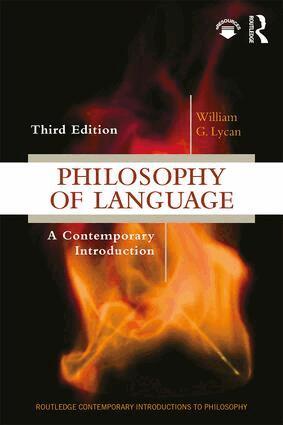
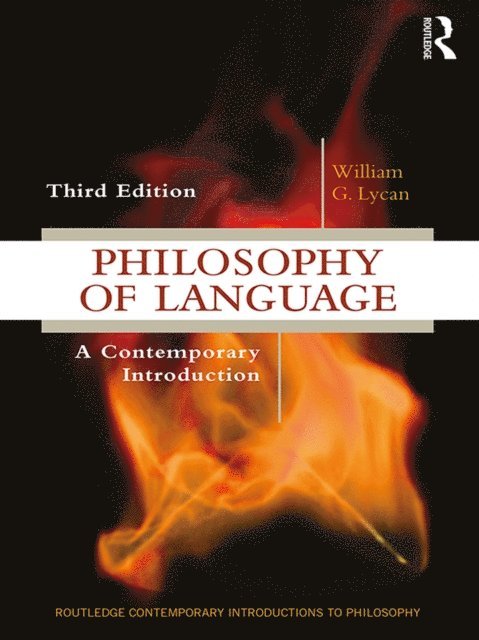
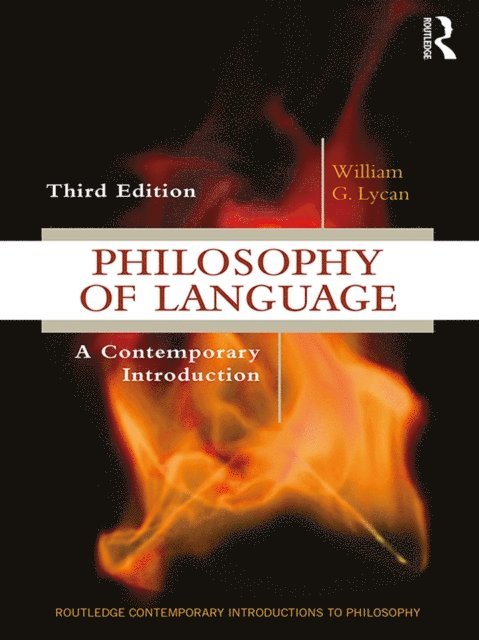
Now in its third edition, Philosophy of Language: A Contemporary Introduction introduces students to the main issues and theories in twenty-first-century philosophy of language, focusing specifically on linguistic phenomena. Author William G. Lycan structures the book into four general parts. Part I, Reference and Referring, includes topics such as Russell's Theory of Descriptions (and its objections), Donnellan's distinction, problems of anaphora, the Description Theory of proper names, Searle's Cluster Theory, and the Causal-Historical Theory. Part II, Theories of Meaning, surveys the competing theories of linguistic meaning and compares their various advantages and liabilities. Part III, Pragmatics and Speech Acts, introduces the basic concepts of linguistic pragmatics and includes a detailed discussion of the problem of indirect force. Part IV, The Expressive and the Figurative, examines various forms of expressive language and what "metaphorical meaning" is and how most listeners readily grasp it.Features of Philosophy of Language include: chapter overviews and summaries; clear supportive examples; study questions; annotated lists of further reading; a glossary.Updates to the third edition include: an entirely new chapter, "Expressive Language" (Chapter 14), covering verbal irony, sarcasm, and pejorative language (particularly slurs); the addition in several chapters of short sections on pretense theories, addressing (1) puzzles about reference, (2) irony, and (3) metaphor; a much expanded discussion of Relevance Theory, particularly its notion of ad hoc concept construction or "loosening and tightening," and the application of that to metaphor; new discussion of Cappelen and Lepore's skepticism about content-dependence;up-to-date coverage of new literature, further reading lists, and the bibliography, as well as an improved glossary.
956 kr
Skickas inom 5-8 vardagar
Perceptual Content is the first book to discuss and compare the representational characters of all the traditional "five senses". It has three main topics or concerns.(1) The diversity of the senses: though Lycan maintains as a working assumption that all perception represents, the similarity between sense modalities ends there. The senses' respective representational modes, styles and structures -- not just their mechanisms -- differ very strongly from each other.(2) The Layering thesis: Lycan argues that a single sensory representation usually has more than one content, the contents systematically related to each other by a priority or dependence relation. More specifically, a perceptual state may represent one object or property by representing a more primitive or less ambitious one; he calls this the "layering" of content. For example, by hearing a sound sequence involving such-and-such volumes and timbres, you hear a voice speaking, and by hearing the voice, you hear words in a language. In some modalities layering works unexpectedly: nearly all tactile representation derives from representation of conditions of or in the subject's own skin, meaning that touch represents, e.g., the texture of a physical object by, and only by, representing stress within the skin; and even among the skin conditions, some are represented only by representing more primitive ones.(3) Aspect perception: despite Wittgenstein's famous discussion of "seeing as" in a late section of Philosophical Investigations, little has been written on perceiving-as. Besides its intrinsic interest -- even popular appeal, what with joke ambiguous figures such as the duck-rabbit and the old/young woman -- it remains especially mysterious. Nearly all work on it has concerned vision only. But it is crucial for understanding auditory representation, which is one thing that distinguishes hearing from the other senses. Further, the auditory case severely damages what Lycan and others had thought was the best approach to understanding aspect perception, in terms of attention.
766 kr
Skickas inom 7-10 vardagar
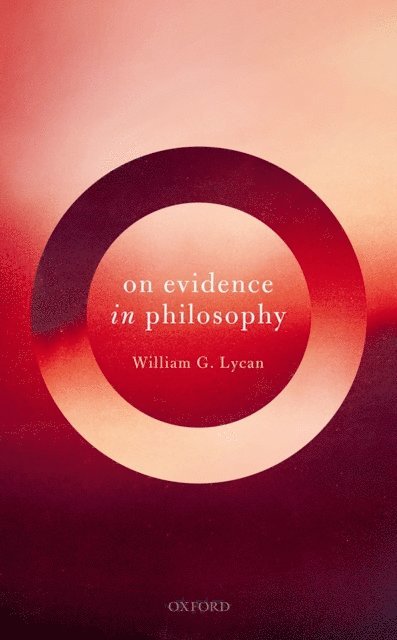
In this book William G. Lycan offers an epistemology of philosophy itself, a partial method for philosophical inquiry. The epistemology features three ultimate sources of justified philosophical belief. First, common sense, in a carefully restricted sense of the term-the sorts of contingent propositions Moore defended against idealists and skeptics. Second, the deliverances of well confirmed science. Third and more fundamentally, intuitions about cases in a carefully specified sense of that term. The first half of On Evidence in Philosophy expounds a version of Moore's method and applies it to each of several issues. This version is shown to resist all the standard objections to Moore; most of them do not even apply. It is argued, in Chapters 5 and 6, that philosophical method is far less powerful than most have taken it to be. In particular, deductive argument can accomplish very little, and hardly ever is an opposing position refuted except by common sense or by science. The final two chapters defend the evidential status of intuitions and the Goodmanian method of reflective equilibrium; it is argued that philosophy always and everywhere depends on them. The method is then set within a more general explanatory-coherentist epistemology, which is shown to resist standard forms of skepticism.In sum, William G. Lycan advocates a picture of philosophy as a very wide explanatory reflective equilibrium incorporating common sense, science, and our firmest intuitions on any topic-and nothing more, not ever.
1 409 kr
Skickas inom 5-8 vardagar
Philosophers and logicians have long debated how best to understand conditional or hypothetical sentences. William G. Lycan has a distinctive approach to this debate, attending not just to the semantics of such sentences, but equally to their syntax. He shows how insights from linguistic theory help to illuminate problems about the meaning and function of conditionals. For instance, philosophers and logicians have had problems analysing the locutions 'only if', 'unless', and 'even if'. Lycan sets out a general semantic theory of conditionals which works for all such sentences; he assigns meanings to them in a way that explains how and why those meanings depend upon features of utterance context. According to Lycan's theory the 'if'-clauses refer to items called 'events', 'circumstances', or 'conditions'.Real Conditionals gives at last the definitive presentation of this original approach to a topic at the intersection of philosophy, logic, and linguistics. Lycan's characteristically lively and witty expository style ensures that it can be enjoyed by readers from all three disciplines.
686 kr
Skickas inom 5-8 vardagar
Philosophers and logicians have long debated how best to understand conditional or hypothetical sentences. William G. Lycan has a distinctive approach to this debate, attending not just to the semantics of such sentences, but equally to their syntax. He shows how insights from linguistic theory help to illuminate problems about the meaning and function of conditionals. For instance, philosophers and logicians have had problems analysing the locutions 'only if', 'unless', and 'even if'. Lycan sets out a general semantic theory of conditionals which works for all such sentences; he assigns meanings to them in a way that explains how and why those meanings depend upon features of utterance context. According to Lycan's theory the 'if'-clauses refer to items called 'events', 'circumstances', or 'conditions'.Real Conditionals gives at last the definitive presentation of this original approach to a topic at the intersection of philosophy, logic, and linguistics. Lycan's characteristically lively and witty expository style ensures that it can be enjoyed by readers from all three disciplines.
564 kr
Skickas inom 5-8 vardagar
617 kr
Kommande
Now in its fourth edition, Philosophy of Language: A Contemporary Introduction introducesstudents to the main issues and theories in twenty-first-century philosophy of language,focusing specifically on linguistic phenomena.Author William G. Lycan structures the book’s thirteen chapters into four general parts.Part I, Reference and referring, includes topics such as Russell’s Theory of Descriptions(and its failings), Donnellan’s distinction, problems of anaphora, the Description Theory ofproper names, Searle’s Cluster Theory, and the Causal–Historical Theory. Part II, Theoriesof meaning, surveys the competing theories of linguistic meaning and compares their variousadvantages and liabilities. Part III, Pragmatics and speech acts, introduces the basic conceptsof linguistic pragmatics and includes an introduction to the Relevance approach to pragmatics.Part IV, The expressive and the figurative, examines various forms of expressive language,as well as what “metaphorical meaning” is and how most listeners readily grasp it.Features of Philosophy of Language include:• chapter overviews and summaries• clear supportive examples• study questions• annotated lists of further reading• a glossary.Key updates to the fourth edition:• a new section on the predicativist theory of proper names• an expanded section on inferentialist theories of meaning• a new section on dynamic (“update”) theories of meaning• a separate section on varieties of presupposition• an all-new section on “applied” philosophy of language, listing eleven recent areas ofresearch• up-to-date coverage of new literature, further reading lists, and the bibliography.
2 258 kr
Kommande
Now in its fourth edition, Philosophy of Language: A Contemporary Introduction introducesstudents to the main issues and theories in twenty-first-century philosophy of language,focusing specifically on linguistic phenomena.Author William G. Lycan structures the book’s thirteen chapters into four general parts.Part I, Reference and referring, includes topics such as Russell’s Theory of Descriptions(and its failings), Donnellan’s distinction, problems of anaphora, the Description Theory ofproper names, Searle’s Cluster Theory, and the Causal–Historical Theory. Part II, Theoriesof meaning, surveys the competing theories of linguistic meaning and compares their variousadvantages and liabilities. Part III, Pragmatics and speech acts, introduces the basic conceptsof linguistic pragmatics and includes an introduction to the Relevance approach to pragmatics.Part IV, The expressive and the figurative, examines various forms of expressive language,as well as what “metaphorical meaning” is and how most listeners readily grasp it.Features of Philosophy of Language include:• chapter overviews and summaries• clear supportive examples• study questions• annotated lists of further reading• a glossary.Key updates to the fourth edition:• a new section on the predicativist theory of proper names• an expanded section on inferentialist theories of meaning• a new section on dynamic (“update”) theories of meaning• a separate section on varieties of presupposition• an all-new section on “applied” philosophy of language, listing eleven recent areas ofresearch• up-to-date coverage of new literature, further reading lists, and the bibliography.
2 098 kr
Skickas inom 10-15 vardagar
Now in its third edition, Philosophy of Language: A Contemporary Introduction introduces students to the main issues and theories in twenty-first-century philosophy of language, focusing specifically on linguistic phenomena. Author William G. Lycan structures the book into four general parts. Part I, Reference and Referring, includes topics such as Russell's Theory of Descriptions (and its objections), Donnellan's distinction, problems of anaphora, the Description Theory of proper names, Searle's Cluster Theory, and the Causal-Historical Theory. Part II, Theories of Meaning, surveys the competing theories of linguistic meaning and compares their various advantages and liabilities. Part III, Pragmatics and Speech Acts, introduces the basic concepts of linguistic pragmatics and includes a detailed discussion of the problem of indirect force. Part IV, The Expressive and the Figurative, examines various forms of expressive language and what "metaphorical meaning" is and how most listeners readily grasp it.Features of Philosophy of Language include: chapter overviews and summaries; clear supportive examples; study questions; annotated lists of further reading; a glossary.Updates to the third edition include: an entirely new chapter, "Expressive Language" (Chapter 14), covering verbal irony, sarcasm, and pejorative language (particularly slurs); the addition in several chapters of short sections on pretense theories, addressing (1) puzzles about reference, (2) irony, and (3) metaphor; a much expanded discussion of Relevance Theory, particularly its notion of ad hoc concept construction or "loosening and tightening," and the application of that to metaphor; new discussion of Cappelen and Lepore's skepticism about content-dependence;up-to-date coverage of new literature, further reading lists, and the bibliography, as well as an improved glossary.
1 229 kr
Skickas inom 7-10 vardagar
First published in 1990, Mind and Cognition: An Anthology is now firmly established as a popular teaching apparatus for upper level undergraduate and graduate courses in the philosophy of mind. Brings together the most important classic and contemporary articles in philosophy of mind and cognition Completely revised and updated throughout, in response to feedback from teachers in the field Now includes 20 new readings Each updated part opens with a brief, synoptic introduction to the individual field and a comprehensive further reading list Each section also includes three to four of the most influential papers that have been written in the philosophy of mind over the last 40 years
442 kr
Skickas inom 7-10 vardagar
First published in 1990, Mind and Cognition: An Anthology is now firmly established as a popular teaching apparatus for upper level undergraduate and graduate courses in the philosophy of mind. Brings together the most important classic and contemporary articles in philosophy of mind and cognition Completely revised and updated throughout, in response to feedback from teachers in the field Now includes 20 new readings Each updated part opens with a brief, synoptic introduction to the individual field and a comprehensive further reading list Each section also includes three to four of the most influential papers that have been written in the philosophy of mind over the last 40 years