William G. Martin – författare
Visar alla böcker från författaren William G. Martin. Handla med fri frakt och snabb leverans.
12 produkter
Semiperipheral States in the World-Economy
Av William Martin, William G. Martin
Inbunden, 1990
1241 kr
Lägg i varukorg
William G. Martin's Semiperipheral States in the World-Economy diverges sharply from past international labor division interpretations of semiperipheral development. Martin emphasizes the importance of each country's individual conditions. Linking each example, however, is the theory that there is …
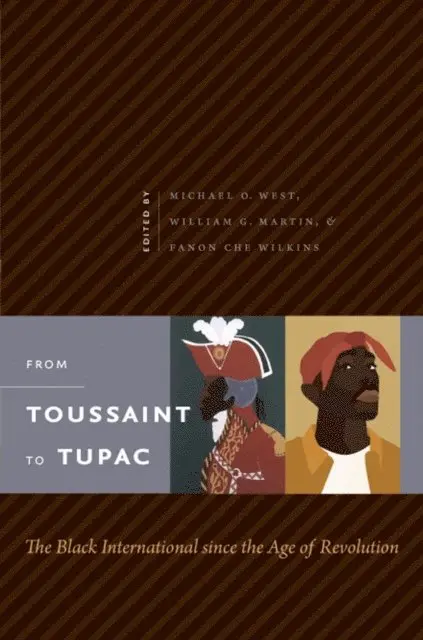
From Toussaint to Tupac
The Black International since the Age of Revolution
Av Fanon Che Wilkins, William G. Martin m. fl.
E-bok, 2009
339 kr
Lägg i varukorg
Transcending geographic and cultural lines, From Toussaint to Tupac is an ambitious collection of essays exploring black internationalism and its implications for a black consciousness. At its core, black internationalism is a struggle against oppression, whether manifested in slavery, colonialism, …
Making Waves
Worldwide Social Movements, 1750-2005
E-bok, 2015
1266 kr
Lägg i varukorg
Making Waves unearths the successive, worldwide waves of revolts, rebellions, and revolutions that have shaken and remade the world from the eighteenth century to the present. It challenges us to rethink not only our limited conceptions of social movements but the very character and possibilities …
Making Waves
Worldwide Social Movements, 1750-2005
E-bok, 2015
1266 kr
Lägg i varukorg
Making Waves unearths the successive, worldwide waves of revolts, rebellions, and revolutions that have shaken and remade the world from the eighteenth century to the present. It challenges us to rethink not only our limited conceptions of social movements but the very character and possibilities …
From Toussaint to Tupac
The Black International since the Age of Revolution
Av Fanon Che Wilkins, William G. Martin m. fl.
E-bok, 2009
1677 kr
Lägg i varukorg
Transcending geographic and cultural lines, From Toussaint to Tupac is an ambitious collection of essays exploring black internationalism and its implications for a black consciousness. At its core, black internationalism is a struggle against oppression, whether manifested in slavery, colonialism, …
After Prisons?
Freedom, Decarceration, and Justice Disinvestment
Av William G. Martin, Joshua M. Price
Inbunden, 2016
1139 kr
Lägg i varukorg
As recently as five years ago mass incarceration was widely considered to be a central, permanent feature of the political and social landscape. The number of people in U.S. prisons is still without historic parallel anywhere in the world or in U.S. history. But in the last few years, the …
After Prisons?
Freedom, Decarceration, and Justice Disinvestment
Av William G. Martin, Joshua M. Price
Häftad, 2018
573 kr
Lägg i varukorg
As recently as five years ago mass incarceration was widely considered to be a central, permanent feature of the political and social landscape. The number of people in U.S. prisons is still without historic parallel anywhere in the world or in U.S. history. But in the last few years, the …
South Africa and the World Economy
Remaking Race, State, and Region
Inbunden, 2013
1352 kr
Lägg i varukorg
This volume chronicles the volatile history of the resurgence of South Africa, once an international pariah, as a respected and influential African state.Once an international pariah, South Africa has emerged as a respected and influential African state, projecting its economic and political power …
Making Waves
Worldwide Social Movements, 1750-2005
Inbunden, 2007
3161 kr
Lägg i varukorg
Making Waves unearths the successive, worldwide waves of revolts, rebellions, and revolutions that have shaken and remade the world from the eighteenth century to the present. It challenges us to rethink not only our limited conceptions of social movements but the very character and possibilities …
Making Waves
Worldwide Social Movements, 1750-2005
Häftad, 2008
1074 kr
Lägg i varukorg
Making Waves unearths the successive, worldwide waves of revolts, rebellions, and revolutions that have shaken and remade the world from the eighteenth century to the present. It challenges us to rethink not only our limited conceptions of social movements but the very character and possibilities …
From Toussaint to Tupac
The Black International since the Age of Revolution
Av Fanon Che Wilkins, William G. Martin m. fl.
E-bok, 2009
347 kr
Lägg i varukorg
Transcending geographic and cultural lines, From Toussaint to Tupac is an ambitious collection of essays exploring black internationalism and its implications for a black consciousness. At its core, black internationalism is a struggle against oppression, whether manifested in slavery, colonialism, …
From Toussaint to Tupac
The Black International since the Age of Revolution
Av Fanon Che Wilkins, William G. Martin m. fl.
E-bok, 2009
2165 kr
Lägg i varukorg
Transcending geographic and cultural lines, From Toussaint to Tupac is an ambitious collection of essays exploring black internationalism and its implications for a black consciousness. At its core, black internationalism is a struggle against oppression, whether manifested in slavery, colonialism, …