William Gallois - Böcker
Visar alla böcker från författaren William Gallois. Handla med fri frakt och snabb leverans.
7 produkter
7 produkter
550 kr
Skickas inom 10-15 vardagar
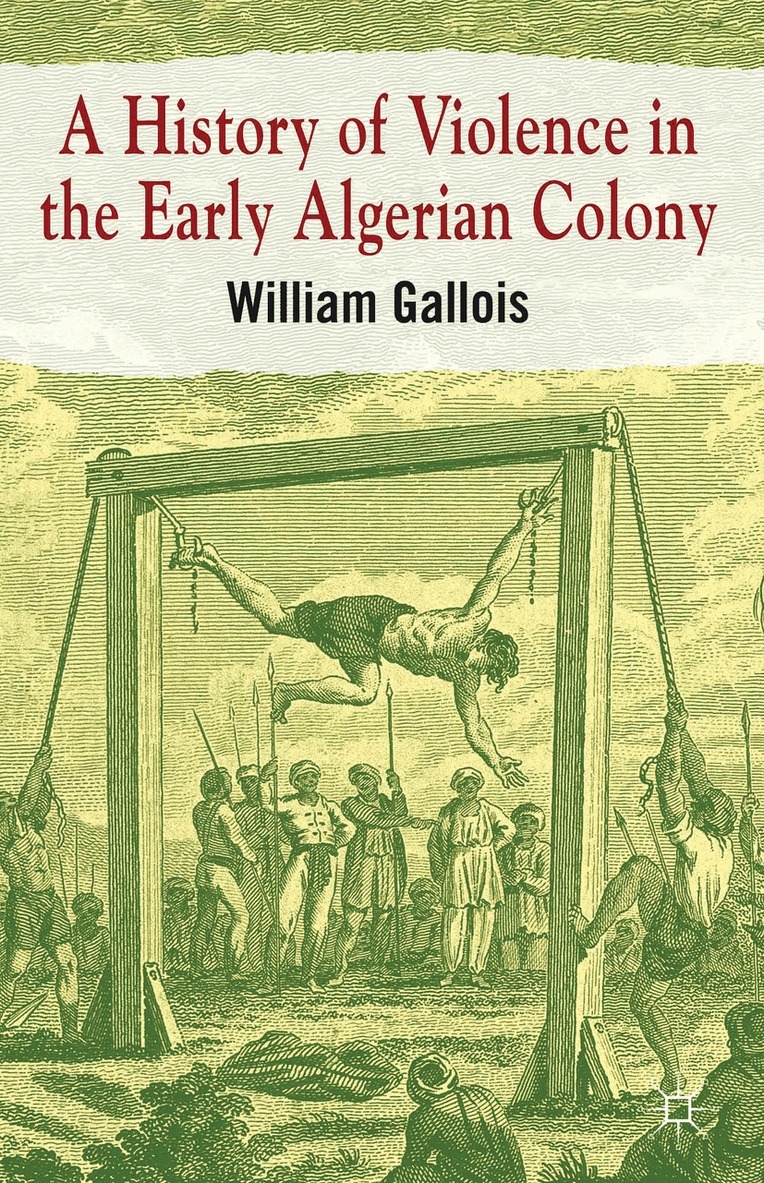
Using newly-discovered documentation from the French military archives, A History of Violence in the Early Algerian Colony offers a comprehensive study of the forms of violence adopted by the French Army in Africa. Its coverage ranges from detailed case studies of massacres to the question of whether a genocide took place in Algeria.
2 162 kr
Skickas inom 10-15 vardagar
This book forms part of the scholarly rejection of the ‘experts’ of empire and calls for us to centre our understanding of colonial praxis upon the lives of the colonised peoples of the past and the present.Western publics are constantly being told by ‘experts’ that they ought to rethink the history of empire. They are told that their (presumed) guilt regarding their countries’ imperial pasts can be assuaged: if people were only able to deploy a ‘balanced scorecard’ they would then recognise that imperialists brought roads as well as death, schools as well as national borders, and hospitals as well as racialised forms of ethnic conflict. Building around an essay by the Algerian writer Hosni Kitouni (here translated into English for the first time), this book shows how the genre and forms of imperial history mirror the actions of colonists and the documents they left behind, erasing the suffering of indigenous people and the after-effects of empire, which last into the present and will continue into the future.This book was originally published as a special issue of Rethinking History.
633 kr
Skickas inom 10-15 vardagar
This book forms part of the scholarly rejection of the ‘experts’ of empire and calls for us to centre our understanding of colonial praxis upon the lives of the colonised peoples of the past and the present.Western publics are constantly being told by ‘experts’ that they ought to rethink the history of empire. They are told that their (presumed) guilt regarding their countries’ imperial pasts can be assuaged: if people were only able to deploy a ‘balanced scorecard’ they would then recognise that imperialists brought roads as well as death, schools as well as national borders, and hospitals as well as racialised forms of ethnic conflict. Building around an essay by the Algerian writer Hosni Kitouni (here translated into English for the first time), this book shows how the genre and forms of imperial history mirror the actions of colonists and the documents they left behind, erasing the suffering of indigenous people and the after-effects of empire, which last into the present and will continue into the future.This book was originally published as a special issue of Rethinking History.
591 kr
Skickas inom 10-15 vardagar
What is time? How does our sense of time lead us to approach the world? How did the peoples of the past view time? This book answers these questions through an investigation of the cultures of time in Christianity, Islam, Buddhism, Judaism and the Australian Dreamtime. It argues that our contemporary world is blind as to the significance and complexity of time, preferring to believe that time is natural and unchanging. This is of critical importance to historians since the base matter of their study is time, yet there is almost no theoretical literature on time in history.This book offers the first detailed historiographical study of the centrality of time to human cultures. It sets out the complex ways in which ideas of time developed in the major world religions, and the manner in which such conceptions led people both to live in ways very different to our contemporary world and to make very different kinds of histories. It goes on to argue that modern scientific descriptions of time, such as Einsteins Theory of Relativity, lie much closer to the complex understandings of time in religions such as Christianity than they do to our common-sense notions of time which are centred on progress through a past, present and future.
2 162 kr
Skickas inom 10-15 vardagar
What is time? How does our sense of time lead us to approach the world? How did the peoples of the past view time? This book answers these questions through an investigation of the cultures of time in Christianity, Islam, Buddhism, Judaism and the Australian Dreamtime. It argues that our contemporary world is blind as to the significance and complexity of time, preferring to believe that time is natural and unchanging. This is of critical importance to historians since the base matter of their study is time, yet there is almost no theoretical literature on time in history.This book offers the first detailed historiographical study of the centrality of time to human cultures. It sets out the complex ways in which ideas of time developed in the major world religions, and the manner in which such conceptions led people both to live in ways very different to our contemporary world and to make very different kinds of histories. It goes on to argue that modern scientific descriptions of time, such as Einsteins Theory of Relativity, lie much closer to the complex understandings of time in religions such as Christianity than they do to our common-sense notions of time which are centred on progress through a past, present and future.
550 kr
Skickas inom 10-15 vardagar
Using newly-discovered documentation from the French military archives, A History of Violence in the Early Algerian Colony offers a comprehensive study of the forms of violence adopted by the French Army in Africa. Its coverage ranges from detailed case studies of massacres to the question of whether a genocide took place in Algeria.
1 802 kr
Kommande
The painter Mohammed Racim (1896–1975) was the best known Algerian artist of the twentieth century. His neo-traditional revival of the genre of the illuminated miniature appealed equally to French imperialists, to colonial subjects and to later generations of liberated Algerians.This book offers close readings of a series of previously unseen chromolithographic prints which the artist created on a clandestine basis in the early decades of the twentieth century. It shows how these works merit consideration as radical, modern forms of Islamic art, noteworthy not simply for the manner in which they deployed religion as a means of challenging foreign rule, but for the richness and complexity of their spiritual purpose.An affirmation of the major significance Racim's work had in shaping the modern art history, this book challenges the reader's preconceptions as to what constitutes Islamic art and the degree to which it developed in the modern period.