William Greenslade – författare
Visar alla böcker från författaren William Greenslade. Handla med fri frakt och snabb leverans.
10 produkter
Grant Allen
Literature and Cultural Politics at the Fin de Siècle
Av Terence Rodgers, William Greenslade
Inbunden, 2005
3643 kr
Lägg i varukorg
A strikingly interdisciplinary figure in Victorian literary history, Grant Allen (1848-1899) has thus far managed to elude the focused scrutiny of contemporary scholarship. This collection offers a valuable analytical and bibliographical resource for the exploration of the man and his work. Grant …
Grant Allen
Literature and Cultural Politics at the Fin de Siècle
Av Terence Rodgers, William Greenslade
Häftad, 2018
943 kr
Lägg i varukorg
A strikingly interdisciplinary figure in Victorian literary history, Grant Allen (1848-1899) has thus far managed to elude the focused scrutiny of contemporary scholarship. This collection offers a valuable analytical and bibliographical resource for the exploration of the man and his work. Grant …
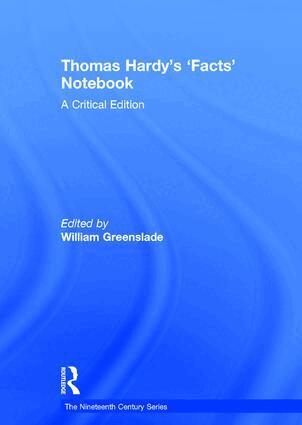
Thomas Hardy’s ‘Facts’ Notebook
A Critical Edition
Häftad, 2019
926 kr
Lägg i varukorg
Within weeks of Thomas Hardy’s return to his native Dorchester in June 1883, he began to compile his ’Facts’ notebook, which he kept up throughout the years when he was writing some of his major work - The Mayor of Casterbridge, The Woodlanders, Tess of the d’Urbervilles and Jude the Obscure. From …
Thomas Hardy's 'Facts' Notebook
A Critical Edition
E-bok, 2017
1072 kr
Lägg i varukorg
Within weeks of Thomas Hardy’s return to his native Dorchester in June 1883, he began to compile his ’Facts’ notebook, which he kept up throughout the years when he was writing some of his major work - The Mayor of Casterbridge, The Woodlanders, Tess of the d’Urbervilles and Jude the Obscure. From …
Thomas Hardy's 'Facts' Notebook
A Critical Edition
E-bok, 2017
1095 kr
Lägg i varukorg
Within weeks of Thomas Hardy’s return to his native Dorchester in June 1883, he began to compile his ’Facts’ notebook, which he kept up throughout the years when he was writing some of his major work - The Mayor of Casterbridge, The Woodlanders, Tess of the d’Urbervilles and Jude the Obscure. From …
Grant Allen
Literature and Cultural Politics at the Fin de Siecle
Av Terence Rodgers, William Greenslade
E-bok, 2017
1115 kr
Lägg i varukorg
A strikingly interdisciplinary figure in Victorian literary history, Grant Allen (1848-1899) has thus far managed to elude the focused scrutiny of contemporary scholarship. This collection offers a valuable analytical and bibliographical resource for the exploration of the man and his work. Grant …
Grant Allen
Literature and Cultural Politics at the Fin de Siecle
Av Terence Rodgers, William Greenslade
E-bok, 2017
1091 kr
Lägg i varukorg
A strikingly interdisciplinary figure in Victorian literary history, Grant Allen (1848-1899) has thus far managed to elude the focused scrutiny of contemporary scholarship. This collection offers a valuable analytical and bibliographical resource for the exploration of the man and his work. Grant …
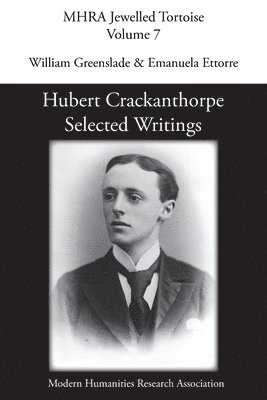
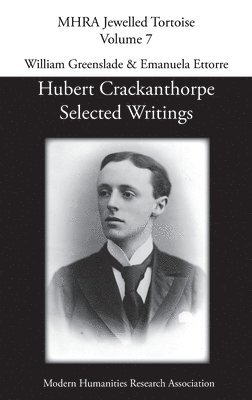
Hubert Crackanthorpe
Selected Writings
Av Hubert Crackanthorpe, William Greenslade m. fl.
Häftad, 2020
373 kr
Lägg i varukorg
Hubert Crackanthorpe
Selected Writings
Av Hubert Crackanthorpe, William Greenslade m. fl.
Inbunden, 2020
991 kr
Lägg i varukorg
Thomas Hardy’s ‘Facts’ Notebook
A Critical Edition
Inbunden, 2004
1601 kr
Tillfälligt slut
Within weeks of Thomas Hardy’s return to his native Dorchester in June 1883, he began to compile his ’Facts’ notebook, which he kept up throughout the years when he was writing some of his major work - The Mayor of Casterbridge, The Woodlanders, Tess of the d’Urbervilles and Jude the Obscure. From …