William H. Schubert - Böcker
Visar alla böcker från författaren William H. Schubert. Handla med fri frakt och snabb leverans.
7 produkter
7 produkter
489 kr
Skickas inom 10-15 vardagar
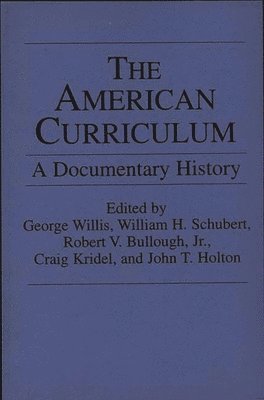
At a time marked by strong demands for educational reform, the American school curriculum is a topic of special concern. This volume provides a comprehensive historical record of the evolution of the curriculum in America from the colonial period to the present day. The editors have compiled a collection of influential and representative documents in primary, secondary, and higher education in the United States. Each document is introduced by a short essay that discusses its historical context and significance. The result is a valuable chronicle of the development of the American school curriculum.The work begins with an introductory piece that overviews the development of the curriculum and surveys the most important works on curriculum history. The introduction is followed by excerpts from 34 documents representative of the school curriculum from The Rules and Course of Study of Harvard College, 1642 to the 1983 report, A Nation at Risk: The Imperative for Educational Reform. The essay that introduces each document closes with a brief bibliography, and the volume concludes with a more extensive list of sources for further reading. By consulting this reference, historians and educators can trace the development of the curriculum over the last 350 years.
901 kr
Skickas inom 10-15 vardagar
At a time marked by strong demands for educational reform, the American school curriculum is a topic of special concern. This volume provides a comprehensive historical record of the evolution of the curriculum in America from the colonial period to the present day. The editors have compiled a collection of influential and representative documents in primary, secondary, and higher education in the United States. Each document is introduced by a short essay that discusses its historical context and significance. The result is a valuable chronicle of the development of the American school curriculum.The work begins with an introductory piece that overviews the development of the curriculum and surveys the most important works on curriculum history. The introduction is followed by excerpts from 34 documents representative of the school curriculum from The Rules and Course of Study of Harvard College, 1642 to the 1983 report, A Nation at Risk: The Imperative for Educational Reform. The essay that introduces each document closes with a brief bibliography, and the volume concludes with a more extensive list of sources for further reading. By consulting this reference, historians and educators can trace the development of the curriculum over the last 350 years.
544 kr
Skickas inom 5-8 vardagar
599 kr
Skickas inom 7-10 vardagar
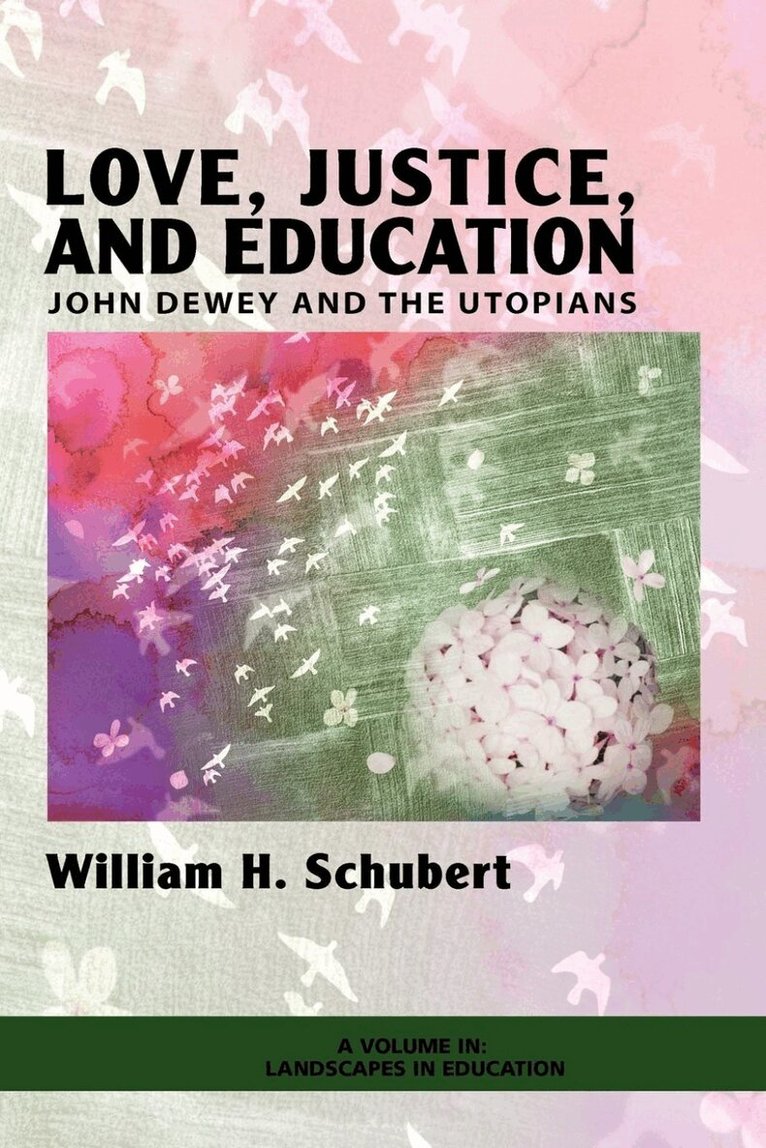
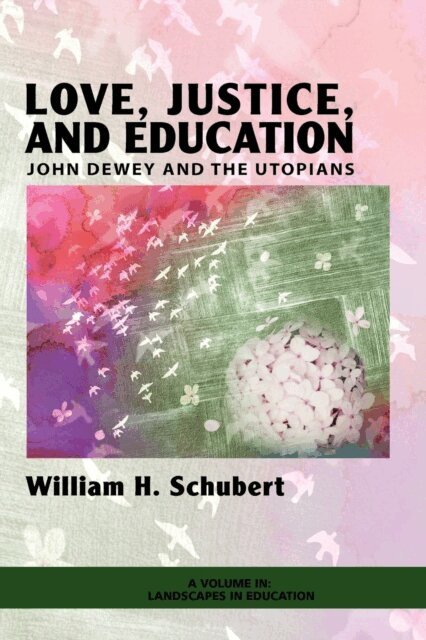
Love, Justice, and Education by William H. Schubert brings to life key ideas in the work of John Dewey and their relevance for the world today. He does this by imagining continuation of a highly evocative article that Dewey published in the New York Times in 1933. Dewey wrote from the posture of having visited Utopia. Schubert begins each of thirty short chapters with a phrase or sentence from Dewey's article, in response to which a continuous flow of Utopians consider what is necessary for educational and social reform among Earthlings. Schubert encourages the Utopians, who have studied Earthling practices and literatures, to recommend from their experience what Earthlings need for educational and social reform and how they can address obstacles to that reform. The Utopians speak to myriad implications of Dewey's report by drawing upon a wide range of philosophical, literary, and educational ideas - including many of Dewey's other writings. Their central message is that loving relationships and empathic dedication to social justice are necessary for educational reform that responds wholeheartedly to learner needs and interests. True to Dewey's original position, such education must be built upon social reform that works to overcome acquisitive society based on greed: the principal impediment to realizing human potential, democratic society, and educational relationships that enhance it. To overcome the debilitating acquisitiveness that plagues Earth is the challenge for educators and all human beings who seek to involve the young in composing their lives and cultivating a world of integrity, beauty, justice, love, and continuously evolving capacities of humanity.
1 059 kr
Skickas inom 7-10 vardagar
Love, Justice, and Education by William H. Schubert brings to life key ideas in the work of John Dewey and their relevance for the world today. He does this by imagining continuation of a highly evocative article that Dewey published in the New York Times in 1933. Dewey wrote from the posture of having visited Utopia. Schubert begins each of thirty short chapters with a phrase or sentence from Dewey's article, in response to which a continuous flow of Utopians consider what is necessary for educational and social reform among Earthlings. Schubert encourages the Utopians, who have studied Earthling practices and literatures, to recommend from their experience what Earthlings need for educational and social reform and how they can address obstacles to that reform. The Utopians speak to myriad implications of Dewey's report by drawing upon a wide range of philosophical, literary, and educational ideas - including many of Dewey's other writings. Their central message is that loving relationships and empathic dedication to social justice are necessary for educational reform that responds wholeheartedly to learner needs and interests. True to Dewey's original position, such education must be built upon social reform that works to overcome acquisitive society based on greed: the principal impediment to realizing human potential, democratic society, and educational relationships that enhance it. To overcome the debilitating acquisitiveness that plagues Earth is the challenge for educators and all human beings who seek to involve the young in composing their lives and cultivating a world of integrity, beauty, justice, love, and continuously evolving capacities of humanity.
646 kr
Skickas inom 7-10 vardagar
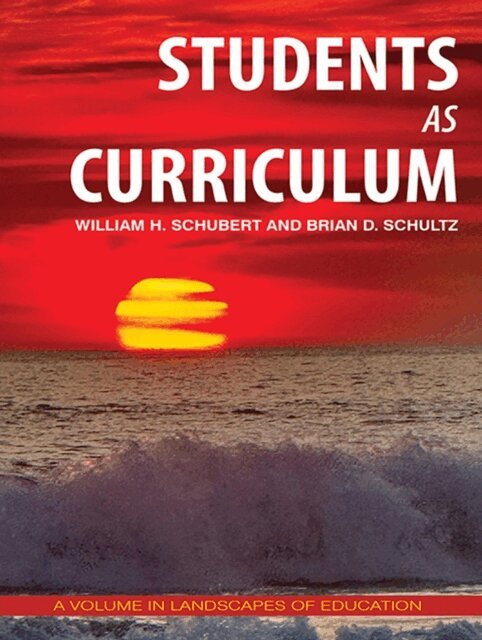
This book explores possibilities for students to have a much greater role in curriculum than mere receivers of it. In fact, we suggest what happens when students are the curriculum. We draw upon our scholarship (theory, practice, and praxis) over the years to show how educational experiences can be invigorated and embodied when students ask the what’s worthwhile questions, joining teachers as fellow curricularists, action researchers, and practical inquirers, to engage in creative insubordination that refines the theories within (and among) them through lifelong education. Such educational experience stems from listening carefully to students and creates meaning because it is of and by students, and therefore more genuinely for them. It is cultural experience writ large because it draws on curricula of educational experience from many spheres of life (outside of school and in school) to continuously reconstruct who and what they are. It draws on teacher and student lore and is improvisational, pedagogically pivoting, adapting, and emerging. It finds new spaces, crevices, and cracks wherein students continuously re-create themselves – the curriculum that they are becoming. This book includes previously published articles and book chapters by William H. Schubert and Brian D. Schultz. The authors include dialogic interludes between chapters to introduce, reflect on, and connect the chapters and their theorizing.
1 093 kr
Skickas inom 7-10 vardagar
This book explores possibilities for students to have a much greater role in curriculum than mere receivers of it. In fact, we suggest what happens when students are the curriculum. We draw upon our scholarship (theory, practice, and praxis) over the years to show how educational experiences can be invigorated and embodied when students ask the what’s worthwhile questions, joining teachers as fellow curricularists, action researchers, and practical inquirers, to engage in creative insubordination that refines the theories within (and among) them through lifelong education. Such educational experience stems from listening carefully to students and creates meaning because it is of and by students, and therefore more genuinely for them. It is cultural experience writ large because it draws on curricula of educational experience from many spheres of life (outside of school and in school) to continuously reconstruct who and what they are. It draws on teacher and student lore and is improvisational, pedagogically pivoting, adapting, and emerging. It finds new spaces, crevices, and cracks wherein students continuously re-create themselves – the curriculum that they are becoming. This book includes previously published articles and book chapters by William H. Schubert and Brian D. Schultz. The authors include dialogic interludes between chapters to introduce, reflect on, and connect the chapters and their theorizing.