William H. Young – författare
Visar alla böcker från författaren William H. Young. Handla med fri frakt och snabb leverans.
20 produkter
20 produkter
E-bok
PDF, Engelska, 2005978 kr
Läs direkt efter köp
Prior to the stock market crash of 1929 American music still possessed a distinct tendency towards elitism, as songwriters and composers sought to avoid the mass appeal that critics scorned. During the Depression, however, radio came to dominate the other musical media of the time, and a new era of truly popular music was born. Under the guidance of the great Duke Ellington and a number of other talented and charismatic performers, swing music unified the public consciousness like no other musical form before or since. At the same time the enduring legacies of Woody Guthrie in folk, Aaron Copeland in classical, and George and Ira Gershwin on Broadway stand as a testament to the great diversity of tastes and interests that subsisted throughout the Great Depression, and play a part still in our lives today. The lives of these and many other great musicians come alive in this insightful study of the works, artists, and circumstances that contributed to making and performing the music that helped America through one of its most difficult times.The American History through Music series examines the many different styles of music that have played a significant part in our nation's history. While volumes in this series show the multifaceted roles of music in our culture, they also use music as a lens through which readers may study American social history. The authors present in-depth analysis of American musical genres, significant musicians, technological innovations, and the many connections between music and the realms of art, politics, and daily life.
E-bok
PDF, Engelska, 2004376 kr
Läs direkt efter köp
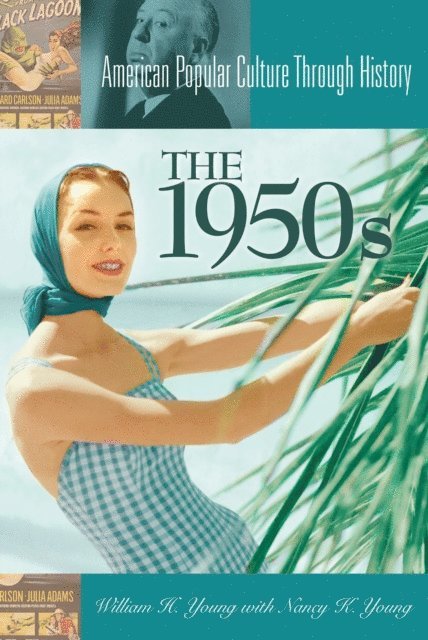
Have the 1950s been overly romanticized? Beneath the calm, conformist exterior, new ideas and attitudes were percolating. This was the decade of McCarthyism, Levittowns, and men in gray flannel suits, but the 1950s also saw bold architectural styles, the rise of paperback novels and the Beat writers, Cinema Scope and film noir, television variety shows, the Golden Age of the automobile, subliminal advertising, fast food, Frisbees, and silly putty. Meanwhile, teens attained a more prominent role in American culture with hot rods, rock 'n' roll, preppies and greasers, and—gasp—juvenile delinquency. At the same time, a new technological threat, the atom bomb, lurked beneath the surface of the postwar decade. This volume presents a nuanced look at a surprisingly complex time in American popular culture.
E-bok
PDF, Engelska, 2002376 kr
Läs direkt efter köp
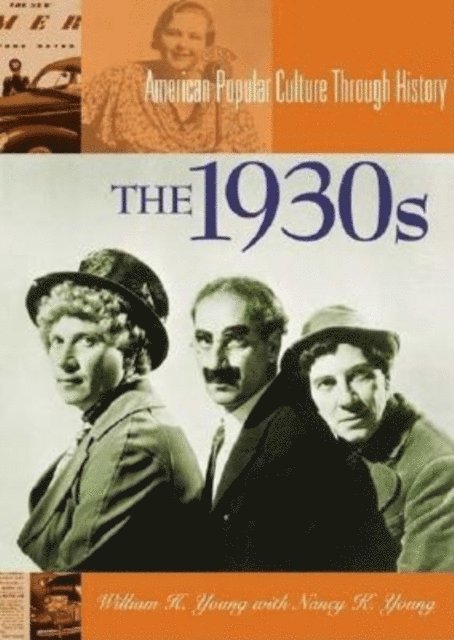
Most historical studies bury us in wars and politics, paying scant attention to the everyday effects of pop culture. Welcome to America's other history—the arts, activities, common items, and popular opinions that profoundly impacted our national way of life. The twelve narrative chapters in this volume provide a textured look at everyday life, youth, and the many different sides of American culture during the 1930s. Additional resources include a cost comparison of common goods and services, a timeline of important events, notes arranged by chapter, an extensive bibliography for further reading, and a subject index.The dark cloud of the Depression shadowed most Americans' lives during the 1930s. Books, movies, songs, and stories of the 1930s gave Americans something to hope for by depicting a world of luxury and money. Major figures of the age included Fred Astaire and Ginger Rogers, Irving Berlin, Amelia Earhart, Duke Ellington, the Marx Brothers, Margaret Mitchell, Cole Porter, Joe Louis, Babe Ruth, Shirley Temple, and Frank Lloyd Wright. Innovations in technology and travel hinted at a Utopian society just off the horizon, group sports and activities gave the unemployed masses ways to spend their days, and a powerful new demographic—the American teenager—suddenly found itself courted by advertisers and entertainers.
E-bok
PDF, Engelska, 2007346 kr
Läs direkt efter köp
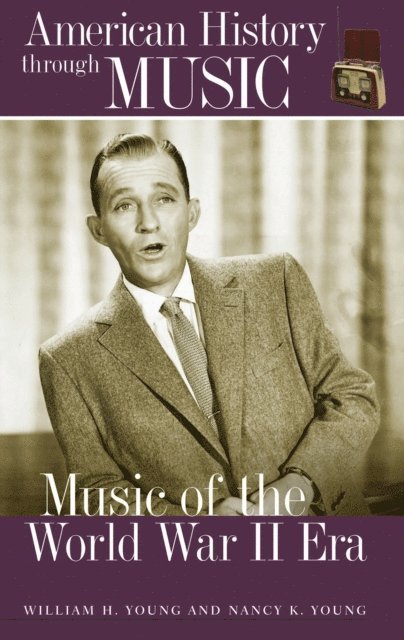
In the World War II era, big bands and swing music reached the heights of popularity with soldiers as well as friends and loved ones back home. Many entertainers such as Glenn Miller also served in the military, or supported the war effort with bond drives and entertaining the troops at home and abroad. In addition to big band and swing music, musicals, jazz, blues, gospel and country music were also popular. Chapters on each, along with an analysis of the evolution of record companies, records, radios, and television are included here, for students, historians, and fans of the era.Includes a timeline of the music of the era, an appendix of the Broadway and Hollywood Musicals, 1939-1945, and an appendix of Songs, Composers, and lyricists, 1939-1945. An extensive discography and bibliography, along with approximately 35 black and white photos, complete the volume.
E-bok
PDF, Engelska, 20072 215 kr
Läs direkt efter köp
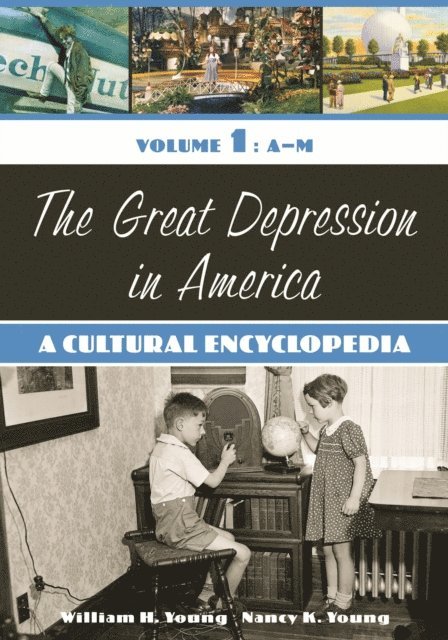
Everything from Amos n' Andy to zeppelins is included in this expansive two volume encyclopedia of popular culture during the Great Depression era. Two hundred entries explore the entertainments, amusements, and people of the United States during the difficult years of the 1930s. In spite of, or perhaps because of, such dire financial conditions, the worlds of art, fashion, film, literature, radio, music, sports, and theater pushed forward. Conditions of the times were often mirrored in the popular culture with songs such as Brother Can You Spare a Dime, breadlines and soup kitchens, homelessness, and prohibition and repeal. Icons of the era such as Fred Astaire and Ginger Rogers, Louis Armstrong, Bing Crosby, F. Scott Fitzgerald, George and Ira Gershwin, Jean Harlow, Billie Holiday, the Marx Brothers, Roy Rogers, Frank Sinatra, and Shirley Temple entertained many. Dracula, Gone With the Wind, It Happened One Night, and Superman distracted others from their daily worries. Fads and games - chain letters, jigsaw puzzles, marathon dancing, miniature golf, Monopoly - amused some, while musicians often sang the blues.Nancy and William Young have written a work ideal for college and high school students as well as general readers looking for an overview of the popular culture of the 1930s. Art deco, big bands, Bonnie and Clyde, the Chicago's World Fair, Walt Disney, Duke Ellington, five-and-dimes, the Grand Ole Opry, the jitter-bug, Lindbergh kidnapping, Little Orphan Annie, the Olympics, operettas, quiz shows, Seabiscuit, vaudeville, westerns, and Your Hit Parade are just a sampling of the vast range of entries in this work. Reference features include an introductory essay providing an historical and cultural overview of the period, bibliography, and index.
Inbunden, Engelska, 2002
756 kr
Skickas inom 10-15 vardagar
Most historical studies bury us in wars and politics, paying scant attention to the everyday effects of pop culture. Welcome to America's other history—the arts, activities, common items, and popular opinions that profoundly impacted our national way of life. The twelve narrative chapters in this volume provide a textured look at everyday life, youth, and the many different sides of American culture during the 1930s. Additional resources include a cost comparison of common goods and services, a timeline of important events, notes arranged by chapter, an extensive bibliography for further reading, and a subject index.The dark cloud of the Depression shadowed most Americans' lives during the 1930s. Books, movies, songs, and stories of the 1930s gave Americans something to hope for by depicting a world of luxury and money. Major figures of the age included Fred Astaire and Ginger Rogers, Irving Berlin, Amelia Earhart, Duke Ellington, the Marx Brothers, Margaret Mitchell, Cole Porter, Joe Louis, Babe Ruth, Shirley Temple, and Frank Lloyd Wright. Innovations in technology and travel hinted at a Utopian society just off the horizon, group sports and activities gave the unemployed masses ways to spend their days, and a powerful new demographic—the American teenager—suddenly found itself courted by advertisers and entertainers.
Inbunden, Engelska, 2004
918 kr
Skickas inom 10-15 vardagar
Have the 1950s been overly romanticized? Beneath the calm, conformist exterior, new ideas and attitudes were percolating. This was the decade of McCarthyism, Levittowns, and men in gray flannel suits, but the 1950s also saw bold architectural styles, the rise of paperback novels and the Beat writers, Cinema Scope and film noir, television variety shows, the Golden Age of the automobile, subliminal advertising, fast food, Frisbees, and silly putty. Meanwhile, teens attained a more prominent role in American culture with hot rods, rock 'n' roll, preppies and greasers, and—gasp—juvenile delinquency. At the same time, a new technological threat, the atom bomb, lurked beneath the surface of the postwar decade. This volume presents a nuanced look at a surprisingly complex time in American popular culture.
Inbunden, Engelska, 2005
918 kr
Skickas inom 10-15 vardagar
Prior to the stock market crash of 1929 American music still possessed a distinct tendency towards elitism, as songwriters and composers sought to avoid the mass appeal that critics scorned. During the Depression, however, radio came to dominate the other musical media of the time, and a new era of truly popular music was born. Under the guidance of the great Duke Ellington and a number of other talented and charismatic performers, swing music unified the public consciousness like no other musical form before or since. At the same time the enduring legacies of Woody Guthrie in folk, Aaron Copeland in classical, and George and Ira Gershwin on Broadway stand as a testament to the great diversity of tastes and interests that subsisted throughout the Great Depression, and play a part still in our lives today. The lives of these and many other great musicians come alive in this insightful study of the works, artists, and circumstances that contributed to making and performing the music that helped America through one of its most difficult times.The American History through Music series examines the many different styles of music that have played a significant part in our nation's history. While volumes in this series show the multifaceted roles of music in our culture, they also use music as a lens through which readers may study American social history. The authors present in-depth analysis of American musical genres, significant musicians, technological innovations, and the many connections between music and the realms of art, politics, and daily life.Chapters present accessible narratives on music and its cultural resonations Music theory and technique is broken down for the lay reader Each volume presents a chapter of alphabetically arranged entries on significant people and terms
Inbunden, Engelska, 2007
848 kr
Skickas inom 10-15 vardagar
In the World War II era, big bands and swing music reached the heights of popularity with soldiers as well as friends and loved ones back home. Many entertainers such as Glenn Miller also served in the military, or supported the war effort with bond drives and entertaining the troops at home and abroad. In addition to big band and swing music, musicals, jazz, blues, gospel and country music were also popular. Chapters on each, along with an analysis of the evolution of record companies, records, radios, and television are included here, for students, historians, and fans of the era.Includes a timeline of the music of the era, an appendix of the Broadway and Hollywood Musicals, 1939-1945, and an appendix of Songs, Composers, and lyricists, 1939-1945. An extensive discography and bibliography, along with approximately 35 black and white photos, complete the volume.
E-bok
PDF, Engelska, 20102 215 kr
Läs direkt efter köp
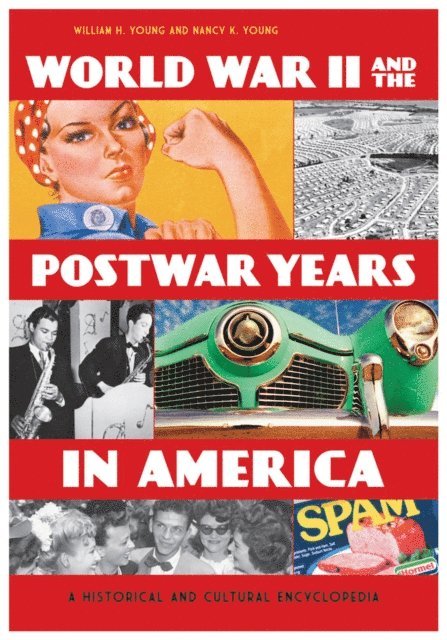
More than 150 articles provide a revealing look at one of the most tempestuous decades in recent American history, describing the everyday activities of Americans as they dealt first with war, and then a difficult transition to peace and prosperity.The two-volume World War II and the Postwar Years in America: A Historical and Cultural Encyclopedia contains over 175 articles describing everyday life on the American home front during World War II and the immediate postwar years. Unlike publications about this period that focus mainly on the big picture of the war and subsequent economic conditions, this encyclopedia drills down to the popular culture of the 1940s, bringing the details of the lives of ordinary men, women, and children alive. The work covers a broad range of everyday activities throughout the 1940s, including movies, radio programming, music, the birth of commercial television, advertising, art, bestsellers, and other equally intriguing topics. The decade was divided almost evenly between war (1940-1945) and peace (1946-1950), and the articles point up the continuities and differences between these two periods. Filled with evocative photographs, this unique encyclopedia will serve as an excellent resource for those seeking an overview of life in the United States during a decade that helped shape the modern world.
Häftad, Engelska, 2002
358 kr
Skickas inom 10-15 vardagar
Most historical studies bury us in wars and politics, paying scant attention to the everyday effects of pop culture. Welcome to America's other history—the arts, activities, common items, and popular opinions that profoundly impacted our national way of life. The twelve narrative chapters in this volume provide a textured look at everyday life, youth, and the many different sides of American culture during the 1930s. Additional resources include a cost comparison of common goods and services, a timeline of important events, notes arranged by chapter, an extensive bibliography for further reading, and a subject index.The dark cloud of the Depression shadowed most Americans' lives during the 1930s. Books, movies, songs, and stories of the 1930s gave Americans something to hope for by depicting a world of luxury and money. Major figures of the age included Fred Astaire and Ginger Rogers, Irving Berlin, Amelia Earhart, Duke Ellington, the Marx Brothers, Margaret Mitchell, Cole Porter, Joe Louis, Babe Ruth, Shirley Temple, and Frank Lloyd Wright. Innovations in technology and travel hinted at a Utopian society just off the horizon, group sports and activities gave the unemployed masses ways to spend their days, and a powerful new demographic—the American teenager—suddenly found itself courted by advertisers and entertainers.
Häftad, Engelska, 2004
358 kr
Skickas inom 10-15 vardagar
Have the 1950s been overly romanticized? Beneath the calm, conformist exterior, new ideas and attitudes were percolating. This was the decade of McCarthyism, Levittowns, and men in gray flannel suits, but the 1950s also saw bold architectural styles, the rise of paperback novels and the Beat writers, Cinema Scope and film noir, television variety shows, the Golden Age of the automobile, subliminal advertising, fast food, Frisbees, and silly putty. Meanwhile, teens attained a more prominent role in American culture with hot rods, rock 'n' roll, preppies and greasers, and—gasp—juvenile delinquency. At the same time, a new technological threat, the atom bomb, lurked beneath the surface of the postwar decade. This volume presents a nuanced look at a surprisingly complex time in American popular culture.
Häftad, Engelska, 2011
208 kr
Skickas inom 5-8 vardagar
Häftad, Engelska, 2010
235 kr
Skickas inom 5-8 vardagar
Inbunden, Engelska, 2010
332 kr
Skickas inom 5-8 vardagar
Häftad, Engelska
719 kr
Skickas inom 3-6 vardagar
Häftad, Engelska
484 kr
Skickas inom 3-6 vardagar
Häftad, Engelska, 2020
187 kr
Skickas inom 5-8 vardagar
Häftad, Engelska
263 kr
Skickas inom 3-6 vardagar
Häftad, Engelska, 2023
327 kr
Skickas inom 10-15 vardagar
In the World War II era, big bands and swing music reached the heights of popularity with soldiers as well as friends and loved ones back home. Many entertainers such as Glenn Miller also served in the military, or supported the war effort with bond drives and entertaining the troops at home and abroad. In addition to big band and swing music, musicals, jazz, blues, gospel and country music were also popular. Chapters on each, along with an analysis of the evolution of record companies, records, radios, and television are included here, for students, historians, and fans of the era.Includes a timeline of the music of the era, an appendix of the Broadway and Hollywood Musicals, 1939-1945, and an appendix of Songs, Composers, and lyricists, 1939-1945. An extensive discography and bibliography, along with approximately 35 black and white photos, complete the volume.