William Horsted - Böcker
Visar alla böcker från författaren William Horsted. Handla med fri frakt och snabb leverans.
5 produkter
5 produkter
168 kr
Skickas inom 7-10 vardagar
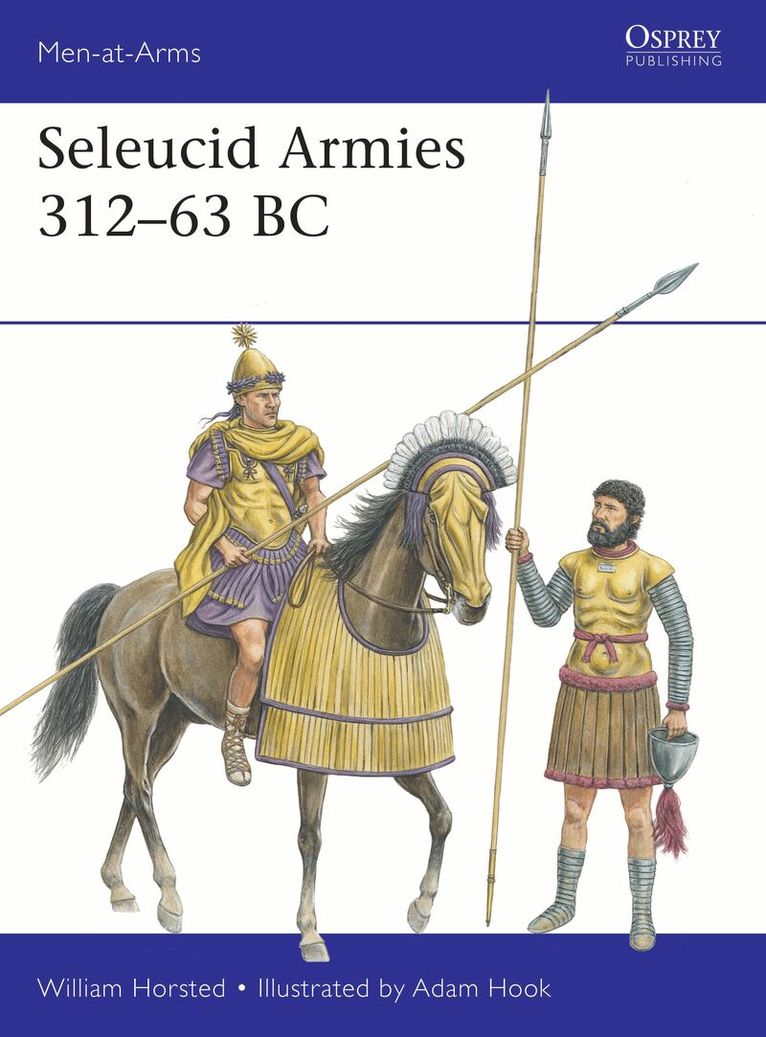
This colourful study describes and illustrates the troops of the Seleucid Empire in West Asia throughout its turbulent 250-year existence.Founded by the Macedonian general Seleucus I Nicator in 312 BC in the wake of the death of Alexander the Great 11 years previously, the Seleucid Empire came to control much of the territory conquered by Alexander in western Asia, and at its height reached from the Mediterranean to Afghanistan. The colourful armies fielded by Seleucus I and his successors are described and illustrated in this absorbing study of a major power at war in the ancient world.As the fortunes of their realm ebbed and flowed, Seleucid kings deployed vast armies recruited from diverse peoples that drew upon an array of military traditions, including the mighty phalanx, war elephants, scythed chariots and camel-mounted archers. Illustrated throughout with photographs and drawings as well as eight pages of specially commissioned artwork, this fascinating study draws upon a range of literary, archaeological and artistic sources to explore the organization, tactics, weapons and equipment of the varied units of Seleucid armies over two-and-a-half turbulent centuries in the ancient world.
153 kr
Skickas inom 10-15 vardagar
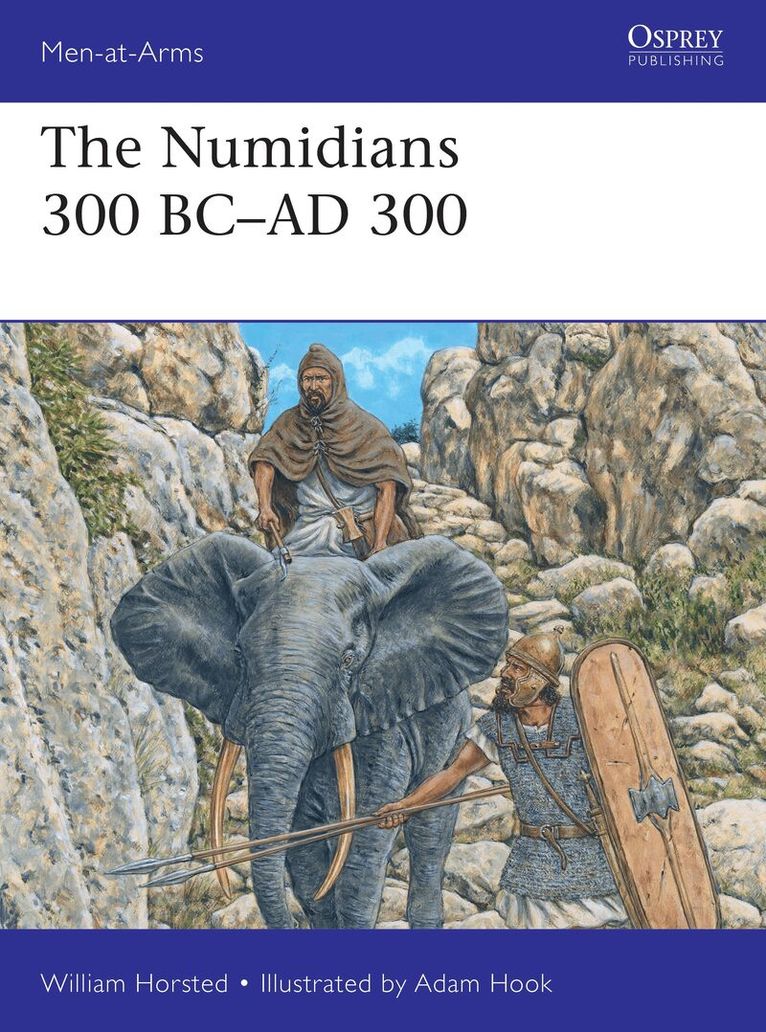
The Numidian light cavalry were among the best-known horsemen in the ancient world.Riding without saddles or bridle, carrying only hide shields for defense and clutching a handful of light javelins, they were renowned for their darting attacks, swift retreats, and skirmishing prowess. Yet, as much as they were respected by their allies and enemies, they were unfairly dismissed as uncivilized, nomadic barbarians from beyond the cultured, settled Mediterranean world.Recent scholarship, however, has shown that there is far more evidence for the armour and equipment of the Numidians than hitherto assumed. Based on up-to-date findings including the decorative friezes of the stone ‘altars’ at Kbor Klib and Chimtou in North Africa, this book reveals that the Numidians also fielded infantry, slingers, archers, and even war elephants in conflicts across the Mediterranean, including Spain, Greece, northern Italy, and Thrace.All of these troops are brought to life in original colour artwork, complemented by chapters on their weapons and equipment, history, tactics, and organization.
174 kr
Skickas inom 7-10 vardagar
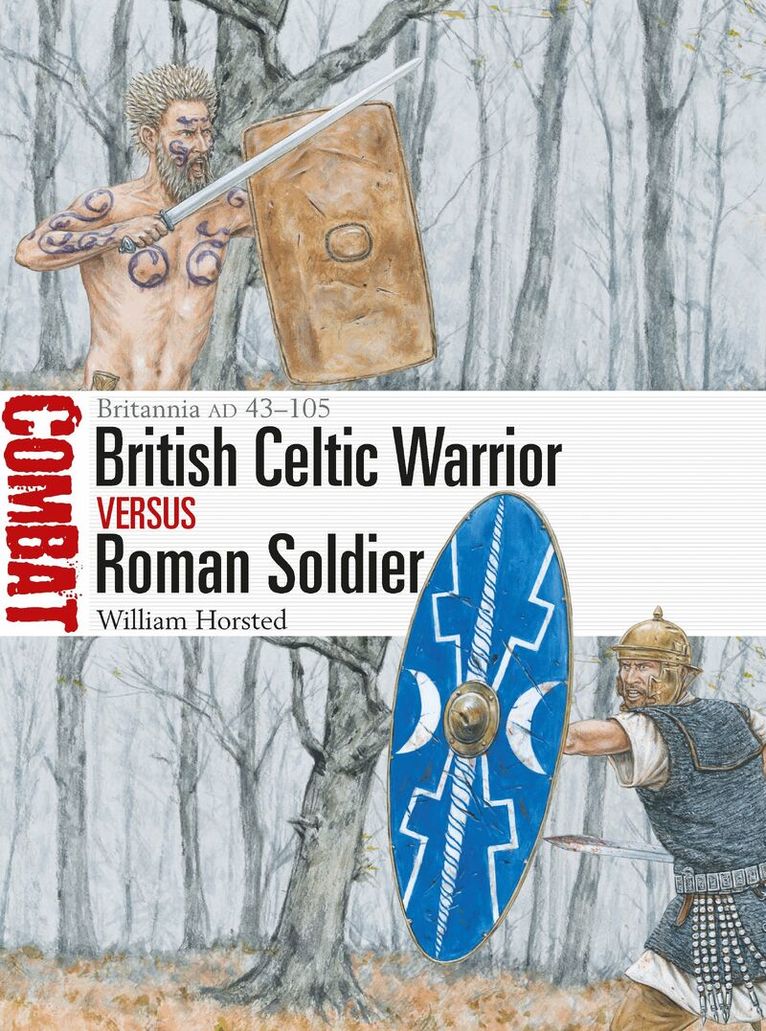
An illustrated study of the British tribal warriors and Roman auxiliaries who fought in three epic battles for control of Britain in the 1st century AD.Following the Roman invasion of Britain in AD 43, the tribes of the west and north resisted the establishment of a ‘Roman peace’, led in particular by the chieftain Caratacus. Even in the south-east, resentment of Roman occupation remained, exploding into the revolt of Boudicca’s Iceni in AD 60. Roman auxiliaries from two particular peoples are known to have taken part in the invasion of Britain: the Tungrians, from what is now Belgium, and the Batavians, from the delta of the River Rhine in the modern Netherlands. From the late 80s AD, units of both the Batavians and the Tungrians were garrisoned at a fort at Vindolanda in northern Britain. The so called ‘Vindolanda tablets’ provide an unparalleled body of material with which to reconstruct the lives of these auxiliary soldiers in Britain.Featuring full-colour maps and specially commissioned battlescene and figure artwork plates, this book examines how both the British warriors and the Roman auxiliaries experienced the decades of conflict that followed the invasion. Their recruitment, training, leadership, motivation, culture and beliefs are compared alongside an assessment of three particular battles: the final defeat of Caratacus in the hills of Wales in AD 50; the Roman assault on the island of Mona (Anglesey) in AD 60; and the battle of Mons Graupius in Scotland in AD 83.
Del 82 - Combat
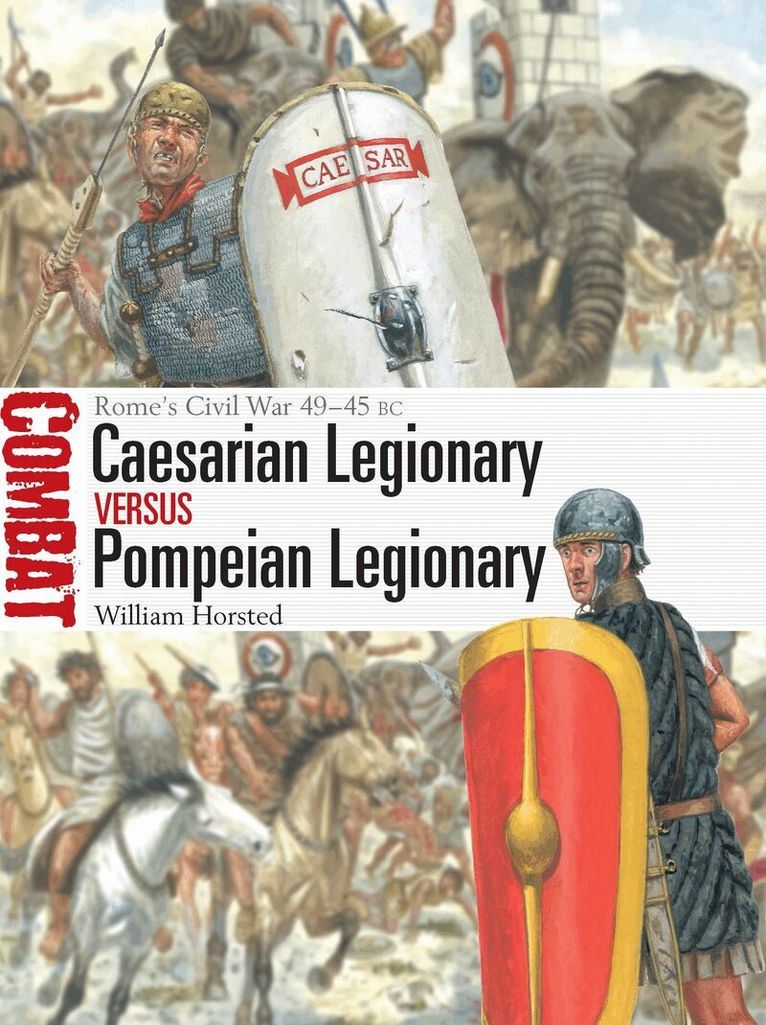
Caesarian Legionary vs Pompeian Legionary
Rome’s Civil War 49–45 BC
Häftad, Engelska, 2025
185 kr
Skickas inom 7-10 vardagar
A fully illustrated study of the troops fighting for Caesar and Pompey in three major battles of the Roman Civil War.Triggered by the tensions surrounding Julius Caesar’s return to Rome from Gaul, the civil war that broke out in 49 BC convulsed the Roman world. Commanders and troops loyal to Gnaeus Pompeius Magnus, known as Pompey, confronted those following Caesar in a series of brutal battles across the Mediterranean, from Hispania to Greece.William Horsted assesses the similarities and differences between the evolving Caesarian and Pompeian armies, which included not only Roman legions but also auxiliaries from Gaul, Numidia and elsewhere. Even after Pompey’s defeat at Pharsalus (48 BC) and his subsequent death in Egypt, the conflict continued, with Pompey’s relatives and followers continuing the fight until 45 BC. The two armies are examined in the context of three major clashes of the conflict: Dyrrachium (48 BC) in present-day Albania; Thapsus (46 BC) in modern Tunisia; and Munda (45 BC) in Spain. The text is complemented by specially commissioned colour artwork and mapping as well as archive photographs.
146 kr
Kommande
This insightful study describes and illustrates the troops fielded by the Ptolemaic regime in North Africa throughout its turbulent 275-year existence.Founded by Ptolemy I Soter, a close companion of Alexander the Great, the Ptolemaic Empire encompassed Egypt, northern Libya and parts of the Levant for nearly three centuries. Initially, its armies fought in the Wars of the Diadochi, as Alexander’s successors disputed his conquests. Intermittent conflicts with the empire’s neighbours, notably the Seleucids, characterized the following decades, with the Ptolemaic Empire falling under the influence of the Roman Republic during the 1st century BC. The death of Cleopatra VII, the dynasty’s final ruler, saw the realm’s incorporation into the Roman Empire.At first, Ptolemaic armies resembled the Macedonian forces of Alexander’s conquests, with the pike and phalanx at the heart of their tactics. The empire increasingly relied upon hired troops and adopted Roman military practices in the decades before the battle of Actium and the eclipse of Cleopatra’s realm in 30 BC. In this book, William Horsted describes the evolution of the Ptolemaic Empire’s army, investigating its various troop types, from the Wars of the Diadochi to their decline in the 1st century BC. Specially commissioned artwork reveals the colourful appearance of these warriors over nearly three centuries of conflict in the Near East.