William Isbell - Böcker
Visar alla böcker från författaren William Isbell. Handla med fri frakt och snabb leverans.
4 produkter
4 produkter
1 423 kr
Skickas inom 10-15 vardagar
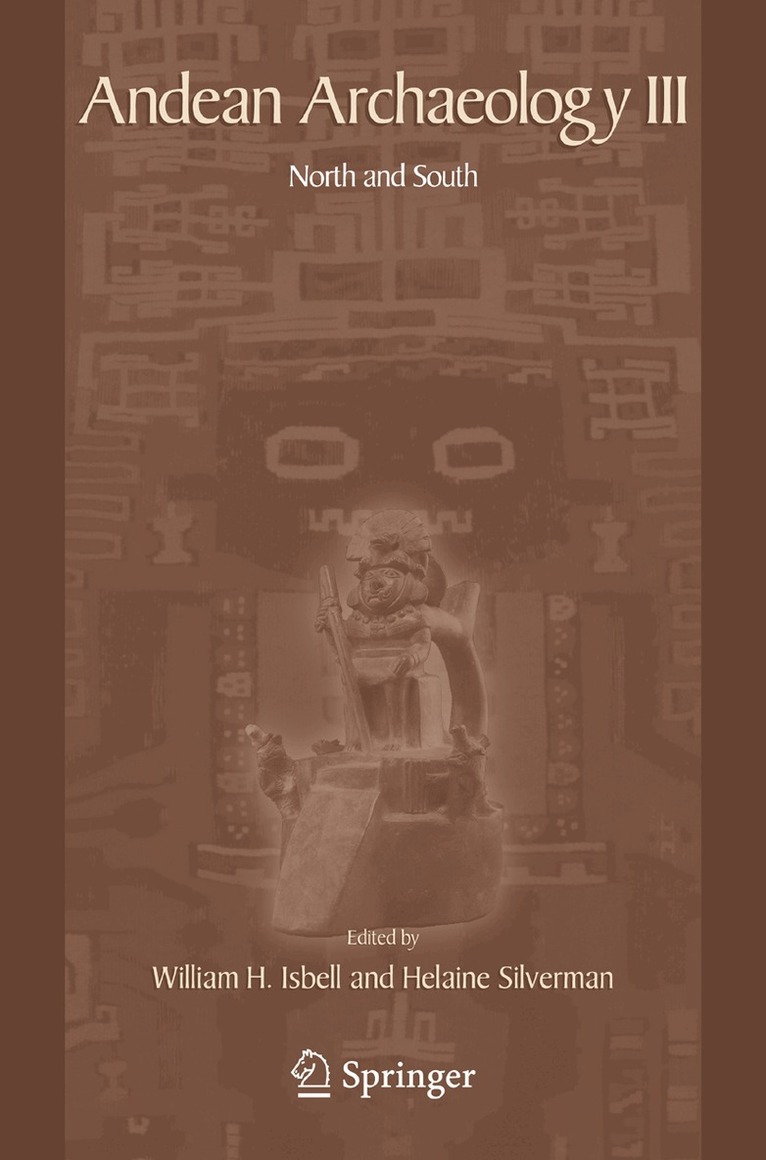
Andean Archaeology III represents a continuation in our effort to highlight the ?nest of current archaeological scholarship conducted in the Central Andean c- ture area. Each paper contributes in a signi?cant way to understanding prehistoric processes in the Central Andean culture tradition, adding importantly to the rich base provided by Andean Archaeology I and II. As in those former volumes we do not seek a balanced presentation of the entirety of the Andean past, but instead showcase what is new, what is innovative, and what is controversial in thinking about and investigating the great sweep of Andean cultural development. We wholeheartedly agree with Pauketat (2001:xiii) that it is “more satisfying to compare how cultural phenomena happened,” than for researchers to hasten to answer “why questions” that tend more to “reify their initial assumptions” than to inform us about prehistoric people and their embodied, cultural practices. We supporttherevitalizedstudyofsocioculturalevolution,especiallythatchampioned by Bruce Trigger (e.g., 1998, 2003), which has bene?ted by several decades of valuable critique. Ontheotherhand,explanationsofthepastnotbasedoncomparisonsofhistorical processes carefully argued from well-studied archaeological records sacri?ce the rigor that was such an important part of the ?rst processual archaeology advocated byLewisBinford(1962,1964,1972;Sabloff1998;seealsoYoffee2005interalia). In some recent and current Andean archaeology we ?nd explanatory conclusions, especiallyprocessualevolutionarytransformations,andclimatechange-basedrise or collapse accounts, to have been reached too hastily, constituting more of a reading of material remains in terms of theoretical expectations than a rigorous interrogation of thearchaeological record.
1 733 kr
Skickas inom 10-15 vardagar
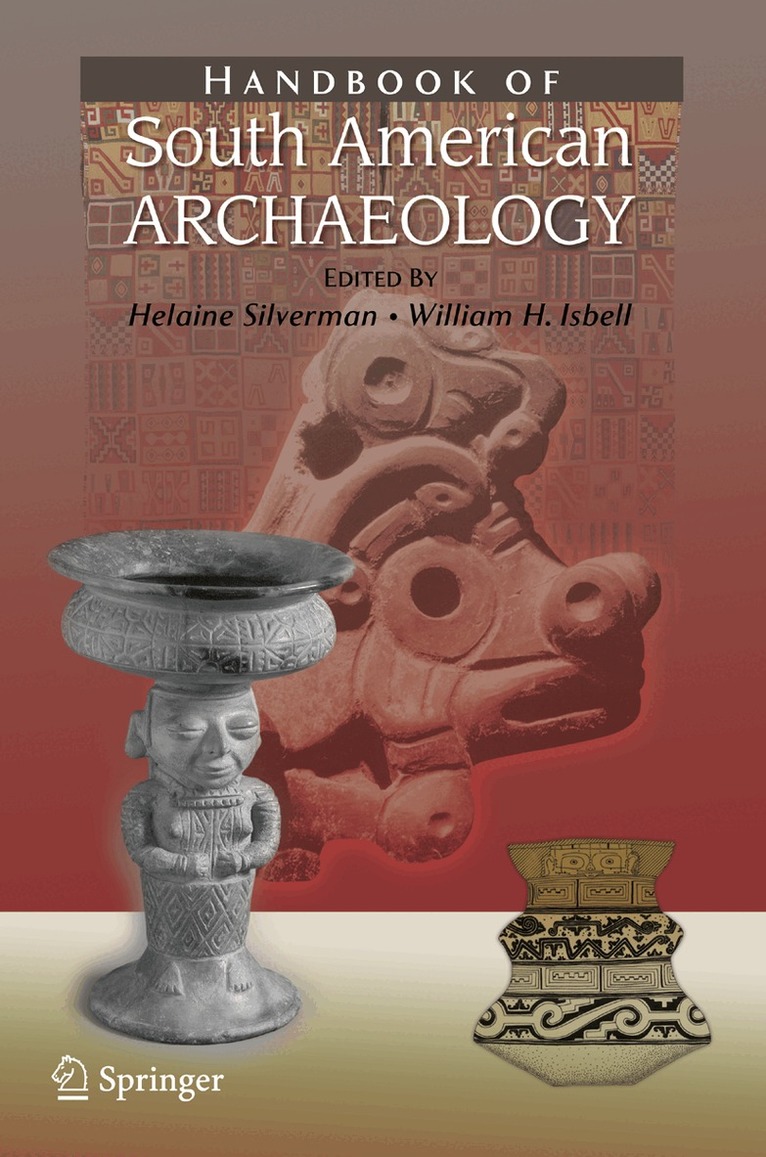
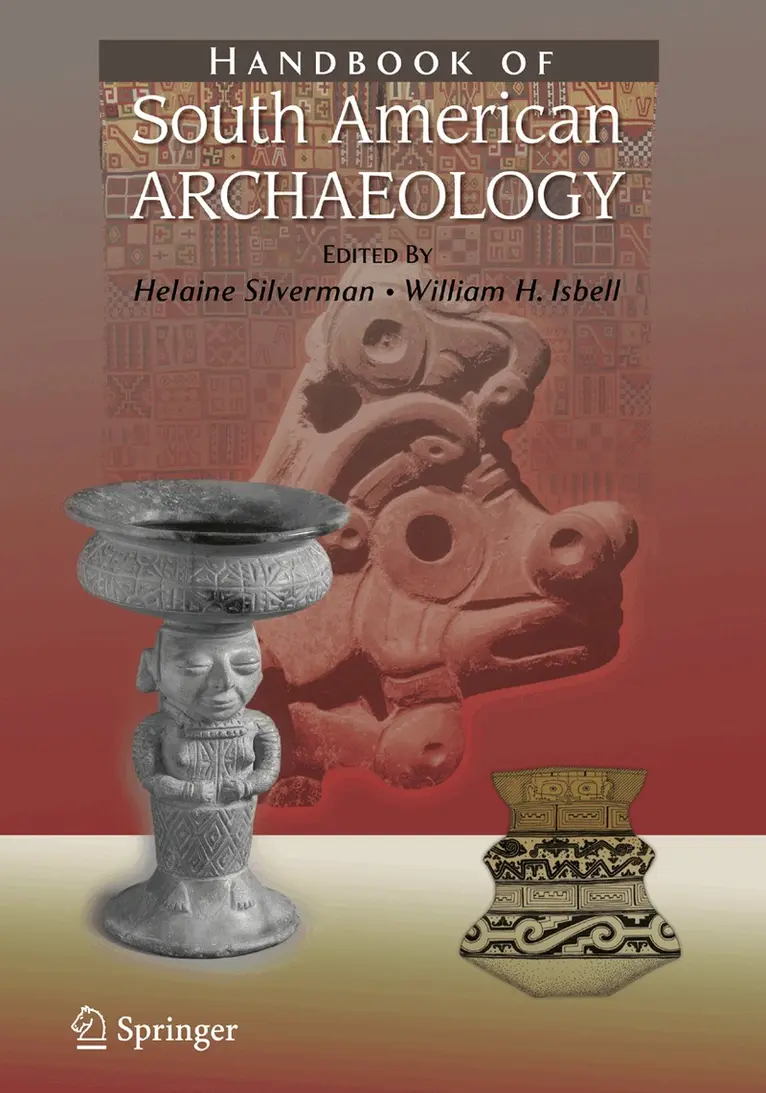
Perhaps the contributions of South American archaeology to the larger field of world archaeology have been inadequately recognized. If so, this is probably because there have been relatively few archaeologists working in South America outside of Peru and recent advances in knowledge in other parts of the continent are only beginning to enter larger archaeological discourse. Many ideas of and about South American archaeology held by scholars from outside the area are going to change irrevocably with the appearance of the present volume. Not only does the Handbook of South American Archaeology (HSAA) provide immense and broad information about ancient South America, the volume also showcases the contributions made by South Americans to social theory. Moreover, one of the merits of this volume is that about half the authors (30) are South Americans, and the bibliographies in their chapters will be especially useful guides to Spanish and Portuguese literature as well as to the latest research. It is inevitable that the HSAA will be compared with the multi-volume Handbook of South American Indians (HSAI), with its detailed descriptions of indigenous peoples of South America, that was organized and edited by Julian Steward. Although there are heroic archaeological essays in the HSAI, by the likes of Junius Bird, Gordon Willey, John Rowe, and John Murra, Steward states frankly in his introduction to Volume Two that “arch- ology is included by way of background” to the ethnographic chapters.
1 733 kr
Skickas inom 10-15 vardagar
Perhaps the contributions of South American archaeology to the larger field of world archaeology have been inadequately recognized. If so, this is probably because there have been relatively few archaeologists working in South America outside of Peru and recent advances in knowledge in other parts of the continent are only beginning to enter larger archaeological discourse. Many ideas of and about South American archaeology held by scholars from outside the area are going to change irrevocably with the appearance of the present volume. Not only does the Handbook of South American Archaeology (HSAA) provide immense and broad information about ancient South America, the volume also showcases the contributions made by South Americans to social theory. Moreover, one of the merits of this volume is that about half the authors (30) are South Americans, and the bibliographies in their chapters will be especially useful guides to Spanish and Portuguese literature as well as to the latest research. It is inevitable that the HSAA will be compared with the multi-volume Handbook of South American Indians (HSAI), with its detailed descriptions of indigenous peoples of South America, that was organized and edited by Julian Steward. Although there are heroic archaeological essays in the HSAI, by the likes of Junius Bird, Gordon Willey, John Rowe, and John Murra, Steward states frankly in his introduction to Volume Two that “arch- ology is included by way of background” to the ethnographic chapters.
987 kr
Skickas inom 10-15 vardagar
Andean Archaeology III represents a continuation in our effort to highlight the ?nest of current archaeological scholarship conducted in the Central Andean c- ture area.