William J. Gavin - Böcker
Visar alla böcker från författaren William J. Gavin. Handla med fri frakt och snabb leverans.
3 produkter
3 produkter
258 kr
Skickas inom 7-10 vardagar
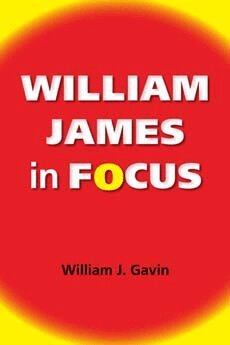
William James (1842-1910) is a canonical figure of American pragmatism. Trained as a medical doctor, James was more engaged by psychology and philosophy and wrote a foundational text, Pragmatism, for this characteristically American way of thinking. Distilling the main currents of James's thought, William J. Gavin focuses on "latent" and "manifest" ideas in James to disclose the notion of "will to believe," which courses through his work. For students who may be approaching James for the first time and for specialists who may not know James as deeply as they wish, Gavin provides a clear path to understanding James's philosophy even as he embraces James's complications and hesitations.
1 057 kr
Tillfälligt slut
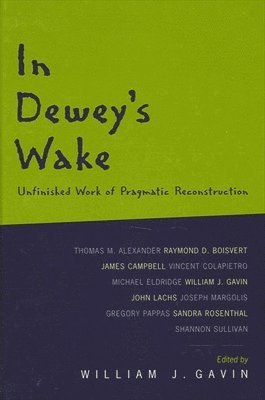
Leading scholars evaluate the importance of Dewey's work for our times.In a pluralistic tapestry of approaches, eminent Dewey scholars address his pragmatic philosophy and whether it should be reinterpreted, reconfigured, or "passed-by," so as to better deal with the problems posed by the twenty-first century. For some, Dewey's contextualism remains intact, requiring more to be amended than radically changed. For others, his work needs significant revision if he is to be relevant in the new millennium. Finally, there are those who argue that we should not be so quick to pass Dewey by, for he has much to offer that has still gone unnoticed or unappreciated. This rich narrative indicates both where the context has changed and what needs to be preserved and nurtured in Dewey as we advance into the future.
353 kr
Skickas inom 11-20 vardagar
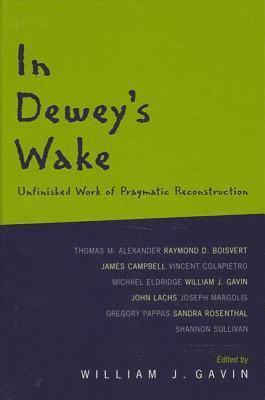
Leading scholars evaluate the importance of Dewey's work for our times.In a pluralistic tapestry of approaches, eminent Dewey scholars address his pragmatic philosophy and whether it should be reinterpreted, reconfigured, or "passed-by," so as to better deal with the problems posed by the twenty-first century. For some, Dewey's contextualism remains intact, requiring more to be amended than radically changed. For others, his work needs significant revision if he is to be relevant in the new millennium. Finally, there are those who argue that we should not be so quick to pass Dewey by, for he has much to offer that has still gone unnoticed or unappreciated. This rich narrative indicates both where the context has changed and what needs to be preserved and nurtured in Dewey as we advance into the future.