
William M. Grimes - Böcker
Visar alla böcker från författaren William M. Grimes. Handla med fri frakt och snabb leverans.
3 produkter
3 produkter
674 kr
Skickas inom 10-15 vardagar
In the last fifteen years, Japan's economy has gone from model of success to object lesson in failure. William W. Grimes offers a richly detailed, insider's view of the key macroeconomic policies and events in contemporary Japan, as well as a close examination of the causes and effects of these upheavals.It is difficult to believe that the "Bubble Economy" of the late 1980s and the failed attempts at economic stimulation in the following decade both arose from the same policies. In Unmaking the Japanese Miracle, Grimes shows that this is precisely what happened. Focusing less on what went wrong than on why it went wrong, Grimes finds that mistaken macroeconomic policies—loose money in the late 1980s, excessively tight money until 1992, and only grudging use of expansionary fiscal policy until 1998—largely caused Japan's economic problems. Based on scores of interviews with Japanese policymakers, his is the first political explanation of why these catastrophic policies were carried out by the Ministry of Finance, the Bank of Japan, and the Diet. Various economic shocks were met, Grimes says, with a consistent and often inappropriate pattern of responses. This pattern has fundamentally altered because of changes within the three policymaking institutions since 1998.
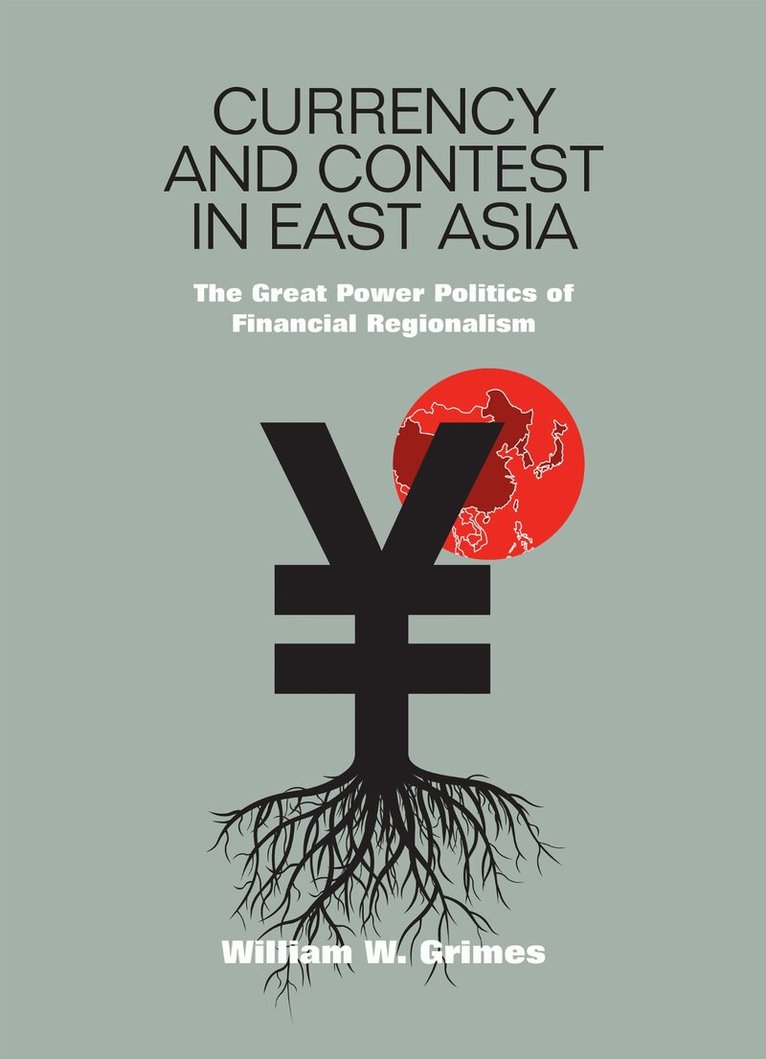
Currency and Contest in East Asia
The Great Power Politics of Financial Regionalism
Inbunden, Engelska, 2008
612 kr
Skickas inom 10-15 vardagar
Since the Asian Financial Crisis of 1997–98, East Asian economies have sought to make themselves less vulnerable to global financial markets by transforming the regional financial architecture. With Japan as a leading actor, they have introduced initiatives to provide emergency financing to crisis economies, support the development of local-currency bond markets, and better coordinate currency policies.In Currency and Contest in East Asia, William W. Grimes builds on years of primary research and scores of interviews with participants and policy analysts to provide the most accurate, complete, and detailed description available of attempts to build financial cooperation among East Asian countries. Adapting realist political economy theory to the realities of contemporary global finance, Grimes places regional issues firmly in the wider context of great-power rivalries. He argues that financial regionalism can best be understood as one arena for competition among Japan, the United States, and China.Despite their mutual desire for regional prosperity and economic stability, these three powers have conflicting political interests. Their struggles for regional leadership raise questions about the long-term feasibility of regional financial cooperation, the possible effects of Sino-Japanese rivalry on regional financial stability, and the potential for East Asian financial regionalism to undermine the long-established-albeit waning-global and regional dominance of the United States and the dollar.
378 kr
Skickas inom 10-15 vardagar
In the last fifteen years, Japan's economy has gone from model of success to object lesson in failure. William W. Grimes offers a richly detailed, insider's view of the key macroeconomic policies and events in contemporary Japan, as well as a close examination of the causes and effects of these upheavals.It is difficult to believe that the "Bubble Economy" of the late 1980s and the failed attempts at economic stimulation in the following decade both arose from the same policies. In Unmaking the Japanese Miracle, Grimes shows that this is precisely what happened. Focusing less on what went wrong than on why it went wrong, Grimes finds that mistaken macroeconomic policies—loose money in the late 1980s, excessively tight money until 1992, and only grudging use of expansionary fiscal policy until 1998—largely caused Japan's economic problems. Based on scores of interviews with Japanese policymakers, his is the first political explanation of why these catastrophic policies were carried out by the Ministry of Finance, the Bank of Japan, and the Diet. Various economic shocks were met, Grimes says, with a consistent and often inappropriate pattern of responses. This pattern has fundamentally altered because of changes within the three policymaking institutions since 1998.