William M. Johnston - Böcker
Visar alla böcker från författaren William M. Johnston. Handla med fri frakt och snabb leverans.
7 produkter
7 produkter
324 kr
Skickas inom 7-10 vardagar
Part One of this book shows how bureaucracy sustained the Habsburg Empire while inciting economists, legal theorists, and socialists to urge reform. Part Two examines how Vienna's coffeehouses, theaters, and concert halls stimulated creativity together with complacency. Part Three explores the fin-de-siecle world view known as Viennese Impressionism. Interacting with positivistic science, this reverence for the ephemeral inspired such pioneers ad Mach, Wittgenstein, Buber, and Freud. Part Four describes the vision of an ordered cosmos which flourished among Germans in Bohemia. Their philosophers cultivated a Leibnizian faith whose eventual collapse haunted Kafka and Mahler. Part Five explains how in Hungary wishful thinking reinforced a political activism rare elsewhere in Habsburg domains. Engage intellectuals like Lukacs and Mannheim systematized the sociology of knowledge, while two other Hungarians, Herzel and Nordau, initiated political Zionism. Part Six investigates certain attributes that have permeated Austrian thought, such as hostility to technology and delight in polar opposites.
1 148 kr
Tillfälligt slut
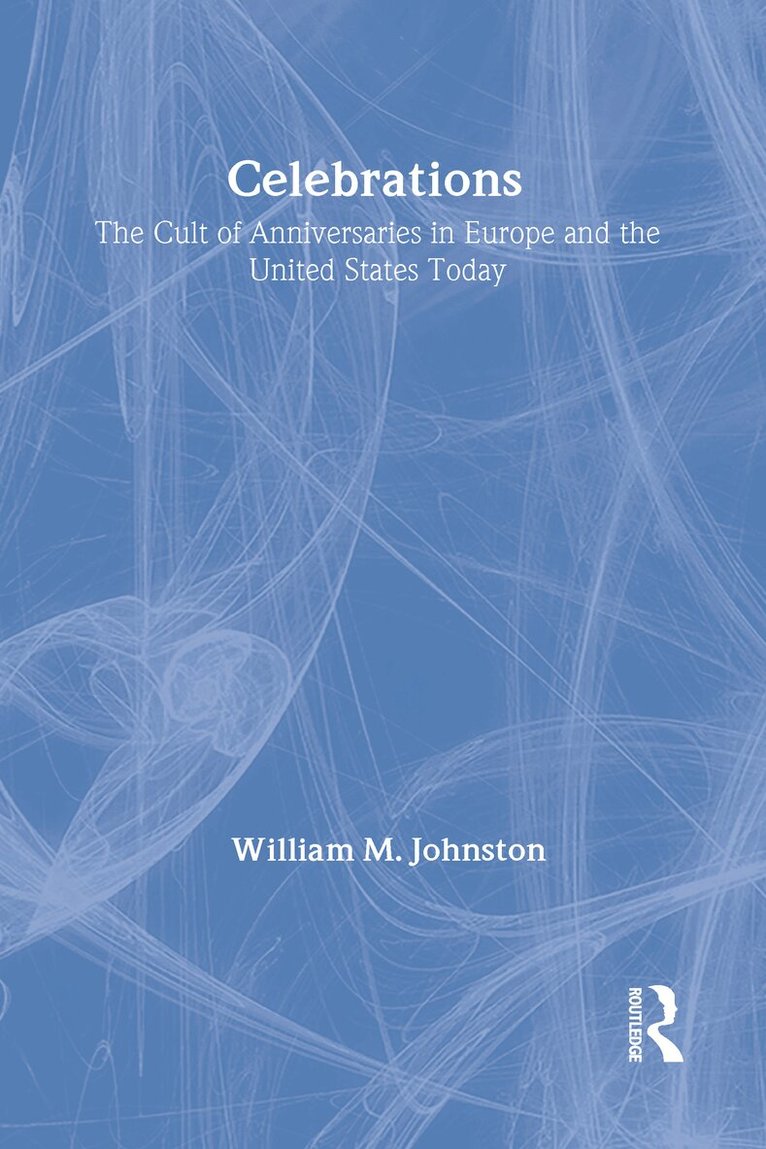
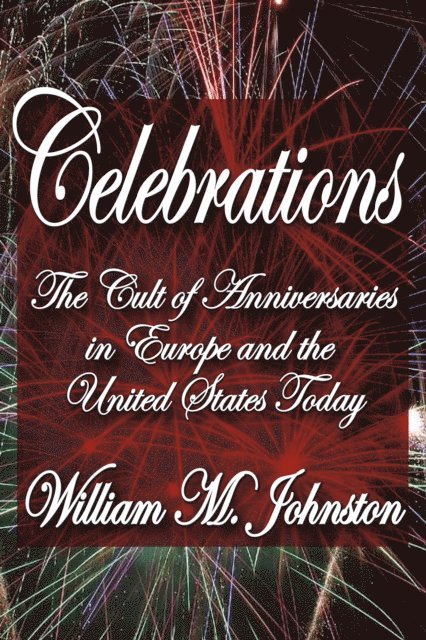
In the twentieth century, celebrations of historical anniversaries abounded. There was the bicentennial of the French Revolution, the 150th anniversary of photography, Bach's 300th anniversary, and the 200th anniversary of the American Constitution, to name just a few. Every year hundreds of anniversaries still attract media attention and government investment in ever greater degrees. Deploying an astonishing array of insights, Celebrations explores the causes and consequences of this major phenomenon of our time.As Johnston shows, anniversaries fulfill a number of needs. They provide the kind of experience of regularity across a lifetime that the weekly cycle supplies in daily life. The use of anniversaries for political ends emerged during the French Revolution and expanded to promote nationalism during the nineteenth century, although there are differences in how they are used. Europeans tend to celebrate cultural heroes, while Americans tend to celebrate events. Entire nations exploit anniversaries of founding events in order to promote national identity. Commercially, there are whole industries built around commemoration, and they provide intellectuals an opportunity to take center stage.Using methods of cultural history, sociology, and religious studies, Johnston shows how the cult of anniversaries reflects postmodern concerns. It fills a void left by the disappearance of ideologies and avant-gardes. In an era when there is little consensus about styles or methods, anniversaries allow intellectuals, businesses, and governments to acknowledge and celebrate every nuance of opinion. By suggesting ways to use anniversaries more creatively, this book offers a broad range of insights.
693 kr
Skickas inom 10-15 vardagar
In the twentieth century, celebrations of historical anniversaries abounded. There was the bicentennial of the French Revolution, the 150th anniversary of photography, Bach's 300th anniversary, and the 200th anniversary of the American Constitution, to name just a few. Every year hundreds of anniversaries still attract media attention and government investment in ever greater degrees. Deploying an astonishing array of insights, Celebrations explores the causes and consequences of this major phenomenon of our time.As Johnston shows, anniversaries fulfill a number of needs. They provide the kind of experience of regularity across a lifetime that the weekly cycle supplies in daily life. The use of anniversaries for political ends emerged during the French Revolution and expanded to promote nationalism during the nineteenth century, although there are differences in how they are used. Europeans tend to celebrate cultural heroes, while Americans tend to celebrate events. Entire nations exploit anniversaries of founding events in order to promote national identity. Commercially, there are whole industries built around commemoration, and they provide intellectuals an opportunity to take center stage.Using methods of cultural history, sociology, and religious studies, Johnston shows how the cult of anniversaries reflects postmodern concerns. It fills a void left by the disappearance of ideologies and avant-gardes. In an era when there is little consensus about styles or methods, anniversaries allow intellectuals, businesses, and governments to acknowledge and celebrate every nuance of opinion. By suggesting ways to use anniversaries more creatively, this book offers a broad range of insights.
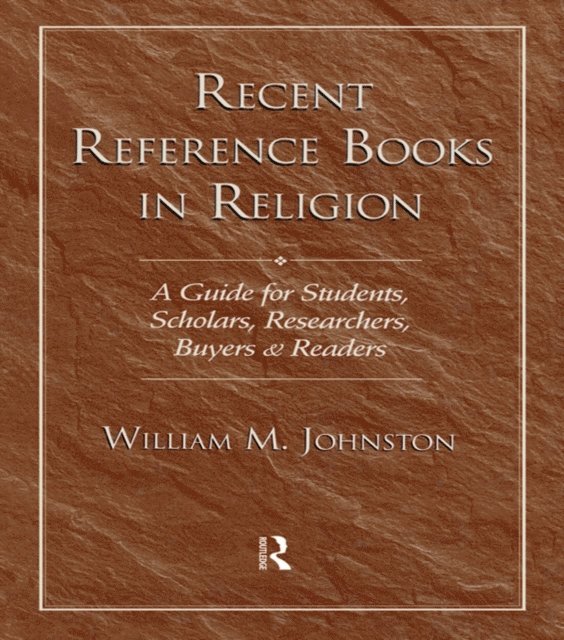
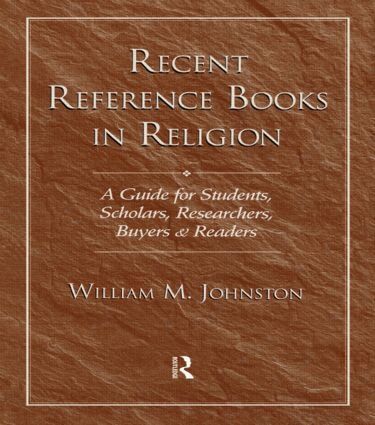
Recent Reference Books in Religion
A Guide for Students, Scholars, Researchers, Buyers, & Readers
Inbunden, Engelska, 1998
2 385 kr
Skickas inom 10-15 vardagar
Recent Reference Books in Religion provides incisive summaries and evaluations of more than 350 contemporary reference works on religious traditions ancient and modern that have been published in English, French and German. For maximum usefulness to readers, Professor Johnston has broadly defined religion to include not just the world religion of Christianity , Judaism, Islam, Hinduism, and Buddhism but also such alternative approaches as mythology, folklore, and the philosophy of ethics. Each entry, analyzing a particular work, includes full bibliographic details as well as commentary: outstanding articles and contributors are highlighted, strengths and weaknesses are carefully noted and weighed. Readers are directed to volumes whose strengths and weaknesses are carefully noted and weighed. Readers are directed to volumes whose strengths complement the weaknesses of others. An indispensable guide in any religious studies collection, Recent Reference Books in Religion: 2nd Edition includes works published through the end of 1997. It also includes a Glossary that describes types and functions of refernce books, and five indexes: Titles, Authors, Topics, Persons and Places.
7 538 kr
Skickas inom 10-15 vardagar
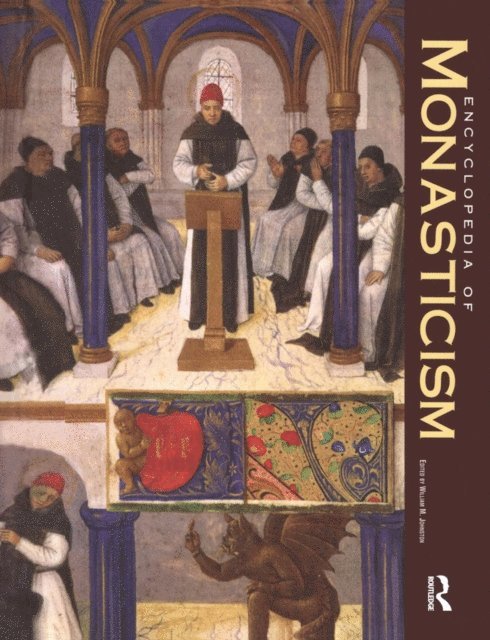
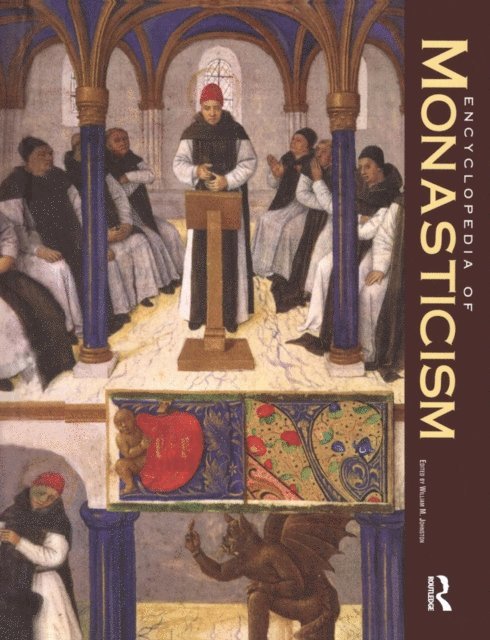
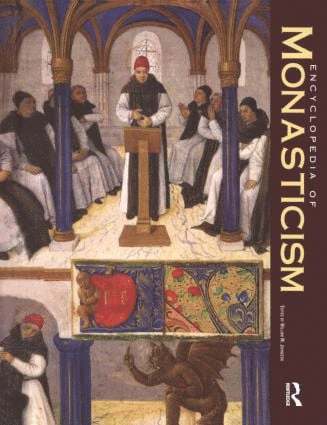
The two-volume Encyclopedia of Monasticism describes the monastic traditions of both Christianity and Buddhism with more than 600 entries on important monastic figures of all periods and places, surveys of countries and localities, and topical essays covering a wide range of issues (e.g., art, behavior, economics, liturgy, politics, theology, and scholarship). Coverage encompasses not only geography and history worldwide but also the contemporary dilemmas of monastic life.Recent upheavals in certain countries are highlighted (Korea, Russia, Sri Lanka, etc.). Topical essays subtitled Christian Perspectives and Buddhist Perspectives explore in imaginative fashion comparisons and contrasts between Christian and Buddhist monasticism. Encyclopedia of Monasticism also includes more than 500 color and black and white illustrations covering all aspects of monastic life, art, and architecture.
534 kr
Skickas inom 10-15 vardagar
550 kr
Skickas inom 10-15 vardagar
Collingwood and Hegel R. G. Collingwood was a lonely thinker. Begrudgingly admired by some and bludgeoned by others, he failed to train a single disciple, just as he failed to communicate to the reading public his vision of the unity of experience. This failure stands in stark contrast to the success of Georg Wilhelm Friedrich Hegel, who won many disciples to a very similar point-of-view and whose influence on subsequent thought, having been rediscovered since 1920, has not yet been adequately explored. Collingwood and Hegel share three fundamental similarities: both men held overwhelming admiration of the Greeks, both possessed uniquely broad knowledge of academic controversies of their day, and both were inalterably convinced that human experience consti tutes a single whole. If experts find Collingwood's vision of wholeness less satisfactory than Hegel's, much of the fault lies in the atmosphere in which Col lingwood labored. Oxford in the 1920'S and 1930's, sceptical and specialized, was not the enthusiastic Heidelberg and Berlin of 1816 to 183I. What is important in Collingwood is not that he fell short of Hegel but that working under adverse conditions he came so elose. Indeed those unfamiliar with Hegel will find in Collingwood's early works, especially in Speculum M entis, a useful introduction to the great German.