William O. Walker III - Böcker
Visar alla böcker från författaren William O. Walker III. Handla med fri frakt och snabb leverans.
5 produkter
5 produkter
Del 1 - Issues in Policy History
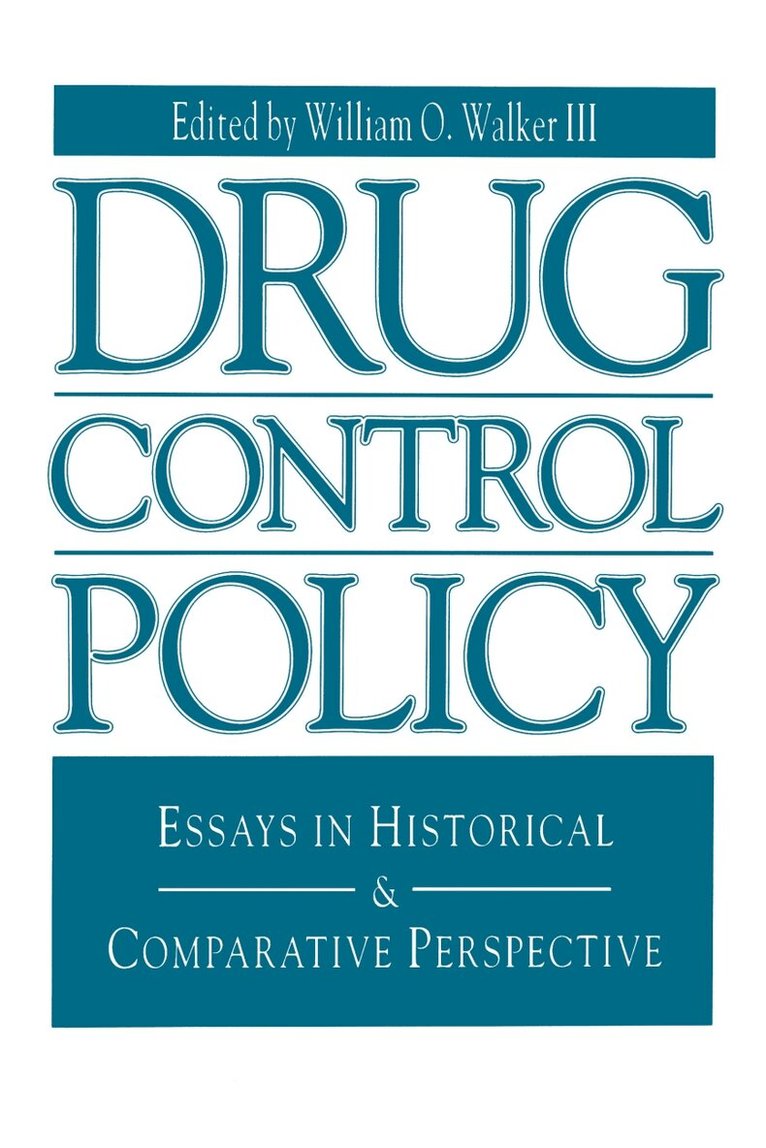
Drug Control Policy
Essays in Historical and Comparative Perspective
Häftad, Engelska, 1992
502 kr
Skickas inom 5-8 vardagar
A detailed look at drug control policy as it has been shaped historically in the United States and other countries, most notably in China and East Asia.Drug policy has emphasized suppressing drugs at their source by curtailing their distribution, but few policy makers have considered legalization as a remedy. On the other hand, much of drug policy has been a record of bureaucratic infighting and aggrandizement. At the same time, it has reflected nativistic and racial biases. These essays suggest, however, that alternative strategies would not necessarily be any more successful. David Courtwright argues that legalization of drugs would create its own problems. Given the nature of federal policy, institutional structures, and social mores, the authors question whether drug policy could have been otherwise constructed.William O. Walker has brought together leading scholars writing in the field to contribute essays that offer broad perspectives on the history of drug policy. They provide a comparative and historical lens through which to view the current debate over drug policy in the United States.
577 kr
Skickas inom 7-10 vardagar
There is no book quite like National Security and Core Values in American History. Drawing upon themes from the whole of the nation's past, William O. Walker III presents a new interpretation of the history of American exceptionalism, that is, of the basic values and liberties that have given the United States its very identity. He argues that a political economy of expansion and the quest for security led American leaders after 1890 to equate prosperity and safety with global engagement. In so doing, they developed and clung to what Walker calls the 'security ethos.' Expressed in successive grand strategies - Wilsonian internationalism, global containment, and strategic globalism - the security ethos ultimately damaged the values citizens cherish most and impaired popular participation in public affairs. Most important, it led to the abuse of executive authority after September 11, 2001, by the administration of President George W. Bush.
422 kr
Skickas inom 7-10 vardagar
There is no book quite like National Security and Core Values in American History. Drawing upon themes from the whole of the nation's past, William O. Walker III presents a new interpretation of the history of American exceptionalism, that is, of the basic values and liberties that have given the United States its very identity. He argues that a political economy of expansion and the quest for security led American leaders after 1890 to equate prosperity and safety with global engagement. In so doing, they developed and clung to what Walker calls the 'security ethos.' Expressed in successive grand strategies - Wilsonian internationalism, global containment, and strategic globalism - the security ethos ultimately damaged the values citizens cherish most and impaired popular participation in public affairs. Most important, it led to the abuse of executive authority after September 11, 2001, by the administration of President George W. Bush.
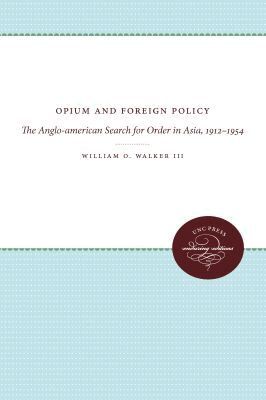
Opium and Foreign Policy
The Anglo-american Search for Order in Asia, 1912-1954
Häftad, Engelska, 2011
637 kr
Skickas inom 10-15 vardagar
William Walker traces British and American attempts to control the Asian opium trade from the fall of the Manchu dynasty in China in 1912 to the French withdrawal from Indochina in 1954. Analyzing the moral, cultural, economic, political, diplomatic, and security aspects of drug control, Walker argues that the fight against opium played a significant, and virtually unexamined, role in Anglo-American relations and security interests in the region.Throughout much of China and Southeast Asia, many farmers had cultivated opium for generations, and at times survival itself seemed to depend upon the market for the poppy crop. Before World War II, the British tolerated the deeply entrenched culture of the poppy in China in order to safeguard their economic and political interests. Conversely, the Americans, who had far less at stake in Asia strategically or economically, consistently opposed the opium trade. During the war, the United States defined opium as a strategic commodity and tried to restrict Japanese access to it. Following the war, American hopes of limiting the Asian drug trade were thwarted by civil war in China. Finally, as the Cold War spread to Southeast Asia in the 1950s, drug control was subordinated to Western security concerns in the fight against communism.Basing his study upon extensive archival research in British and American sources, Walker shows that the chances for opium control were never good and that ultimately the search for order in Asia on Western terms failed. United States drug-control officials, Walker contends, must share in the blame for that failure.A UNC Press Enduring Edition -- UNC Press Enduring Editions use the latest in digital technology to make available again books from our distinguished backlist that were previously out of print. These editions are published unaltered from the original, and are presented in affordable paperback formats, bringing readers both historical and cultural value.
531 kr
Skickas inom 7-10 vardagar
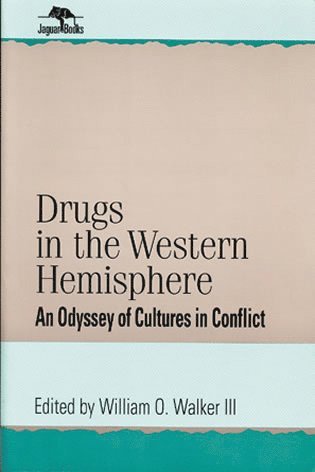
A history of drugs is a study of cultures in competition, argues editor William O. Walker III. Eminently adaptive, drug cultures have competed with proscriptive cultures to create a legitimate place for themselves, although one that the dominant society may recognize only tacitly. Professor Walker brings together forty-six essays that examine the complex negotiations and changing rhetoric revolving around issues of drugs and their control between the United States and its Latin American neighbors. Drugs in the Western Hemisphere is divided into six parts. Articles are arranged chronologically, offering the reader a compre-hensive overview of the evolution of U.S.-Latin American drug policy from the turn of the century to the Clinton administration. Part I, Cultures in Conflict suggests that clashes between members of drug cultures and proponents of drug control traditionally have occurred within the context of the forma-tion of the modern nation. Part II, Drugs in Latin America, 1920-1940 takes a closer look at inter-American policies revolving around drugs in the 1920s and 1940s. Part III, Wartime Experience and Part IV, Confrontation and Controversy examine how World War II both affected U.S.-Latin American drug policy and set the tone for many years to come. Part V, Drugs and Security and Part VI, Drugs in the Americas: An Assessment takes the reader through to the Clinton administration. Writers here note the concerted efforts of the United States to establish hegemony over drug control throughout the Western Hemisphere.