William of Saint-Thierry – författare
Visar alla böcker från författaren William of Saint-Thierry. Handla med fri frakt och snabb leverans.
12 produkter
Meditations with a Monastic Commentary
Häftad, 2022
536 kr
Lägg i varukorg
The Meditations, written over a period from 1125 to 1137, are a personal account of William of Saint-Thierry’s ascent into Trinitarian intimacy. Writing to the monks of Mont Dieu sometime around 1144, he proposed the Meditations as helpful in forming minds in prayer. These Meditations, with their …
Meditations with a Monastic Commentary
E-bok, 2022
568 kr
Lägg i varukorg
The Meditations , written over a period from 1125 to 1137, are a personal account of William of Saint-Thierry’s ascent into Trinitarian intimacy. Writing to the monks of Mont Dieu sometime around 1144, he proposed the Meditations as helpful in forming minds in prayer. These Meditations, with their …
First Life of Bernard of Clairvaux
Av William of Saint-Thierry, Arnold of Bonneval m. fl.
Häftad, 2015
341 kr
Lägg i varukorg
The First Life of Bernard of Clairvaux, traditionally known as the Vita Prima, originated to prepare the case for canonization of Bernard, first abbot of Clairvaux. The work was begun by William of Saint-Thierry, continued by Arnold of Bonneval, and completed by Geoffrey of Auxerre. When the …
Enigma of Faith
Häftad, 1991
291 kr
Lägg i varukorg
William of Saint Thierry left all things in his search for God. He left his home in Liage (modern Belgium) to study in France. He left the schools to enter benedictine monastic life at Rheims. And late in his life he left the Benedictines to enter the more austere, recently founded cistercian abbey …
Exposition on the Song of Songs
Häftad, 1970
374 kr
Lägg i varukorg
Perhaps no book was more central to medieval spirituality and mysticism," writes Bernard McGinn, "or more problematic to contemporary readers, than the Song of Songs. . . Lingering Victorian attitudes towards the opposition between sex and religion find the Song's frank erotic language embarrassing …
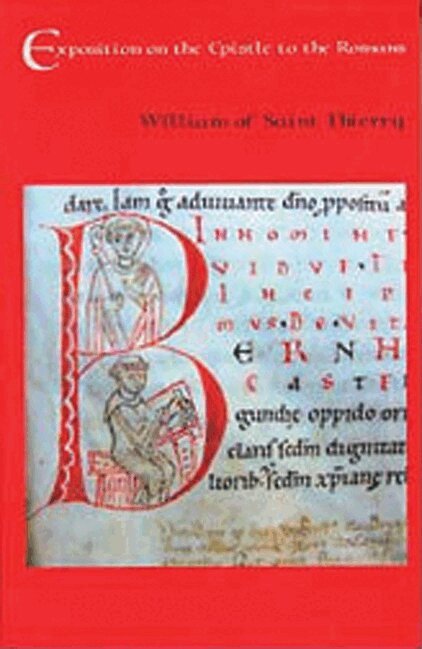
Exposition on the Epistle to the Romans
Häftad, 2000
423 kr
Lägg i varukorg
The Epistle to the Romans was a favorite text of medieval commentators, especially in an age concerned with the theology of grace. William of Saint Thierry's Exposition is a thoroughly monastic text. In it the twelfth-century monk is concerned, not with dialectic or scholastic disputation, but with …
Mirror of Faith
Häftad, 1979
296 kr
Lägg i varukorg
William of Saint Thierry wrote The Mirror of Faith and The Enigma of Faith shortly after he read the Theology of Peter Abelard. Writing at the cistercian abbey of Signy, which he entered in 1135 after fifteen years as a benedictine abbot, he tried to correct what he considered Abelard's failure to …
First Life of Bernard of Clairvaux
Av Geoffrey of Auxerre, Arnold of Bonneval m. fl.
E-bok, 2015
428 kr
Lägg i varukorg
The First Life of Bernard of Clairvaux , traditionally known as the Vita Prima , originated to prepare the case for canonization of Bernard, first abbot of Clairvaux. The work was begun by William of Saint-Thierry, continued by Arnold of Bonneval, and completed by Geoffrey of Auxerre. When the …
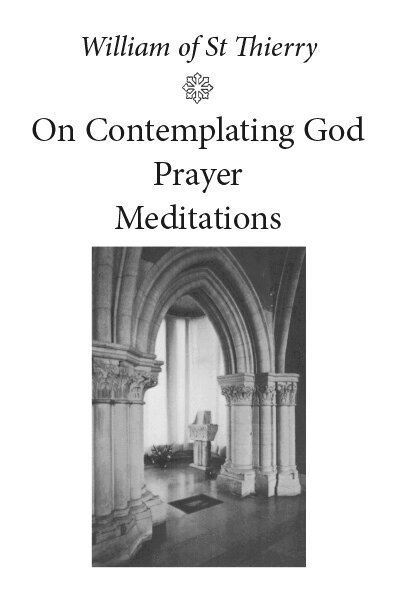
On Contemplating God, Prayer, Meditations
Häftad, 1970
363 kr
Lägg i varukorg
ON CONTEMPLATING GOD, PRAYER, and MEDITATIONS were written while William was abbot of the benedictine monastery of Saint Thierry, within sight of the royal city of Rheims. The works reflect his deepening spiritual life, and the impatience and the hope, the frustrations and the joys he met. It is in …
Golden Epistle
Häftad, 1971
316 kr
Lägg i varukorg
This practical guide to the spiritual life, cherished by monks, beguines, and lay folk for eight centuries, can still lead men and women to God.The Golden Epistle first appeared in 1145 and has been ascribed to several different authors, among them Bernard of Clairvaux and Guigo the Carthusian. …
Nature and Dignity of Love
Häftad, 1981
287 kr
Lägg i varukorg
William of Saint Thierry wrote down his reflections on the nature and greatness of love during the second decade of the twelfth century, while he was abbot of the benedictine monastery of St Thierry, near Rheims. His insight, drawn from Scripture and the Church Fathers, shaped his own spiritual …
The Nature and Dignity of Love
Av William of Saint Thierry, Brother Hermenegild Tosf
Häftad
195 kr
Lägg i varukorg