William P. Alston - Böcker
Visar alla böcker från författaren William P. Alston. Handla med fri frakt och snabb leverans.
15 produkter
15 produkter
1 552 kr
Skickas inom 10-15 vardagar
Epistemic Justification collects twelve distinguished and influential essays in epistemology by William P. Alston taken from a body of work spanning almost two decades. They represent the gradual development of Alston's thought in epistemology.He concentrates on topics that are central to contemporary epistemology and provides a much-needed and useful map to these issues be explicitly distinguishing and interrelating concepts of justification used in epistemology. More important, he develops and defends his own distinctive epistemic view throughout the volume. Notably, he argues for an account of justification that combines both internalist and externalist features. In addition, he discusses various forms of foundationalism and supports a moderate form. Finally, Alston demonstrates that the epistemic circularity that often plagues our attempts to validate our basic sources of belief does not prevent our showing that they are reliable sources of knowledge.
699 kr
Skickas inom 10-15 vardagar
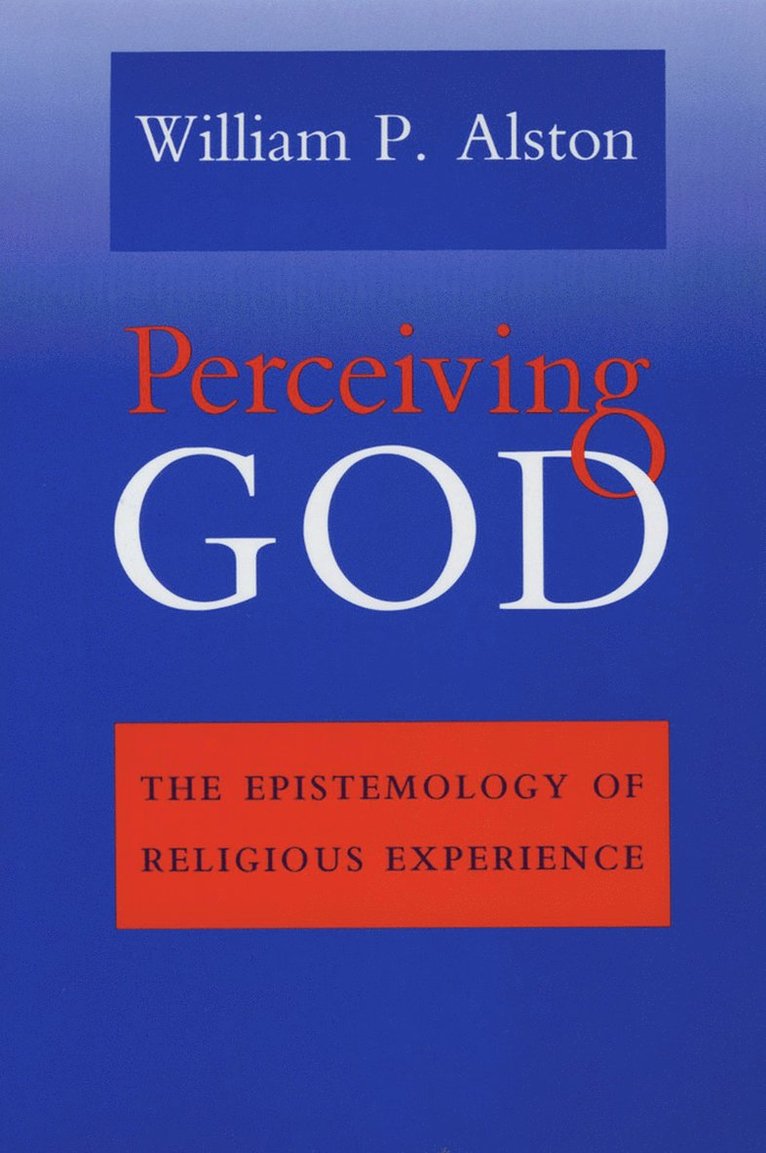
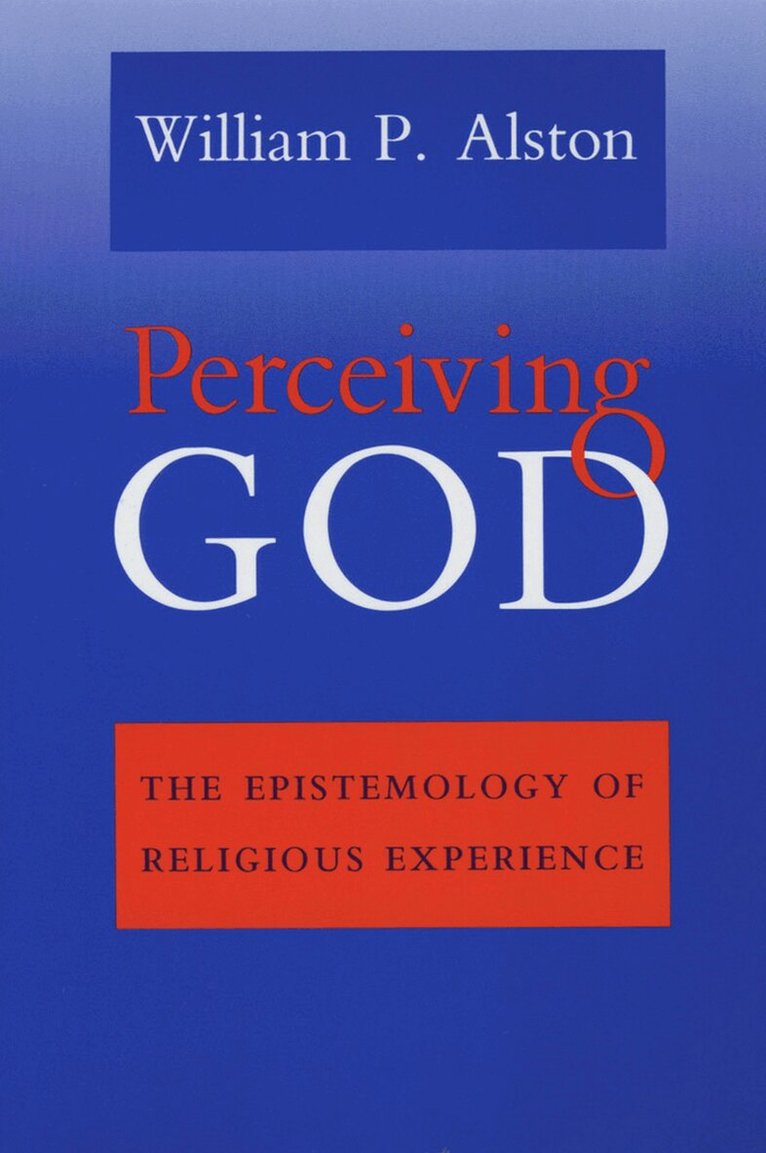
In this clear and provocative account of the epistemology of religious experience, William P. Alston argues that the perception of God—his term for direct experiential awareness of God—makes a major contribution to the grounds of religious belief. Surveying the variety of reported direct experiences of God, Alston demonstrates that a person can be justified in holding certain beliefs about God on the basis of mystical experience.
699 kr
Skickas inom 10-15 vardagar
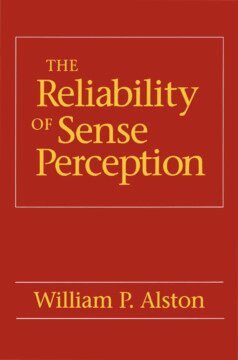
Why suppose that sense perception is an accurate source of information about the physical environment? More generally, is it possible to demonstrate that our basic ways of forming beliefs are reliable? In this book, a leading analytic philosopher confronts this classic problem through detailed investigation of sense perception, the source of beliefs in which we place the most confidence. Carefully assessing the available arguments, William P. Alston concludes that it is not possible to show in any noncircular way that sense perception is a reliable source of beliefs.Alston thoroughly examines the main arguments that have been advanced for the reliability of sense perception, including arguments from the various kinds of success we achieve by relying on the sense perception, arguments that some features of our sense experience are best explained by supposing that it is an accurate guide, and arguments that there is something conceptually incoherent about the idea that sense perception is not reliable. He concludes that all of these arguments that are not disqualified in other ways are epistemically circular, for they use premises based upon the very source in question. Alston then suggest that the most appropriate response to the impossibility of showing that our basic sources of beliefs are reliable is an appeal to the practical rationality of engaging in certain socially established belief-forming practices. The Reliability of Sense Perception will be welcome by epistemologists, cognitive scientists, and philosophers of science.
673 kr
Skickas inom 10-15 vardagar
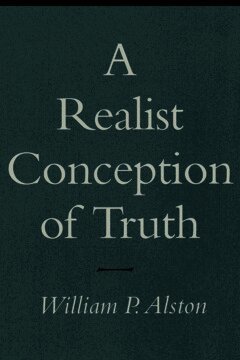
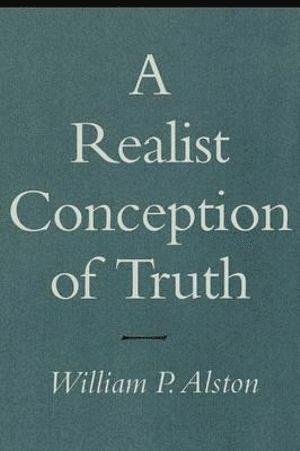
One of the most important Anglo-American philosophers of our time here joins the current philosophical debate about the nature of truth. William P. Alston formulates and defends a realist conception of truth, which he calls alethic realism (from "aletheia," Greek for truth). This idea holds that the truth value of a statement (belief or proposition) depends on whether what the statement is about is as the statement says it is. Michael Dummett and Hilary Putnam are two of the prominent and widely influential contemporary philosophers whose anti-realist ideas Alston attacks.
1 145 kr
Skickas inom 10-15 vardagar
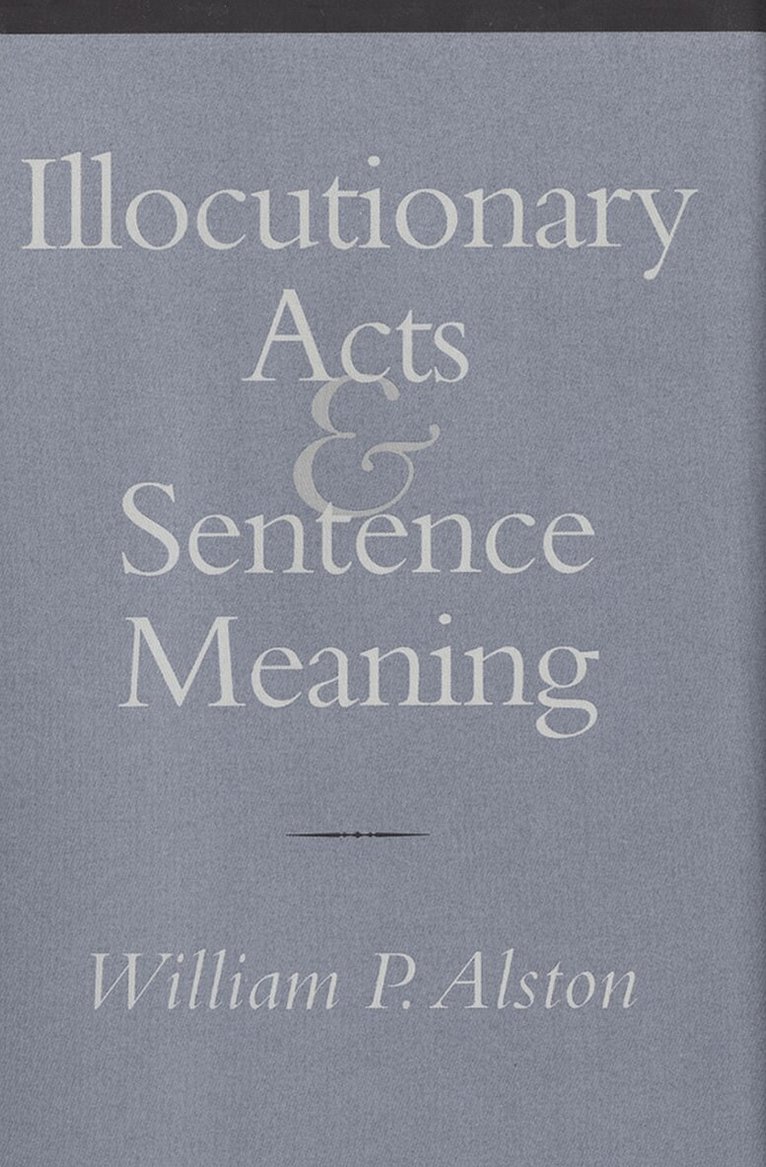
What is it for a sentence to have a certain meaning? This is the question that William P. Alston, one of America's most distinguished and prolific analytic philosophers, addresses in this major contribution to the philosophy of language. His answer focuses on the given sentence's potential to play the role that its speaker had in mind—what he terms the usability of the sentence to perform the illocutionary act intended by its speaker.Alston defines an illocutionary act as an act of saying something with a certain "content." He develops his account of what it is to perform such acts in terms of taking responsibility, in uttering a sentence, for the existence of certain conditions. In requesting someone to open a window, for example, the speaker takes responsibility for its being the case that the window is closed and that the speaker has an interest in its being opened.In Illocutionary Acts and Sentence Meaning, Alston expands upon this concept, creating a framework of five categories of illocutionary act and going on to argue that sentence meaning is fundamentally a matter of illocutionary act potential; that is, for a sentence to have a particular meaning is for it to be usable to perform illocutionary acts of a certain type.In providing detailed and explicit patterns of analysis for the whole range of illocutionary acts, Alston makes a unique contribution to the field of philosophy of language—one that is likely to generate debate for years to come.
1 552 kr
Skickas inom 10-15 vardagar
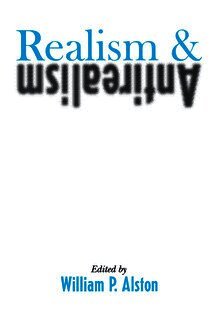
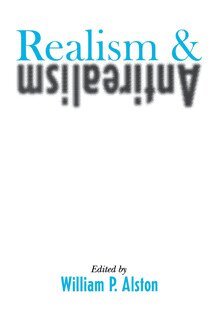
Throughout the past century, a debate has raged over the thesis of realism and its alternatives. Realism—the seemingly commonsensical view that all or most of what we encounter in the world exists and is what it is independently of human thought—has been vigorously denied by such prominent intellectuals as Jacques Derrida, Michel Foucault, Richard Rorty, Thomas Kuhn, Hilary Putnam, and Nelson Goodman. The opponents of realism, among them historians and social scientists who support social constructionism, hold that all or most of reality depends on human conceptual schemes and beliefs. In this volume of original essays, a group of philosophers explores the ongoing controversy. The book opens with an introduction by William P. Alston, whose writing on the subject has been widely influential. Selected essays then compare and contrast aspects of the arguments put forward by the realists with those of the antirealists. Other chapters discuss the importance of the debate for philosophical topics such as epistemology and for domains ranging from religion, literature, and science to morality.
673 kr
Skickas inom 10-15 vardagar
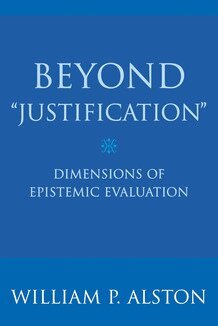
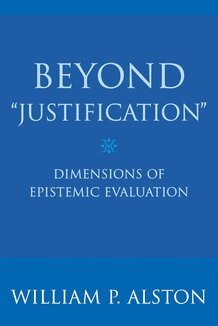
Much of the writing in Anglo-American epistemology in the twentieth century focused on the conditions for beliefs being "justified." In a book that seeks to shift the ground of debate within theory of knowledge, William P. Alston finds that the century-long search for a correct account of the nature and conditions of epistemic justification misses the point. Alston calls for that search to be suspended and for talk of epistemic justification to cease. He proposes instead an approach to the epistemology of belief that focuses on the evaluation of various "epistemic desiderata" that may be satisfied by beliefs.Alston finds that features of belief that are desirable for the goals of cognition include having an adequate basis, being formed in a reliable way, and coherence within bodies of belief. In Alston's view, a belief's being based on an adequate ground and its being formed in a reliable way, though often treated as competing accounts of justification, are virtually identical. Beyond "Justification" also contains discussions of fundamental questions about the epistemic status of principles and beliefs and appropriate responses to various kinds of skepticism.
327 kr
Skickas inom 10-15 vardagar
Much of the writing in Anglo-American epistemology in the twentieth century focused on the conditions for beliefs being "justified." In a book that seeks to shift the ground of debate within theory of knowledge, William P. Alston finds that the century-long search for a correct account of the nature and conditions of epistemic justification misses the point. Alston calls for that search to be suspended and for talk of epistemic justification to cease. He proposes instead an approach to the epistemology of belief that focuses on the evaluation of various "epistemic desiderata" that may be satisfied by beliefs.Alston finds that features of belief that are desirable for the goals of cognition include having an adequate basis, being formed in a reliable way, and coherence within bodies of belief. In Alston's view, a belief's being based on an adequate ground and its being formed in a reliable way, though often treated as competing accounts of justification, are virtually identical. Beyond "Justification" also contains discussions of fundamental questions about the epistemic status of principles and beliefs and appropriate responses to various kinds of skepticism.
327 kr
Skickas inom 10-15 vardagar
Why suppose that sense perception is an accurate source of information about the physical environment? More generally, is it possible to demonstrate that our basic ways of forming beliefs are reliable? In this book, a leading analytic philosopher confronts this classic problem through detailed investigation of sense perception, the source of beliefs in which we place the most confidence. Carefully assessing the available arguments, William P. Alston concludes that it is not possible to show in any noncircular way that sense perception is a reliable source of beliefs.Alston thoroughly examines the main arguments that have been advanced for the reliability of sense perception, including arguments from the various kinds of success we achieve by relying on the sense perception, arguments that some features of our sense experience are best explained by supposing that it is an accurate guide, and arguments that there is something conceptually incoherent about the idea that sense perception is not reliable. He concludes that all of these arguments that are not disqualified in other ways are epistemically circular, for they use premises based upon the very source in question. Alston then suggest that the most appropriate response to the impossibility of showing that our basic sources of beliefs are reliable is an appeal to the practical rationality of engaging in certain socially established belief-forming practices. The Reliability of Sense Perception will be welcome by epistemologists, cognitive scientists, and philosophers of science.
420 kr
Skickas inom 10-15 vardagar
In this clear and provocative account of the epistemology of religious experience, William P. Alston argues that the perception of God—his term for direct experiential awareness of God—makes a major contribution to the grounds of religious belief. Surveying the variety of reported direct experiences of God, Alston demonstrates that a person can be justified in holding certain beliefs about God on the basis of mystical experience.
460 kr
Skickas inom 10-15 vardagar
One of the most important Anglo-American philosophers of our time here joins the current philosophical debate about the nature of truth. William P. Alston formulates and defends a realist conception of truth, which he calls alethic realism (from "aletheia," Greek for truth). This idea holds that the truth value of a statement (belief or proposition) depends on whether what the statement is about is as the statement says it is. Michael Dummett and Hilary Putnam are two of the prominent and widely influential contemporary philosophers whose anti-realist ideas Alston attacks.
366 kr
Skickas inom 10-15 vardagar
Throughout the past century, a debate has raged over the thesis of realism and its alternatives. Realism—the seemingly commonsensical view that all or most of what we encounter in the world exists and is what it is independently of human thought—has been vigorously denied by such prominent intellectuals as Jacques Derrida, Michel Foucault, Richard Rorty, Thomas Kuhn, Hilary Putnam, and Nelson Goodman. The opponents of realism, among them historians and social scientists who support social constructionism, hold that all or most of reality depends on human conceptual schemes and beliefs. In this volume of original essays, a group of philosophers explores the ongoing controversy. The book opens with an introduction by William P. Alston, whose writing on the subject has been widely influential. Selected essays then compare and contrast aspects of the arguments put forward by the realists with those of the antirealists. Other chapters discuss the importance of the debate for philosophical topics such as epistemology and for domains ranging from religion, literature, and science to morality.
433 kr
Skickas inom 10-15 vardagar
Epistemic Justification collects twelve distinguished and influential essays in epistemology by William P. Alston taken from a body of work spanning almost two decades. They represent the gradual development of Alston's thought in epistemology.He concentrates on topics that are central to contemporary epistemology and provides a much-needed and useful map to these issues be explicitly distinguishing and interrelating concepts of justification used in epistemology. More important, he develops and defends his own distinctive epistemic view throughout the volume. Notably, he argues for an account of justification that combines both internalist and externalist features. In addition, he discusses various forms of foundationalism and supports a moderate form. Finally, Alston demonstrates that the epistemic circularity that often plagues our attempts to validate our basic sources of belief does not prevent our showing that they are reliable sources of knowledge.
335 kr
Skickas inom 5-8 vardagar
944 kr
Skickas inom 5-8 vardagar