William Robert - Böcker
Visar alla böcker från författaren William Robert. Handla med fri frakt och snabb leverans.
5 produkter
5 produkter
864 kr
Skickas inom 7-10 vardagar
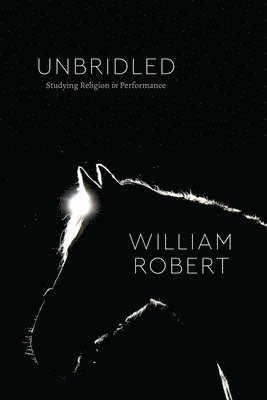
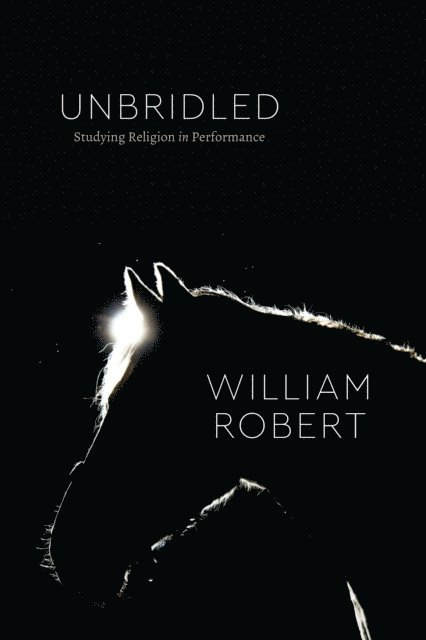
A study of religion through the lens of Peter Shaffer’s play Equus. In Unbridled, William Robert uses Equus, Peter Shaffer’s enigmatic play about a boy passionately devoted to horses, to think differently about religion. For several years, Robert has used Equus to introduce students to the study of religion, provoking them to conceive of religion in unfamiliar, even uncomfortable ways. In Unbridled, he is inviting readers to do the same. A play like Equus tangles together text, performance, practice, embodiment, and reception. Studying a play involves us in playing different roles, as ourselves and others, and those roles, as well as the imaginative work they require, are critical to the study of religion. By approaching Equus with the reader, turning the play around and upside-down, Unbridled transforms standard approaches to the study of religion, engaging with themes including ritual, sacrifice, worship, power, desire, violence, and sexuality, as well as thinkers including Judith Butler, Sigmund Freud, Karl Marx, Friedrich Nietzsche, and Jonathan Z. Smith. As Unbridled shows, the way themes and theories play out in Equus challenges us to reimagine the study of religion through open questions, contrasting perspectives, and alternative modes of interpretation and appreciation.
125 kr
Skickas
A study of religion through the lens of Peter Shaffer’s play Equus. In Unbridled, William Robert uses Equus, Peter Shaffer’s enigmatic play about a boy passionately devoted to horses, to think differently about religion. For several years, Robert has used Equus to introduce students to the study of religion, provoking them to conceive of religion in unfamiliar, even uncomfortable ways. In Unbridled, he is inviting readers to do the same. A play like Equus tangles together text, performance, practice, embodiment, and reception. Studying a play involves us in playing different roles, as ourselves and others, and those roles, as well as the imaginative work they require, are critical to the study of religion. By approaching Equus with the reader, turning the play around and upside-down, Unbridled transforms standard approaches to the study of religion, engaging with themes including ritual, sacrifice, worship, power, desire, violence, and sexuality, as well as thinkers including Judith Butler, Sigmund Freud, Karl Marx, Friedrich Nietzsche, and Jonathan Z. Smith. As Unbridled shows, the way themes and theories play out in Equus challenges us to reimagine the study of religion through open questions, contrasting perspectives, and alternative modes of interpretation and appreciation.
776 kr
Skickas inom 10-15 vardagar
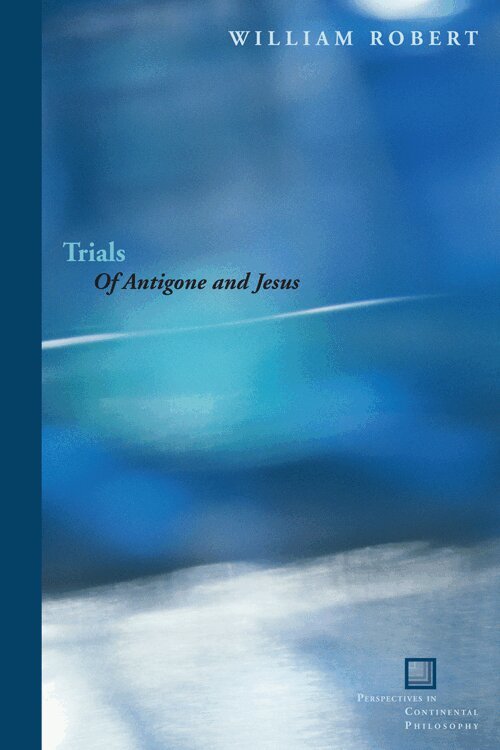
What does it mean to be called "human"? How does this nomination affect or effect what it means to be called "divine"? This book responds to these related questions in intertwined explorations of the passionate trials-examinations, tests, and ordeals-of Antigone and Jesus. Impelled by her love of the impossible, Antigone crosses uncrossable boundaries, transgresses norms of kinship and mortality, confounds distinctions of nature and culture, and, in the process, unearths and critiques the sexism implicit in humanism. Antigone thus disrupts humanist traditions stretching from Sophocles to Martin Heidegger-traditions that would render her subhuman or inhuman. She survives these exclusions and engenders a new mode of humanity, one that destabilizes classic oppositions of life and death and affirms mortal finitude in the face of the future's unforeseeability. This new mode of humanity offers a new way of considering Jesus, whom Christianity identifies as human and divine. Building on his reading of Antigone, the author, through a close reading of Mark's gospel focused on Jesus' cry of abandonment from the cross, shows that to refigure humanity is also to refigure divinity and their relation. In the first extended treatment of Jean-Luc Nancy's Corpus in English, the author draws on the theoretical insights of Jacques Derrida and Nancy to propose an innovative account of Jesus' humanity and divinity-one that can contribute to religious understandings of embodiment and prayer and can open avenues of inquiry into tragedy, sexual difference, posthumanism, and politics.By pairing Antigone and Jesus and engaging the work of Judith Butler, Simone Weil, Jean-Louis Chrétien, and Dominique Janicaud, this book constructively participates in interdisciplinary conversations at the nexus of religious, philosophical, literary, and gender studies.
1 215 kr
Tillfälligt slut
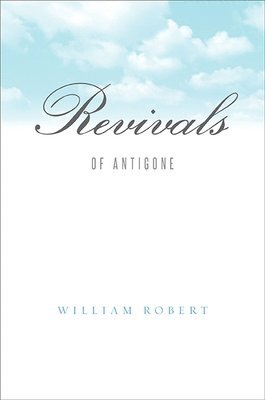
Presents new ways of thinking about the human and the humanities through a rethinking of Antigone.Why revive Antigone-again? And why now? William Robert responds to these questions through an inventive reading of Sophocles's Antigone, reimagining Antigone in unprecedented ways. These new possibilities, of new Antigones, offer fresh ideas on what it means to be human in relation to others. Recast in novel roles, Antigone is brought into contemporary conversations taking place in the humanities concerning animals, biopolitics, ethics, philosophies, religions, and sexualities. Robert also brings her into conversation with Luce Irigaray in ways that illuminate Antigone and Irigaray alike, opening up new avenues for understanding them both and their potential for further contributions to the humanities.
471 kr
Skickas inom 5-8 vardagar
Presents new ways of thinking about the human and the humanities through a rethinking of Antigone.Why revive Antigone-again? And why now? William Robert responds to these questions through an inventive reading of Sophocles's Antigone, reimagining Antigone in unprecedented ways. These new possibilities, of new Antigones, offer fresh ideas on what it means to be human in relation to others. Recast in novel roles, Antigone is brought into contemporary conversations taking place in the humanities concerning animals, biopolitics, ethics, philosophies, religions, and sexualities. Robert also brings her into conversation with Luce Irigaray in ways that illuminate Antigone and Irigaray alike, opening up new avenues for understanding them both and their potential for further contributions to the humanities.