William Y. Chang - Böcker
Visar alla böcker från författaren William Y. Chang. Handla med fri frakt och snabb leverans.
4 produkter
4 produkter
1 625 kr
Skickas inom 10-15 vardagar
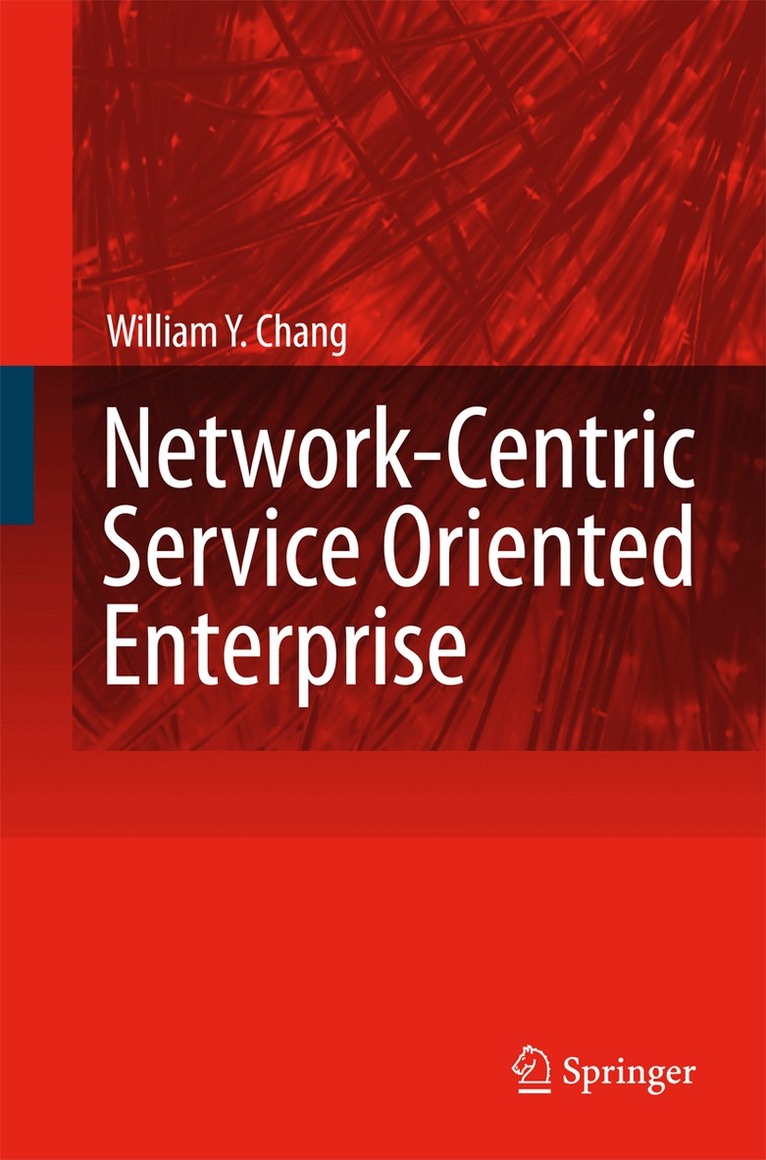
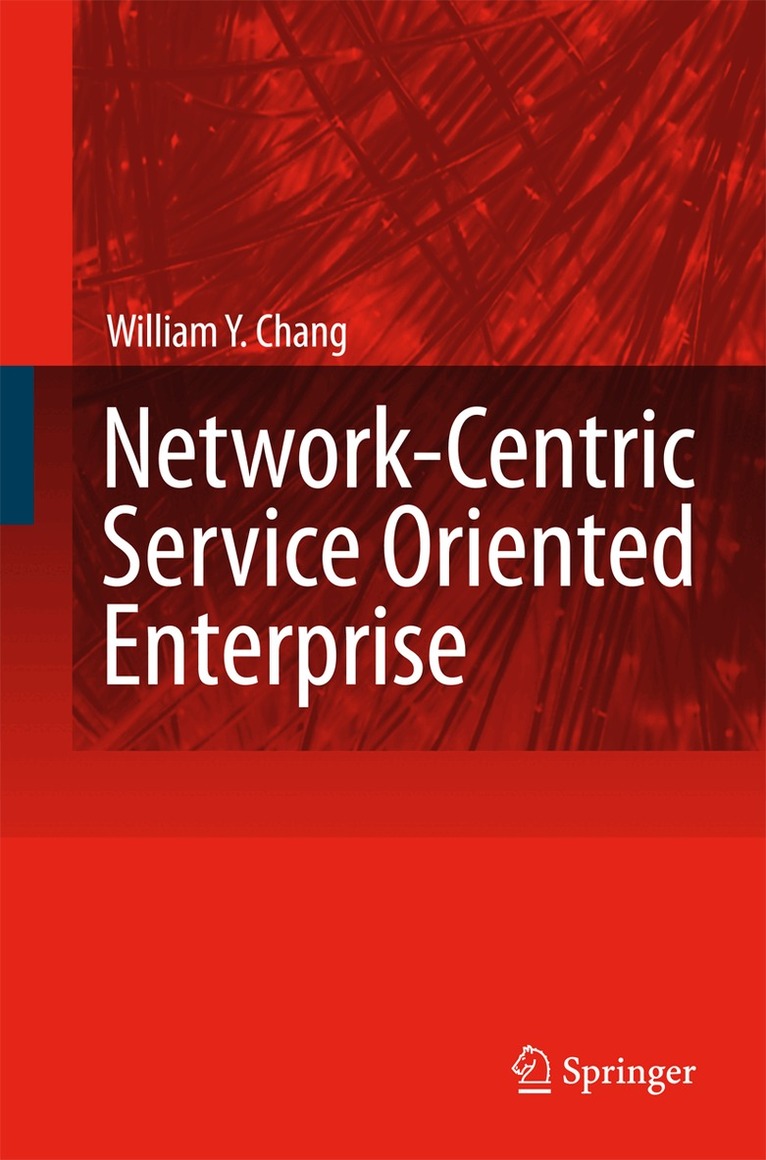
Corporate information is skyrocketing in business values; for enterprise, what is best practice for developing and maintaining goals and standards to enhance information management and business operations? The growing need to incorporate and exchange information across n- works has driven corporations to establish infrastructure for high-distribution communities in a timely and safe manner. Service-Oriented Enterprise (SOE) is lauded as a mainstream business-information collaboration solution due to its decentralized, loosely coupled, and highly interoperable nature. Through SOE, composite applications can be created, modified, and removed in a dynamic use of services. This allows corporate information to be abstracted from existing applications and data, and creating new possibilities for assets to be either provided by external platforms or provisioned from external sources. Within a business/commercial paradigm, SOE translates to a set of flexible services and processes that an organization wishes to make available to its customers, partners, and/or associates. From a technical perspective, SOE evolves existing integration concepts into the notion of a contract – a technology-neutral and business-specific representation of the function. The history of the term network-centricity has represented different p- ceptions in the realm of enterprise services. In such traditional Information Technology (IT) domains as the telecommunications industry, networking has comprised a complex and expensive asset-management effort for service carriers. Network operators are consistently challenged to manage techno- gies and associated procedures that are continually growing and changing. Efficiency of resource management via network-centricity has widely been regarded as acornerstone of business assurance. ix x Preface
1 578 kr
Skickas inom 10-15 vardagar
Corporate information is skyrocketing in business values; for enterprise, what is best practice for developing and maintaining goals and standards to enhance information management and business operations? The growing need to incorporate and exchange information across n- works has driven corporations to establish infrastructure for high-distribution communities in a timely and safe manner. Service-Oriented Enterprise (SOE) is lauded as a mainstream business-information collaboration solution due to its decentralized, loosely coupled, and highly interoperable nature. Through SOE, composite applications can be created, modified, and removed in a dynamic use of services. This allows corporate information to be abstracted from existing applications and data, and creating new possibilities for assets to be either provided by external platforms or provisioned from external sources. Within a business/commercial paradigm, SOE translates to a set of flexible services and processes that an organization wishes to make available to its customers, partners, and/or associates. From a technical perspective, SOE evolves existing integration concepts into the notion of a contract – a technology-neutral and business-specific representation of the function. The history of the term network-centricity has represented different p- ceptions in the realm of enterprise services. In such traditional Information Technology (IT) domains as the telecommunications industry, networking has comprised a complex and expensive asset-management effort for service carriers. Network operators are consistently challenged to manage techno- gies and associated procedures that are continually growing and changing. Efficiency of resource management via network-centricity has widely been regarded as acornerstone of business assurance. ix x Preface
1 578 kr
Skickas inom 10-15 vardagar
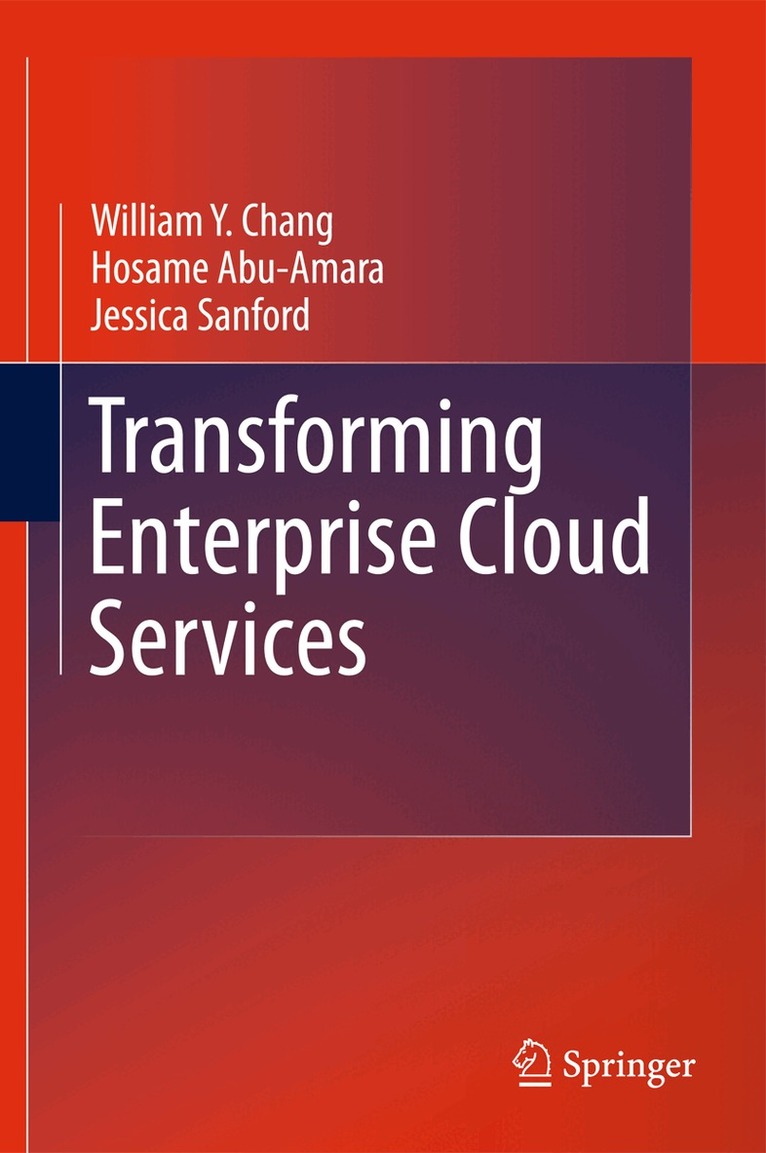
The broad scope of Cloud Computing is creating a technology, business, sociolo- cal, and economic renaissance. Cloud users experience Cloud services as virtual, off-premise applications provided by Cloud service providers.
1 578 kr
Skickas inom 10-15 vardagar
The broad scope of Cloud Computing is creating a technology, business, sociolo- cal, and economic renaissance. It delivers the promise of making services available quickly with rather little effort. Cloud Computing allows almost anyone, anywhere, at anytime to interact with these service offerings. Cloud Computing creates a unique opportunity for its users that allows anyone with an idea to have a chance to deliver it to a mass market base. As Cloud Computing continues to evolve and penetrate different industries, it is inevitable that the scope and definition of Cloud Computing becomes very subjective, based on providers’ and customers’ persp- tive of applications. For instance, Information Technology (IT) professionals p- ceive a Cloud as an unlimited, on-demand, flexible computing fabric that is always available to support their needs. Cloud users experience Cloud services as virtual, off-premise applications provided by Cloud service providers. To an end user, a p- vider offering aset of services or applications in the Cloud can manage these off- ings remotely. Despite these discrepancies, there is a general consensus that Cloud Computing includes technology that uses the Internet and collaborated servers to integrate data, applications, and computing resources. With proper Cloud access, such technology allows consumers and businesses to access their personal files on any computer without having to install special tools. Cloud Computing facilitates efficient operations and management of comp- ing technologies by federating storage, memory, processing, and bandwidth.