Wolfgang Kaschuba – författare
Visar alla böcker från författaren Wolfgang Kaschuba. Handla med fri frakt och snabb leverans.
5 produkter
Lebenswelt Und Kultur Der Unterbürgerlichen Schichten Im 19. Und 20. Jahrhundert
Häftad, 1990
350 kr
Lägg i varukorg
Aus der Presse: "Im Zentrum des Interesses stehen Klassenbildungsprozesse und Klassenkultur. Freizeit und Arbeitswelt, städtische und dörfliche Lebenswelt, Geschlechterbeziehungen, Familienstrukturen, Proteste, Wohnung, Kleidung und Eßkultur werden eingehend beleuchtet, der Aspekt der sozialen …
Representations on the Margins of Europe
Politics and Identities in the Baltic and South Caucasian States
Av Tsypylma Darieva, Wolfgang Kaschuba
Häftad, 2008
453 kr
Lägg i varukorg
Since the Baltic nations joined the European Union, debates about reorganizing post-Soviet republics have grown increasingly heated. How do citizens in the Baltic and South Caucasian states cope with EU expansion and the feeling of existing simultaneously "inside" and "outside" Europe? Based on …
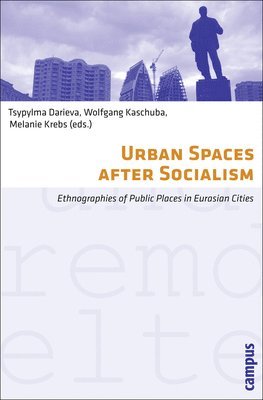
Urban Spaces after Socialism
Ethnographies of Public Places in Eurasian Cities
Av Tsypylma Darieva, Wolfgang Kaschuba m. fl.
Häftad, 2012
308 kr
Lägg i varukorg
The two decades following the collapse of the Soviet Union brought great changes to the new nations on its periphery. "Urban Spaces after Socialism" offers a detailed ethnographic look at one area of change: the use and understanding of public space in the region's cities. Presenting case studies …
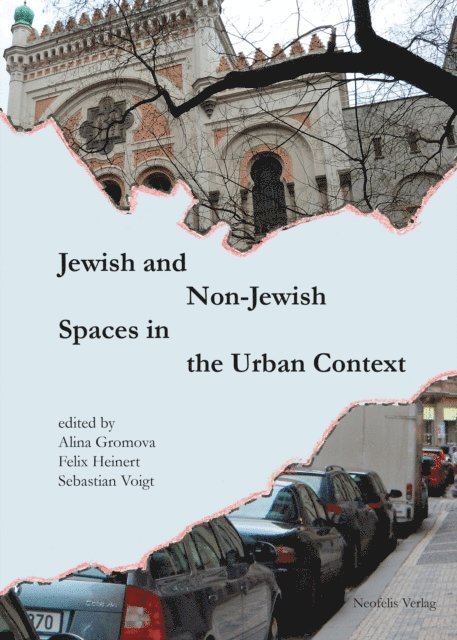
Jewish and Non-Jewish Spaces in the Urban Context
Av Mirjam Zadoff, Magdalena Waligorska m. fl.
E-bok, 2015
307 kr
Lägg i varukorg
The unifying thread of the interdisciplinary volume Jewish and Non-Jewish Spaces in the Urban Context is the fact that Jewish spaces are almost always generated in relation to non-Jewish spaces; they determine and influence each other.This general phenomenon will be scrutinized and put to the test …