Wolfgang Sofsky – författare
Visar alla böcker från författaren Wolfgang Sofsky. Handla med fri frakt och snabb leverans.
12 produkter
Order of Terror
The Concentration Camp
Häftad, 1999
448 kr
Lägg i varukorg
During the twelve years from 1933 until 1945, the concentration camp operated as a terror society. In this pioneering book, the renowned German sociologist Wolfgang Sofsky looks at the concentration camp from the inside as a laboratory of cruelty and a system of absolute power built on extreme …
Privacy
A Manifesto
Inbunden, 2008
178 kr
Lägg i varukorg
What ever happened to privacy? The simple right to be left alone? Surveillance cameras track our movements. Governments monitor our phone calls, e-mails, and Internet habits. Insurance companies know what drugs we take. Banks and credit agencies keep tabs on our smallest purchases. And new …
Order of Terror
The Concentration Camp
E-bok, 2013
617 kr
Lägg i varukorg
During the twelve years from 1933 until 1945, the concentration camp operated as a terror society. In this pioneering book, the renowned German sociologist Wolfgang Sofsky looks at the concentration camp from the inside as a laboratory of cruelty and a system of absolute power built on extreme …
Die Ordnung sozialer Situationen
Theoretische Studien über die Methoden und Strukturen sozialer Erfahrung und Interaktion
E-bok, 2013
587 kr
Lägg i varukorg
Die Ordnung sozialer Situationen
Theoretische Studien über die Methoden und Strukturen sozialer Erfahrung und Interaktion
Häftad, 1983
567 kr
Lägg i varukorg
Die Ordnung des Terrors: Das Konzentrationslager
Häftad, 1997
5,0 utav 5 stjärnor. Totalt antal röster: (1)
241 kr
Lägg i varukorg
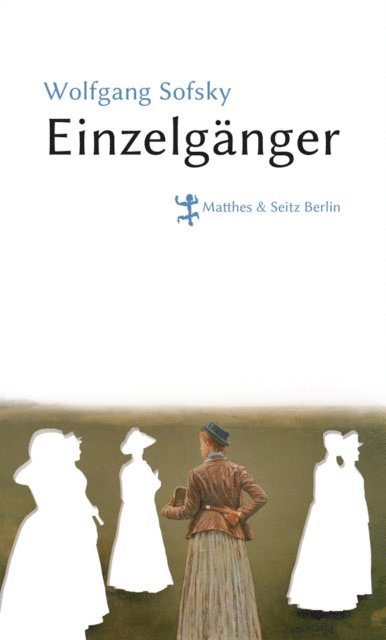
Einzelgänger
E-bok, 2013
193 kr
Lägg i varukorg
Alle sind sie allein, einsam oder verlassen. Ob der Eremit oder Prophet, ob König, Narr oder Verräter, ob Trinker, Spieler oder Künstler, sie sind der Welt abhanden gekommen. Wolfgang Sofsky erzählt von Figuren abseits der Gesellschaft, von Ausgestoßenen, Verlorenen, Enttäuschten, Verwirrten und …