X. Yin - Böcker
Visar alla böcker från författaren X. Yin. Handla med fri frakt och snabb leverans.
4 produkter
4 produkter
2 937 kr
Skickas inom 10-15 vardagar
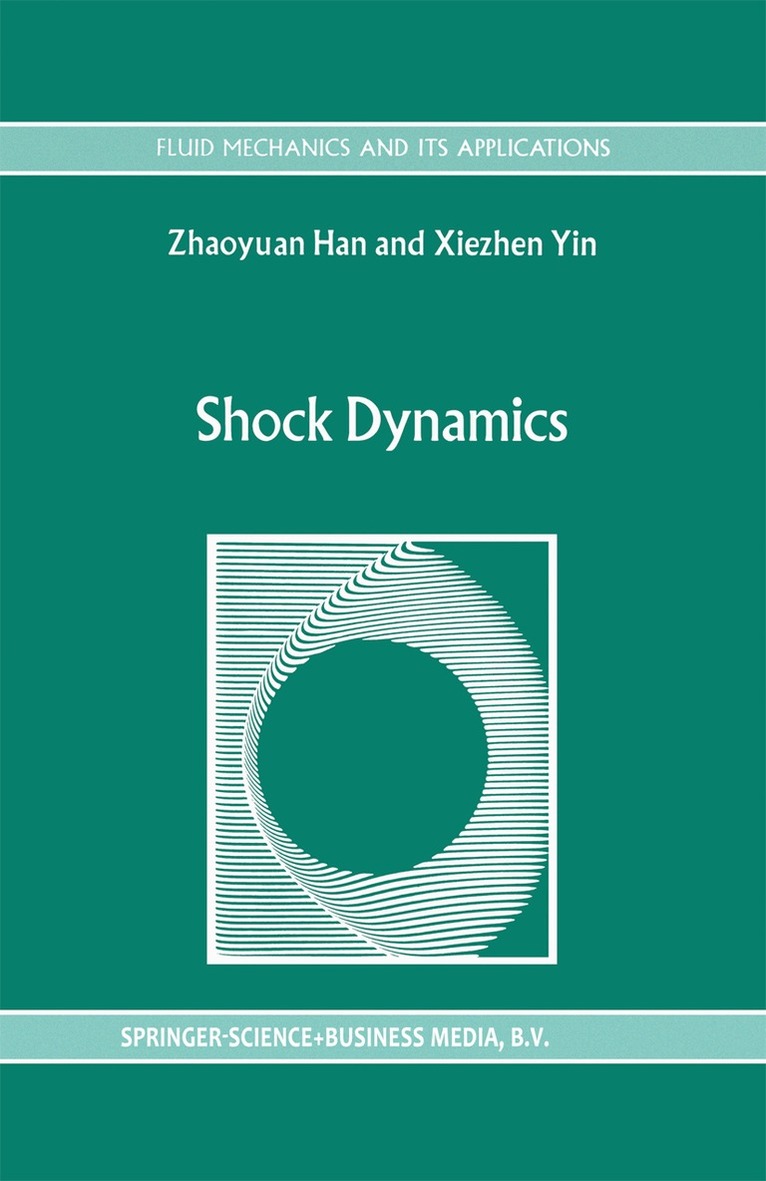
The phenomena of shock motion, including propagation, diffraction, reflection, refraction and interaction of shock waves, can be studied by theoretical analysis, experimental methods and numerical calculations. Although emphasis is placed on the detailed flow pattern obtained by experimental or computational research solving the Euler or Navier-Stokes equation, shock wave formation can usefully be analyzed by theoretical methods. This book introduces the shock dynamic method and explains the underlying concepts, then progresses to a systematic description of the methods, equations and applications of shock dynamics. The book broadly follows the two main categories of shock; that propagating into a quiescent gas, and that into a moving gas, including shock propagating through a non-uniform disturbed flow field. The book consists of three parts: Part I (Chapters 1-4) describes the equations and applications of shock dynamics for quiescent uniform and non-uniform gas ahead of shock. Part 11 (Chapters 5-7) then describes the application of the equations for uniform and non-uniform flows ahead of shock.Part III (Chapters 8-10) introduces Mach reflection of shock for steady, pseudo-steady and unsteady flow; shock refraction at gas interface and the interaction between two shocks.
Earthquake Processes: Physical Modelling, Numerical Simulation and Data Analysis Part I
Häftad, Engelska, 2002
535 kr
Skickas inom 10-15 vardagar
The last decade of the 20th century saw great progress in the physics of earthquake generation; that is, the introduction of laboratory-based fault constitutive laws as a basic equation governing earthquake rupture, quantitative description of tectonic loading driven by plate motion, and a microscopic approach to study fault zone processes. The fault constitutive law plays the role of an interface between microscopic processes in fault zones and macroscopic processes of a fault system, and the plate motion connects diverse crustal activities with mantle dynamics. An ambitious challenge is to develop realistic computer simulation models for the complete earthquake process on the basis of microphysics in fault zones and macro-dynamics in the crust-mantle system. Advances in high performance computer technology and numerical simulation methodology are bringing this vision within reach. This book is the first of two which present a cross-section of cutting-edge research in the field of computational earthquake physics. It includes works on microphysics of rupture and fault constitutive laws, and dynamic rupture, wave propagation and strong ground motion.The second volume covers earthquake cycles, crustal deformation, plate dynamics, and seismicity change and its physical interpretation. Topics covered in this volume range from the microscopic simulation and laboratory studies of rock fracture and the underlying mechanism for nucleation and catastrophic failure to the development of theoretical models of frictional behaviours of faults; as well as the simulation studies of dynamic rupture processes and seismic wave propagation in a 3-D heterogeneous medium, to the case studies of strong ground motions from the 1999 Chi-Chi earthquake and seismic hazard estimation for Cascadian subduction zone earthquakes.
Earthquake Processes: Physical Modelling, Numerical Simulation and Data Analysis Part II
Häftad, Engelska, 2002
535 kr
Skickas inom 10-15 vardagar
The last decade of the 20th century saw great progress in the physics of earthquake generation; that is, the introduction of laboratory-based fault constitutive laws as a basic equation governing earthquake rupture, quantitative description of tectonic loading driven by plate motion, and a microscopic approach to study fault zone processes. The fault constitutive law plays the role of an interface between microscopic processes in fault zones and macroscopic processes of a fault system, and the plate motion connects diverse crustal activities with mantle dynamics. An ambitious challenge is to develop realistic computer simulation models for the complete earthquake process on the basis of microphysics in fault zones and macro-dynamics in the crust-mantle system. Advances in high performance computer technology and numerical simulation methodology are bringing this vision within reach. This book is the second of two which present a cross-section of cutting-edge research in the field of computational earthquake physics. It covers earthquake cycles, crustal deformation, plate dynamics, and seismicity change and its physical interpretation.The first volume includes works on microphysics of rupture and fault constitutive laws, and dynamic rupture, wave propagation and strong ground motion. Topics in this volume range from the 3-D simulations of earthquake generation cycles and interseismic crustal deformation associated with plate subduction to the development of new methods for analysing geophysical and geodetical data and new simulation algorithms for large amplitude folding and mantle convection with viscoelastic/brittle lithosphere, as well as a theoretical study of accelerated seismic release on heterogeneous faults, simulation of long-range automaton models of earthquakes, and various approaches to earthquake prediction based on underlying physical and/or statistical models for seismicity change.
2 937 kr
Skickas inom 10-15 vardagar
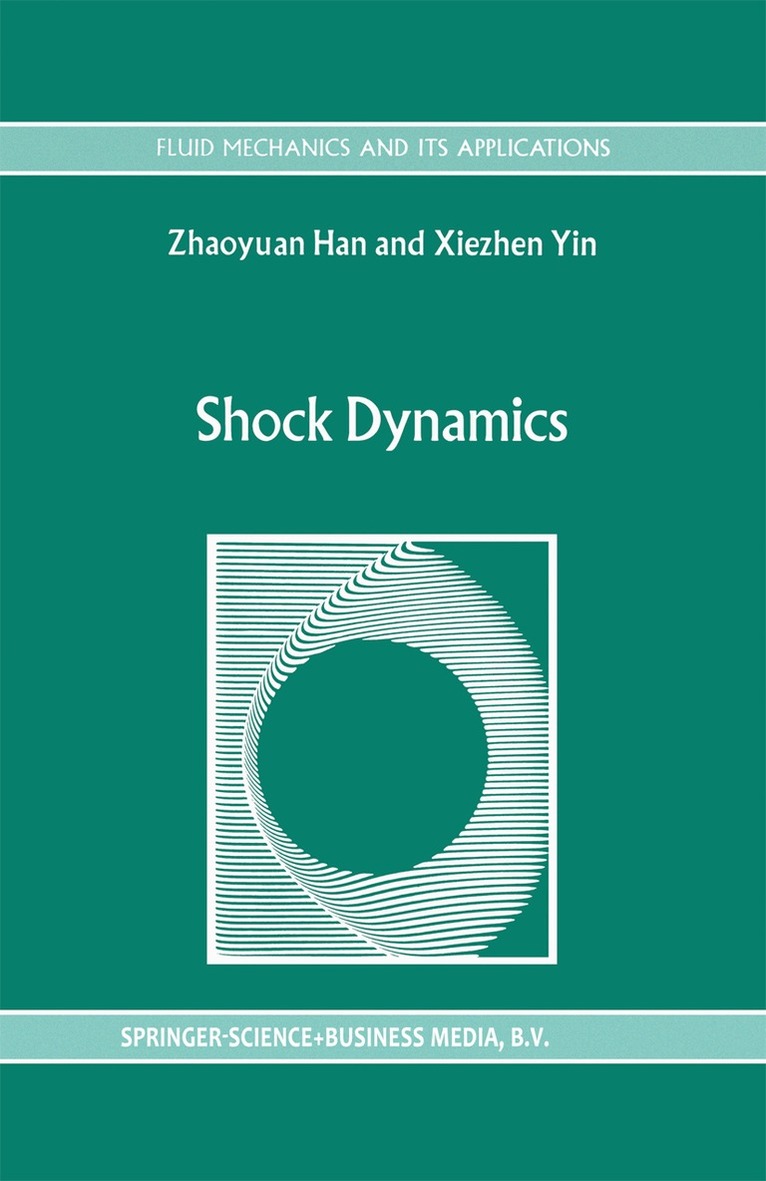
The phenomena of shock motion, including propagation, diffraction, reflection, refraction and interaction of shock waves, can be studied by theoretical analysis, experimental methods and numerical calculations. Although emphasis is placed on the detailed flow pattern obtained by experimental or computational research solving the Euler or Navier-Stokes equation, shock wave formation can usefully be analysed by theoretical methods. This book introduces the shock dynamic method and explains the underlying concepts, then progresses to a systematic description of the methods, equations and applications of shock dynamics. The book broadly follows the two main categories of shock; that propagating into a quiescent gas, and that into a moving gas, including shock propagating through a non-uniform disturbed flow field. The book consists of three parts: Part I (Chapters 1-4) describes the equations and applications of shock dynamics for quiescent uniform and non-uniform gas ahead of shock. Part II (Chapter 5-7) then describes the application of the equations for uniform and non-uniform flows ahead of shock.Part III (Chapters 8-10) introduces Mach reflection of shock for steady, pseudo-steady and unsteady flow; shock refraction at gas interface and the interaction between two shocks. For mechanical and aerospace engineers, applied mathematicians.