Xavier Márquez - Böcker
Visar alla böcker från författaren Xavier Márquez. Handla med fri frakt och snabb leverans.
5 produkter
5 produkter
541 kr
Skickas inom 10-15 vardagar
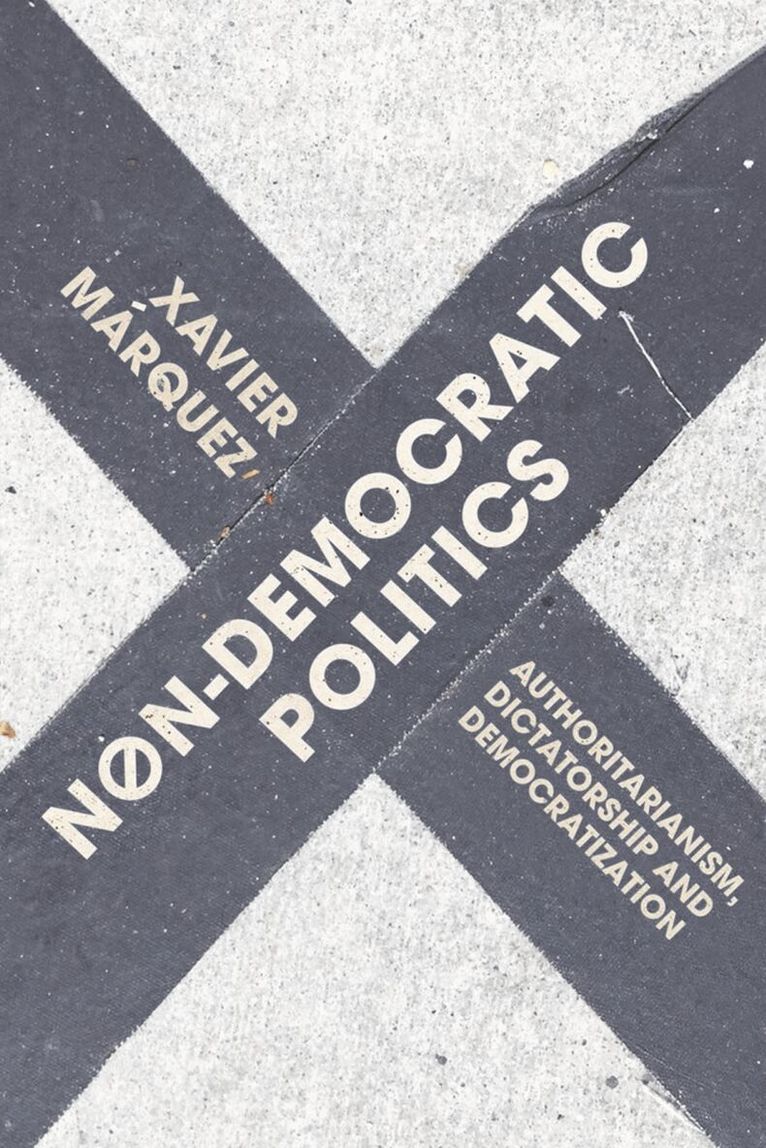
Since the 19th century, there has been a slow transformation in the nature of the norms that regulate political competition and the uses of state power. Monarchies whose legitimating principles appealed to divine sanction have steadily given way to republican regimes normatively grounded in appeals to 'the people.' Ideals of liberty, equality and solidarity have gained ground relative to ideals of hierarchy and dependence. Yet while in some ways the world is more democratic now than ever, new forms of non-democracy and new justifications for it have emerged. Drawing on a wide variety of examples and data from around the world, this important new text provides a global account of the history and theory of non-democratic government over the past two centuries. Grounded in the most recent social science research, it shows how non-democratic regimes have ruled through many different institutions, from parties to armies to dynastic families, and examines the economic and social performance of these different types of non-democracy, as well as the development of justifications for them. It discusses how over the last century personal dictatorships and totalitarian regimes have given way to hybrid regimes combining electoral competition with various restrictions on the ability of parties and other social groups to effectively compete for control of the state. The book assesses the processes through which non-democratic regimes change, and sometimes democratize, from cultural change and economic development to collective action and revolution.Offering a cutting-edge analysis of the complex issue of non-democratic politics, this is the perfect introduction for students with an interest in how authoritarianism exerts itself in the modern age.
1 833 kr
Skickas inom 10-15 vardagar
Since the 19th century, there has been a slow transformation in the nature of the norms that regulate political competition and the uses of state power. Monarchies whose legitimating principles appealed to divine sanction have steadily given way to republican regimes normatively grounded in appeals to 'the people.' Ideals of liberty, equality and solidarity have gained ground relative to ideals of hierarchy and dependence. Yet while in some ways the world is more democratic now than ever, new forms of non-democracy and new justifications for it have emerged. Drawing on a wide variety of examples and data from around the world, this important new text provides a global account of the history and theory of non-democratic government over the past two centuries.Grounded in the most recent social science research, it shows how non-democratic regimes have ruled through many different institutions, from parties to armies to dynastic families, and examines the economic and social performance of these different types of non-democracy, as well as the development of justifications for them. It discusses how over the last century personal dictatorships and totalitarian regimes have given way to hybrid regimes combining electoral competition with various restrictions on the ability of parties and other social groups to effectively compete for control of the state. The book assesses the processes through which non-democratic regimes change, and sometimes democratize, from cultural change and economic development to collective action and revolution.Offering a cutting-edge analysis of the complex issue of non-democratic politics, this is the perfect introduction for students with an interest in how authoritarianism exerts itself in the modern age.Accompanying online resources for this title can be found at bloomsburyonlineresources.com/non-democratic-politics. These resources are designed to support teaching and learning when using this textbook and are available at no extra cost.
1 314 kr
Skickas inom 10-15 vardagar
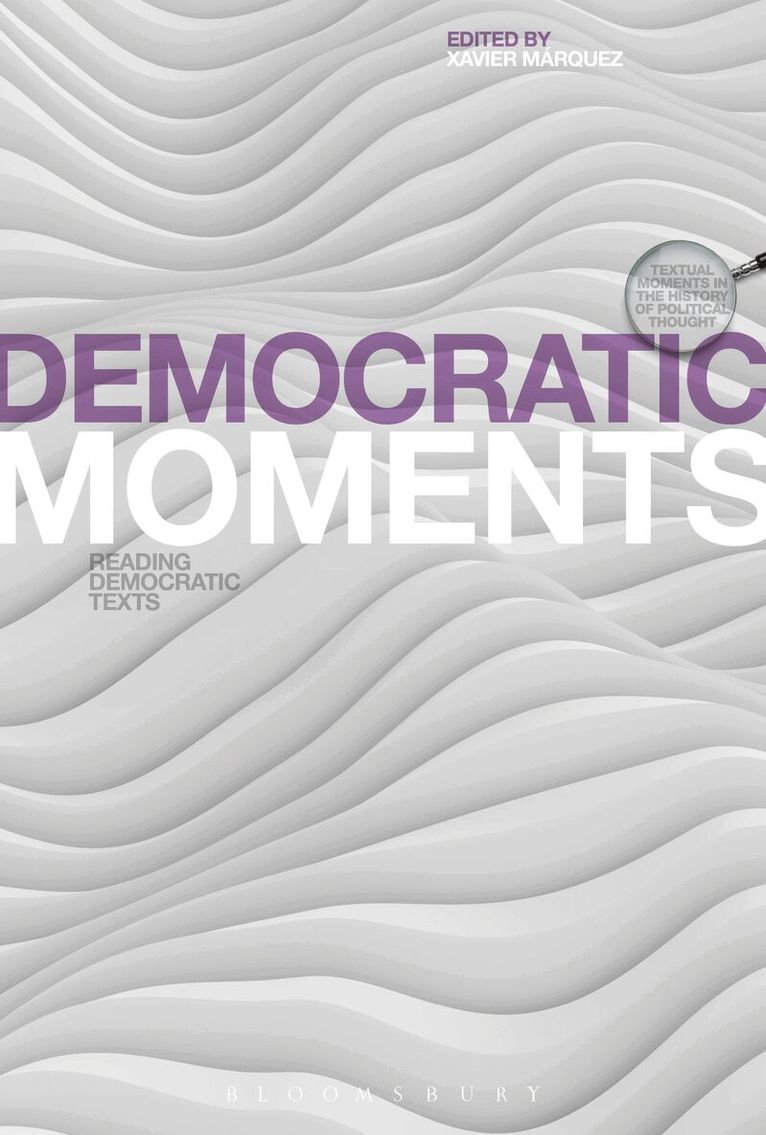
This book is available as open access through the Bloomsbury Open Access programme and is available on www.bloomsburycollections.com.This collection of short essays on texts in the history of democracy shows the diversity of ideas that contributed to the making of our present democratic moment. The selection of texts goes beyond the standard, Western-centric canonical history of democracy, with its beginnings in ancient Athens and its climax in the French and American revolutions, recovering some of the significant body of democratic and anti-democratic thought in Latin America, Asia, and elsewhere. It includes discussions of well-known philosophers like Plato and Aristotle, but also of a variety of thinkers much less well known in English as writers on democracy: Al Farabi, Bolívar, Gandhi, Radishchev, Lenin, Sun Yat-sen, and many others. The essays thus de-center our understanding of the moments where the idea of democracy was articulated, rejected, and appropriated. Spanning antiquity to the present and global in scope, with contributions by key scholars of democracy from around the world, Democratic Moments is the ideal text for all students wishing to expand their understanding of the ways in which this contested concept has been understood.
379 kr
Skickas inom 10-15 vardagar
This book is available as open access through the Bloomsbury Open Access programme and is available on www.bloomsburycollections.com.This collection of short essays on texts in the history of democracy shows the diversity of ideas that contributed to the making of our present democratic moment. The selection of texts goes beyond the standard, Western-centric canonical history of democracy, with its beginnings in ancient Athens and its climax in the French and American revolutions, recovering some of the significant body of democratic and anti-democratic thought in Latin America, Asia, and elsewhere. It includes discussions of well-known philosophers like Plato and Aristotle, but also of a variety of thinkers much less well known in English as writers on democracy: Al Farabi, Bolívar, Gandhi, Radishchev, Lenin, Sun Yat-sen, and many others. The essays thus de-center our understanding of the moments where the idea of democracy was articulated, rejected, and appropriated. Spanning antiquity to the present and global in scope, with contributions by key scholars of democracy from around the world, Democratic Moments is the ideal text for all students wishing to expand their understanding of the ways in which this contested concept has been understood.
504 kr
Skickas inom 7-10 vardagar
The Statesman is a difficult and puzzling Platonic dialogue. In A Stranger's Knowledge Marquez argues that Plato abandons here the classic idea, prominent in the Republic, that the philosopher, qua philosopher, is qualified to rule. Instead, the dialogue presents the statesman as different from the philosopher, the possessor of a specialist expertise that cannot be reduced to philosophy. The expertise is of how to make a city resilient against internal and external conflict in light of the imperfect sociality of human beings and the poverty of their reason. This expertise, however, cannot be produced on demand: one cannot train statesmen like one might train carpenters. Worse, it cannot be made acceptable to the citizens, or operate in ways that are not deeply destructive to the city’s stability. Even as the political community requires his knowledge for its preservation, the genuine statesman must remain a stranger to the city.Marquez shows how this impasse is the key to understanding the ambiguous reevaluation of the rule of law that is the most striking feature of the political philosophy of the Statesman. The law appears here as a mere approximation of the expertise of the inevitably absent statesman, dim images and static snapshots of the clear and dynamic expertise required to steer the ship of state across the storms of the political world. Yet such laws, even when they are not created by genuine statesmen, can often provide the city with a limited form of cognitive capital that enables it to preserve itself in the long run, so long as citizens, and especially leaders, retain a “philosophical” attitude towards them. It is only when rulers know that they do not know better than the laws what is just or good (and yet want to know what is just and good) that the city can be preserved. The dialogue is thus, in a sense, the vindication of the philosopher-king in the absence of genuine political knowledge.