Xiudian Dai – författare
Visar alla böcker från författaren Xiudian Dai. Handla med fri frakt och snabb leverans.
17 produkter
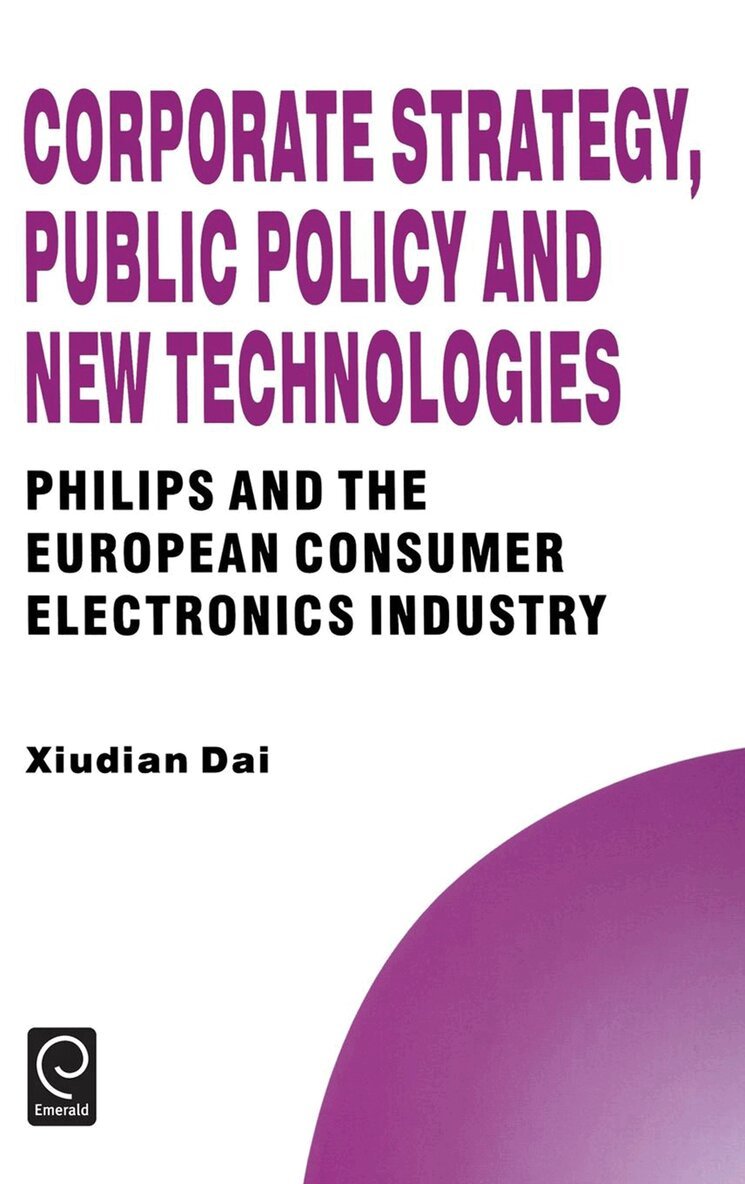
Corporate Strategy, Public Policy and New Technologies
Philips and the European Consumer Electronics Industry
Inbunden, 1996
1431 kr
Lägg i varukorg
Based on in-depth study of the electronics giant Philips, "Corporate Strategy, Public Policy and New Technologies" examines the key factors which have determined the success or failure of new technologies and the global competitiveness of firms within a major European consumer industry. Drawing on …
Internet and European Parliamentary Democracy
A Comparative Study of the Ethics of Political Communication in the Digital Age
Inbunden, 2008
2512 kr
Lägg i varukorg
This book investigates the ethical challenges the internet presents to contemporary parliamentary democracy in Europe and how these challenges are being addressed. It fills an important gap: current literature until now has largely focused on the study of internet usage by politicians and …
Internet and European Parliamentary Democracy
A Comparative Study of the Ethics of Political Communication in the Digital Age
Häftad, 2010
691 kr
Lägg i varukorg
This book investigates the ethical challenges the internet presents to contemporary parliamentary democracy in Europe and how these challenges are being addressed. It fills an important gap: current literature until now has largely focused on the study of internet usage by politicians and …
Digital Revolution and Governance
Av Xiudian Dai
Häftad, 2019
560 kr
Lägg i varukorg
This title was first published in 2000. This text examines the politics of the digital age, looking at topics including new industrial policies, the implications of the Internet and global governance of innovation.
Digital Revolution and Governance
Av Xiudian Dai
Inbunden, 2017
2133 kr
Lägg i varukorg
This title was first published in 2000. This text examines the politics of the digital age, looking at topics including new industrial policies, the implications of the Internet and global governance of innovation.
Internet and European Parliamentary Democracy
A Comparative Study of the Ethics of Political Communication in the Digital Age
E-bok, 2013
814 kr
Lägg i varukorg
This book investigates the ethical challenges the internet presents to contemporary parliamentary democracy in Europe and how these challenges are being addressed. It fills an important gap: current literature until now has largely focused on the study of internet usage by politicians and …
Internet and European Parliamentary Democracy
A Comparative Study of the Ethics of Political Communication in the Digital Age
E-bok, 2013
796 kr
Lägg i varukorg
This book investigates the ethical challenges the internet presents to contemporary parliamentary democracy in Europe and how these challenges are being addressed. It fills an important gap: current literature until now has largely focused on the study of internet usage by politicians and …
Digital Revolution and Governance
Av Xiudian Dai
E-bok, 2018
639 kr
Lägg i varukorg
This title was first published in 2000. This text examines the politics of the digital age, looking at topics including new industrial policies, the implications of the Internet and global governance of innovation.
Digital Revolution and Governance
Av Xiudian Dai
E-bok, 2018
658 kr
Lägg i varukorg
This title was first published in 2000. This text examines the politics of the digital age, looking at topics including new industrial policies, the implications of the Internet and global governance of innovation.
Belt and Road Initiative and the Politics of Connectivity
Sino-Indian Rivalry in the 21st Century
Av Bhumitra Chakma, Xiudian Dai
Inbunden, 2022
1098 kr
Lägg i varukorg
This volume analyses New Delhi’s reaction to China’s Belt and Road Initiative (BRI) and the rise of politics of connectivity and infrastructure building which has heightened Sino-Indian rivalry in South Asia and the Indian Ocean Region (IOR). It can be evidenced that the BRI has transformed the …
Belt and Road Initiative and the Politics of Connectivity
Sino-Indian Rivalry in the 21st Century
Av Xiudian Dai, Bhumitra Chakma
E-bok, 2022
1459 kr
Lägg i varukorg
This volume analyses New Delhi’s reaction to China’s Belt and Road Initiative (BRI) and the rise of politics of connectivity and infrastructure building which has heightened Sino-Indian rivalry in South Asia and the Indian Ocean Region (IOR). It can be evidenced that the BRI has transformed the …
Belt and Road Initiative and the Politics of Connectivity
Sino-Indian Rivalry in the 21st Century
Av Bhumitra Chakma, Xiudian Dai
Häftad, 2023
1098 kr
Lägg i varukorg
This volume analyses New Delhi’s reaction to China’s Belt and Road Initiative (BRI) and the rise of politics of connectivity and infrastructure building which has heightened Sino-Indian rivalry in South Asia and the Indian Ocean Region (IOR). It can be evidenced that the BRI has transformed the …
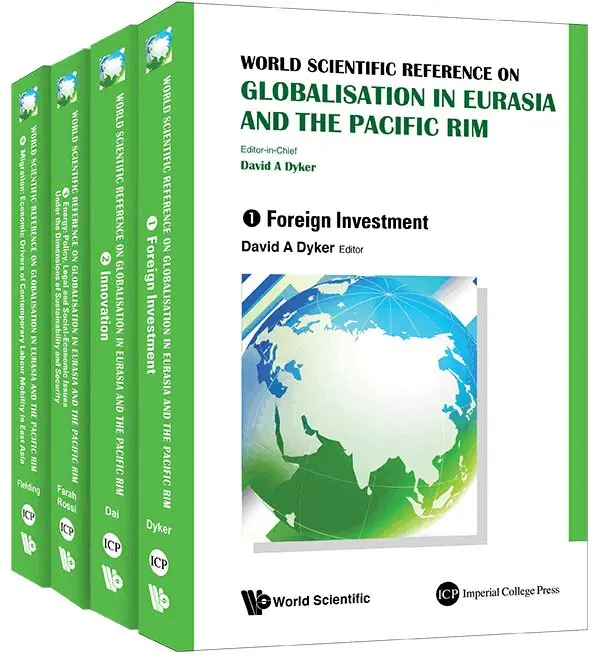
WORLD SCIENTIFIC REFERENCE ON GLOBALISATION IN EURASIA AND THE PACIFIC RIM (IN 4 VOLUMES)
Av DYKER DAVID A, David A Dyker m. fl.
Inbunden, 2015
9338 kr
Lägg i varukorg
This multi-volume set focuses on a key region of the world which contains four of the biggest emerging economies, a large number of highly dynamic small- and medium-sized emerging economies, and one of the leading advanced industrial countries. It is a region which contains some of the biggest …
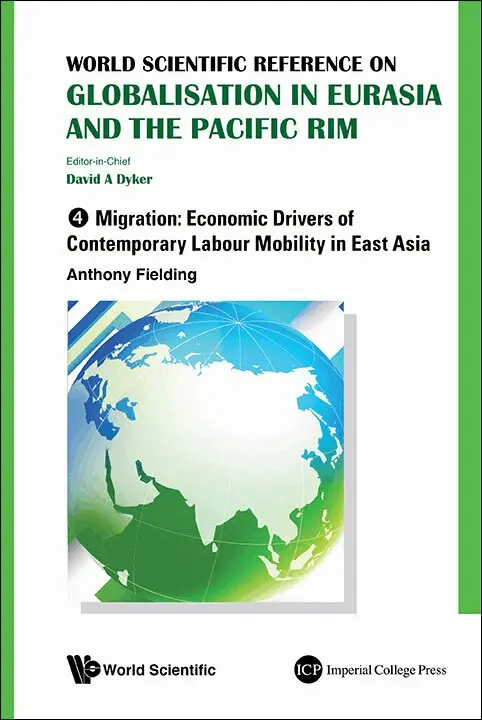
WORLD SCIENTIFIC REFERENCE ON GLOBALISATION IN EURASIA AND THE PACIFIC RIM - VOLUME 4: MIGRATION: ECONOMIC DRIVERS OF CONTEMPORARY LABOUR MOBILITY IN EAST ASIA
Av Anthony Fielding, David A Dyker m. fl.
Inbunden, 2015
3057 kr
Lägg i varukorg
This multi-volume set focuses on a key region of the world which contains four of the biggest emerging economies, a large number of highly dynamic small- and medium-sized emerging economies, and one of the leading advanced industrial countries. It is a region which contains some of the biggest …
WORLD SCIENTIFIC REFERENCE ON GLOBALISATION IN EURASIA AND THE PACIFIC RIM - VOLUME 1: FOREIGN INVESTMENT
Av DYKER DAVID A, David A Dyker m. fl.
Inbunden, 2015
3562 kr
Tillfälligt slut
This multi-volume set focuses on a key region of the world which contains four of the biggest emerging economies, a large number of highly dynamic small- and medium-sized emerging economies, and one of the leading advanced industrial countries. It is a region which contains some of the biggest …
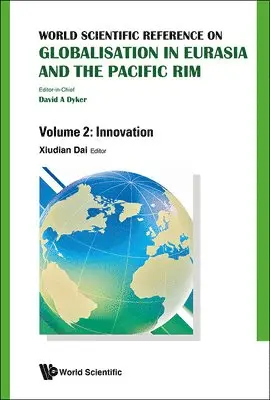
WORLD SCIENTIFIC REFERENCE ON GLOBALISATION IN EURASIA AND THE PACIFIC RIM - VOLUME 2: INNOVATION
Av DAI XIUDIAN, David A Dyker m. fl.
Inbunden, 2015
3486 kr
Tillfälligt slut
This multi-volume set focuses on a key region of the world which contains four of the biggest emerging economies, a large number of highly dynamic small- and medium-sized emerging economies, and one of the leading advanced industrial countries. It is a region which contains some of the biggest …
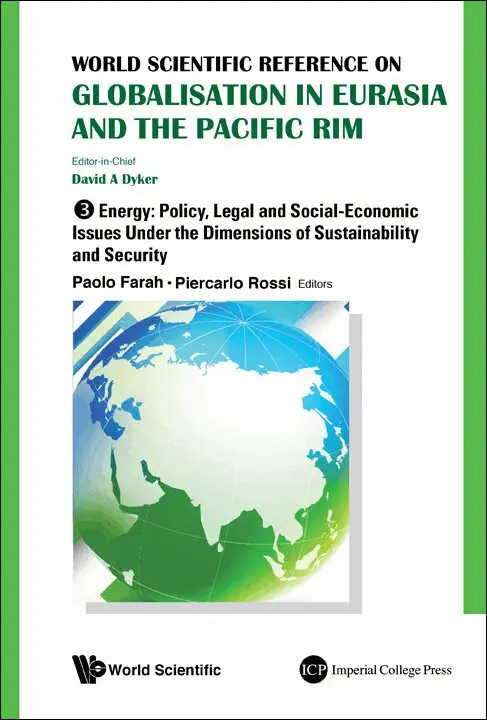
WORLD SCIENTIFIC REFERENCE ON GLOBALISATION IN EURASIA AND THE PACIFIC RIM - VOLUME 3: ENERGY: POLICY, LEGAL AND SOCIAL-ECONOMIC ISSUES UNDER THE DIMENSIONS OF SUSTAINABILITY AND SECURITY
Av FARAH PAOLO, David A Dyker m. fl.
Inbunden, 2015
3562 kr
Tillfälligt slut
This multi-volume set focuses on a key region of the world which contains four of the biggest emerging economies, a large number of highly dynamic small- and medium-sized emerging economies, and one of the leading advanced industrial countries. It is a region which contains some of the biggest …