Yanna Krupnikov - Böcker
Visar alla böcker från författaren Yanna Krupnikov. Handla med fri frakt och snabb leverans.
10 produkter
10 produkter
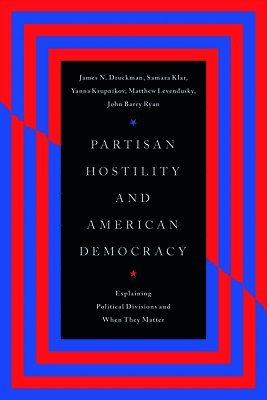
Partisan Hostility and American Democracy
Explaining Political Divisions and When They Matter
Inbunden, Engelska, 2024
912 kr
Skickas inom 7-10 vardagar
An unflinching examination of the effects and boundaries of partisan animosity.For generations, experts argued that American politics needed cohesive parties to function effectively. Now many fear that strong partisan views, particularly hostility to the opposing party, are damaging democracy. Is partisanship as dangerous as we fear it is? To provide an answer, this book offers a nuanced evaluation of when and how partisan animosity matters in today’s highly charged, dynamic political environment, drawing on panel data from some of the most tumultuous years in recent American history, 2019 through 2021. The authors show that partisanship powerfully shapes political behaviors, but its effects are conditional, not constant. Instead, it is most powerful when politicians send clear signals and when an issue is unlikely to bring direct personal consequences. In the absence of these conditions, other factors often dominate decision-making. The authors argue that while partisan hostility has degraded US politics—for example, politicizing previously non-political issues and undermining compromise—it is not in itself an existential threat. As their research shows, the future of American democracy depends on how politicians, more than ordinary voters, behave.
Partisan Hostility and American Democracy
Explaining Political Divisions and When They Matter
Häftad, Engelska, 2024
243 kr
Skickas inom 7-10 vardagar
An unflinching examination of the effects and boundaries of partisan animosity.For generations, experts argued that American politics needed cohesive parties to function effectively. Now many fear that strong partisan views, particularly hostility to the opposing party, are damaging democracy. Is partisanship as dangerous as we fear it is? To provide an answer, this book offers a nuanced evaluation of when and how partisan animosity matters in today’s highly charged, dynamic political environment, drawing on panel data from some of the most tumultuous years in recent American history, 2019 through 2021. The authors show that partisanship powerfully shapes political behaviors, but its effects are conditional, not constant. Instead, it is most powerful when politicians send clear signals and when an issue is unlikely to bring direct personal consequences. In the absence of these conditions, other factors often dominate decision-making. The authors argue that while partisan hostility has degraded US politics—for example, politicizing previously non-political issues and undermining compromise—it is not in itself an existential threat. As their research shows, the future of American democracy depends on how politicians, more than ordinary voters, behave.
234 kr
Skickas inom 7-10 vardagar
Expert news sources offer context and act as translators, communicating complex policy issues to the public. Therefore, these sources have implications for who, and what is elevated and legitimized by news coverage. This element considers patterns in expert sources, focusing on a particular area of expertise: politics. As a starting point, it conducts a content analysis tracking which types of political experts are most likely to be interviewed, using this analysis to explain patterns in expert sourcing. Building on the source data, it next conducts experiments and surveys of journalists to consider demand for expert sources. Finally, shifting the analysis to the supply of expert sources, it turns to a survey of faculty to track expert experiences with journalists. Jointly, the results suggest underlying patterns in expert sourcing is a tension between journalists' preferences, the time constraints of producing news, and the preferences of the experts themselves.
753 kr
Skickas inom 7-10 vardagar
While scholars have long considered how political messages make people feel, changes in the media environment have given people unprecedented access to the expressed emotions of others. Through both contemporary news stories and social media, people now learn how others - often strangers - feel about political events. Do people believe in the sincerity of these expressed emotions? To answer this question, we turn to expressions about one of the most pressing issues of our time: climate change. We begin with a theoretic framework of the way people perceive mediated emotional expression. Then, across six pre-registered experiments, we find people are generally skeptical of others' emotional expression - perceiving emotional posts and quotes less authentic and appropriate than more neutral content. While evaluations vary by platform, our results suggest that emotions online aren't always taken at face value - complicating the role of these expressed emotions in political communication.
234 kr
Skickas inom 7-10 vardagar
While scholars have long considered how political messages make people feel, changes in the media environment have given people unprecedented access to the expressed emotions of others. Through both contemporary news stories and social media, people now learn how others - often strangers - feel about political events. Do people believe in the sincerity of these expressed emotions? To answer this question, we turn to expressions about one of the most pressing issues of our time: climate change. We begin with a theoretic framework of the way people perceive mediated emotional expression. Then, across six pre-registered experiments, we find people are generally skeptical of others' emotional expression - perceiving emotional posts and quotes less authentic and appropriate than more neutral content. While evaluations vary by platform, our results suggest that emotions online aren't always taken at face value - complicating the role of these expressed emotions in political communication.
Independent Politics
How American Disdain for Parties Leads to Political Inaction
Inbunden, Engelska, 2016
1 100 kr
Skickas inom 7-10 vardagar
The number of independent voters in America increases each year, yet they remain misunderstood by both media and academics. Media describe independents as pivotal for electoral outcomes. Political scientists conclude that independents are merely 'undercover partisans': people who secretly hold partisan beliefs and are thus politically inconsequential. Both the pundits and the political scientists are wrong, argue the authors. They show that many Americans are becoming embarrassed of their political party. They deny to pollsters, party activists, friends, and even themselves, their true partisanship, instead choosing to go 'undercover' as independents. Independent Politics demonstrates that people intentionally mask their partisan preferences in social situations. Most importantly, breaking with decades of previous research, it argues that independents are highly politically consequential. The same motivations that lead people to identify as independent also diminish their willingness to engage in the types of political action that sustain the grassroots movements of American politics.
902 kr
Skickas inom 7-10 vardagar
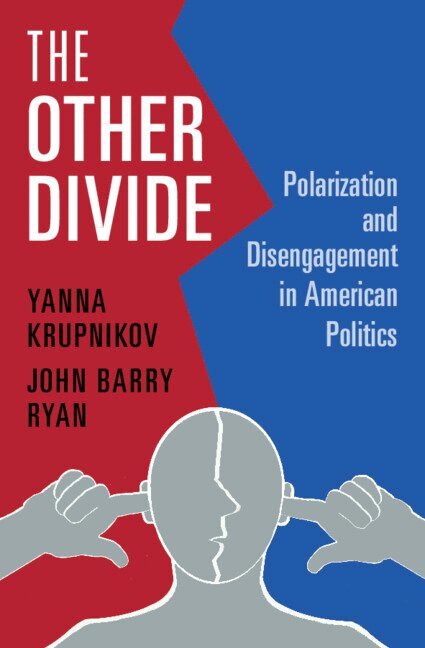
There is little doubt that increasing polarization over the last decade has transformed the American political landscape. In The Other Divide, Yanna Krupnikov and John Barry Ryan challenge the nature and extent of that polarization. They find that more than party, Americans are divided by involvement in politics. On one side is a group of Americans who are deeply involved in politics and very expressive about their political views; on the other side is a group much less involved in day-to-day political outcomes. While scholars and journalists have assumed that those who are most vocal about their political views are representative of America at large, they are in fact a relatively small group whose voices are amplified by the media. By considering the political differences between the deeply involved and the rest of the American public, Krupnikov and Ryan present a broader picture of the American electorate than the one that often appears in the news.
297 kr
Skickas inom 7-10 vardagar
There is little doubt that increasing polarization over the last decade has transformed the American political landscape. In The Other Divide, Yanna Krupnikov and John Barry Ryan challenge the nature and extent of that polarization. They find that more than party, Americans are divided by involvement in politics. On one side is a group of Americans who are deeply involved in politics and very expressive about their political views; on the other side is a group much less involved in day-to-day political outcomes. While scholars and journalists have assumed that those who are most vocal about their political views are representative of America at large, they are in fact a relatively small group whose voices are amplified by the media. By considering the political differences between the deeply involved and the rest of the American public, Krupnikov and Ryan present a broader picture of the American electorate than the one that often appears in the news.
234 kr
Skickas inom 7-10 vardagar
In spite of what appears to be the increasingly negative tone of media coverage, this Element suggests that the prevalence of positive news is likely to increase, for three reasons: (1) valence-based asymmetries vary over time, (2) valence-based asymmetries vary across individuals, and (3) technology facilitates diverse news platforms catering to diverse preferences. Each of these claims is examined in detail here, based on analyses of prior and/or novel data on media content, psychophysiological responses, and survey-based experiments. Results are considered as they relate to our understanding of media gatekeeping, political communication, and political psychology, and also as actionable findings for producers of media content, communications platforms, and media consumers.
Independent Politics
How American Disdain for Parties Leads to Political Inaction
Häftad, Engelska, 2016
397 kr
Skickas inom 7-10 vardagar
The number of independent voters in America increases each year, yet they remain misunderstood by both media and academics. Media describe independents as pivotal for electoral outcomes. Political scientists conclude that independents are merely 'undercover partisans': people who secretly hold partisan beliefs and are thus politically inconsequential. Both the pundits and the political scientists are wrong, argue the authors. They show that many Americans are becoming embarrassed of their political party. They deny to pollsters, party activists, friends, and even themselves, their true partisanship, instead choosing to go 'undercover' as independents. Independent Politics demonstrates that people intentionally mask their partisan preferences in social situations. Most importantly, breaking with decades of previous research, it argues that independents are highly politically consequential. The same motivations that lead people to identify as independent also diminish their willingness to engage in the types of political action that sustain the grassroots movements of American politics.