Yasheng Huang - Böcker
Visar alla böcker från författaren Yasheng Huang. Handla med fri frakt och snabb leverans.
7 produkter
7 produkter
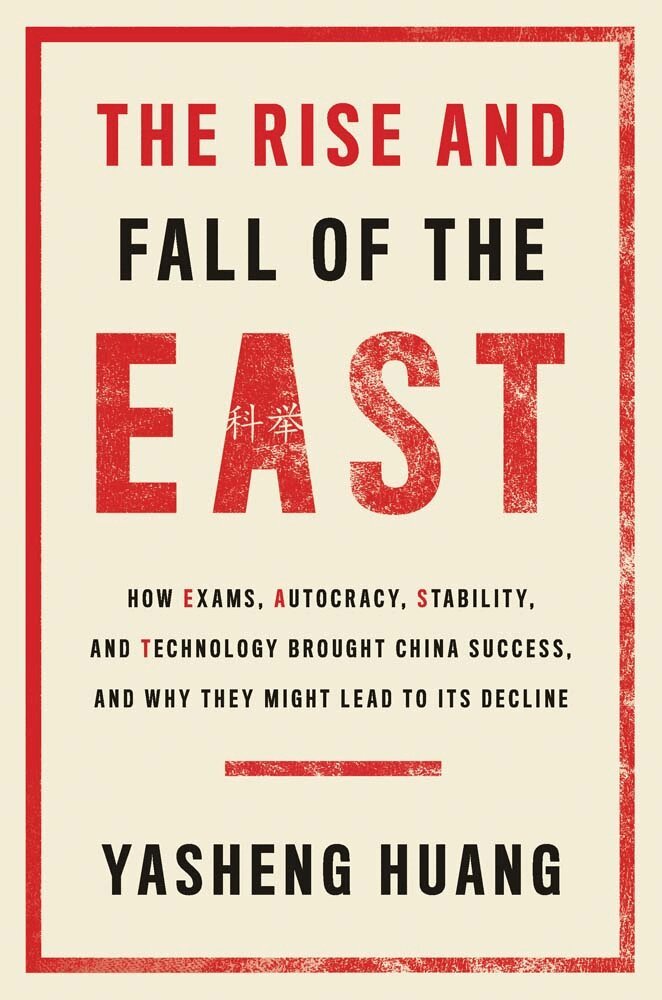
Rise and Fall of the EAST
How Exams, Autocracy, Stability, and Technology Brought China Success, and Why They Might Lead to Its Decline
Häftad, Engelska, 2024
199 kr
Skickas inom 7-10 vardagar
The long history of China’s relationship between stability, diversity, and prosperity, and how its current leadership threatens this delicate balance “Riveting.”—Tunku Varadarajan, Wall Street Journal A Foreign Affairs Best Book of 2023 Chinese society has been shaped by the interplay of the EAST—exams, autocracy, stability, and technology—from ancient times through the present. Beginning with the Sui dynasty’s introduction of the civil service exam, known as Keju, in 587 CE—and continuing through the personnel management system used by the Chinese Communist Party (CCP)—Chinese autocracies have developed exceptional tools for homogenizing ideas, norms, and practices. But this uniformity came with a huge downside: stifled creativity. Yasheng Huang shows how China transitioned from dynamism to extreme stagnation after the Keju was instituted. China’s most prosperous periods, such as during the Tang dynasty (618–907) and under the reformist CCP, occurred when its emphasis on scale (the size of bureaucracy) was balanced with scope (diversity of ideas). Considering China’s remarkable success over the past half-century, Huang sees signs of danger in the political and economic reversals under Xi Jinping. The CCP has again vaulted conformity above new ideas, reverting to the Keju model that eventually led to technological decline. It is a lesson from China’s own history, Huang argues, that Chinese leaders would be wise to take seriously.
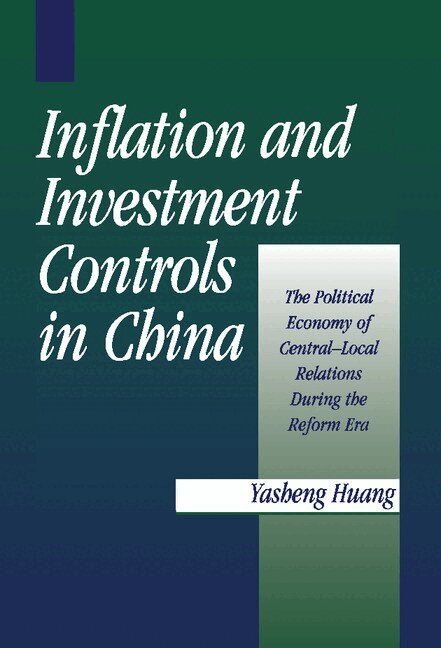
Inflation and Investment Controls in China
The Political Economy of Central-Local Relations during the Reform Era
Inbunden, Engelska, 1996
943 kr
Skickas inom 7-10 vardagar
How has the Chinese central government been able to avoid the crippling hyperinflation that has bedeviled so many developing and centrally planned economies? China's unique, de facto federalism, Huang argues - a combination of economic and fiscal decentralization and strong political centralization - has spurred economic growth and allowed political institutions to impose restraints on inflation from the top down. Focusing on central-local relations and the controlling role of political institutions, Yasheng Huang explains why local Chinese officials comply, even against their own economic interests, with the investment-reduction and inflation-control policies of the central government. Drawing upon institutional economics, he hypothesizes that the central government's powerful role in appointing and firing bureaucrats at the local level helps to reconcile some of the central-local economic policy differences. Huang uses systematic data analysis to test this proposition. This book also offers detailed descriptions of the roles of local governments in economic and investment management.
370 kr
Skickas inom 7-10 vardagar
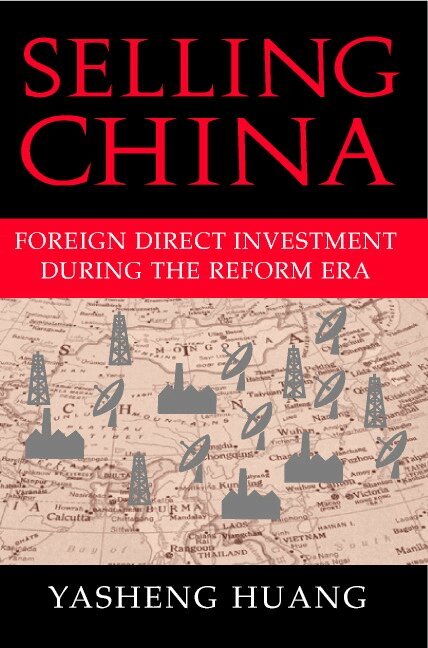
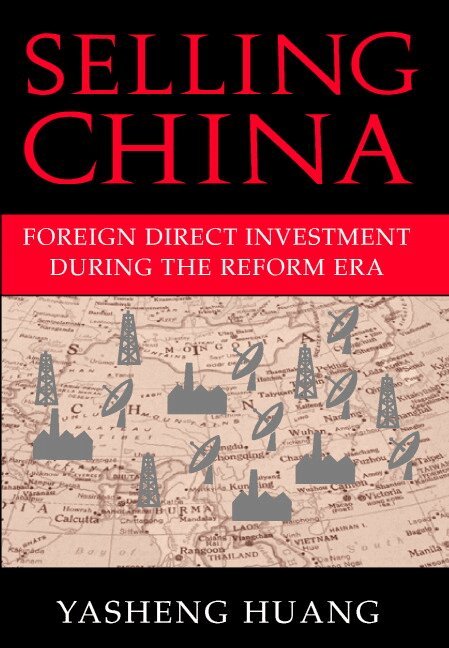
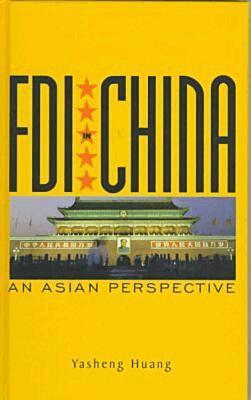
In this book, Yasheng Huang makes a provocative claim: the large absorption of foreign direct investment (FDI) by China is a sign of some substantial weaknesses in the Chinese economy. The primary benefits associated with China's FDI inflows are concerned with the privatization functions supplied by foreign firms, venture capital provisions to credit-constrained private entrepreneurs, and promotion of interregional capital mobility. Huang argues that one should ask why domestic firms cannot supply the same functions. China's partial reforms, while successful in increasing the scope of the market, have so far failed to address many allocative inefficiencies in the Chinese economy.
Inflation and Investment Controls in China
The Political Economy of Central-Local Relations during the Reform Era
Häftad, Engelska, 1999
523 kr
Skickas inom 7-10 vardagar
How has the Chinese central government been able to avoid the crippling hyperinflation that has bedeviled so many developing and centrally planned economies? China's unique, de facto federalism, Huang argues - a combination of economic and fiscal decentralization and strong political centralization - has spurred economic growth and allowed political institutions to impose restraints on inflation from the top down. Focusing on central-local relations and the controlling role of political institutions, Yasheng Huang explains why local Chinese officials comply, even against their own economic interests, with the investment-reduction and inflation-control policies of the central government. Drawing upon institutional economics, he hypothesizes that the central government's powerful role in appointing and firing bureaucrats at the local level helps to reconcile some of the central-local economic policy differences. Huang uses systematic data analysis to test this proposition. This book also offers detailed descriptions of the roles of local governments in economic and investment management.
1 200 kr
Skickas inom 7-10 vardagar
In this book, Yasheng Huang makes a provocative claim: the large absorption of foreign direct investment (FDI) by China is a sign of some substantial weaknesses in the Chinese economy. The primary benefits associated with China's FDI inflows are concerned with the privatization functions supplied by foreign firms, venture capital provisions to credit-constrained private entrepreneurs, and promotion of interregional capital mobility. Huang argues that one should ask why domestic firms cannot supply the same functions. China's partial reforms, while successful in increasing the scope of the market, have so far failed to address many allocative inefficiencies in the Chinese economy.
409 kr
Skickas inom 7-10 vardagar
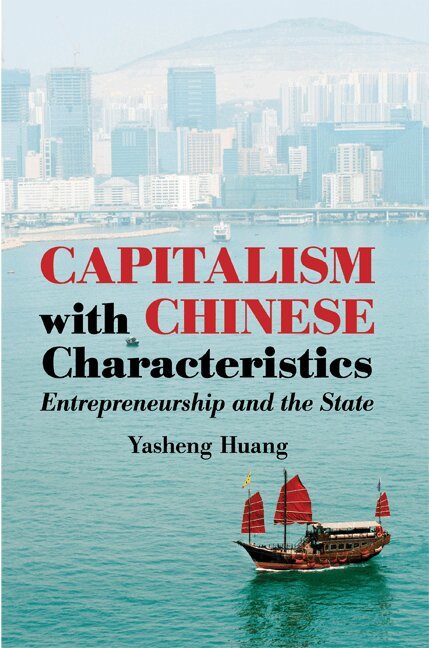
Presents a story of two Chinas - an entrepreneurial rural China and a state-controlled urban China. In the 1980s, rural China gained the upper hand. In the 1990s, urban China triumphed. In the 1990s, the Chinese state reversed many of its rural experiments, with long-lasting damage to the economy and society. A weak financial sector, income disparity, rising illiteracy, productivity slowdowns, and reduced personal income growth are the product of the capitalism with Chinese characteristics of the 1990s and beyond. While GDP grew quickly in both decades, the welfare implications of growth differed substantially. The book uses the emerging Indian miracle to debunk the widespread notion that democracy is automatically anti-growth. As the country marked its 30th anniversary of reforms in 2008, China faces some of its toughest economic challenges and substantial vulnerabilities that require fundamental institutional reforms.
Statism with Chinese Characteristics
A History of China's Reforms and Reversals
Inbunden, Engelska, 2026
461 kr
Skickas inom 7-10 vardagar
Statism with Chinese Characteristics offers a fresh perspective on the Chinese economy and its impact on the world. By diving into details and data such as the private nature of rural enterprises, early financial reforms, and the critical role of initial political openness, Yasheng Huang challenges the popular view that credits China's success to a unique blend of government interventions and autocratic governance. Huang shows how China's growth was driven by private entrepreneurship and gradual liberalization, not by infrastructural development, statist finance, and meritocratic autocracy. He confronts assumptions regarding the conventional wisdom about the Chinese economy, explicitly engaging with the policy pivot from the 1980s to the 1990s and infrastructure as a crucial factor behind China's growth. Underscoring the significant role of politics in shaping economic outcomes, this second edition explores the challenges facing the Chinese economy today, emphasizing how political changes dictate economic reforms, rather than the opposite.