
Yehuda Israely - Böcker
Visar alla böcker från författaren Yehuda Israely. Handla med fri frakt och snabb leverans.
7 produkter
7 produkter
2 023 kr
Skickas inom 10-15 vardagar
This book explores the nature of paradoxes in Lacanian psychoanalysis, how they can be approached in treatment and how they can be resolved. Building on Freud’s and Lacan’s own work in resolving paradoxes, Yehuda Israely considers psychic distress, and its amelioration, by means of the study and clarification of the many life situations that can be described as paradoxical. Among the paradoxes examined in this book are the nature of longing (the object’s presence in its absence), the wholeness of the broken heart (the subject’s existence in relation to the lack that defines her or him), drives (the more you feed it, the hungrier it gets) and the pangs of conscience (the righteous suffer). Israely’s innovative approach considers several questions which can be used to orient treatment and focuses on shedding the erroneous beliefs and assumptions that can lead to dead ends. Paradoxes in Lacanian Psychoanalysis also explores those paradoxes – involving anxiety, perplexity, wonder and creativity – that cannot and are not meant to be resolved.This fascinating book will be essential reading for Lacanian psychoanalysts in practice and in training, and for psychoanalysts and psychotherapists of other theoretical backgrounds who are interested in understanding the nature of paradoxes.
396 kr
Skickas inom 10-15 vardagar
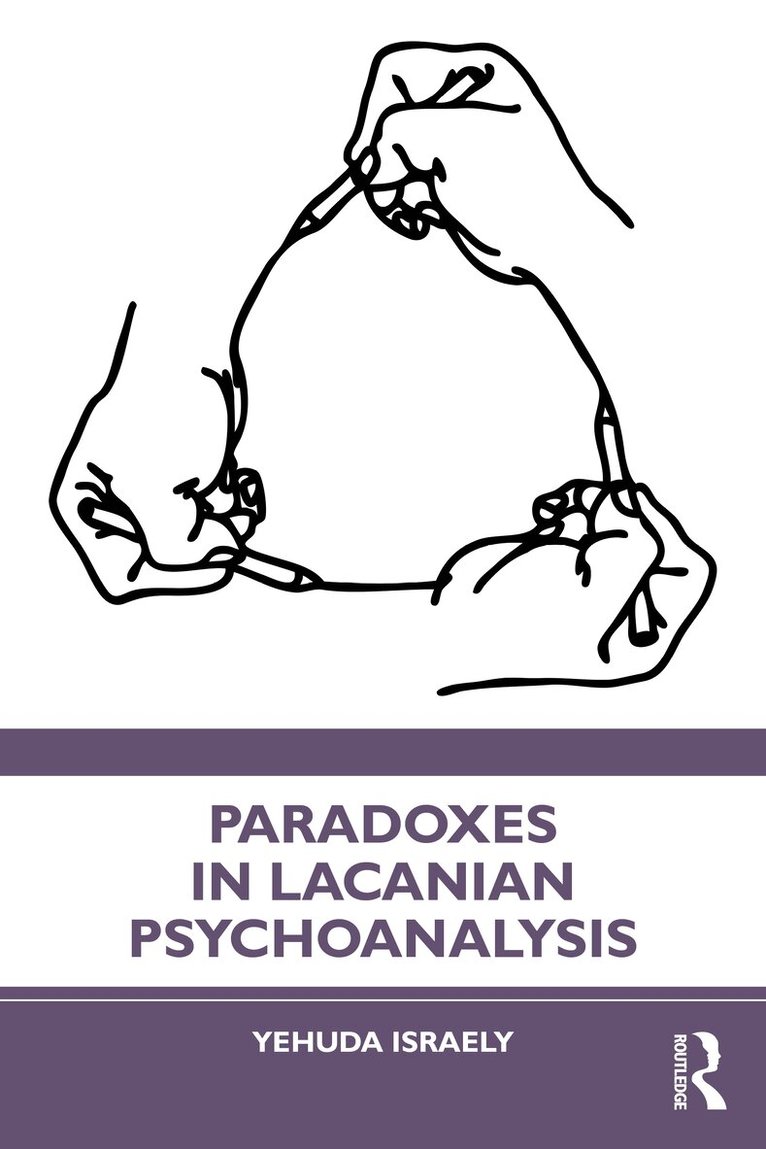
This book explores the nature of paradoxes in Lacanian psychoanalysis, how they can be approached in treatment and how they can be resolved. Building on Freud’s and Lacan’s own work in resolving paradoxes, Yehuda Israely considers psychic distress, and its amelioration, by means of the study and clarification of the many life situations that can be described as paradoxical. Among the paradoxes examined in this book are the nature of longing (the object’s presence in its absence), the wholeness of the broken heart (the subject’s existence in relation to the lack that defines her or him), drives (the more you feed it, the hungrier it gets) and the pangs of conscience (the righteous suffer). Israely’s innovative approach considers several questions which can be used to orient treatment and focuses on shedding the erroneous beliefs and assumptions that can lead to dead ends. Paradoxes in Lacanian Psychoanalysis also explores those paradoxes – involving anxiety, perplexity, wonder and creativity – that cannot and are not meant to be resolved.This fascinating book will be essential reading for Lacanian psychoanalysts in practice and in training, and for psychoanalysts and psychotherapists of other theoretical backgrounds who are interested in understanding the nature of paradoxes.

398 kr
Skickas inom 10-15 vardagar
The Ethics of Lacanian Psychoanalysis observes different aspects of life – childhood, romantic love, sex, death, and human suffering – through a Lacanian lens, with a glance toward a Buddhist point of view.Combining Lacanian psychoanalysis with insight from Freud, Bion, and the Zen masters, this book suggests finding ways to suffer less and cultivate a passion for life. Yehuda Israely and Esther Pelled consider the ethics in the light of which people live, and the questions pertinent to this choice. What kind of person do you want to be? What desire will you choose your life to be led by? How will you deal with separations, relationships, and cravings that you cannot control? This book raises these questions and proposes possible answers through an accessible, conversational format.The Ethics of Lacanian Psychoanalysis will be of interest to psychoanalysts in practice and in training as well as readers looking to learn more about applying Lacanian ideas to everyday life.

1 897 kr
Skickas inom 10-15 vardagar
The Ethics of Lacanian Psychoanalysis observes different aspects of life – childhood, romantic love, sex, death, and human suffering – through a Lacanian lens, with a glance toward a Buddhist point of view.Combining Lacanian psychoanalysis with insight from Freud, Bion, and the Zen masters, this book suggests finding ways to suffer less and cultivate a passion for life. Yehuda Israely and Esther Pelled consider the ethics in the light of which people live, and the questions pertinent to this choice. What kind of person do you want to be? What desire will you choose your life to be led by? How will you deal with separations, relationships, and cravings that you cannot control? This book raises these questions and proposes possible answers through an accessible, conversational format.The Ethics of Lacanian Psychoanalysis will be of interest to psychoanalysts in practice and in training as well as readers looking to learn more about applying Lacanian ideas to everyday life.

531 kr
Kommande
Myth Psychoanalysis: Freud, Lacan and Lévi-Strauss examines the human psyche through the theoretical lenses of three groundbreaking thinkers, exploring how humans craft their symbolic reality.This innovative work treats the exemplary cases of Freud as myths, parallel to native myths in their structure and the knowledge they harbor. The book reviews what Freud, Lacan and Lévi-Strauss would say on various aspects of the human psyche, identifying commonalities and discrepancies while distilling truths that resonate through the intersection of their perspectives. Through twelve comprehensive chapters, the work explores creation myths, kinship relations, totemism, and the structural foundations of meaning-making in both clinical and cultural contexts. The author employs a storytelling style that brings to life fascinating narratives from native myths and psychoanalytic case studies, making complex theoretical concepts accessible through engaging examples and biographical insights.This book is fascinating reading for psychoanalysts, mental health professionals, and those familiar with Freud, Lacan, or Lévi-Strauss who seek to enrich their knowledge and clinical application.
2 173 kr
Kommande
Myth Psychoanalysis: Freud, Lacan and Lévi-Strauss examines the human psyche through the theoretical lenses of three groundbreaking thinkers, exploring how humans craft their symbolic reality.This innovative work treats the exemplary cases of Freud as myths, parallel to native myths in their structure and the knowledge they harbor. The book reviews what Freud, Lacan and Lévi-Strauss would say on various aspects of the human psyche, identifying commonalities and discrepancies while distilling truths that resonate through the intersection of their perspectives. Through twelve comprehensive chapters, the work explores creation myths, kinship relations, totemism, and the structural foundations of meaning-making in both clinical and cultural contexts. The author employs a storytelling style that brings to life fascinating narratives from native myths and psychoanalytic case studies, making complex theoretical concepts accessible through engaging examples and biographical insights.This book is fascinating reading for psychoanalysts, mental health professionals, and those familiar with Freud, Lacan, or Lévi-Strauss who seek to enrich their knowledge and clinical application.

374 kr
Skickas inom 10-15 vardagar
Secret wishes, forbidden pleasures, and painful memories hide below the false bottom of consciousness. How do we decipher the desire and pleasure located between the words spoken in psychotherapeutic treatment, and how can we identify and interpret them? This book, following the author's previous work which focused mainly on Lacanian theory, is dedicated to the practice of psychological treatment. Given its general clarity, the book can also be useful to those who are not deeply versed in Lacanian thinking. How does one interpret symptoms, dreams, and other expressions of the unconscious? What is transference, and how is it put to work in treatment? How do we work with anxiety, depression, suicidal tendencies and other types of distress? What is the Lacanian approach to these things? How does diagnosis relate to how we orient the treatment? And, finally, what is the secret of termination of the treatment, which happens to coincide with the analyst's training process?