Yi-Fu Tuan - Böcker
Visar alla böcker från författaren Yi-Fu Tuan. Handla med fri frakt och snabb leverans.
17 produkter
17 produkter
730 kr
Skickas inom 10-15 vardagar
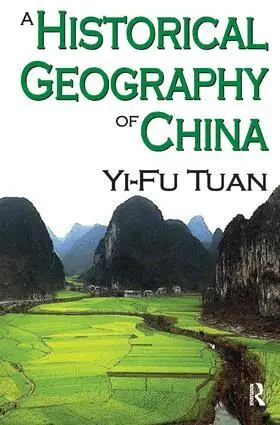
The Chinese earth is pervasively humanized through long occupation. Signs of man's presence vary from the obvious to the extremely subtle. The building of roads, bridges, dams, and factories, and the consolidation of farm holdings alter the Chinese landscape and these alterations seem all the more conspicuous because they introduce features that are not distinctively Chinese. In contrast, traditional forms and architectural relics escape our attention because they are so identified with the Chinese scene that they appear to be almost outgrowths of nature. Describing the natural order of human beings in the context of the Chinese earth and civilization, "A Historical Geography of China" narrates the evolution of the Chinese landscape from prehistoric times to the present.Tuan views landscape as a visible expression of man's efforts to gain a living and achieve a measure of stability in the constant flux of nature. The book ranges the period of time from Peking man to the epoch of Mao Tse-tung. It moves through the ancient and modern dynasties, the warlords and conquests, earthquakes, devastating floods, climatic reversals, and staggering civil wars to the impact of Western civilization and industrialization. The emphasis throughout is on the effect of a changing environment on succeeding cultures.This classic study attempts to analyze and describe traditional Chinese settlement patterns and architecture. The result is a clear and succinct examination of the development of the Chinese landscape over thousands of years. It describes the ways the Communist regime worked to alter the face of the nation. This work will quickly prove to be crucial reading for all who are interested in this pivotal nation. It goes far beyond the usual political spectrum, into the physical and social roots of Chinese history.
298 kr
Skickas inom 7-10 vardagar
What are the links between environment and world view? Topophilia, the affective bond between people and place, is the primary theme of this book that examines environmental perceptions and values at different levels: the species, the group, and the individual. Yi-Fu Tuan holds culture and environment and topophilia and environment as distinct in order to show how they mutually contribute to the formation of values. Topophilia examines the search for environment in the city, suburb, countryside, and wilderness from a dialectical perspective, distinguishes different types of environmental experience, and describes their character.
205 kr
Skickas inom 10-15 vardagar
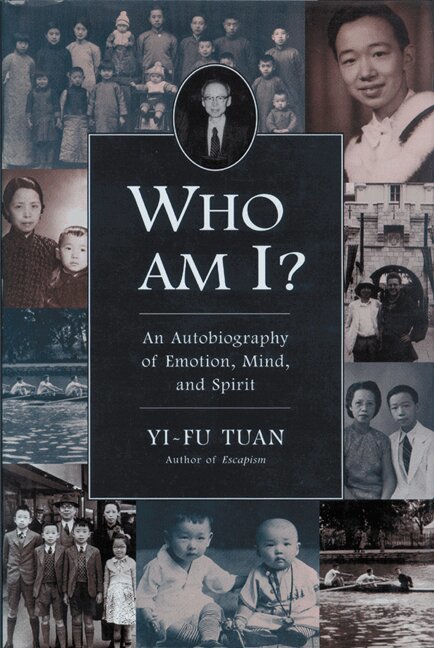
Who Am I? is the bittersweet memoir of a Chinese American who came to this country as a twenty-year-old graduate student and stayed to become one of America's most innovative intellectuals, whose work has explored the aesthetic and moral dimensions of human relations with landscape, nature, and environment. This unusually introspective autobiography mixes Yi-Fu Tuan's reflections on a life filled with recognition, accolades, and affection with what he deems moral failings, his lack of courage - including the courage to be open about his homosexuality.
273 kr
Skickas inom 10-15 vardagar
In his many best-selling books, Yi-Fu Tuan seizes big, metaphysical issues and considers them in uniquely accessible ways. ""Human Goodness"" is evidence of this talent and is both as simple, and as epic, as it sounds.Genuinely good people and their actions, Tuan contends, are far from boring, naive, and trite; they are complex, varied, and enormously exciting. In a refreshing antidote to skeptical times, he writes of ordinary human courtesies, as simple as busing your dishes after eating, that make society functional and livable. And he writes of extraordinary courage and inventiveness under the weight of adversity and evil. He considers the impact of communal goodness over time, and his sketches of six very different individuals - Confucius, Socrates, Wolfgang Amadeus Mozart, John Keats, Dr. Albert Schweitzer, and Simone Weil - confirm that there are human lives that can encourage and lead us to our better selves.
196 kr
Kommande
In his many best-selling books, Yi-Fu Tuan seizes big, metaphysical issues and considers them in uniquely accessible ways. Human Goodness is evidence of this talent and is both as simple, and as epic, as it sounds.Genuinely good people and their actions, Tuan contends, are far from boring, naive, and trite; they are complex, varied, and enormously exciting. In a refreshing antidote to skeptical times, he writes of ordinary human courtesies, as simple as busing your dishes after eating, that make society functional and livable. And he writes of extraordinary courage and inventiveness under the weight of adversity and evil. He considers the impact of communal goodness over time, and his sketches of six very different individuals—Confucius, Socrates, Wolfgang Amadeus Mozart, John Keats, Dr. Albert Schweitzer, and Simone Weil—confirm that there are human lives that can encourage and lead us to our better selves.
273 kr
Skickas inom 10-15 vardagar
Geography is useful, indeed necessary, to survival. Everyone must know where to find food, water, and a place of rest, and, in the modern world, all must make an effort to make the Earth—our home—habitable. But much present-day geography lacks drama, with its maps and statistics, descriptions and analysis, but no acts of chivalry, no sense of quest. Not long ago, however, geography was romantic. Heroic explorers ventured to forbidding environments—oceans, mountains, forests, caves, deserts, polar ice caps—to test their power of endurance for reasons they couldn't fully articulate. Why climb Everest? ""Because it is there.""Yi-Fu Tuan has established a global reputation for deepening the field of geography by examining its moral, universal, philosophical, and poetic potentials and implications. In his twenty-second book, Romantic Geography, he continues to engage the wide-ranging ideas that have made him one of the most influential geographers of our time. In this elegant meditation, he considers the human tendency—stronger in some cultures than in others—to veer away from the middle ground of common sense to embrace the polarised values of light and darkness, high and low, chaos and form, mind and body. In so doing, venturesome humans can find salvation in geographies that cater not so much to survival needs (or even to good, comfortable living) as to the passionate and romantic aspirations of their nature. Romantic Geography is thus a paean to the human spirit, which can lift us to the heights but also plunge us into the abyss.
196 kr
Kommande
Yi-Fu Tuan established a global reputation for deepening the field of geography by examining its moral, universal, philosophical, and poetic potentials and implications. In Romantic Geography, he engages the wide-ranging ideas that made him one of the most influential geographers of our time. In this elegant meditation, he considers the human tendency—stronger in some cultures than in others—to veer away from the middle ground of common sense to embrace the polarized values of light and darkness, high and low, chaos and form, mind and body. In so doing, venturesome humans can find salvation in geographies that cater not so much to survival needs (or even to good, comfortable living) as to the passionate and romantic aspirations of their nature. Romantic Geography is a paean to the human spirit, which can lift us to new heights but also plunge us into the abyss.
370 kr
Skickas inom 5-8 vardagar
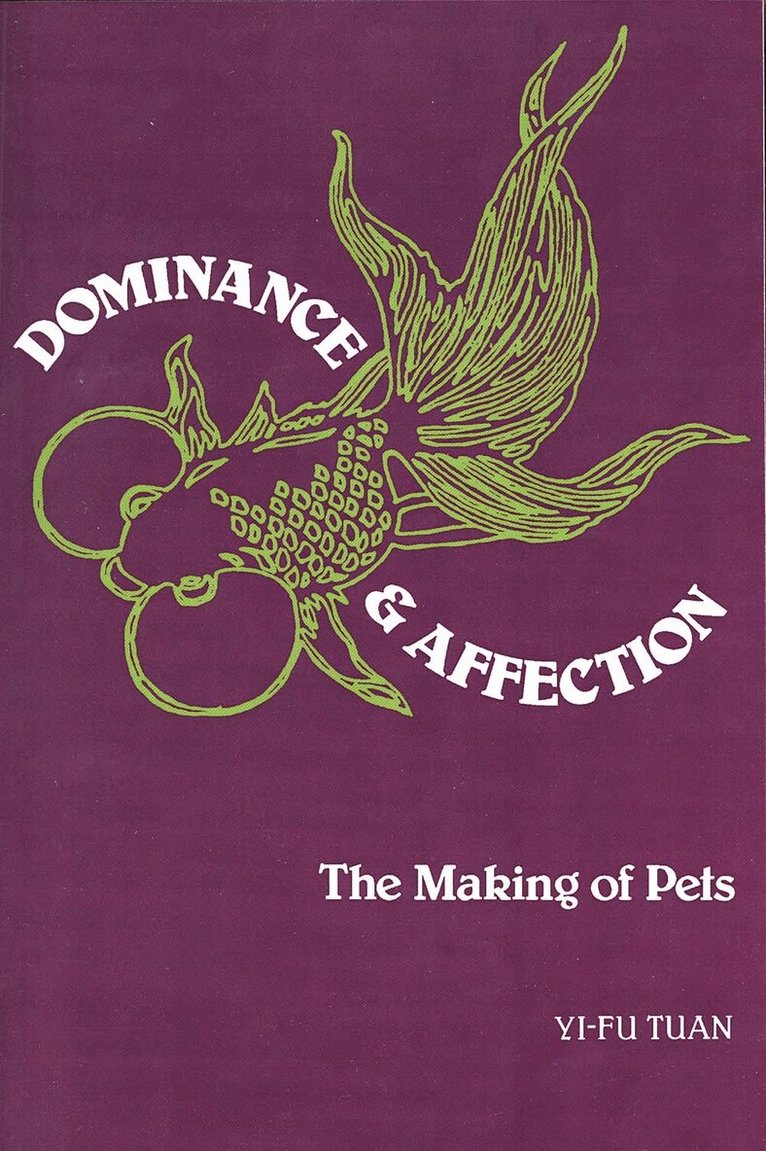
Is it cruelty or playfulness to breed a variety of goldfish with dysfunctional bulging eyes? Was it an urge for dominance or benevolence that led ladies of eighteenth-century England to keep finely dressed black boys as their pets? Can we be said to abuse a plant when part of our pleasure lies in twisting its stem into the shape of an animal? This is a provocative book about the psychological impulse to “make pets”—to tame and control inanimate nature, animals, and other humans. Yi-Fu Tuan has amassed a wealth of evidence to show that the human urge for domination—even in the cultural and aesthetic realm—has exhibited itself repeatedly through the ages. He contends that we fail to understand the true nature of pleasure, play, and art unless we put power as well as affection somewhere close to its center. When we view the beauty of a man-made landscape, we tend to forget that it was often initiated as an exercise in power; in the case of Louis XIV’s Versailles, for example, 30,000 soldiers had to labor day and night to bring water to the arid palace grounds. In the same way, the creation of topiary art and bonsai can be viewed in a dual light: as a playful, pleasurable activity or as a deliberate reminder of our ability to command and impose. Our relationship with animals is another vivid example of our inclination to control. Tuan contends that cruelty to animals is extremely widespread: breeding animals for aesthetic purpose and training them to perform are not only favored hobbies but examples of delight in willful manipulation. The abuse of power is also seen in the treatment of those human members of a household who become patronized as pets. Children, women, servants, and entertainers have been at different times both highly valued and severely controlled—trained to approach the obedience of inanimate matter or mechanical toys. Dominance and Affection is likely to change the way we look at ourselves and our “pets.” If it is sobering in the questions it raises about human nature, it is also irresistible in the nature of the varied and fascinating material it lays before the reader.
356 kr
Skickas inom 7-10 vardagar
In prehistoric times, our ancestors began building shelters and planting crops in order to escape from nature's harsh realities. Today, we flee urban dangers for the safer, reconfigured world of suburban lawns and parks. According to geographer Yi-Fu Tuan, people have always sought to escape in one way or another, sometimes foolishly, often creatively and ingeniously. Glass-tower cities, suburbs, shopping malls, Disneyland-all are among the most recent monuments in our efforts to escape the constraints and uncertainties of life-ultimately, those imposed by nature. "What cultural product," Tuan asks, "is not escape?" In his new book, the capstone of a celebrated career, Tuan shows that escapism is an inescapable component of human thought and culture.
259 kr
Skickas inom 10-15 vardagar
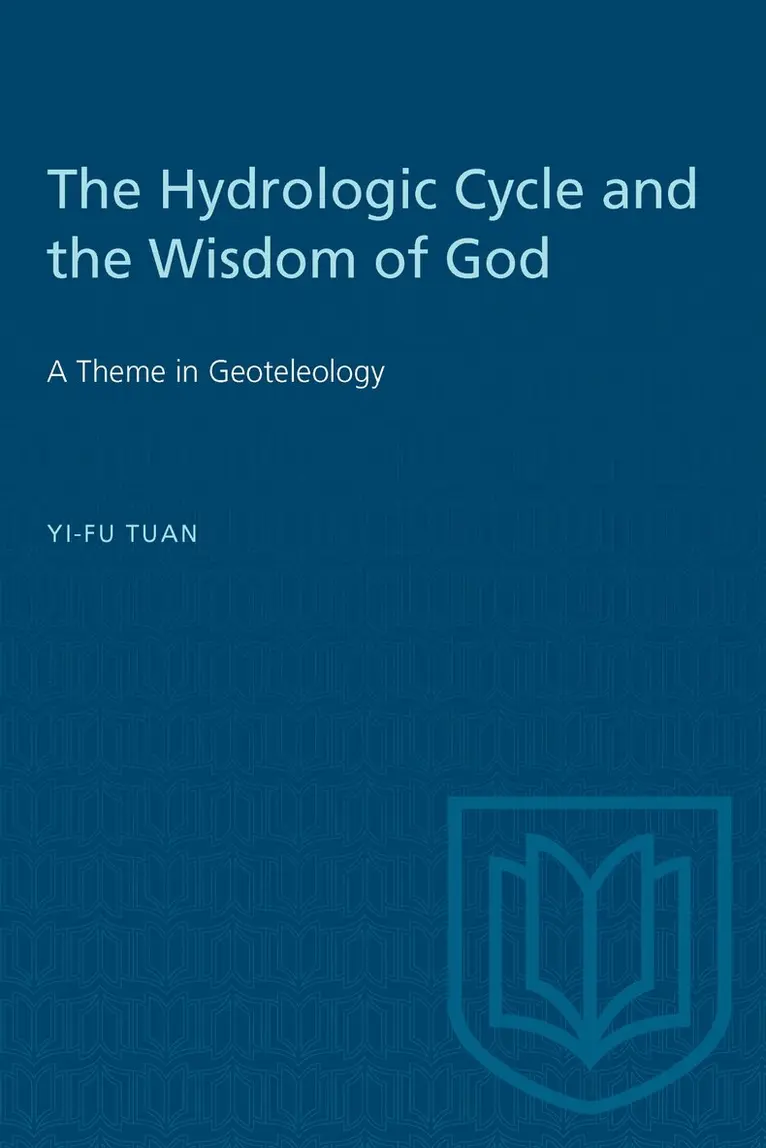
This is the first volume of a new series of research publications in geography which is published for the Department of Geography, University of Toronto. The Hydrologic Cycle and the Wisdom of God traces the development of the idea of the hydrologic cycle in the context of natural theology. The notion that "all creation exhibits the wisdom of the Creator" was once a widely held belief in the Western world. However, unlike stars and biological organisms, the physical features of the earth, with their evident lack of pattern, were difficult to reconcile with God’s wisdom until scholars and scientists, at the end of the seventeenth century, found a satisfactory solution in the concept of the hydrologic cycle. The concept served to explain the earth’s features so well that in the process it explained away one of them—the great deserts. This work shows the growth and eventual decay of a concept which attempts to relate the broad range of seemingly little-connected phenomena that physical geographers, in their several capacities, are still committed to study. It will be of interest to physical geographers and all scholars who are concerned with historical attitudes towards man’s physical environment. (University of Toronto Department of Geography Publications No. 1)
256 kr
Skickas inom 7-10 vardagar
In a volume that represents the culmination of his life’s work in considering the relationship between culture and landscape, eminent scholar Yi-Fu Tuan argues that “cosmos” and “hearth” are two scales that anchor what it means to be fully and happily human. Illustrating this contention with examples from both his native China and his home of the past forty years, the United States, Tuan proposes a revised conception of culture, one thoroughly grounded in one’s own society but also embracing curiosity about the world. Optimistic and deeply human, this important volume lays out a path to being “at home in the cosmos.” Hardcover:In this moving meditation on the difficult choices facing humanity in the next millennium, celebrated scholar Yi-Fu Tuan reaffirms his faith in the value of a cosmopolitan worldview. In a volume that represents the culmination of his life's work in considering the relationship between culture and landscape, Tuan argues that “cosmos” and “hearth” are two scales that anchor what it means to be fully and happily human. Hearth is our house and neighborhood, family and kinfolk, habit and custom. Cosmos, by contrast, is the larger reality-world, civilization, and humankind. Tuan addresses the extraordinary revival of interest in the hearth in recent decades, examining both the positive and negative effects of this renewed concern. Among the beneficent outcomes has been a revival of ethnic culture and sense of place. Negative repercussions abound, however, manifested as an upsurge in superstition, excessive pride in ancestry and custom, and a constricted worldview that when taken together can inflame local passions, leading at times to violent conflict-from riots in American cities to wars in the Balkans. In Cosmos and Hearth, Tuan takes the position that we need to embrace both the sublime and the humble, drawing what is valuable from each.Illustrating the importance of both cosmos and hearth with examples from his country of birth, China, and from his home of the past forty years, the United States, Tuan proposes a revised conception of culture, the “cosmopolitan hearth,” that has the coziness but not the narrowness and bigotry of the traditional hearth. Tuan encourages not only being thoroughly grounded in one’s own culture but also the embracing of curiosity about the world. Optimistic and deeply human, Cosmos and Hearth lays out a path to being “at home in the cosmos.” Born in China and educated in Australia, the Philippines, England, and the United States, Yi-Fu Tuan is professor of geography at the University of Wisconsin, Madison, and the author of Space and Place: The Perspective of Experience (Minnesota, 1977), Landscapes of Fear (Minnesota, 1982), The Good Life (1986), and Passing Strange and Wonderful: Aesthetics, Nature, and Culture (1993). Excerpt: “Thinking yields a twofold gain: although it isolates us from our immediate group it can link us both seriously and playfully to the cosmos-to strangers in other places and times; and it enables us to accept a human condition that we have always been tempted by fear and anxiety to deny, namely, the impermanence of our state wherever we are, our ultimate homelessness. A cosmopolite is one who considers the gain greater than the loss. Having seen something of the splendid spaces, he or she will not want to return, permanently, to the ambiguous safeness of the hearth.”
226 kr
Skickas inom 7-10 vardagar
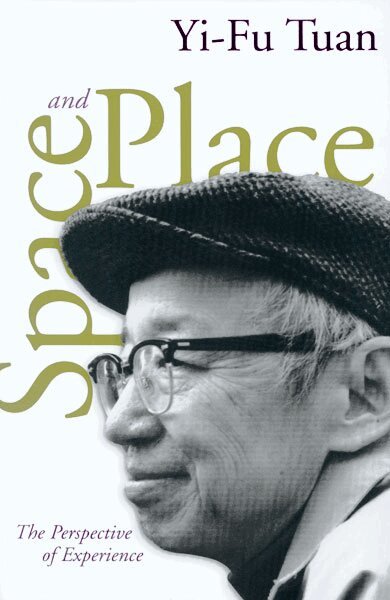
A study of the ways in which people feel and think about space, how they form attachments to home, neighborhood, and nation, and how feelings about space and place are affected by the sense of time."Since it is the breadth and universality of his argument that concerns Yi-Fu Tuan, experience is defined as 'all the modes by which a person knows and constructs reality,' and examples are taken with equal ease from non-literate cultures, from ancient and modern oriental and western civilizations, from novels, poetry, anthropology, psychology, and theology. The result is a remarkable synthesis, which reflects well the subtleties of experience and yet avoids the pitfalls of arbitrary classification and facile generalization. For these reasons, and for its general tone and erudition and humanism, this book will surely be one that will endure when the current flurry of academic interest in environmental experience abates." Canadian Geographer
237 kr
Skickas inom 10-15 vardagar
In the summer of 2005, distinguished geographer Yi-Fu Tuan ventured to China to speak at an international architectural conference, returning for the first time to the place he had left as a child sixty-four years before. He traveled from Beijing to Shanghai, addressing college audiences, floating down the Yangtze River on a riverboat, and visiting his former home in Chongqing. In this enchanting volume, Tuan’s childhood memories and musings on the places encountered during this homecoming are interspersed with new lectures, engaging overarching principles of human geography as well as the changing Chinese landscape. Throughout, Tuan’s interactions with his hosts, with his colleague’s children, and even with a garrulous tour guide, offer insights into one who has spent his life studying place, culture, and self. At the beginning of his trip, Tuan wondered if he would be a stranger among people who looked like him. By its end, he reevaluates his own self-definition as a hyphenated American and sheds new light on human identity’s complex roots in history, geography, and language. Yi-Fu Tuan is author of Cosmos and Hearth, Dear Colleague, and Space and Place, all from Minnesota. He retired from the University of Wisconsin-Madison in 1998.
278 kr
Skickas inom 7-10 vardagar
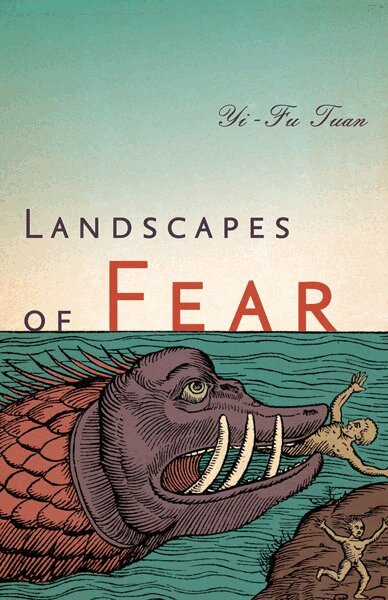
To be human is to experience fear, but what is it exactly that makes us fearful? Landscapes of Fear-written immediately after his classic Space and Place-is renowned geographer Yi-Fu Tuan’s influential exploration of the spaces of fear and of how these landscapes shift during our lives and vary throughout history.In a series of linked essays that journey broadly across place, time, and cultures, Tuan examines the diverse manifestations and causes of fear in individuals and societies: he describes the horror created by epidemic disease and supernatural visions of witches and ghosts; violence and fear in the country and the city; fears of drought, flood, famine, and disease; and the ways in which authorities devise landscapes of terror to instill fear and subservience in their own populations. In this groundbreaking work-now with a new preface by the author-Yi-Fu Tuan reaches back into our prehistory to discover what is universal and what is particular in our inheritance of fear. Tuan emphasizes that human fear is a constant; it causes us to draw what he calls our “circles of safety” and at the same time acts as a foundational impetus behind curiosity, growth, and adventure.
309 kr
Skickas inom 7-10 vardagar
For more than fifty years, Yi-Fu Tuan has carried the study of humanistic geography - what John K. Wright early in the twentieth century called geosophy, a blending of geography and philosophy - to new heights, offering with each new book a fresh and often unique intellectual introspection into the human condition. His latest book, Humanist Geography, is a testament of all that he has learned and encountered as a geographer. In returning to and reappraising his previous books, Tuan emphasizes how the study of humanist geography can offer a younger generation of students, scholars, and teachers a path toward self-discovery, personal fulfillment, and even enlightenment. He argues that in the study of place can be found the wonders of the human mind and imagination, especially as understood by the senses, even as we human beings deal with nature's stringencies and our own deep flaws.
2 162 kr
Skickas inom 10-15 vardagar
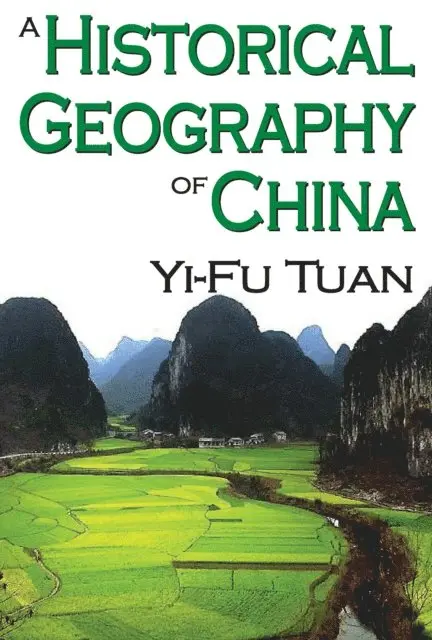
The Chinese earth is pervasively humanized through long occupation. Signs of man's presence vary from the obvious to the extremely subtle. The building of roads, bridges, dams, and factories, and the consolidation of farm holdings alter the Chinese landscape and these alterations seem all the more conspicuous because they introduce features that are not distinctively Chinese. In contrast, traditional forms and architectural relics escape our attention because they are so identified with the Chinese scene that they appear to be almost outgrowths of nature. Describing the natural order of human beings in the context of the Chinese earth and civilization, "A Historical Geography of China" narrates the evolution of the Chinese landscape from prehistoric times to the present.Tuan views landscape as a visible expression of man's efforts to gain a living and achieve a measure of stability in the constant flux of nature. The book ranges the period of time from Peking man to the epoch of Mao Tse-tung. It moves through the ancient and modern dynasties, the warlords and conquests, earthquakes, devastating floods, climatic reversals, and staggering civil wars to the impact of Western civilization and industrialization. The emphasis throughout is on the effect of a changing environment on succeeding cultures.This classic study attempts to analyze and describe traditional Chinese settlement patterns and architecture. The result is a clear and succinct examination of the development of the Chinese landscape over thousands of years. It describes the ways the Communist regime worked to alter the face of the nation. This work will quickly prove to be crucial reading for all who are interested in this pivotal nation. It goes far beyond the usual political spectrum, into the physical and social roots of Chinese history.
313 kr
Skickas inom 7-10 vardagar
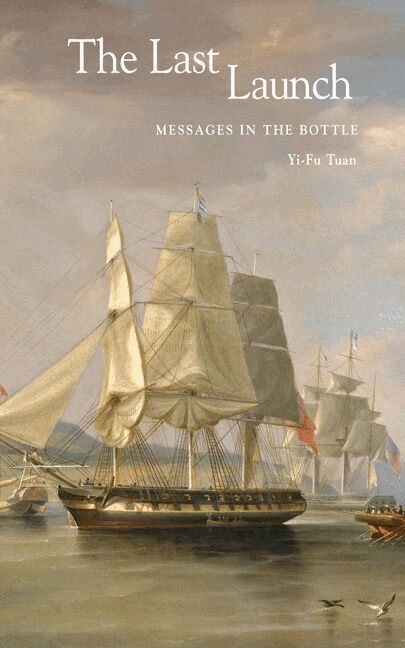
Can Yi-Fu Tuan, one of the world's most decorated geographers, from the aspen glow of retirement and a distinguished career, hold the interest of young readers who themselves are just now embarking on their own sojourns into the larger world? The question is all the more important for Professor Tuan, because the topic of his last book, his 'last launch,' is human life itself---what it means to be human and how we humans can reach our full potential in the brief period we live on Earth.Professor Tuan, like the curious child on a familiar beach, has decided to make his last launch a personal voyage in which he sends messages to the young in a bottle presented as a book. Securely corked, the bottle is cast into the vast sea before finding its resting ground in the hands of a young reader, who discovers the bottle on a foreign shore. Contained within the bottle are sixteen messages never before published. They represent Professor Tuan's last conversation, his last meal, with his readers, young and old.The messages that Professor Tuan has presented involve his final thoughts about childhood and education, about comprehending the relationship between space, place, and time, about understanding social reality and our attitudes toward nature and religion. But, ultimately, The Last Launch is about goodness and the Good, a recurrent theme in the master scholar's work.Although we humans, by nature, are flawed beings, Professor Tuan affirms that we are also the most subtly complex beings in the solar system, if not in the Milky Way. All of us are endowed with keen senses and some with even keener minds that enable us to savor the wonders of this world that is our only home. Moreover, we humans are, by nature, moral beings who find fulfillment and happiness in doing good. Since evil--as the fact of suffering, misfortune, and wrongdoing--does not disdain from inflicting the slightest hurt or harm, we must not miss any opportunity to do good, Professor Tuan urges, however inconsequential the doing may seem at the time.In a final reflection, Professor Tuan offers the following: that, in living a life fully, one senses that we are engaged in something larger than ourselves, that we may well be in a cosmic struggle for life in which there is no trifling player among us. Everyone and everything on Earth counts. Thus, doing good in one's life is the ultimate form of human love and caring. If we do not embrace this truth, is it because we fear the responsibility and accountability of doing good? Such are the questions to be found in Professor Tuan's bottle, to be answered in his last launch. Lucky is the person forever young in spirit who picks up the bottle on the beach and reads and listens to its contents.Distributed for George F. Thompson Publishing.