Yi-min Lin - Böcker
Visar alla böcker från författaren Yi-min Lin. Handla med fri frakt och snabb leverans.
5 produkter
5 produkter
1 531 kr
Skickas inom 5-8 vardagar
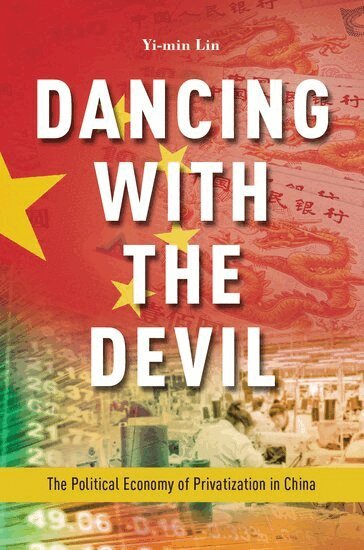
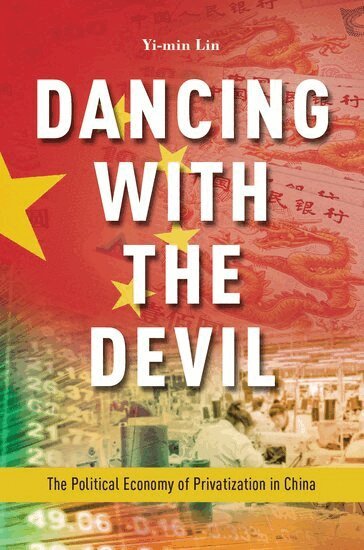
From 1978 through the turn of the century, China was transformed from a state-owned economy into a predominantly private economy. This fundamental change took place under the Chinese Communist Party (CCP), which is ideologically mandated and politically predisposed to suppress private ownership. In Dancing with the Devil, Yi-min Lin explains how and why such an ironic and puzzling reality came about. The central thesis is that private ownership became a necessary evil for the CCP because the public sector was increasingly unable to address two essential concerns for regime survival: employment and revenue. Focusing on political actors as a major group of change agents, the book examines how their self-interested behavior led to the decline of public ownership. Demographics and the state's fiscal system provide the analytical coordinates for revealing the changing incentives and constraints faced by political actors and for investigating their responses and strategies. These factors help explain CCP leaders' initial decision to allow limited private economic activities at the outset of reform. They also shed light on the subsequent growth of opportunism in the behavior of lower level officials, which undermined the vitality of public enterprises. Furthermore, they hold a key to understanding the timing of the massive privatization in the late 1990s, as well as its tempo and spread thereafter. Dancing with the Devil illustrates how the driving forces developed and played out in these intertwined episodes of the story. In so doing, it offers new insights into the mechanisms of China's economic transformation and enriches theories of institutional change.
464 kr
Skickas inom 5-8 vardagar
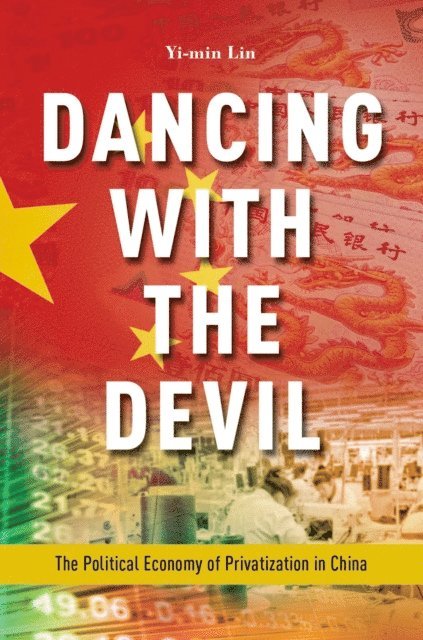
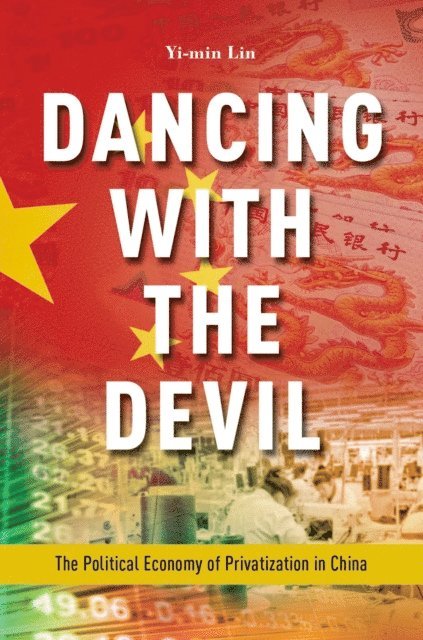
From 1978 through the turn of the century, China was transformed from a state-owned economy into a predominantly private economy. This fundamental change took place under the Chinese Communist Party (CCP), which has been ideologically and politically predisposed to suppress private ownership.In Dancing with the Devil, Yi-min Lin explains how and why such a paradoxical reality came about. He shows that private ownership became a necessary evil for the CCP because the public sector was increasingly unable to address two essential concerns for regime survival: employment and revenue. Focusing on political actors as major change agents, Lin examines how their self-interested behavior led to the decline of public ownership in the context of China's evolving demographics and fiscal system. The constraints and incentives associated with these factors help explain CCP leaders' initial decision to allow limited private economic activities at the outset of reform. They also shed light on the ballooning opportunism among lower officials, which undermined the vitality of public enterprises. Furthermore, they hold a key to understanding the timing of the massive privatization in the late 1990s, as well as its tempo and spread thereafter.Dancing with the Devil illustrates how the driving forces developed and played out in these intertwined episodes of the story. In so doing, it offers new insights into the mechanisms of China's economic transformation and enriches theories of institutional change.
Del 18 - Structural Analysis in the Social Sciences
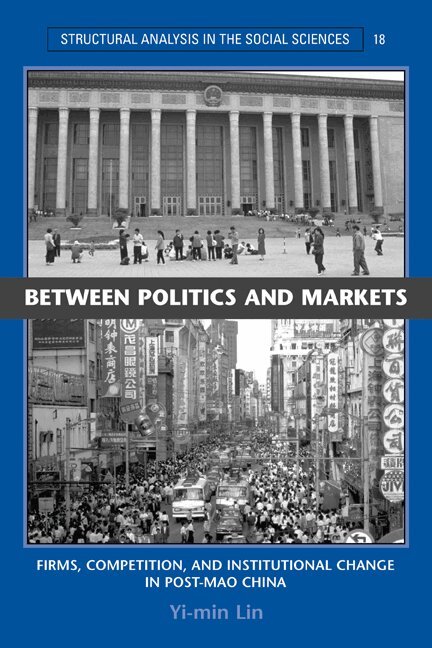
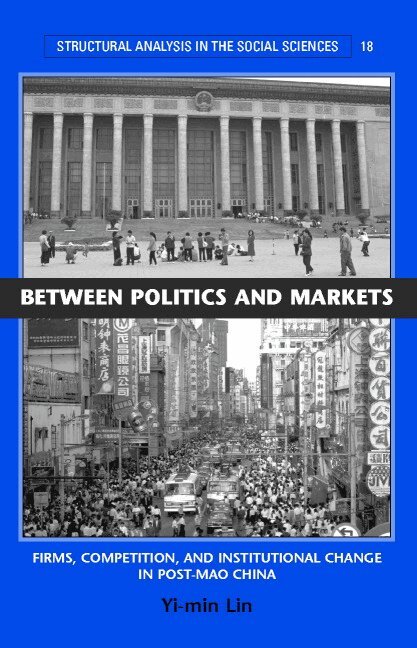
Between Politics and Markets
Firms, Competition, and Institutional Change in Post-Mao China
Häftad, Engelska, 2004
441 kr
Skickas inom 7-10 vardagar
Between Politics and Markets examines how the decline of central planning in post-Mao China was related to the rise of two markets - an economic market for the exchange of products and factors, and a political market for the diversion to private interests of state assets and authorities. Lin reveals their concurrent development through an account of how industrial firms competed their way out of the plan through exchange relations with one another and with state agents. He argues that the two markets were mutually accommodating, that the political market grew also from a decay of the state's self-monitoring capacity, and that economic actors' competition for special favors from state agents constituted a major driving force of economic institutional change.
Del 18 - Structural Analysis in the Social Sciences
Between Politics and Markets
Firms, Competition, and Institutional Change in Post-Mao China
Inbunden, Engelska, 2001
821 kr
Skickas inom 7-10 vardagar
Between Politics and Markets examines how the decline of central planning in post-Mao China was related to the rise of two markets - an economic market for the exchange of products and factors, and a political market for the diversion to private interests of state assets and authorities. Lin reveals their concurrent development through an account of how industrial firms competed their way out of the plan through exchange relations with one another and with state agents. He argues that the two markets were mutually accommodating, that the political market grew also from a decay of the state's self-monitoring capacity, and that economic actors' competition for special favors from state agents constituted a major driving force of economic institutional change.
Del 2 - World Scientific Series In Chinese Business, Innovation, Investment, & Economic Growth
Corporate China: Structure And Change - A World Scientific Reference For Academic Researchers And Practitioners (In 4 Volumes)
Inbunden, Engelska, 2026
7 762 kr
Kommande
This four-volume set surveys the evolving landscape of business organization in China amid institutional reforms and shifting global conditions in the 21st century. It examines the structures and transformations of state-owned enterprises (SOEs), foreign-invested enterprises (FIEs), technology companies, and large corporate groups spanning different organizational forms. Collectively, these accounts offer fresh insights into the dynamics and drivers of China's economic development.Volume 1 explores the emergence and driving forces of leading business groups under China's state-led development model.Volume 2 examines how, following widespread failures and privatization at the turn of the century, SOEs have re-emerged as powerful players in China's new economy.Volume 3 traces the patterns of FIE entry and exit in China, analyzing how foreign investment has responded to diverse institutional contexts and global change.Volume 4 covers the rise and development of China's technology companies, focusing on the intricate interplay among government policies, market forces, and geopolitical factors.